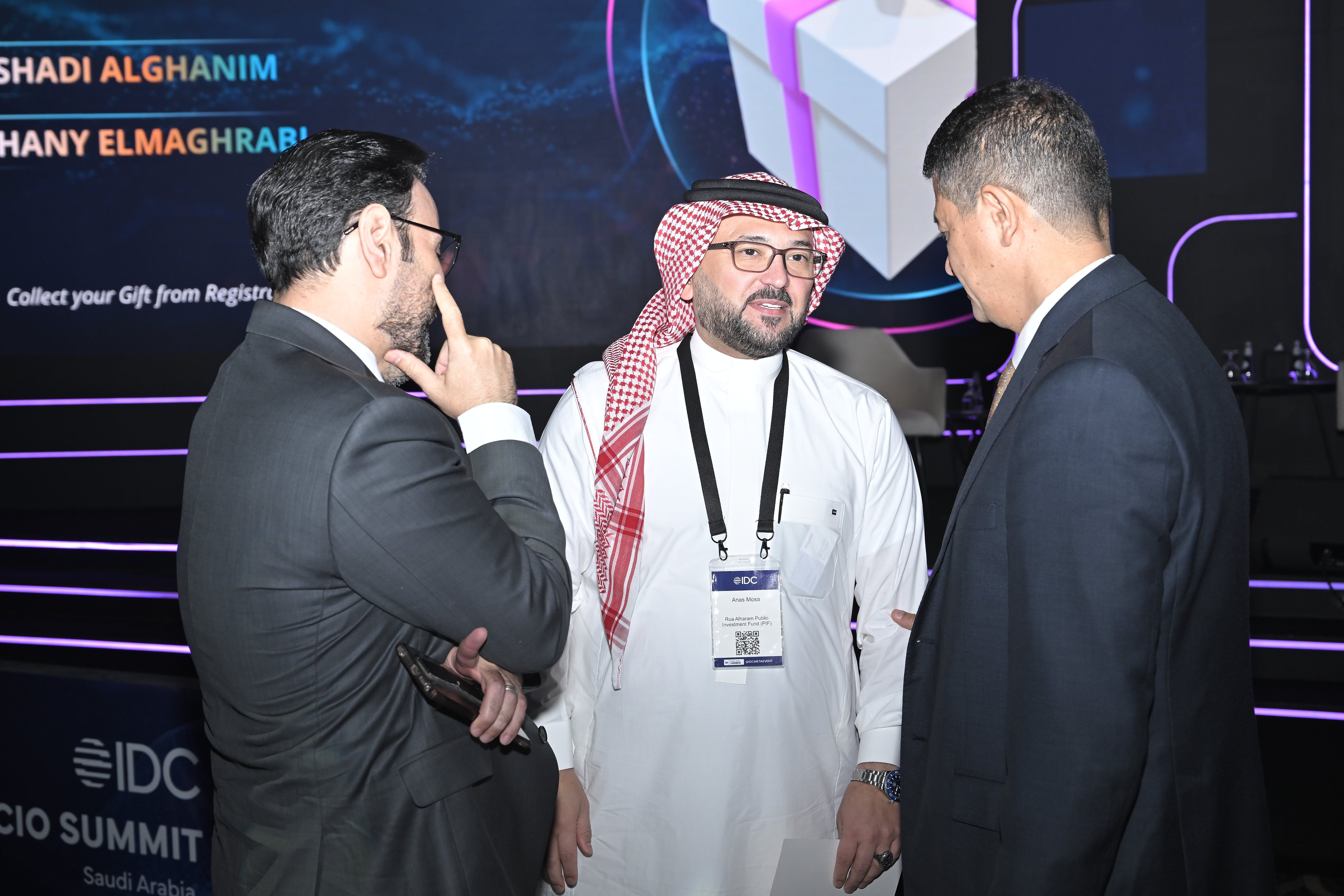
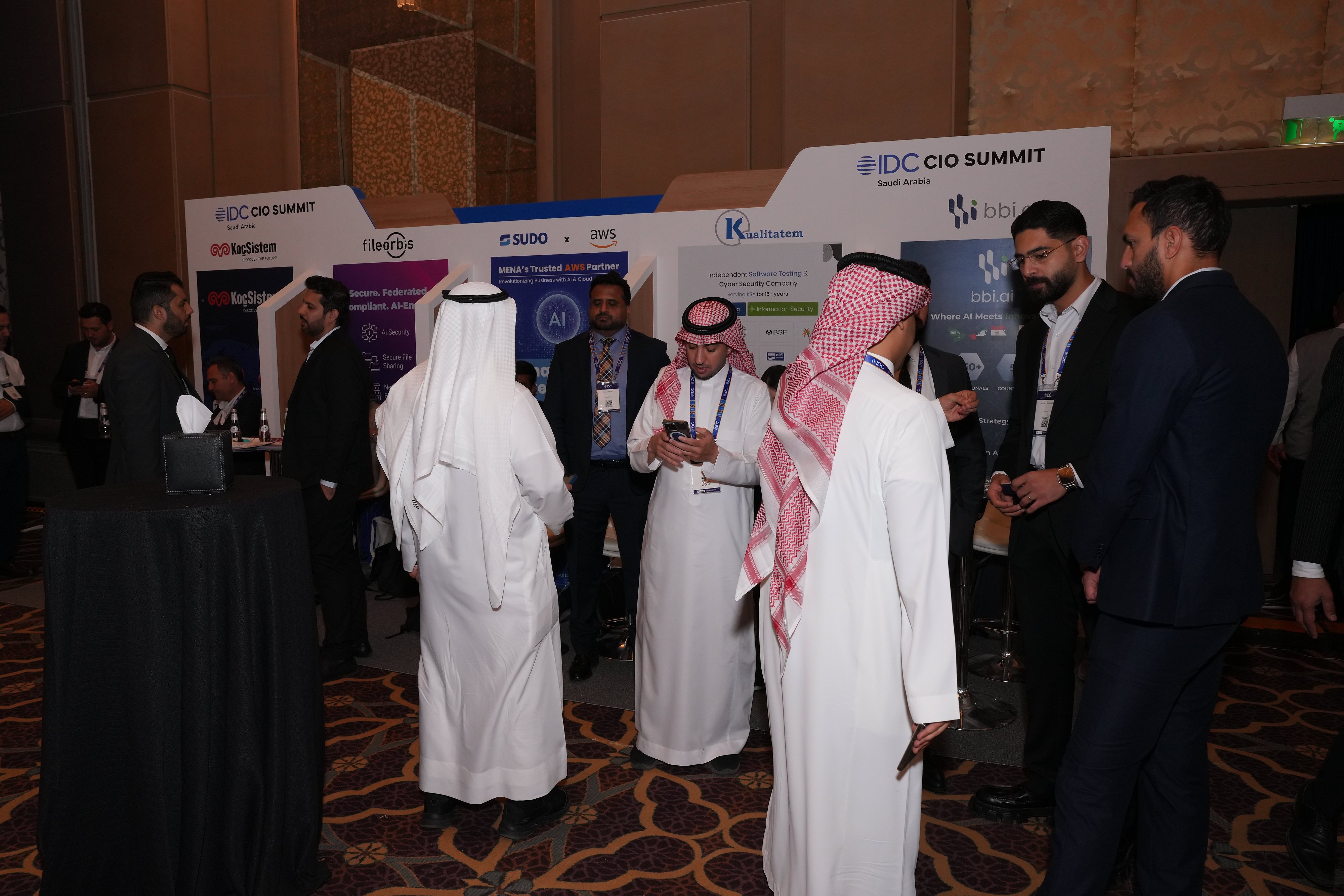
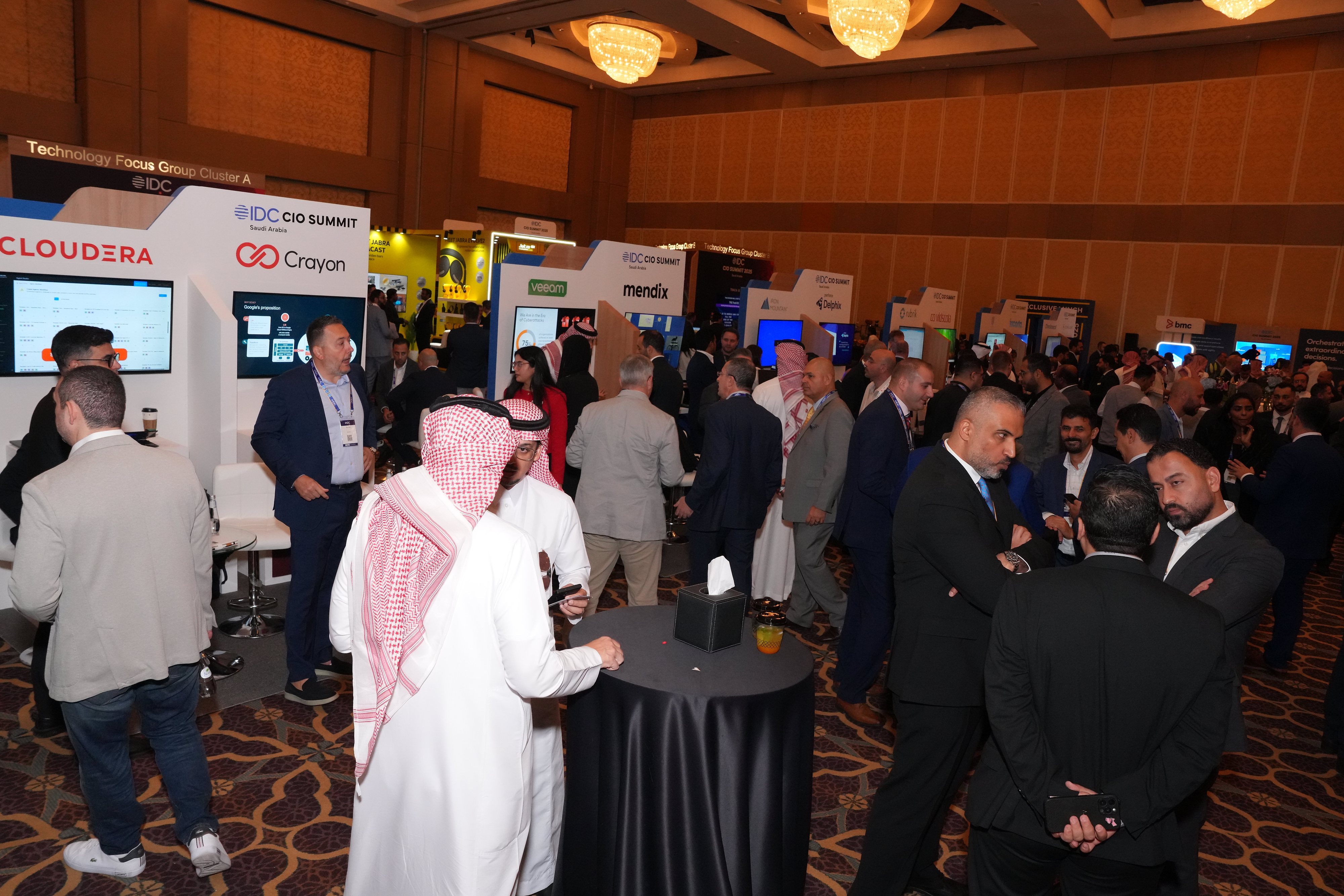
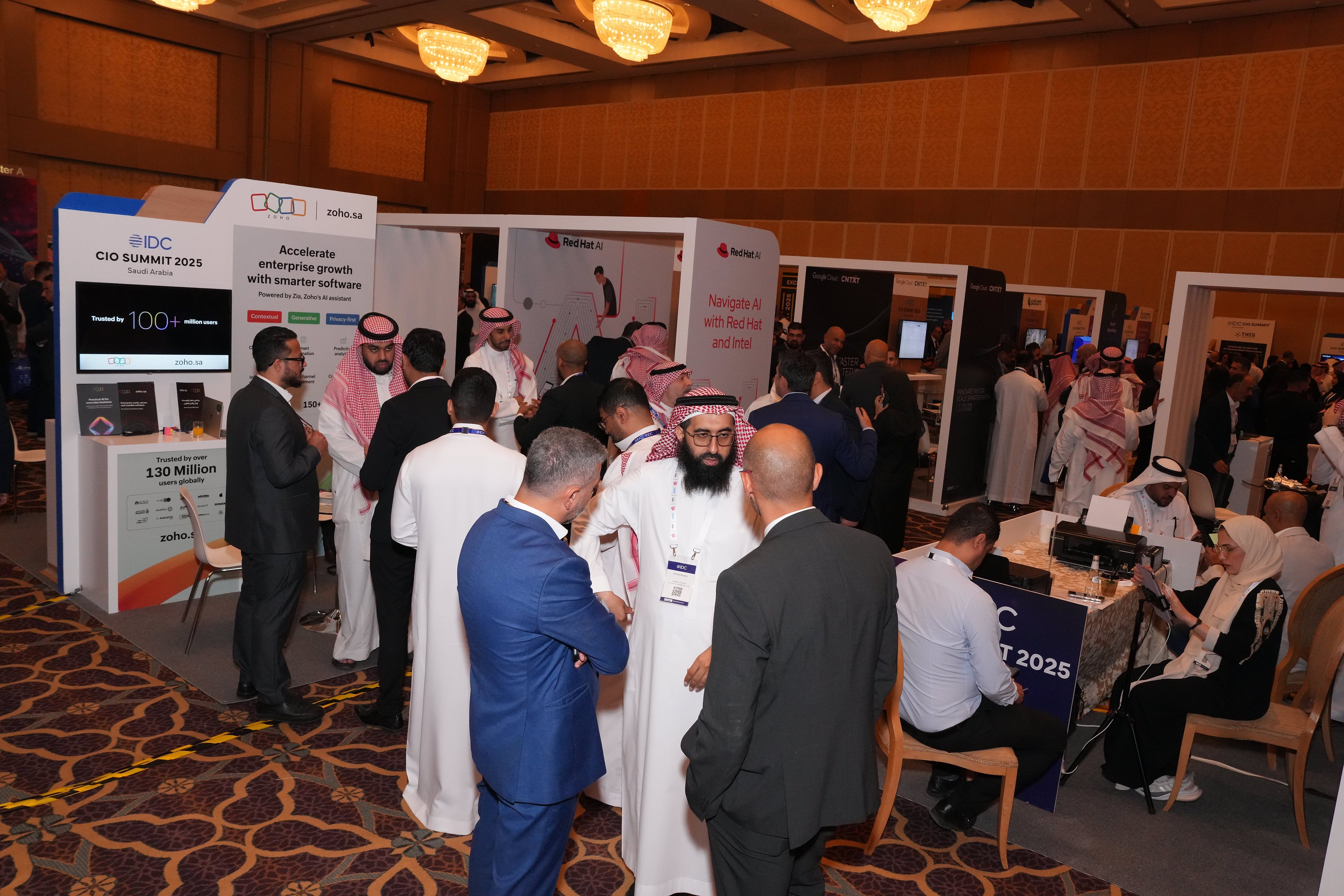
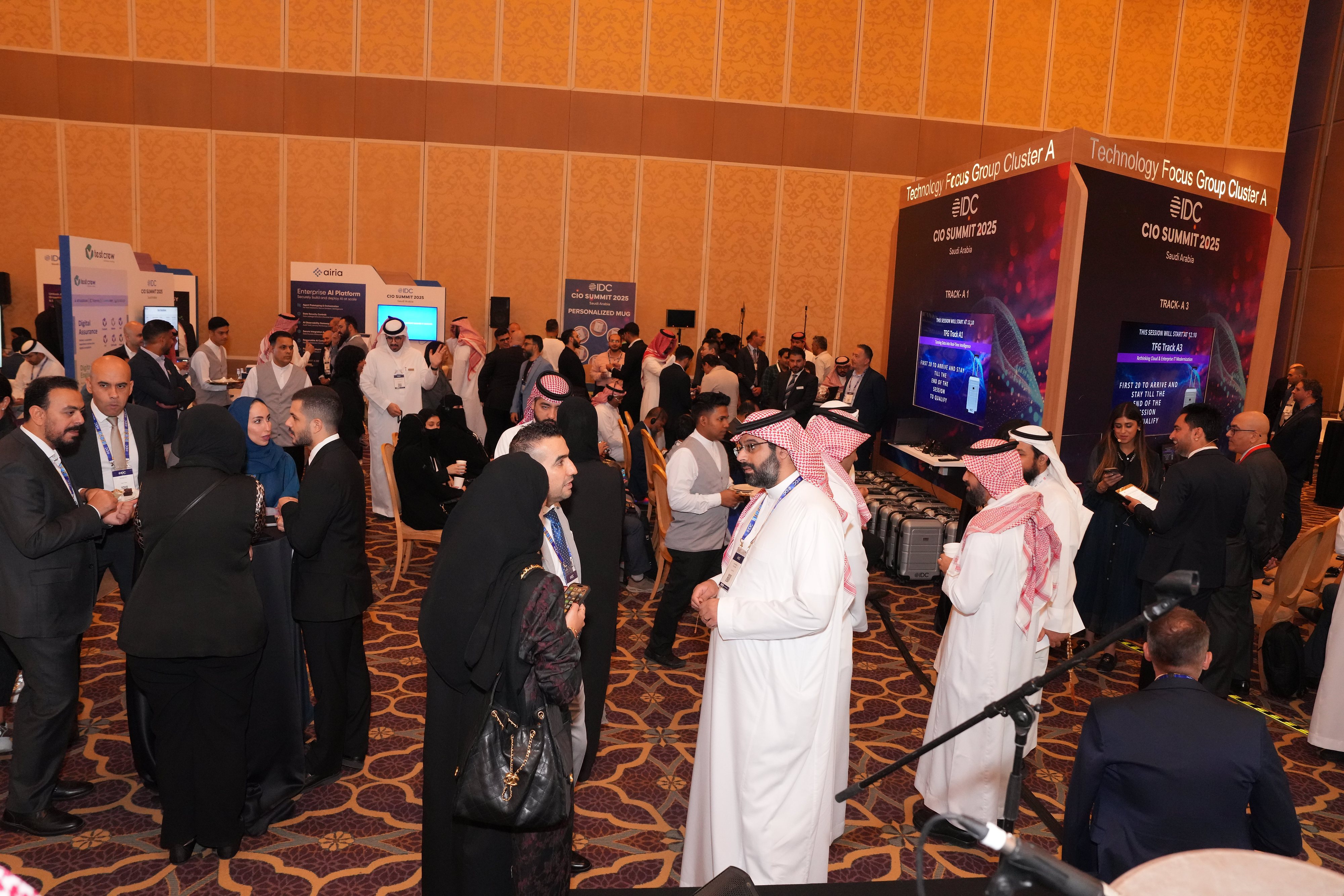
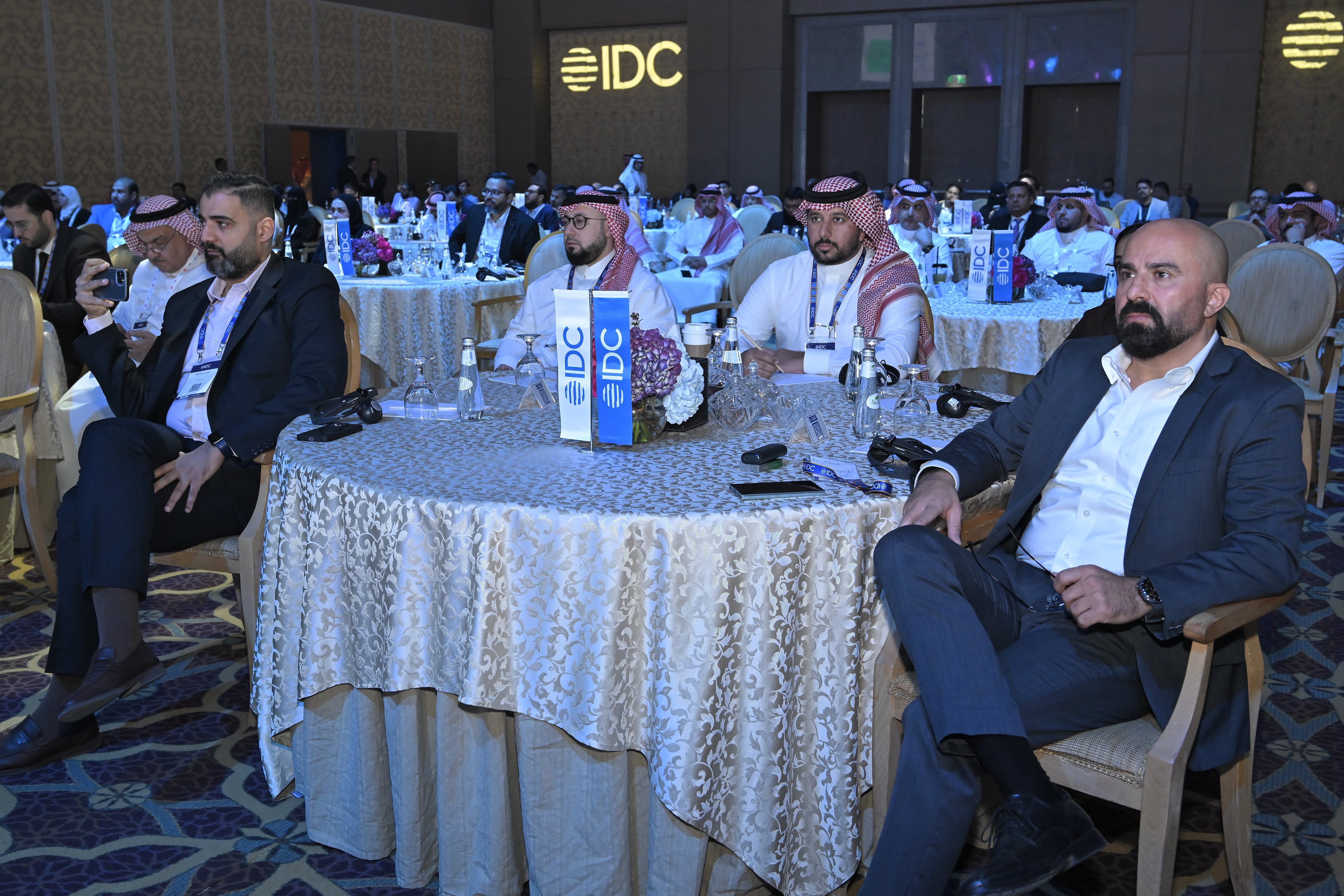
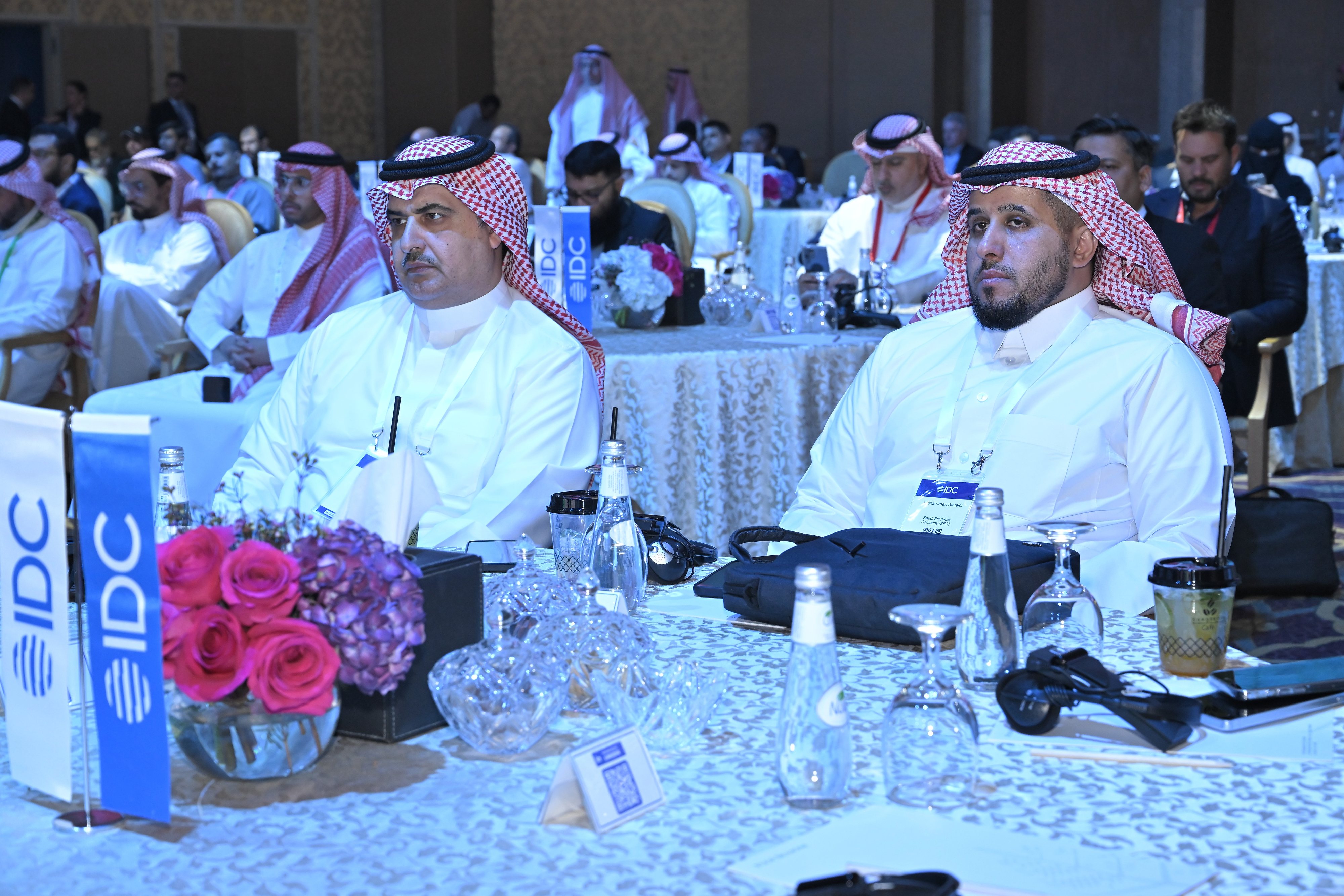
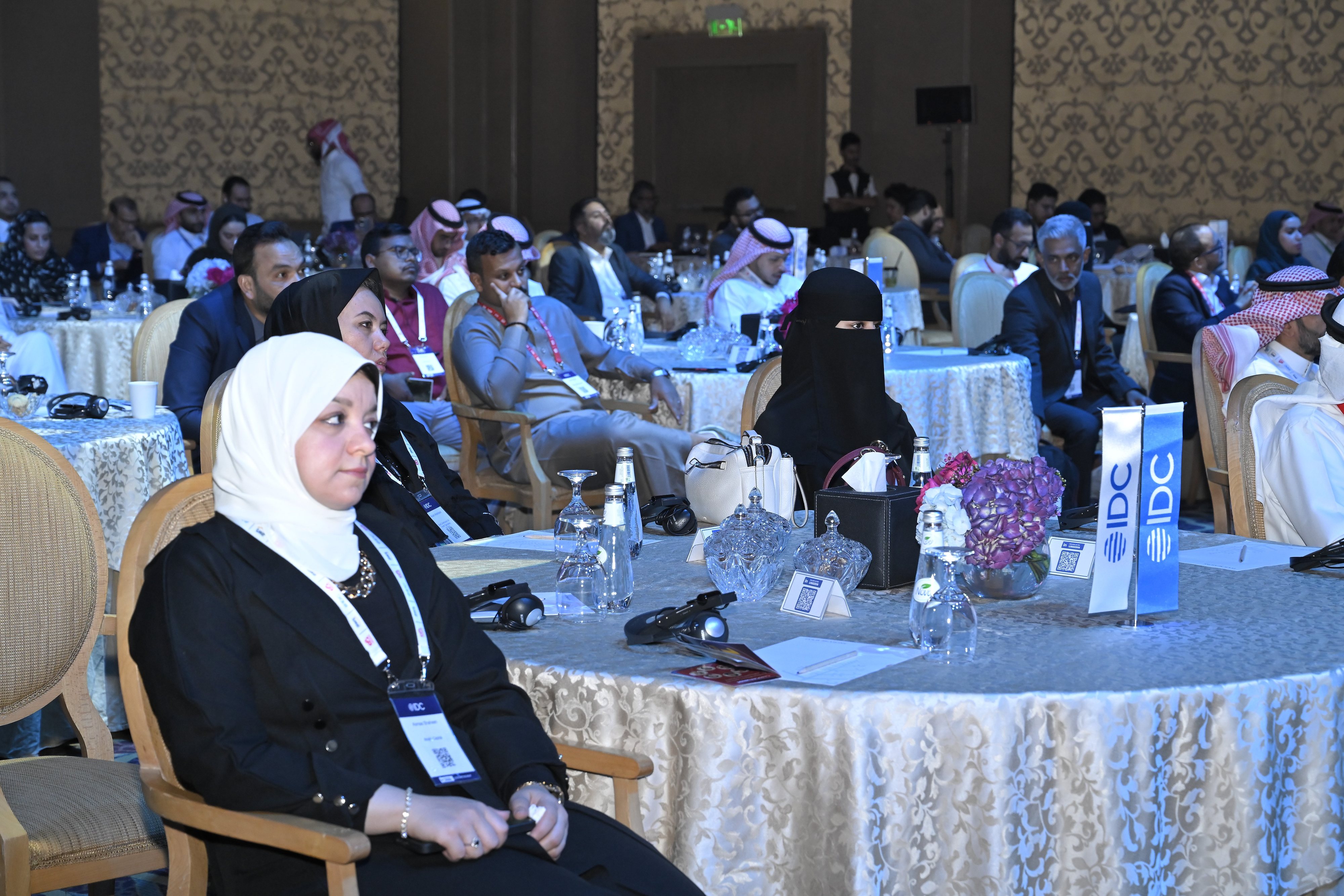
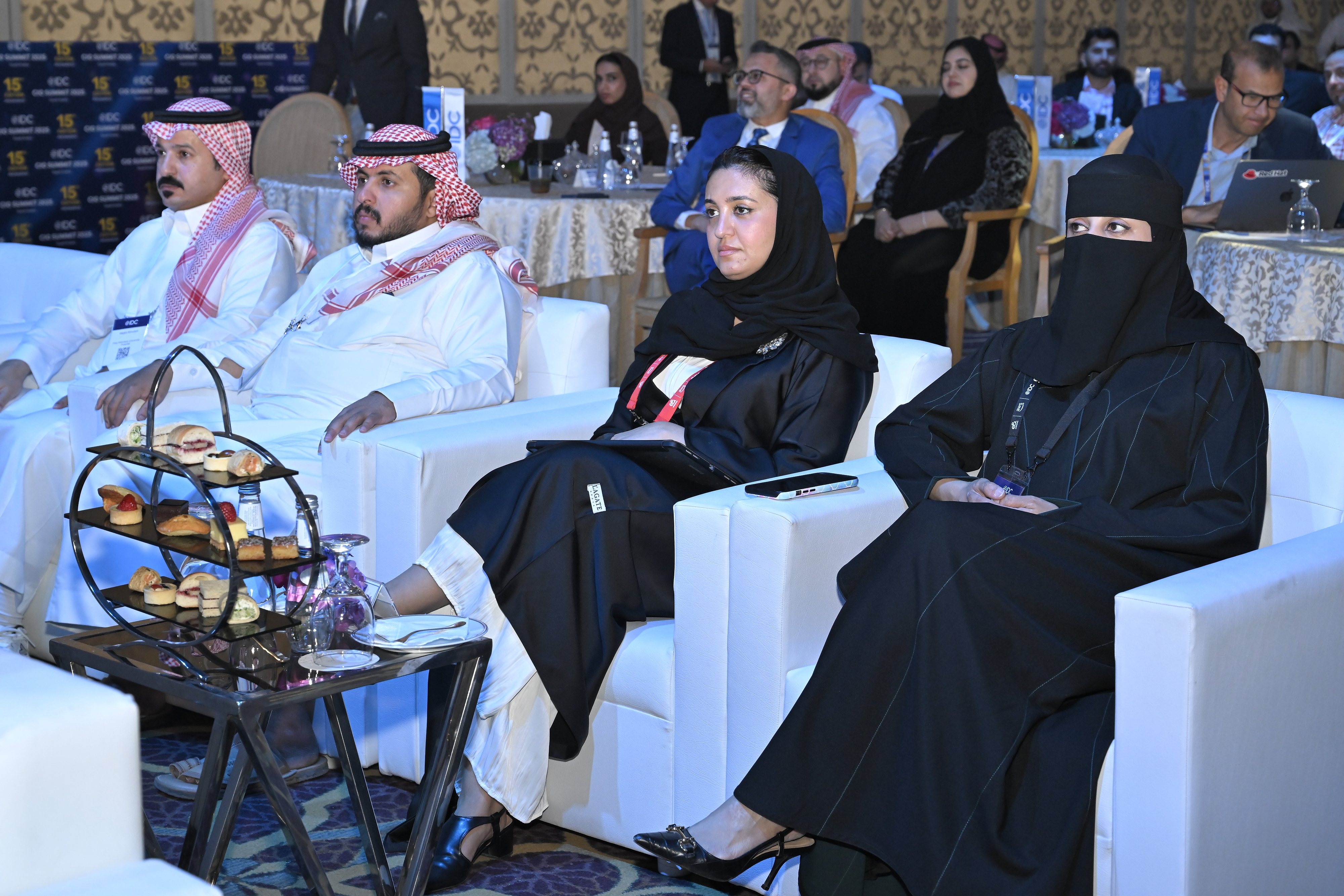
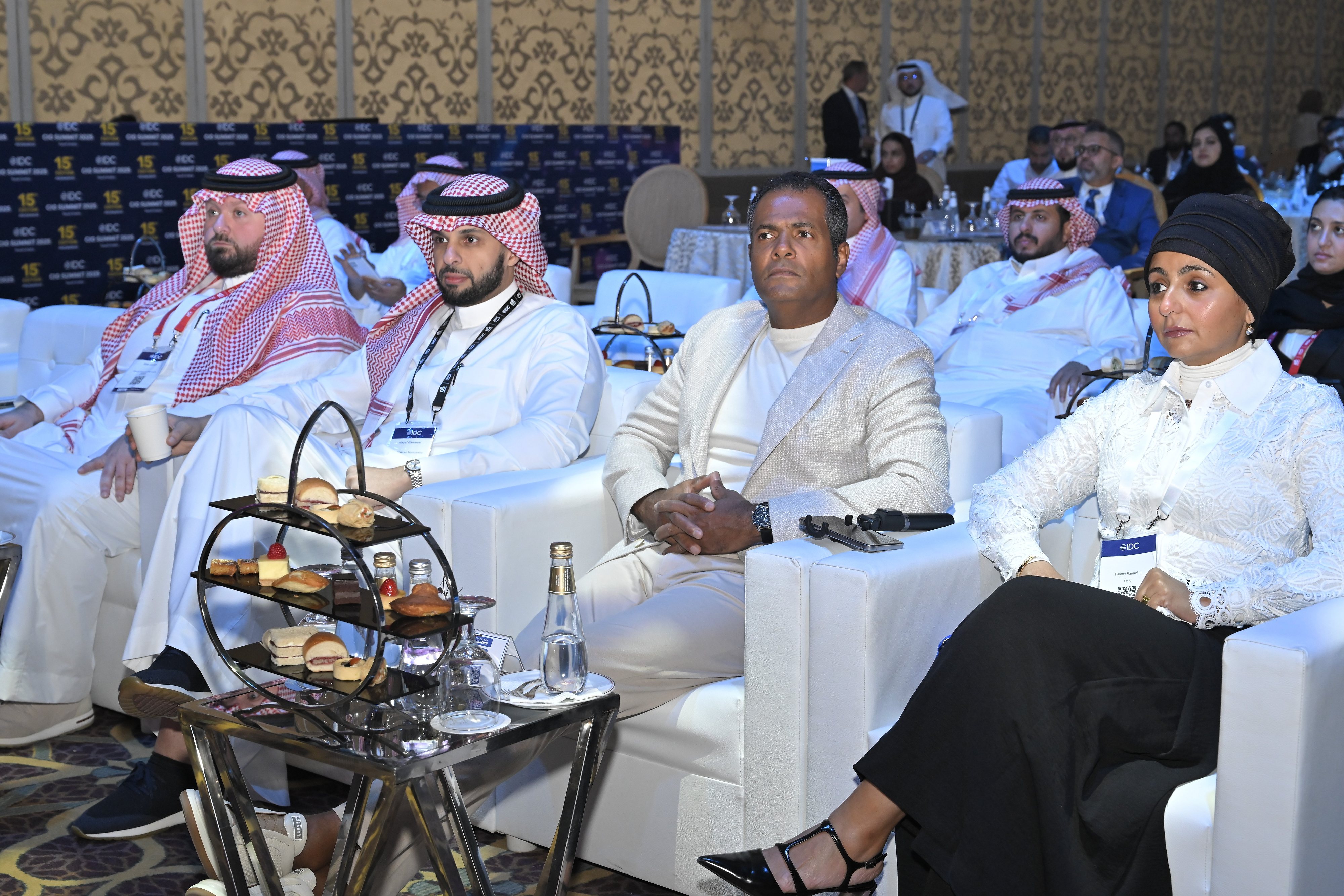
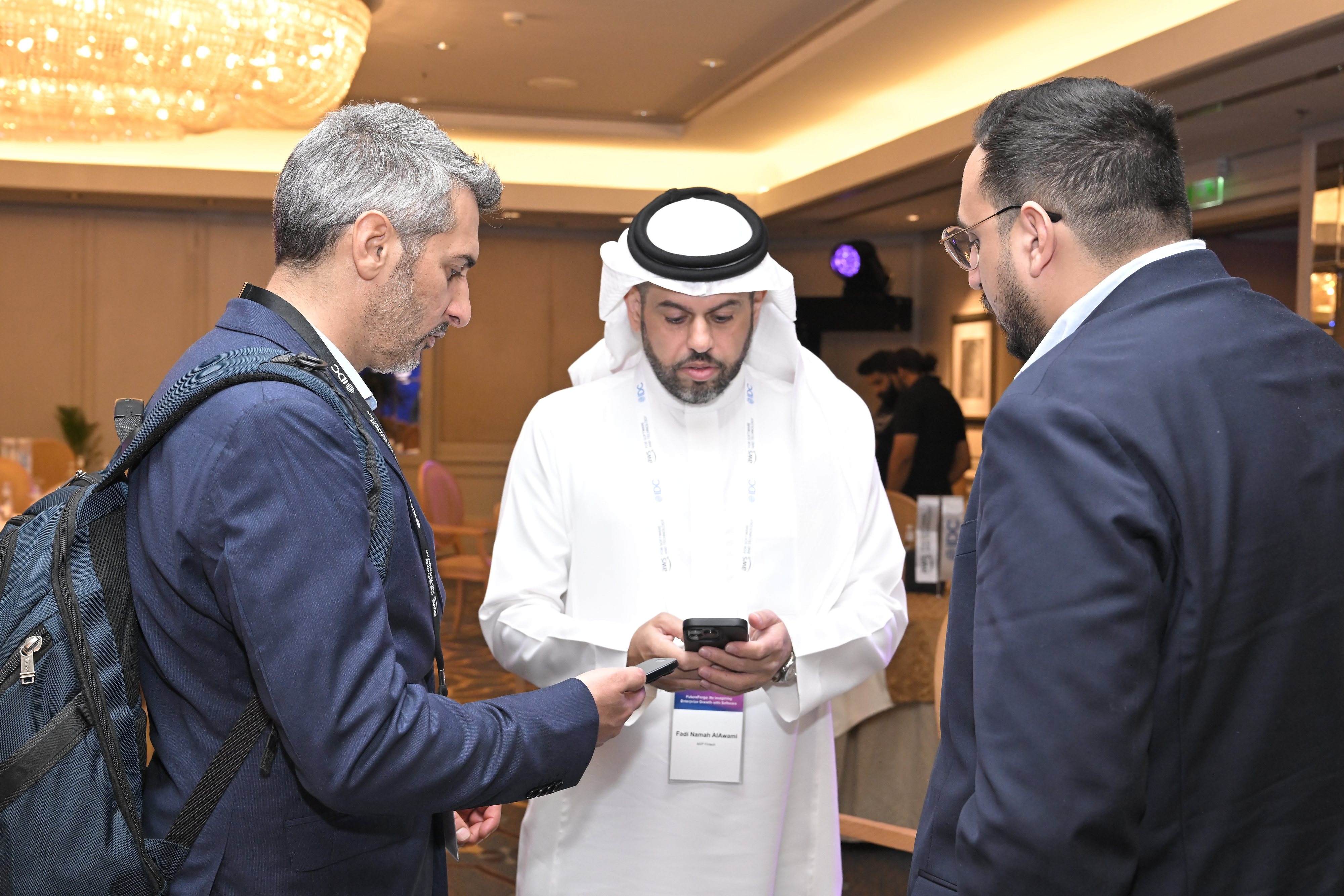
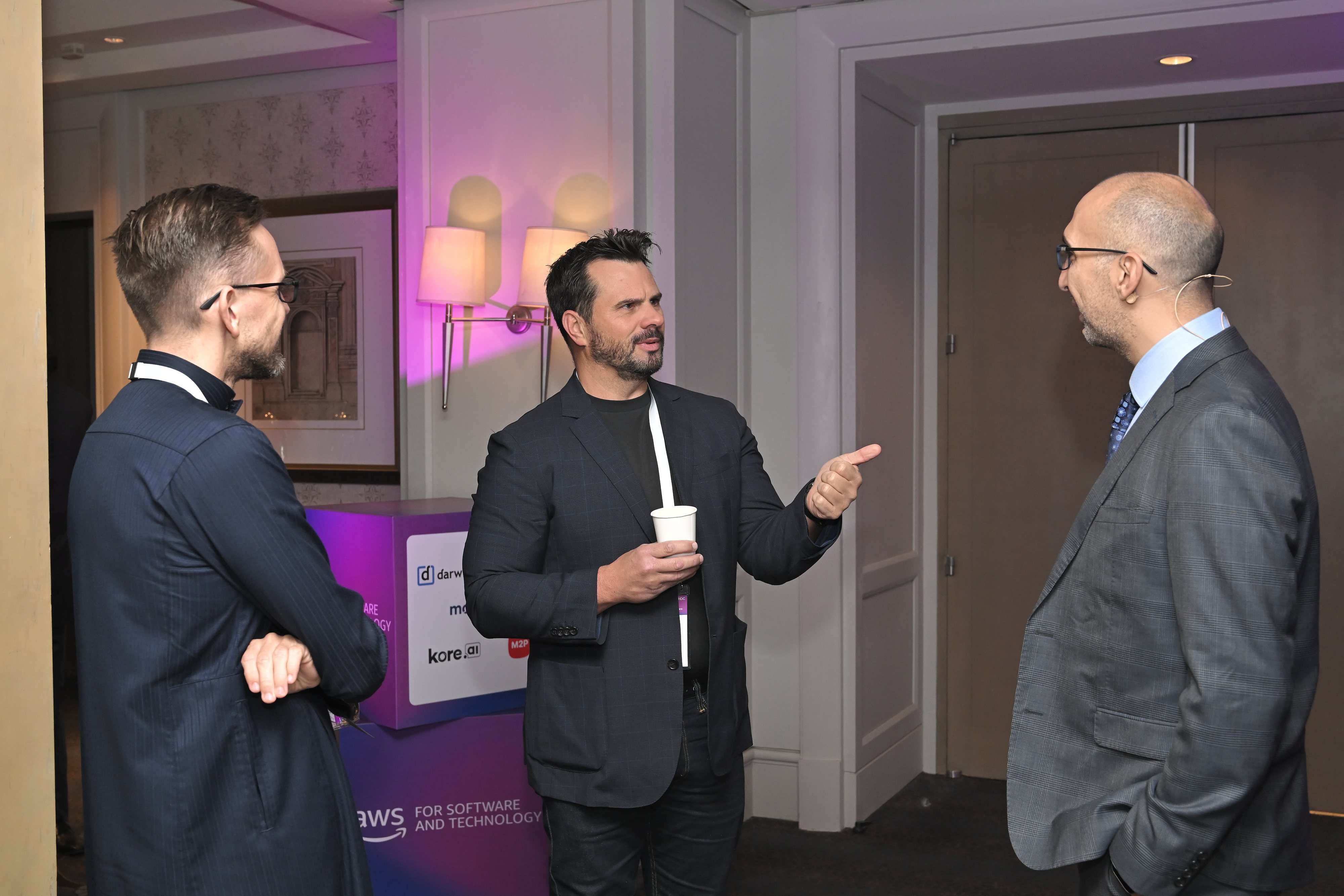
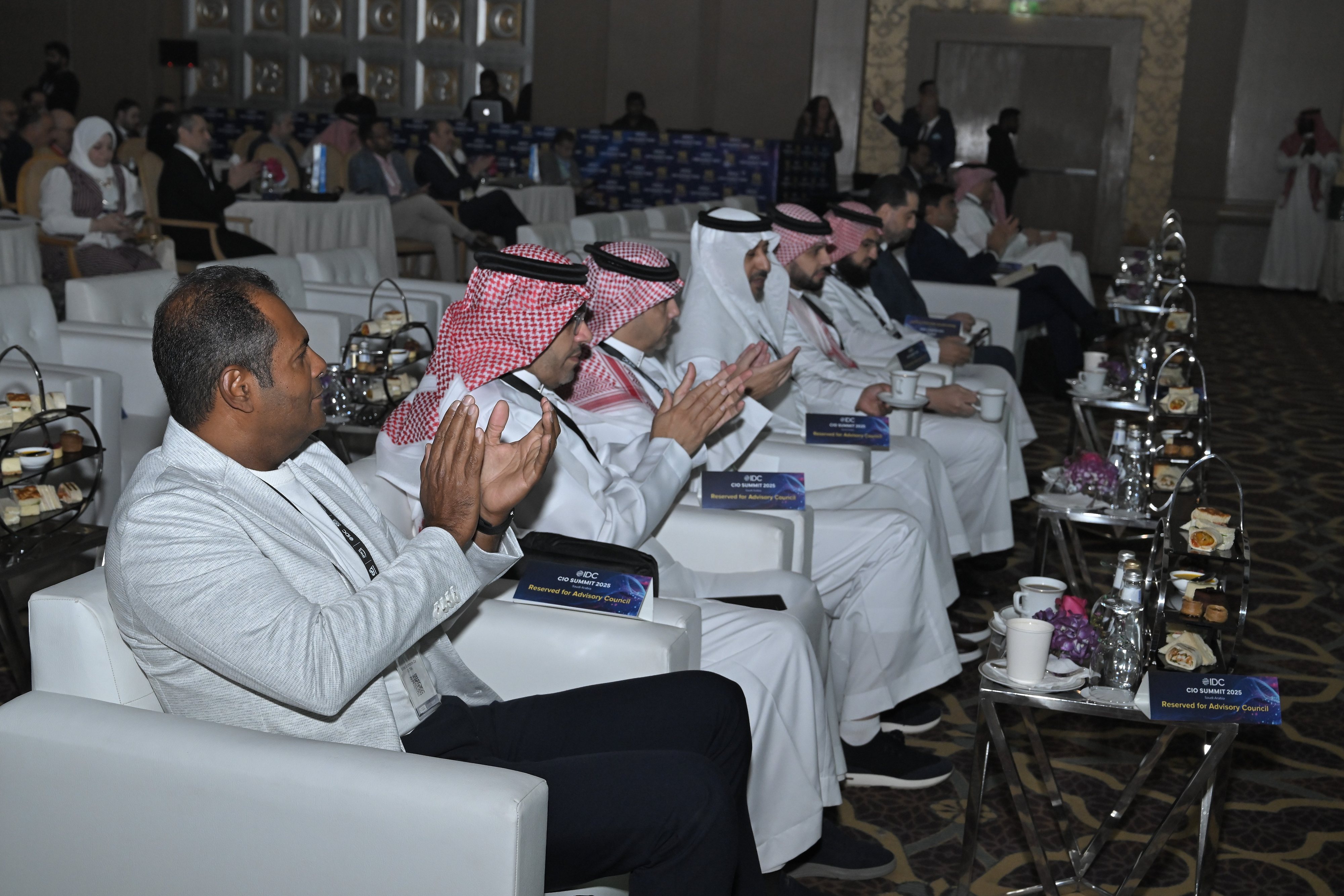
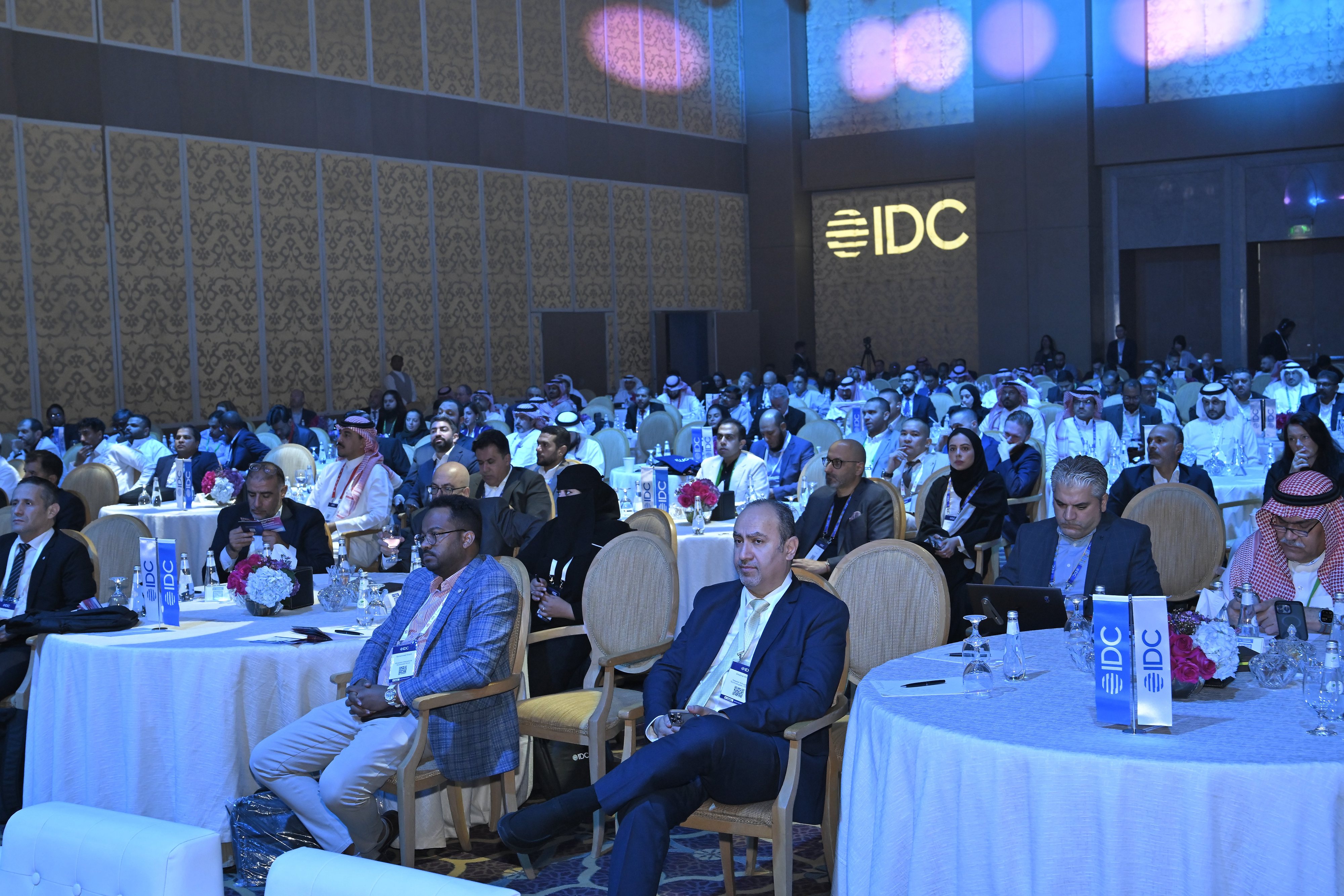
IDC CIO Summit Saudi Arabia 2025 – Gallery
Hosted By
Ayush Mittal
Head of Sales for Data, Analytics and AI services, Middle East, Wipro
Khalid El Hasumi
Partner Development Manager, Google Cloud
Harish Dunakhe
Senior Research Director, Software & Cloud (META), IDC
Most enterprises have run the pilots — now comes the hard part. This session explores how forward-thinking organizations are moving beyond experimentation to operationalize cloud and agentic AI at scale, building the governance, architecture, and organizational resilience needed to make AI a durable driver of enterprise transformation.
Ayush Mittal
Head of Sales for Data, Analytics and AI services, Middle East, Wipro
Data is the fuel for enterprise transformation, but the future belongs to organizations that can make that data act. This session explores how Google Cloud’s Agentic Data Cloud, unified “Chip-to-AI” platforms, and secure Data Mesh architectures are evolving from passive repositories into foundations for autonomous AI agents. Learn how to securely scale data intelligence across subsidiaries and partners, simplify agentic AI adoption, and empower AI agents to drive faster, smarter decisions—all without moving your data. We will dive into how enterprises can leverage the Gemini Enterprise Agent Platform to rapidly build, securely scale, and continuously govern a fleet of data-grounded agents across the enterprise.
Hassan Ahmad
Data Analytics & AI – Practise CE Lead, Google Cloud
This session will explore how enterprises are leveraging Physical AI and closed-loop digital twins to create smarter, connected operations. The discussion will also highlight the evolution of the AI-led Intelligent Enterprise through the use of Predictive, Generative, and Agentic AI to enable autonomous operations and transform key business functions including maintenance, inspection, capital projects, and turnaround management.
Jiji Vijayan
Engineering Sales Leader, Wipro
As enterprises accelerate toward converged operations, collaboration between CIOs and COOs has become critical to unlocking the full value of data, AI, and automation. This interactive discussion will explore the key challenges and opportunities shaping the modern enterprise — from data integration, governance, and OT security to AI adoption, operational ROI, and bridging the gap between IT and plant operations. Industry leaders will share perspectives on investment priorities, organizational readiness, and the future of intelligent, connected operations.
Prajeet Mewar
Vice President – Energy, Manufacturing and Resources, Wipro
Harish Dunakhe
Senior Research Director, Software & Cloud (META), IDC
Hassan Ahmad
Data Analytics & AI – Practise CE Lead, Google Cloud
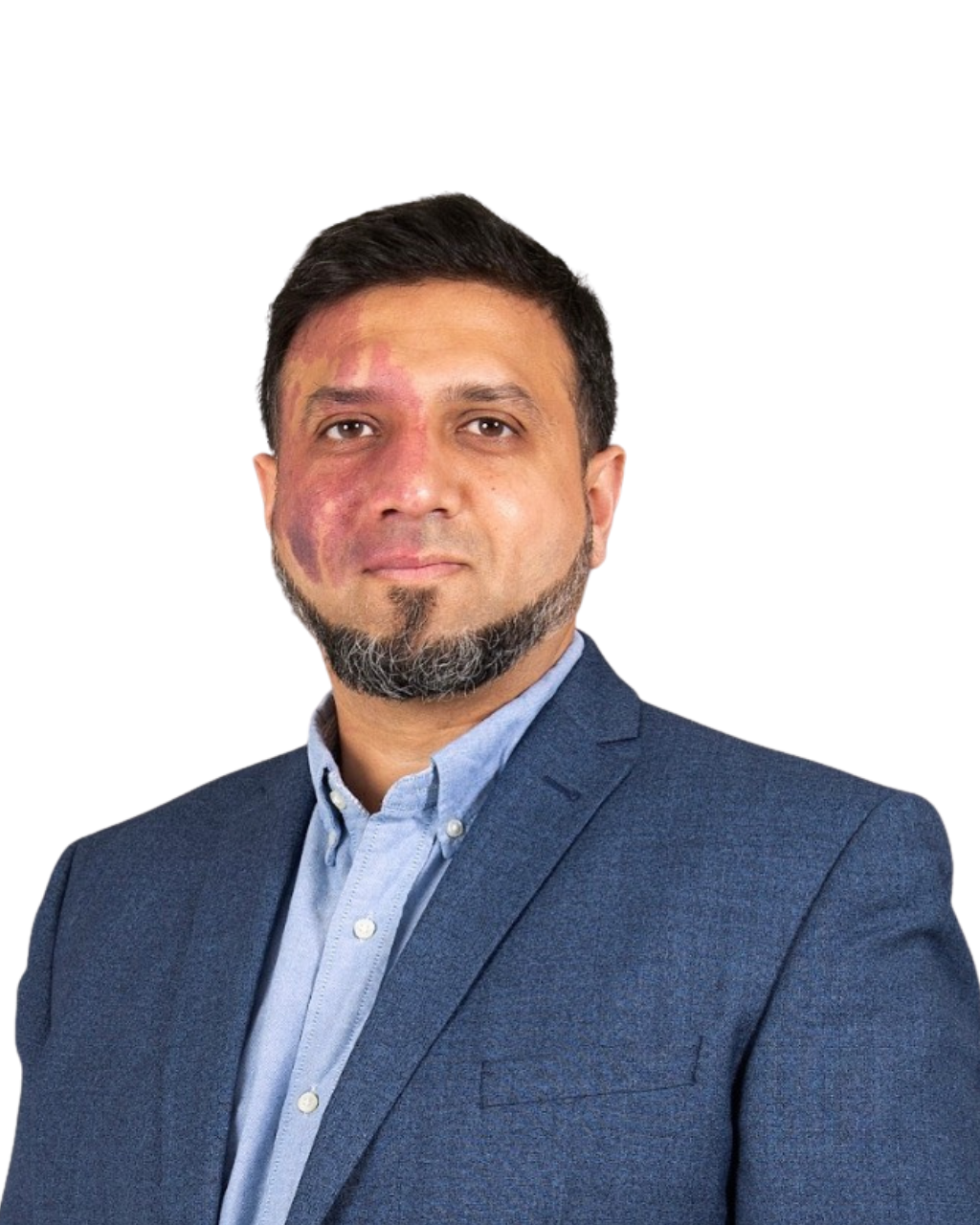
Harish Dunakhe leads IDC’s research & advisory practice for the software program in the Middle East, Africa, and Turkey (META) region.

He is responsible for a team of research analysts and manages the delivery of insights in IDC’s software program and syndicated research. Harish and his team have expertise in studying technology trends to provide our clients with thought leadership and actionable insights. He is based in Dubai.
Harish has a strong understanding of leveraging technologies to solve business problems in the public sector, travel & transportation, hospitality, IT, and retail. He has significant knowledge of emerging technologies such as blockchain, RPA, artificial intelligence, and cloud. He works with clients to understand the intricacies, opportunities, and challenges involved in their technology transformation journeys.
Harish brings more than 17 years of experience working with leading system integrators and other technology companies across the Middle East, South Asia, and India. Prior to joining IDC, he held senior roles spanning technology sales strategy, program governance, and large account business planning at Global MNCs such as Wipro, DXC Technology, and Sonata Software.
As enterprises accelerate toward converged operations, collaboration between CIOs and COOs has become critical to unlocking the full value of data, AI, and automation. This interactive discussion will explore the key challenges and opportunities shaping the modern enterprise — from data integration, governance, and OT security to AI adoption, operational ROI, and bridging the gap between IT and plant operations. Industry leaders will share perspectives on investment priorities, organizational readiness, and the future of intelligent, connected operations.
Most enterprises have run the pilots — now comes the hard part. This session explores how forward-thinking organizations are moving beyond experimentation to operationalize cloud and agentic AI at scale, building the governance, architecture, and organizational resilience needed to make AI a durable driver of enterprise transformation.
As enterprises accelerate toward converged operations, collaboration between CIOs and COOs has become critical to unlocking the full value of data, AI, and automation. This interactive discussion will explore the key challenges and opportunities shaping the modern enterprise — from data integration, governance, and OT security to AI adoption, operational ROI, and bridging the gap between IT and plant operations. Industry leaders will share perspectives on investment priorities, organizational readiness, and the future of intelligent, connected operations.
Data is the fuel for enterprise transformation, but the future belongs to organizations that can make that data act. This session explores how Google Cloud’s Agentic Data Cloud, unified “Chip-to-AI” platforms, and secure Data Mesh architectures are evolving from passive repositories into foundations for autonomous AI agents. Learn how to securely scale data intelligence across subsidiaries and partners, simplify agentic AI adoption, and empower AI agents to drive faster, smarter decisions—all without moving your data. We will dive into how enterprises can leverage the Gemini Enterprise Agent Platform to rapidly build, securely scale, and continuously govern a fleet of data-grounded agents across the enterprise.
This session will explore how enterprises are leveraging Physical AI and closed-loop digital twins to create smarter, connected operations. The discussion will also highlight the evolution of the AI-led Intelligent Enterprise through the use of Predictive, Generative, and Agentic AI to enable autonomous operations and transform key business functions including maintenance, inspection, capital projects, and turnaround management.
Al Maha Ballroom
Kempinski Al Othman Hotel Al Khobar
ص ب 840، طريق الملك سعود, Al Qashlah, Dammam 31952, Saudi Arabia
CISOs have never had an easy job, but right now the pressure is particularly acute. Regional tensions, service disruptions, and shifting working patterns are stress-testing business continuity in real time, and cybercriminals are moving fast to exploit chaos. The challenge is not purely technical — security leaders must safeguard systems and maintain resilience while managing their own stress along the way. But clarity, not alarm, is what this moment demands. The leaders who navigate disruption most effectively resist fearmongering and return to fundamentals.
Drawing from the Pandemic Playbook
The early months of 2020 delivered one of the largest real-world stress tests organisations have faced. As workforces shifted overnight, the traditional network perimeter evaporated. What followed was a shift toward identity-centric security — rethinking how access is granted, privileges managed, and suspicious activity detected. The lesson is simple: resilience now depends on identity, not location. Where employees work from anywhere and attackers can impersonate legitimate users, protecting identities is the single most important line of defence.
Identity Is the New Perimeter
Disruption creates ideal conditions for cybercriminals because people act quickly and verify less. Social engineering remains the most effective entry point, and the goal is usually the same: obtain valid credentials. Once attackers hold a legitimate identity, their activity can look indistinguishable from a real employee’s. Strong MFA is one of the most effective defences — the Microsoft Digital Defense Report finds it can block more than 99% of automated account compromise attacks. But MFA alone is not enough. Enforcing least-privilege access and replacing standing admin privileges with just-in-time access dramatically reduces the blast radius if an account is compromised. Most CISOs already have these capabilities within existing identity providers; the priority is configuring and using them consistently.
Quick Wins That Strengthen Defence
Employee awareness is a critical first layer. Trained professionals still make mistakes under pressure, especially when attackers exploit urgency. Reminders about brand impersonation, and verifying official channels before sharing credentials, stop many attacks from gaining traction. Equally important is clear communication with leadership: boards need calm, evidence-based updates, not dramatic forecasts. Framing cybersecurity around operational resilience builds confidence when speculation can easily spiral.
The Quiet Strength of Getting the Basics Right
Disruption invites narrative, but most attacks still rely on the same core techniques: phishing, credential theft, privilege escalation, and lateral movement. What changes is not the method, but the intensity. The most effective response is also the least glamorous: recommit to the controls that move the needle. The fundamentals are not a fallback — they are the strategy.

Sponsored By
Saudi Arabia’s Vision 2030 has made digital infrastructure a national priority. Cloud adoption is central to that agenda, enabling enterprises to modernise operations, scale AI initiatives, and compete on a regional and global scale. With public cloud services in Saudi Arabia expected to grow at a 31% CAGR through 2029, nearly tripling the annual market size, cloud has become a strategic priority for enterprises across the Kingdom. Recent regional conflict has further sharpened that conversation.
However, the modernization gap remains a reality in the region.
IDC research shows that 51% of organizations across META continue to rely on legacy applications due to concerns about business disruption. For Saudi organisations, monolithic systems remain a key barrier, driving up migration costs and extending timelines. Many enterprises default to lift-and-shift approaches that accelerate early migration but limit long-term cloud ROI.
This exclusive roundtable discussion, hosted by Sudo in association with IDC, will explore how enterprise leaders in Saudi Arabia can approach cloud migration more strategically assessing readiness, mitigating risk, and aligning cloud investments more closely with business outcomes.
Saudi Arabia has passed the cloud decision; spending and adoption show the debate is settled. The harder question is operational: sovereignty is now less about where data sits and more about who runs it and how. This keynote argues that the operating model that determines whether the Kingdom’s cloud and AI plans hold at production scale.
Shahin Hashim
Associate Research Director (META), IDC
As Saudi Arabian organizations accelerate their digital transformation journeys, the shift from cloud migration to cloud modernization has become mission-critical. This session explores how enterprises can build a robust cloud foundation that drives resilience, delivers measurable ROI, and unlocks the full potential of AI. We will examine the key pillars of a future-ready cloud strategy — from optimizing workloads and governance frameworks to enabling AI-powered innovation at scale. Drawing on real-world insights, attendees will leave with a clear roadmap for turning their cloud investments into a strategic advantage aligned with Saudi Vision 2030 and the demands of tomorrow’s digital economy.
Hameedullah Khan
CEO, SUDO Consultants
With the launch of the AWS KSA Region, Saudi enterprises now have the infrastructure to meet the Kingdom’s evolving regulatory landscape — but compliance and security require more than just local data residency. This panel brings together cloud architects, cybersecurity leaders, and regulatory experts to explore how organizations can align with NCA’s Essential Cybersecurity Controls (ECC), NDMO’s Personal Data Protection Law (PDPL), and SAMA’s cloud security mandates within a sovereign cloud framework. Panelists will examine how the AWS Shared Responsibility Model redefines security ownership for KSA customers, and how global threat intelligence can be harnessed to defend against regional and state-sponsored cyber threats — ensuring the Kingdom’s digital transformation is both agile and secure.
Syed Rehan
Partner Solution Architect – Cybersecurity and AI, AWS
Shahin Hashim
Associate Research Director (META), IDC
Hameedullah Khan
CEO, SUDO Consultants
With the launch of the AWS KSA Region, Saudi enterprises now have the infrastructure to meet the Kingdom’s evolving regulatory landscape — but compliance and security require more than just local data residency. This panel brings together cloud architects, cybersecurity leaders, and regulatory experts to explore how organizations can align with NCA’s Essential Cybersecurity Controls (ECC), NDMO’s Personal Data Protection Law (PDPL), and SAMA’s cloud security mandates within a sovereign cloud framework. Panelists will examine how the AWS Shared Responsibility Model redefines security ownership for KSA customers, and how global threat intelligence can be harnessed to defend against regional and state-sponsored cyber threats — ensuring the Kingdom’s digital transformation is both agile and secure.
Saudi Arabia has passed the cloud decision; spending and adoption show the debate is settled. The harder question is operational: sovereignty is now less about where data sits and more about who runs it and how. This keynote argues that the operating model that determines whether the Kingdom’s cloud and AI plans hold at production scale.
Hameedullah Khan is the CEO of SUDO Consultants, where he leads the company’s mission to transform enterprises through cloud innovation, AI-driven solutions, and intelligent automation. With over 20 years of experience, he combines strategic insight and technical expertise to drive large-scale digital transformations, empower organizations to modernize operations, and unlock new growth opportunities across industries. Under his leadership, SUDO has become a trusted partner for businesses seeking cutting-edge, future-ready technology solutions.
With the launch of the AWS KSA Region, Saudi enterprises now have the infrastructure to meet the Kingdom’s evolving regulatory landscape — but compliance and security require more than just local data residency. This panel brings together cloud architects, cybersecurity leaders, and regulatory experts to explore how organizations can align with NCA’s Essential Cybersecurity Controls (ECC), NDMO’s Personal Data Protection Law (PDPL), and SAMA’s cloud security mandates within a sovereign cloud framework. Panelists will examine how the AWS Shared Responsibility Model redefines security ownership for KSA customers, and how global threat intelligence can be harnessed to defend against regional and state-sponsored cyber threats — ensuring the Kingdom’s digital transformation is both agile and secure.
As Saudi Arabian organizations accelerate their digital transformation journeys, the shift from cloud migration to cloud modernization has become mission-critical. This session explores how enterprises can build a robust cloud foundation that drives resilience, delivers measurable ROI, and unlocks the full potential of AI. We will examine the key pillars of a future-ready cloud strategy — from optimizing workloads and governance frameworks to enabling AI-powered innovation at scale. Drawing on real-world insights, attendees will leave with a clear roadmap for turning their cloud investments into a strategic advantage aligned with Saudi Vision 2030 and the demands of tomorrow’s digital economy.
Syed is a Senior AI and Cybersecurity Solution Architect within the global organization at Amazon Web Services (AWS). As a published author on Cybersecurity, Machine Learning, and IoT, he sits at the intersection of emerging technology and modern cloud defense. Syed collaborates globally with CISOs, security architects, and developers to accelerate the adoption of advanced AWS security frameworks. From high-growth startups to critical enterprise infrastructure, he empowers organizations to build, scale, and secure next-generation AI and cybersecurity architectures both globally and across local cloud regions.
SUDO Consultants, the leading AWS Premier Tier Services Partner in UAE and KSA, helps businesses digitally transform their operations with the power of the cloud. We help you leverage the full potential of the cloud to streamline and automate your business processes, reduce operational costs, and gain a competitive edge.
SUDO Consultants, headquartered in Dubai and operating a regional office in Riyadh, supports clients across the US, Asia Pacific, Europe, the Middle East, and Africa. As an AWS Premier Tier Partner, we help you build, migrate, and manage applications on AWS. We also enable data driven decision making by integrating advanced data platforms, analytics, and AI solutions on AWS.

Hosted By
Stuart Bulley
Managing Director, Central Europe & Growth Markets, Couchbase
By 2029, one billion AI agents will reshape the global economy, and Saudi Arabia is racing to be among the leaders of the AI economy. This session examines agentic AI adoption trends in the Kingdom, the organizational and data challenges IT leaders face, and the critical gaps in data maturity hindering AI value delivery. Drawing on IDC research, we explore how AI-ready data platforms, supported by strategic partner ecosystems, enable enterprises to move from ambition to impact, and what it takes to align use case selection with a platform-led approach to AI innovation.
Melih Murat
Associate Research Director, Artificial Intelligence (META), IDC
This session explores how modern data platforms are enabling organizations across Saudi Arabia to accelerate AI-driven transformation and unlock greater business value. As enterprises embrace digital innovation under Vision 2030, the ability to unify, manage, and analyze large volumes of data has become critical for driving intelligent decision-making, operational efficiency, and customer-centric experiences.
The discussion will highlight how scalable cloud-based architectures, real-time analytics, and integrated data ecosystems are helping organizations build strong AI foundations while overcoming challenges related to data silos, governance, security, and scalability. Attendees will gain insights into the role of modern data platforms in supporting advanced AI use cases, improving agility, and enabling sustainable innovation across industries.
Mahmoud Younes
Senior Solutions Engineer, Couchbase
As Saudi Arabia accelerates its digital transformation journey, organizations are increasingly looking to harness scalable, secure, and locally supported cloud capabilities to drive innovation. This session will explore how the AWS Region in KSA, combined with AWS Launch Services and a strong partner ecosystem, is enabling businesses to innovate faster, modernize operations, and unlock new opportunities across industries.
Discover how AWS and its ecosystem are supporting enterprises in building future-ready digital foundations aligned with the Kingdom’s Vision 2030 ambitions.
Faisal Banaeamah
Senior Partner Solutions Architect, MENAT, AWS
Saudi Arabia’s enterprises are racing to become AI-first — yet many are discovering that their data foundations are not yet AI-ready. This panel session extends IDC’s infobrief, “Building the AI-Ready Data Foundation in Saudi Arabia: The Path to Unlocking Opportunities of the Agent Economy“, bringing the research to life through a structured fireside chat with experts from IDC, Couchbase, and AWS.
Melih Murat
Associate Research Director, Artificial Intelligence (META), IDC
Stuart Bulley
Managing Director, Central Europe & Growth Markets, Couchbase
Mahmoud Younes
Senior Solutions Engineer, Couchbase
Faisal Banaeamah
Senior Partner Solutions Architect, MENAT, AWS
In his role as associate research director for IT services and software across the Middle East, Turkey, and Africa (META), Melih drives IDC’s regional research and consulting engagements in the areas of IT services, Cloud, artificial intelligence (AI), and intelligent automation.
He first joined IDC in 2012 as a senior research analyst located out of IDC’s Istanbul office, with various responsibilities for the firm’s IT services, cloud computing, software, and telecom domains — both in Turkey and across the wider META region. Between 2016 and 2021, Melih headed the international marketing and investor relations practice at P.I. Works, a global automation and AI software vendor that serves telecom operators.
Now back at IDC, Melih is leveraging his vast experience in the IT services, cloud, software, and telecommunications domains to advise clients on go-to-market strategies, technology marketing and promotion activities, and market trends analysis. He is also driving a wide variety of research and consulting projects across the META region.
Melih has also previously served as enterprise channel and marketing manager at Nortel Turkey and as business development and strategy manager at Netaş, one of the leading systems integrators in Turkey and a former Nortel subsidiary. He possesses a bachelor’s degree in electrical engineering and received his MBA from Esslingen University of Applied Sciences in Germany. He has worked as a business development specialist at HP and wrote his MBA thesis for the company, covering European retail channel trends and winning strategies for channel businesses.
Saudi Arabia’s enterprises are racing to become AI-first — yet many are discovering that their data foundations are not yet AI-ready. This panel session extends IDC’s infobrief, “Building the AI-Ready Data Foundation in Saudi Arabia: The Path to Unlocking Opportunities of the Agent Economy“, bringing the research to life through a structured fireside chat with experts from IDC, Couchbase, and AWS.
By 2029, one billion AI agents will reshape the global economy, and Saudi Arabia is racing to be among the leaders of the AI economy. This session examines agentic AI adoption trends in the Kingdom, the organizational and data challenges IT leaders face, and the critical gaps in data maturity hindering AI value delivery. Drawing on IDC research, we explore how AI-ready data platforms, supported by strategic partner ecosystems, enable enterprises to move from ambition to impact, and what it takes to align use case selection with a platform-led approach to AI innovation.
Stuart Bulley is Area Vice President for Central Europe, Middle East, Turkey & Africa at Couchbase, leading high-performing teams across some of the company’s fastest-growing markets. He began his career in the Royal Marines Commandos, an experience that shaped his leadership style and resilience. He later held senior roles at Oracle, running direct enterprise sales teams and leading cloud partner ecosystems across EMEA. Known for building strong customer relationships and scaling complex markets, he has consistently delivered standout growth and secured strategic, multi-million-dollar partnerships, helping organizations harness data, cloud and AI to accelerate digital transformation.
Saudi Arabia’s enterprises are racing to become AI-first — yet many are discovering that their data foundations are not yet AI-ready. This panel session extends IDC’s infobrief, “Building the AI-Ready Data Foundation in Saudi Arabia: The Path to Unlocking Opportunities of the Agent Economy“, bringing the research to life through a structured fireside chat with experts from IDC, Couchbase, and AWS.
Mahmoud Younes is a Senior Solutions Engineer at Couchbase with over 15 years of experience in designing and architecting cloud-native and enterprise solutions across multiple industries. Prior to Couchbase, he held various technical sales roles at Oracle and Hewlett Packard, specializing in cloud transformation, solution architecture, and technical enablement.
Saudi Arabia’s enterprises are racing to become AI-first — yet many are discovering that their data foundations are not yet AI-ready. This panel session extends IDC’s infobrief, “Building the AI-Ready Data Foundation in Saudi Arabia: The Path to Unlocking Opportunities of the Agent Economy“, bringing the research to life through a structured fireside chat with experts from IDC, Couchbase, and AWS.
This session explores how modern data platforms are enabling organizations across Saudi Arabia to accelerate AI-driven transformation and unlock greater business value. As enterprises embrace digital innovation under Vision 2030, the ability to unify, manage, and analyze large volumes of data has become critical for driving intelligent decision-making, operational efficiency, and customer-centric experiences.
The discussion will highlight how scalable cloud-based architectures, real-time analytics, and integrated data ecosystems are helping organizations build strong AI foundations while overcoming challenges related to data silos, governance, security, and scalability. Attendees will gain insights into the role of modern data platforms in supporting advanced AI use cases, improving agility, and enabling sustainable innovation across industries.
Faisal Banaeamah is Sr. Partner Solutions Architect at Amazon Web Services (AWS) in MENAT. He enables local strategic partners to build and scale cloud-native and AI-powered solutions that accelerate customers’ digital transformation goals. Previously at Amazon Alexa, he contributed to the Arabic locale launch as Sr. Solutions Architect. In his two decades of experience, he has built and delivered digital transformation strategies specializing in solutions architecture, system integrations, and modernizations. His technical expertise spans cloud computing, integration, databases, NoSQL, APIs, microservices, containers, DevOps, and at-scale solution architecture. Faisal holds B.Sc. and M.Sc. in Software Engineering from KFUPM, Saudi Arabia.
As Saudi Arabia accelerates its digital transformation journey, organizations are increasingly looking to harness scalable, secure, and locally supported cloud capabilities to drive innovation. This session will explore how the AWS Region in KSA, combined with AWS Launch Services and a strong partner ecosystem, is enabling businesses to innovate faster, modernize operations, and unlock new opportunities across industries.
Discover how AWS and its ecosystem are supporting enterprises in building future-ready digital foundations aligned with the Kingdom’s Vision 2030 ambitions.
Saudi Arabia’s enterprises are racing to become AI-first — yet many are discovering that their data foundations are not yet AI-ready. This panel session extends IDC’s infobrief, “Building the AI-Ready Data Foundation in Saudi Arabia: The Path to Unlocking Opportunities of the Agent Economy“, bringing the research to life through a structured fireside chat with experts from IDC, Couchbase, and AWS.
Couchbase, the operational data platform for AI, empowers businesses to succeed by bringing data to life in new ways. Major market-leading companies rely on Couchbase for mission critical operational, analytical, mobile and AI workloads. Built to replace legacy infrastructure and fragmented data services, Couchbase empowers enterprises with a unified platform architected for performance, flexibility and global scale.
With Couchbase, organizations bring their data to life, launching game-changing customer experiences, exploring the limitless potential of AI, and seamlessly extending applications from the cloud to the edge and beyond. Couchbase’s AI-ready technology and enterprise partnership model eliminate complexity and reduce total cost of ownership, enabling teams to stay agile, innovative and secure.
Couchbase believes data should never slow you down, but act as the foundation for your next breakthrough. Discover why Couchbase is trusted to help the world’s biggest players scale, move fast and stay resilient, no matter what’s next on their roadmap.
Eren is a seasoned analyst with 20+ years of experience in the ICT sector. He directs all IDC ICT research and consulting engagements in Türkiye, and all sustainability research and consulting projects across the Middle East, Türkiye, and Africa (META).
Based in Istanbul, Eren has been involved in projects ranging from market forecasts to strategic consulting engagements on market entry, competitive analysis, go-to-market strategies, technology marketing, and end-user studies. Eren’s vast experience in the IT services, cloud, software, and telecommunications domains helps IDC clients understand the impact of technology-enabled, sustainable transformation processes in the context of sustainable digital business strategies, operations, products, and services. In addition to his research and consulting activities, Eren is a speaker at industry events.
Prior to joining IDC in 2017, Eren spent more than a decade in IT industry roles spanning portfolio management, channel and business development, pricing, and software development at companies including Turk Telekom and TAI.
Eren earned a bachelor’s degree in electrical and electronics engineering and an MBA focused on technology road mapping for strategy and innovation, both from Middle East Technical University. He received a master of science in information systems, with a thesis on modeling mobile telecommunications services, from Middle East Technical University. During his academic endeavors, he studied for one semester at the University of Copenhagen, and for one semester at Harvard University. He is pursuing a marketing PhD focused on sustainability.
Hear from Eren Eser as he explores how organizations can move beyond experimentation and turn AI pilots into scalable, enterprise-wide platforms.
Tarik Al-Turki is the Director of Solutions Engineering at Cisco Saudi Arabia, where he leads technical strategy, innovation, and customer engagement across the Kingdom. He holds a Bachelor of Science in Computer Engineering from the University of Central Florida. With deep expertise in digital transformation, networking, and technology management, Tarik empowers organizations to leverage Cisco solutions for business growth and operational excellence. He is recognized for building high-performing teams, driving complex projects, and fostering partnerships that advance Saudi Arabia’s digital infrastructure and Vision 2030 objectives.
Mohammad Wahba is the regional executive leader of Solutions Engineering across Saudi Arabia, Bahrain, and Kuwait at Splunk, a Cisco company. He is a seasoned technology leader with more than 20 years of experience helping enterprises modernize, secure, and scale their digital environments across cloud, data, cybersecurity, and observability domains.
Regional President (Middle East, Africa and South Asia) & CEO (KSA)
Azeus Systems
Read bio
Mr. Alok Kumar is a well-known person in the global business communities for his thought leadership in Digital Economy, Geoeconomics, and Neuroscience; and its use in achieving sustainable business growth. He is expert in setting-up and running business growth centre; efficiently, effectively, and ethically. Mr. Alok has about 20 years of experience in the IT industry and have held several managerial and leadership positions while managing businessin the Middle East, Africa, Europe, South Asia, and North
America. He joined Azeus Systems Limited in 2018 as Director, and now he is the Regional President (Middle East, Africa, and South Asia) & CEO (KSA). Azeus Systems Limited is a CMMI level 5 IT company, listed on the mainboard of Singapore Stock Exchange (SGX), and founded by MIT alumni. Prior to Azeus, was employed with 3i Infotech and Cognizant. For a short period, he was part of the advisory team to the UAE Prime Minister Office (PMO) on the Belt and Road Initiative. He holds a bachelor’s in technology and master’s in business management degree from the top Indian institutes. He had also completed the Global C-Suite Program at the Wharton School. He is an Indian, holding visa from the USA, Schengen, UAE and KSA. He is member of AI for Developing Countries Forum. He is the lifetime member of All India Management Association (AIMA) and was the
founding member of the Young Leaders Council of the AIMA. He loves living a simple life and spending time with people and nature. He likes to speak and write for
major media platforms.
Ata Hallak is AMD’s Country Sales Lead for Saudi Arabia, driving strategic growth across enterprise, government, data center, cloud and AI markets. With more than 18 years of experience in technology and business development, Ata is passionate about helping organizations adopt advanced technologies to accelerate digital transformation and create meaningful business outcomes. He works closely with customers, government stakeholders and technology partners across the Kingdom to advance high-performance computing, AI and cloud innovation. Ata is particularly focused on strengthening AMD’s contribution to Saudi Arabia’s rapidly evolving technology ecosystem and supporting organizations as they build scalable, efficient and future-ready digital infrastructure.
Saudi Arabia is entering a decisive phase of Vision 2030 execution, where digital programs are moving from pilots to platform-scale capabilities across ministries and sectors. Generative AI (GenAI), data platforms, and sovereign cloud are redefining how policies are crafted, services are delivered, and outcomes are measured.
With SDAIA’s continued leadership and a maturing ecosystem of partners, 2026 will focus on safe, responsible, and production-grade AI that improves citizen experience, enhances operational efficiency, and strengthens national competitiveness.
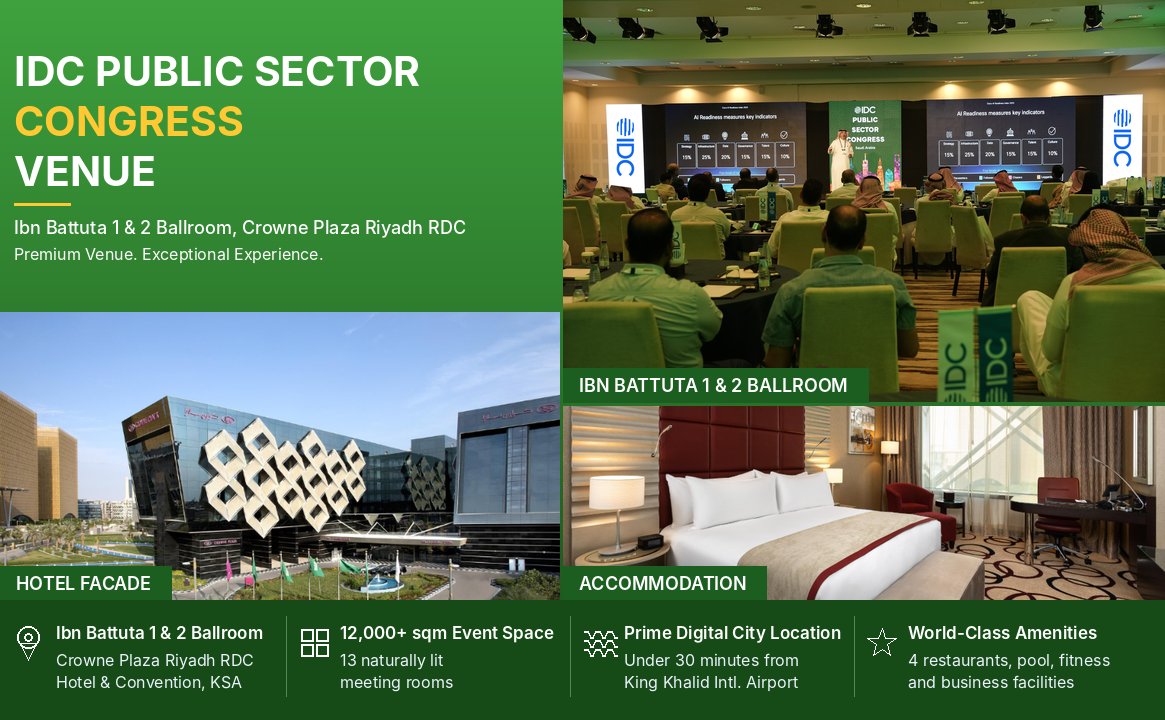
The IDC Public Sector Congress 2026 convenes technology leaders, policymakers, CISOs, CIOs, data leaders, and industry experts to share practical lessons on scaling AI and digital government. The agenda emphasizes AI safety and governance, integrated service platforms, digital sovereignty, cloud modernization, cybersecurity resilience, sustainability-by-design, and workforce readiness.
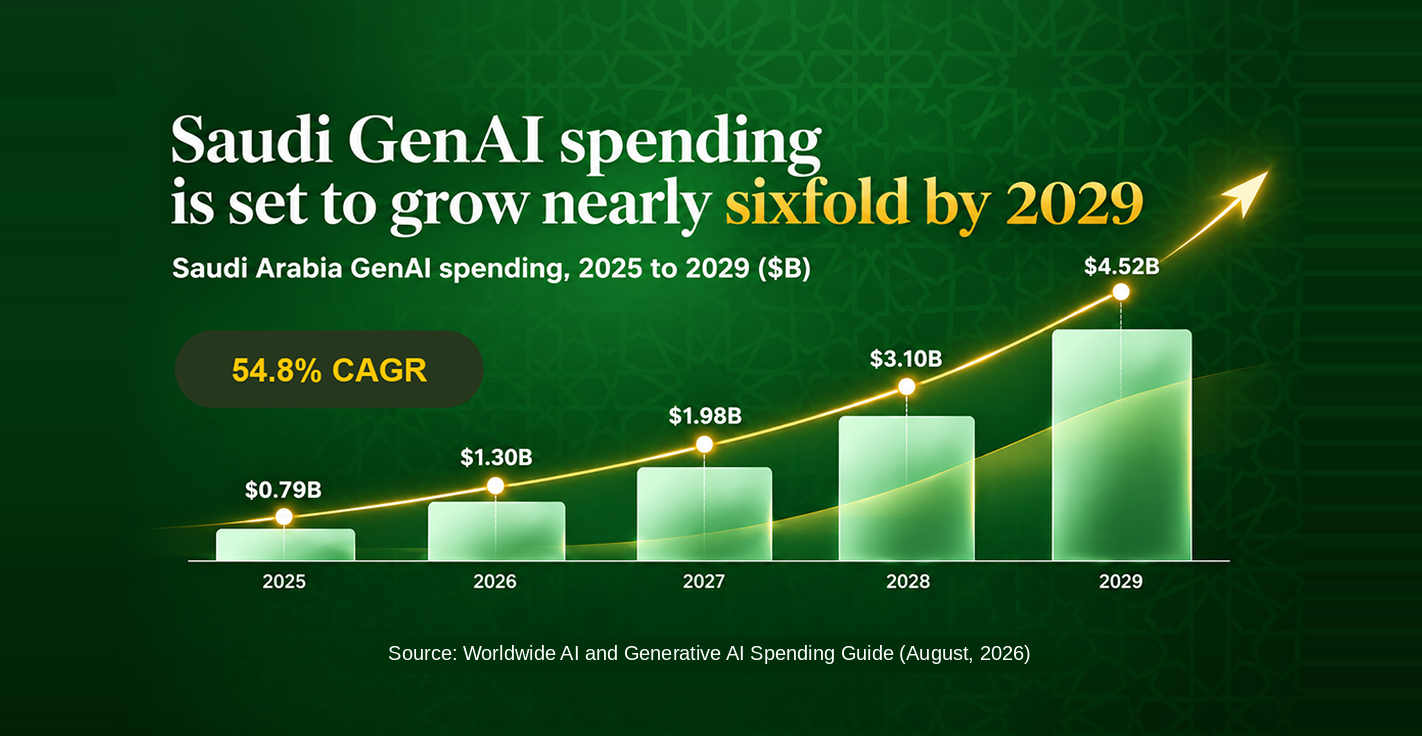
IDC forecasts that GenAI spending in Saudi Arabia, across all industries, will grow from $0.787 billion in 2025 (historical) to $4.519 billion in 2029, a CAGR of 54.8%.
This reflects a shift from early experimentation to scaled deployment as organizations move GenAI into production, supported by national AI investment and sovereign cloud and datacenter build-out.

Hear from Eren Eser as he explores how organizations can move beyond experimentation and turn AI pilots into scalable, enterprise-wide platforms.
Eren Eser | IDC
Associate Research Director, Türkiye
Eren is a seasoned analyst with 20+ years of experience in the ICT sector. He directs all IDC ICT research and consulting engagements in Türkiye, and all sustainability research and consulting projects across the Middle East, Türkiye, and Africa (META).
Based in Istanbul, Eren has been involved in projects ranging from market forecasts to strategic consulting engagements on market entry, competitive analysis, go-to-market strategies, technology marketing, and end-user studies. Eren’s vast experience in the IT services, cloud, software, and telecommunications domains helps IDC clients understand the impact of technology-enabled, sustainable transformation processes in the context of sustainable digital business strategies, operations, products, and services. In addition to his research and consulting activities, Eren is a speaker at industry events.
Prior to joining IDC in 2017, Eren spent more than a decade in IT industry roles spanning portfolio management, channel and business development, pricing, and software development at companies including Turk Telekom and TAI.
Eren earned a bachelor’s degree in electrical and electronics engineering and an MBA focused on technology road mapping for strategy and innovation, both from Middle East Technical University. He received a master of science in information systems, with a thesis on modeling mobile telecommunications services, from Middle East Technical University. During his academic endeavors, he studied for one semester at the University of Copenhagen, and for one semester at Harvard University. He is pursuing a marketing PhD focused on sustainability.
Hear from Eren Eser as he explores how organizations can move beyond experimentation and turn AI pilots into scalable, enterprise-wide platforms.
Tarik Al-Turki is the Director of Solutions Engineering at Cisco Saudi Arabia, where he leads technical strategy, innovation, and customer engagement across the Kingdom. He holds a Bachelor of Science in Computer Engineering from the University of Central Florida. With deep expertise in digital transformation, networking, and technology management, Tarik empowers organizations to leverage Cisco solutions for business growth and operational excellence. He is recognized for building high-performing teams, driving complex projects, and fostering partnerships that advance Saudi Arabia’s digital infrastructure and Vision 2030 objectives.
Mohammad Wahba is the regional executive leader of Solutions Engineering across Saudi Arabia, Bahrain, and Kuwait at Splunk, a Cisco company. He is a seasoned technology leader with more than 20 years of experience helping enterprises modernize, secure, and scale their digital environments across cloud, data, cybersecurity, and observability domains.
Regional President (Middle East, Africa and South Asia) & CEO (KSA)
Azeus Systems
Read bio
Mr. Alok Kumar is a well-known person in the global business communities for his thought leadership in Digital Economy, Geoeconomics, and Neuroscience; and its use in achieving sustainable business growth. He is expert in setting-up and running business growth centre; efficiently, effectively, and ethically. Mr. Alok has about 20 years of experience in the IT industry and have held several managerial and leadership positions while managing businessin the Middle East, Africa, Europe, South Asia, and North
America. He joined Azeus Systems Limited in 2018 as Director, and now he is the Regional President (Middle East, Africa, and South Asia) & CEO (KSA). Azeus Systems Limited is a CMMI level 5 IT company, listed on the mainboard of Singapore Stock Exchange (SGX), and founded by MIT alumni. Prior to Azeus, was employed with 3i Infotech and Cognizant. For a short period, he was part of the advisory team to the UAE Prime Minister Office (PMO) on the Belt and Road Initiative. He holds a bachelor’s in technology and master’s in business management degree from the top Indian institutes. He had also completed the Global C-Suite Program at the Wharton School. He is an Indian, holding visa from the USA, Schengen, UAE and KSA. He is member of AI for Developing Countries Forum. He is the lifetime member of All India Management Association (AIMA) and was the
founding member of the Young Leaders Council of the AIMA. He loves living a simple life and spending time with people and nature. He likes to speak and write for
major media platforms.
Ata Hallak is AMD’s Country Sales Lead for Saudi Arabia, driving strategic growth across enterprise, government, data center, cloud and AI markets. With more than 18 years of experience in technology and business development, Ata is passionate about helping organizations adopt advanced technologies to accelerate digital transformation and create meaningful business outcomes. He works closely with customers, government stakeholders and technology partners across the Kingdom to advance high-performance computing, AI and cloud innovation. Ata is particularly focused on strengthening AMD’s contribution to Saudi Arabia’s rapidly evolving technology ecosystem and supporting organizations as they build scalable, efficient and future-ready digital infrastructure.