AI at Scale: The Next Phase of Enterprise Transformation

AI at Scale: The Next Phase of Enterprise Transformation

Partners

Logo Logo

Overview

AI investment across Asia/Pacific is accelerating rapidly, with IDC forecasting $175 billion in AI and GenAI spending by 2028, as organisations move from pilots to enterprise-scale deployment. For Australian organisations, the next phase of AI adoption is focused on speed, trust, and operational scale. 

At the same time, by 2026, 65% of APEJ organisations will adopt composite AI, combining generative, predictive, prescriptive, and agentic AI to improve reliability and explainability, particularly in regulated industries. 


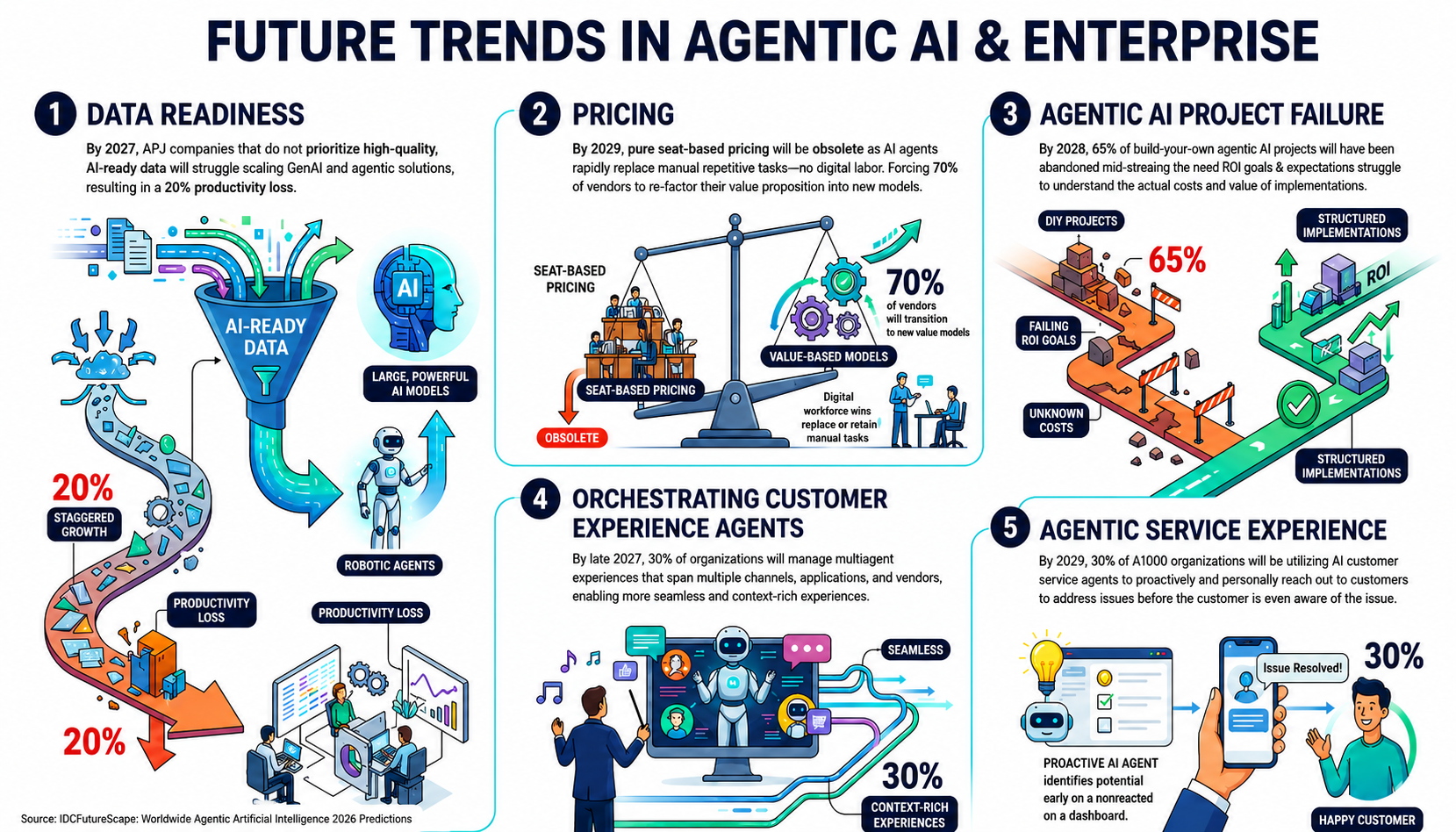
Scaling AI also depends on infrastructure and data readiness. IDC forecasts that organisations that fail to prioritise high-quality, AI-ready data will experience a 20% productivity loss when scaling generative and agentic AI solutions. As a result, Australian enterprises are increasingly investing in hybrid and multicloud platforms, secure data foundations, and governance frameworks to operationalise AI at scale. 


This invitation-only executive roundtable brings together Australian CIOs and senior IT leaders to explore how AI can be industrialised across the enterprise, delivering measurable value while managing risk and compliance. 

What’s in it for You?

  • Exposure to AI Readiness Assessment developed by IDC and commissioned by Lenovo, offering insights to help organisations unlock their full AI potential
  • Access IDC research-backed insights on scaling AI across the enterprise
  • Learn how peers are accelerating time-to-value while maintaining governance and trust
  • Exchange practical approaches to AI evaluation, data readiness, and infrastructure strategy
  • Understand how composite AI and industrialised platforms are shaping the next phase of enterprise transformation
What’s in it for You?

Agenda

AI at Scale: The Next Phase of Enterprise Transformation

One Day Event

8:30 am

Registration, Tea/Coffee and Networking

9:00 am

Welcome Address

James Robertson

James Robertson

Sales Director, Public Sector & Enterprise, Lenovo

9:05 am

Securing the AI-Driven Enterprise: Infrastructure, Data, and Trust

As enterprises accelerate AI adoption, security must evolve beyond traditional perimeters to protect intelligent, data-driven ecosystems. This session explores how organisations can build resilient AI-ready infrastructure, ensure data integrity and governance, and embed trust through explainability, observability, and compliance-by-design.

Linus Lai

Linus Lai

Group Vice President, Research, IDC

9:20 am

CIO Playbook 2026​ The Race for Enterprise AI

AI is no longer measured by efficiency gains alone—it is now a critical driver of business growth, competitive advantage, and reinvention. Today’s CIOs are under increasing pressure to demonstrate how AI delivers tangible business outcomes, moving beyond technical success to real, measurable impact across the organisation.

James Robertson

James Robertson

Sales Director, Public Sector & Enterprise, Lenovo

9:30 am

Open Discussion: Scaling AI for Enterprise Impact: From Strategy to Secure Execution

AI impact requires more than strategy—it demands secure, scalable execution. This discussion session highlights how organisations can align business priorities, modernise data and infrastructure, and embed governance to deliver trusted AI at scale.

Linus Lai

Linus Lai

Group Vice President, Research, IDC

James Robertson

James Robertson

Sales Director, Public Sector & Enterprise, Lenovo

10:05 am

Summary and Close

Linus Lai

Linus Lai

Group Vice President, Research, IDC

Speakers

Linus Lai

Linus Lai

Group Vice President, Research

IDC

Read bio

James Robertson

James Robertson

Sales Director, Public Sector & Enterprise

Lenovo

Read bio

Partners


Venue

Sheraton Grand Sydney Hyde Park

161 Elizabeth St, Sydney NSW 2000, Australia

Located in the Sydney CBD opposite Hyde Park, it offers luxury amenities with comfort for an executive roundtable session.

Knowledge Hub / Vivek Ganesh

Partner Spotlight

Vivek Ganesh
RVP
OutSystems India

Partner Spotlight

The Enterprise AI Reality Check: 6 Predictions for 2026

Based on conversations with several CIOs about their biggest challenges (and hopes) as they look ahead to 2026, I learned some unexpected things along the way. What I learnt challenges much of the prevailing wisdom from AI prognosticators.


Here are 10 surprising, and perhaps controversial, predictions based on these conversations that point to where our industry may truly be headed.


1. AI will increase complexity before it reduces it


What most people aren’t seeing today is the potential for AI to help with the harder stages of the enterprise software development lifecycle. They are overindexing on the build phase, but creating bottlenecks downstream in quality control, security, maintenance, and updates.


2026 will be the year IT teams turn their focus to containing and auditing ungoverned AI-generated apps and agents. Those who use AI to systematically govern their full portfolio will be the first to realize the true potential of AI-driven development.


2. Most AI agents will fail in production


Demos of autonomous AI agents are spectacular. Unfortunately, these demos crumble when they meet an enterprise production environment, and this is likely to get worse soon.Most autonomous agents will need tight orchestration layers and human-in-the-loop controls. In other words, they’ll need new platforms. Autonomy only works in fantasy. It’s orchestration that wins in reality.


3. The enterprise winners will be platforms, not models


The days when every company was racing to build their own LLM have passed. While a handful of big LLMs will dominate the mass market for consumer AI, enterprise leaders will be able to choose among more specialized options and even develop agents that connect to more than one LM for different scenarios. Owning the model matters less than owning the lifecycle.


4. AI will shift value from feature delivery to system integrity


The risks (data leaks, hallucinations, policy violations etc.)of unmanaged AI running rampant without enterprise-grade guardrails are too great to ignore.The ability to ensure correctness at scale becomes more important than the ability to generate software. The market will reward platforms that can ensure AI-driven systems behave as intended, every single time.


5. Shadow AI will become a bigger problem than shadow IT ever was


The fact that non-technical users can generate production code and workflows with LLMs is far more dangerous than unauthorized SaaS adoption. Without any oversight at all, a business user with an unvetted LLM can generate production-level code, create autonomous workflows, or exfiltrate sensitive enterprise data. This risk is insidious, viral, and incalculable.


6. CIOs will spend more on control and governance, not less


AI promises deflation even in the face of inference costs. But the reality will be re-inflation of IT budgets to offset New security layers, New model oversight, New compliance obligations, and New skills


The real opportunity


To recap, the future of software development is one where:


– AI accelerates output

– SaaS and bundled software lose their grip on the enterprise

– Architecture, security, and governance get harder

– Platforms that manage complexity gain relevance

– Enterprise value shifts from code to lifecycle management

– Non-tech companies will manage a growing portfolio of software IP

– The future belongs to platforms that help them bring order to AI-generated chaos.

——会议日程(2026AI峰会)

会议日程

会议日程

——会议日程(2026AI峰会)

One Day Event

1:00 pm

签到及现场交流

2:00 pm

活动开场 & 欢迎致辞

2:05 pm

代理式AI的新纪元

2:20 pm

从数据到智能:AI落地的路径与成功要素

2:40 pm

筑基未来:打造可扩展的智能基础设施

3:00 pm

边云共智:边缘计算驱动实时AI

3:20 pm

AI时代的数据库架构革新

3:40 pm

茶歇 & 自由交流 & 展位参观

4:00 pm

平行论坛

铂金论坛 A

4:00 pm – 4:05 pm

论坛开场抽奖环节

4:05 pm – 4:20 am

面向AI的网络与存储

4:20 pm – 4:35 pm

云与本地:AI算力的战略抉择

4:35 pm – 4:50 pm

算力引擎:GPU·TPU·FPGA驱动AI突破

铂金论坛 B

4:00 pm – 4:05 pm

论坛开场抽奖环节

4:05 pm – 4:20 pm

智创未来:AI软件开发的新篇章

4:20 pm – 4:35 pm

模型全周期智管:MLOps驱动持续创新

4:35 pm – 4:50 pm

打造可信赖的AI应用

4:50 pm

平行论坛

黄金论坛 A

4:50 pm – 5:00 pm

中国网络安全市场趋势与AI安全

5:00 pm – 5:10 pm

数据安全与隐私保护

5:10 pm – 5:20 pm

云安全与零信任

5:20 pm – 5:30 pm

大模型安全与AI安全治理

5:30 pm – 6:00 pm

最终用户高峰对话: 打破孤岛——打造统一的AI战略

黄金论坛 B

4:50 pm – 5:00 pm

数据库的本土化之道

5:00 pm – 5:10 pm

数据库创新的新边疆

5:10 pm – 5:20 pm

数据库安全与合规新标准

5:20 pm – 5:30 pm

AI时代的架构革新

5:30 pm – 6:00 pm

最终用户高峰对话: AI驱动的IT预算——为影响力与投资回报率而投入

6:00 pm

大奖抽奖环节

6:10 pm

展位参观 & 自由交流

6:30 pm

颁奖晚宴

—— 会议日程(2026CIO上海站)

会议日程

会议日程

—— 会议日程(2026CIO上海站)

One Day Event

8:30 am

注册签到及展位参观

9:30 am

平行论坛

专题论坛 A:人工智能与数据

9:30 am – 9:40 am

IDC开场演讲:智能数据驱动企业创新

卢言霞

卢言霞

研究总监, IDC中国

9:40 am – 10:00 am

大模型赋能数据治理与分析

10:00 am – 10:20 am

AI数据资产管理与价值释放

10:20 am – 10:40 am

数据安全与隐私保护的智能化实践

专题论坛 B:人工智能驱动的公共服务转型​

9:30 am – 9:40 am

IDC开场演讲:AI赋能公共服务创新与可持续发展

9:40 am – 10:00 am

智能政务平台与数字治理

10:00 am – 10:20 am

AI助力城市可持续发展

10:20 am – 10:40 am

公共服务人工智能代理的部署和挑战

专题论坛 C:数字创新与基础设施

9:30 am – 9:40 am

IDC开场演讲:数字基础设施驱动创新生态

周震刚

周震刚

中国副总裁, IDC

9:40 am – 10:00 am

云原生与边缘计算赋能工业升级

10:00 am – 10:20 am

智能网络与安全基础设施

10:20 am – 10:40 am

数字孪生与智能运维

专题论坛 D:在智能时代构建具有韧性的金融体系

9:30 am – 9:40 am

开场演讲:智能时代的金融韧性与创新

高飞

高飞

研究总监, IDC中国

9:40 am – 10:00 am

AI驱动的风险管理与合规

10:00 am – 10:20 am

智能金融服务与客户体验升级

10:20 am – 10:40 am

金融数据安全与隐私保护

11:00 am

平行论坛

铂金论坛 A

11:00 am – 11:15 am

生成式AI与企业数据创新

11:15 am – 11:30 am

生成式AI与企业数据创新

11:30 am – 11:45 am

AI驱动的数据质量提升

11:45 am – 12:00 am

数据主权与合规新趋势

12:00 am – 12:20 am

IDC 颁奖典礼

铂金论坛 B

11:00 am – 11:15 am

AI驱动的社会治理新范式

11:15 am – 11:30 am

绿色低碳公共服务实践

11:30 am – 11:45 am

智能医疗与健康服务创新

11:45 am – 12:00 am

AI在教育与社会保障中的应用

12:00 am – 12:20 am

IDC 颁奖典礼

铂金论坛 C

11:00 am – 11:15 am

数字创新生态的构建与协同

11:15 am – 11:30 am

混合云与多云管理创新

11:30 am – 11:45 am

智能医疗与健康服务创新

11:45 am – 12:00 am

AI在教育与社会保障中的应用

12:00 am – 12:20 am

IDC 颁奖典礼

铂金论坛 D

11:00 am – 11:15 am

金融大模型与场景创新

11:15 am – 11:30 am

智能支付与数字货币应用

11:30 am – 11:45 am

金融科技生态协同

11:45 am – 12:00 am

AI赋能金融反欺诈与安全

12:00 am – 12:20 am

IDC 颁奖典礼

12:00 pm

午餐及展位参观

2:00 pm

开场致辞:迈向代理式AI的新纪元

Keynote
2:10 pm

2026中国CIO数字化转型趋势与展望

预计到2030年,人工智能将在全球经济中产生19.9万亿美元的影响,正在重塑经济格局、创造新的收入来源,并重新定义竞争优势。本次会议将基于IDC对中国CIO及关键决策者的广泛调研,提供独特的洞察与分析。会议将深入解析当前及规划中的AI战略与应用路线图,涵盖AI就绪的数据、统一治理、适用且可扩展的基础设施,以及AI人才等关键主题。

武连峰 | IDC

中国副总裁兼首席分析师

Read Bio
武连峰
2:40 pm

企业级AI智能体的落地与创新

3:20 pm

智能生态协同与行业创新

3:40 pm

IDC 颁奖典礼

3:50 pm

数字化解决方案合作伙伴 演讲

4:10 pm

组织变革与人机协同新模式

4:30 pm

生成式AI与场景创新实践

4:50 pm

代理式AI的应用与未来展望

5:10 pm

新一代数字基础设施赋能企业增长

5:30 pm

IDC 颁奖典礼

5:40 pm

晚宴签到

6:00 pm

年度颁奖晚宴

8:00 pm

活动结束

中国CIO峰会

中国CIO峰会

深圳站 | 2026年5月15日
Slide
Slide
Slide

迈向代理式AI的新纪元

当前,中国人工智能市场发展迅猛,已成为AI领域的重要力量。IDC数据显示,2024年中国生成式AI占AI市场投资总规模的18.2%。随着生成式AI技术的快速发展,2029年生成式AI投资占比将达到41.1%,投资规模超450亿美元,五年复合增长率为48.0%。IDC认为,生成式AI正持续深化其在多个垂直领域的应用价值,推动行业自动化与智能化进程迈向新阶段。企业员工可借助生成式AI实时生成结构化业务洞察、自动完成多模态工作报告合成,提升战略决策效率;开发人员能够利用其实现智能代码重构、系统架构辅助设计、自动化漏洞修复,提升研发效能与软件可靠性;在工业、医疗、金融等垂直领域,生成式AI已可协助生成高精度设计仿真方案、辅助临床诊断推理、自动化生成合规风控报告,驱动行业创新与经济效益提升。


2026年IDC中国CIO系列峰会将以“迈向代理式AI的新纪元”为主题,深度解构其演进趋势与企业落地路径。本次峰会将于深圳、上海两地举办,预计汇聚超过1,000位 CIO、技术决策者、国际专家及前瞻型解决方案提供商,共同探索智能体驱动型企业的新范式。

顾问团成员

陈壁环

陈壁环

数据科技部副总经理,联席技术负责人

平安理财

Read Bio

韩方

韩方

安全与隐私部总经理

OPPO广东移动通信有限公司

Read Bio

江碧才

江碧才

科技创新与数智化部副部长

广东省广晟控股集团有限公司

Read Bio

唐恺

唐恺

高级副总裁、CMO

顺丰科技

Read Bio

杨辉

杨辉

数智发展中心总经理

越秀地产

Read Bio

杨鸥 博士

杨鸥 博士

首席技术官

中国海外发展有限公司

Read Bio

张成奇 教授

张成奇 教授

数据及人工智能学系讲座教授 深圳研究院院长,IEEE Fellow, ACS Fellow

香港理工大学

Read Bio

周勇

周勇

CIO

通威股份有限公司

Read Bio

专家观点

聆听思想领袖、前瞻性CIO以及知名演讲嘉宾,如何在中国重新定义技术、领导力与创新。

9:40 am

工业AI驱动的中国制造新范式——从工业软件到工业智能体

本次演讲将深入探讨工业AI驱动下中国制造业的新范式转型,重点分析工业软件向智能体(AI Agent)演进的路径与价值。我们将剖析AI如何赋能研发、生产、运维等核心环节,实现从数据驱动到智能决策,推动智能体与MES、ERP等系统深度融合。演讲还将展望平台化基础设施、智能体规模化落地及其对制造业竞争力的重塑作用。

杜雁泽 | IDC中国

Read Bio

2026 IDC中国工业AI领航者大奖

2026 IDC中国工业AI领航者大奖主要面向工业企业用户,遴选在数字化和智能化转型方面成效显著,能够引领行业方向的优秀企业和项目。大奖已经连续开展多年,遴选表彰了上百家数字化转型领先的工业企业及优秀项目。

  • 征集时间:即日起至3月20日截止
  • 申报主体:工业企业用户;技术供应商可代客户提名参与
  • 公布时间:5月15日 ,2026 IDC中国CIO峰会深圳站

2025年深圳CIO峰会精彩回顾

合作伙伴

分析师洞察

您可以阅读 IDC 分析师、生态合作伙伴及行业用户演讲嘉宾带来的深度文章,从中获取启发。此外,还能深入了解行业专家对最新科技趋势的解读、真实标杆案例的分析,以及引领数字未来发展的前瞻性洞见。

分析师焦点

世界正迎来数字基础设施的关键时刻。人工智能已从实验阶段走向普及,随之而来的是一种新的运营范式——在这种范式下,智能体(agent)而非应用程序成为数字价值创造的主要引擎。这是智能体 AI 时代的曙光,而其成功最重要的前提是:强大、智能且可扩展的基础设施。

Matt Eastwood
| IDC
全球研究高级副总裁
了解更多

AI & Data Summit Malaysia
AI & Data Summit Malaysia
Unlocking the Power of Agentic AI​

13 Aug 2026 Hilton Kuala Lumpur, Malaysia
Slide
Slide
Slide
Slide

AI & Data Summit Malaysia 2026 is Malaysia’s flagship event for business and technology leaders navigating the next phase of the nation’s digital transformation. Bringing together enterprises, policymakers, and innovators, the summit takes place at a pivotal moment as AI adoption accelerates and new regulations reshape how data and AI are governed across industries.

​As global geopolitical dynamics and supply chain shifts redefine technology access and risk, Malaysian organizations are placing growing emphasis on AI sovereignty, ensuring that data, AI models, and digital infrastructure are secure, trusted, and aligned with national and regional requirements. For enterprises, this means rethinking AI strategies to balance innovation with data residency, security, and long-term resilience.

By 2026, more than a third of Malaysian organizations are expected to use synthetic data to advance AI development while protecting sensitive and regulated information. At the same time, industries such as financial services, healthcare, manufacturing, and the public sector are accelerating the adoption of real-time analytics, intelligent automation, and AI-powered decision-making to drive efficiency and competitiveness.


AI & Data Summit Malaysia 2026 offers attendees practical insights, real-world use cases, and expert perspectives on building AI-ready organizations that are compliant, resilient, and future-ready. Through keynotes, panels, and technology showcases, participants will gain the knowledge and connections needed to confidently navigate Malaysia’s AI and data landscape and unlock the next wave of sustainable, AI-driven growth.

IDC's Predictions

Market Growth & Infrastructure

Malaysia’s datacenter market is projected to grow at a 17% CAGR (2023–2028), with total installed power capacity rising from 468MW in 2023 to over 1,000MW by 2028, driven by demand for digital infrastructure, cloud services, and AI workloads.

AI & Data Management Adoption

By 2026, expanded data and privacy regulations will have pushed 35% of APEJ enterprise organizations to rely on synthetic data for AI tools.

Sectoral & Use Case Highlights

Financial services, manufacturing, oil & gas, and public sector are leading verticals, with healthcare emerging.

Regulatory & Governance Trends

Malaysia is advancing amendments to its PDPA, expected to introduce mandatory breach notifications, stricter cross-border data transfer rules, and higher penalties for noncompliance.

Expert Perspectives

Hear from thought leaders, visionary CIOs, CDOs and experienced speakers redefining technology,
leadership, and innovation in Malaysia.

9:05 am

IDC Keynote: The AI Moment: Strategies for CIOs

CIOs must move beyond pilots and act now — scaling AI with the right data foundation, governance, talent, and business alignment to lead enterprise transformation before the window closes.

Deepika Giri | IDC

Read Bio
Deepika Giri

Our Partners

Venue

Hilton Kuala Lumpur

Grand Ballroom, Level 6

3 Jalan Stesen Sentral, Kuala Lumpur, 50470, Malaysia

Be Part of it

Register Now

Proceedings

Proceedings

Protected

To access this content, please enter the password you have received from IDC.


Knowledge Hub / Matt Eastwood

Analyst Spotlight

Matt Eastwood
SVP, WW Research
IDC

Analyst Spotlight

AI Infrastructure: The Foundation of the Agentic Era

The world is entering a defining moment for digital infrastructure. Artificial intelligence has moved from experimentation to ubiquity, and with it, a new operational paradigm is taking shape — one where agents rather than applications become the primary engines of digital value creation. This is the dawn of the agentic AI era, and its success depends on one thing above all else: robust, intelligent, and scalable infrastructure.


From Automation to Autonomy

For decades, infrastructure strategy has focused on efficiency – making IT faster, cheaper, and more reliable. But AI is forcing a step change. IDC’s Worldwide IT Industry 2026 FutureScape predicts that by 2028, nearly half of all IT product and service interactions will be mediated by AI agents. These systems are not just automating tasks; they are reasoning, collaborating, and acting in context – continuously learning from data to improve business outcomes.


Supporting this shift requires infrastructure that can think for itself. IDC’s Future of Digital Infrastructure research shows that by 2029, 70% of new operating systems will ship with built-in infrastructure operations agents and model context servers to drive efficiency, security, and sustainability. In short, we are moving from systems that are operated to systems that operate themselves.


AI Factories and the Rise of Private Intelligence

The massive growth of generative and agentic AI has triggered a global infrastructure renaissance. Enterprises and hyperscalers alike are building “AI factories”. These are the next-generation data centers purpose-built for high-density and GPU-driven workloads. AI-ready data center spending in the U.S. has tripled in three years and forecast anticipate that demand for AI-ready capacity will grow 33% annually through 2030.


IDC’s recent Private AI Infrastructure Systems MarketScape underscores why this matters: as AI workloads scale, organizations need hybrid models that balance performance, cost, and control. Leaders like Dell Technologies, HPE, and Cisco are responding with turnkey private AI systems that integrate compute, storage, networking, and model management software into secure, cloud-consistent platforms. These systems form the backbone of enterprise AI, where data sovereignty, security, and latency matter most.


The Power, Cooling, and Connectivity Challenge

The scale of AI infrastructure buildout is also testing physical limits. High-density GPU clusters can draw tens of kilowatts per rack, driving record levels of power demand and forcing innovation in liquid cooling and grid optimization. IDC predicts that by 2030, 70% of new liquid-cooled deployments will adhere to open standards, improving compatibility and reducing deployment costs by one-third. The infrastructure bottleneck is shifting from compute to power and cooling, making sustainability not just an ESG issue but an operational imperative.


Toward the Autonomous Enterprise

Agentic AI doesn’t live in isolation – it depends on a digital fabric that spans datacenters, clouds, and edge environments. By 2027, IDC expects 80% of enterprises to deploy distributed edge infrastructure to support low-latency AI inferencing, and 75% will use interconnection-oriented networks to secure and orchestrate AI workloads. This fusion of automation, intelligence, and interconnection is paving the way toward autonomous IT operations, where humans remain in the loop but not in the way.


Why It Matters Now

CIOs in Australia and beyond are standing at the intersection of two transformations: the modernization of infrastructure and the emergence of the agentic enterprise. The winners will be those who view AI infrastructure not as a cost center but as a catalyst – the intelligent backbone that allows agents, data, and humans to collaborate seamlessly.

At the IDC CIO Summit Australia 2026, we’ll explore how forward-thinking leaders are reimagining infrastructure for this new era by building the secure, sustainable, and scalable foundations of an intelligent enterprise. Because in the age of agentic AI, infrastructure isn’t just the platform for innovation. It is the innovation.

Proceedings

Proceedings

Protected

To access this content, please enter the password you have received from IDC.


Knowledge Hub / Matt Eastwood

Analyst Spotlight

Matt Eastwood
SVP, WW Research
IDC

Analyst Spotlight

AI Infrastructure: The Foundation of the Agentic Era

The world is entering a defining moment for digital infrastructure. Artificial intelligence has moved from experimentation to ubiquity, and with it, a new operational paradigm is taking shape — one where agents rather than applications become the primary engines of digital value creation. This is the dawn of the agentic AI era, and its success depends on one thing above all else: robust, intelligent, and scalable infrastructure.

From Automation to Autonomy

For decades, infrastructure strategy has focused on efficiency – making IT faster, cheaper, and more reliable. But AI is forcing a step change. IDC’s Worldwide IT Industry 2026 FutureScape predicts that by 2028, nearly half of all IT product and service interactions will be mediated by AI agents. These systems are not just automating tasks; they are reasoning, collaborating, and acting in context – continuously learning from data to improve business outcomes.

Supporting this shift requires infrastructure that can think for itself. IDC’s Future of Digital Infrastructure research shows that by 2029, 70% of new operating systems will ship with built-in infrastructure operations agents and model context servers to drive efficiency, security, and sustainability. In short, we are moving from systems that are operated to systems that operate themselves.

AI Factories and the Rise of Private Intelligence

The massive growth of generative and agentic AI has triggered a global infrastructure renaissance. Enterprises and hyperscalers alike are building “AI factories”. These are the next-generation data centers purpose-built for high-density and GPU-driven workloads. AI-ready data center spending in the U.S. has tripled in three years and forecast anticipate that demand for AI-ready capacity will grow 33% annually through 2030.

IDC’s recent Private AI Infrastructure Systems MarketScape underscores why this matters: as AI workloads scale, organizations need hybrid models that balance performance, cost, and control. Leaders like Dell Technologies, HPE, and Cisco are responding with turnkey private AI systems that integrate compute, storage, networking, and model management software into secure, cloud-consistent platforms. These systems form the backbone of enterprise AI, where data sovereignty, security, and latency matter most.

The Power, Cooling, and Connectivity Challenge

The scale of AI infrastructure buildout is also testing physical limits. High-density GPU clusters can draw tens of kilowatts per rack, driving record levels of power demand and forcing innovation in liquid cooling and grid optimization. IDC predicts that by 2030, 70% of new liquid-cooled deployments will adhere to open standards, improving compatibility and reducing deployment costs by one-third. The infrastructure bottleneck is shifting from compute to power and cooling, making sustainability not just an ESG issue but an operational imperative.

Toward the Autonomous Enterprise

Agentic AI doesn’t live in isolation – it depends on a digital fabric that spans datacenters, clouds, and edge environments. By 2027, IDC expects 80% of enterprises to deploy distributed edge infrastructure to support low-latency AI inferencing, and 75% will use interconnection-oriented networks to secure and orchestrate AI workloads. This fusion of automation, intelligence, and interconnection is paving the way toward autonomous IT operations, where humans remain in the loop but not in the way.

Why It Matters Now

CIOs in the Country and beyond are standing at the intersection of two transformations: the modernization of infrastructure and the emergence of the agentic enterprise. The winners will be those who view AI infrastructure not as a cost center but as a catalyst – the intelligent backbone that allows agents, data, and humans to collaborate seamlessly.

At the IDC CIO Summit 2026, we’ll explore how forward-thinking leaders are reimagining infrastructure for this new era by building the secure, sustainable, and scalable foundations of an intelligent enterprise. Because in the age of agentic AI, infrastructure isn’t just the platform for innovation. It is the innovation.