9 Jun 2026
United Arab Emirates
9 Jun 2026
United Arab Emirates
The UAE has emerged as one of the region’s most active AI economies, with enterprises showing a strong appetite for AI-led transformation. According to IDC, AI ranks among the country’s top digital investment priorities, with 78% of UAE organizations expected to increase AI and digital investments in 2026. The current geopolitical scenario, however, introduces a more complex operating environment shaped by greater cost pressure, risk sensitivity, and increased scrutiny of investment decisions.
For CIOs, the focus now is on sustaining AI momentum and delivering measurable business value amid increasing uncertainty. In today’s environment, business and technology leaders must not only justify AI investments but also ensure their AI strategies are resilient in the face of operational, economic, and geopolitical disruption.
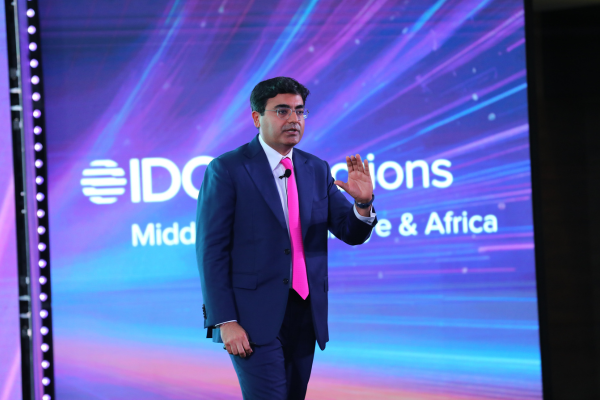
The IDC Middle East Virtual Roadshow – UAE brings a focused, insight-led look at how organizations can keep AI moving forward in a more complex, cost-conscious environment. Led by IDC analysts and backed by the latest research, the session is designed to help you align AI initiatives with clear business priorities and measurable outcomes.
Discover how to prioritize high-impact, low-risk use cases, optimize cloud performance and cost, and strengthen your data, governance, and sovereignty foundations—while building resilient AI operating models that support your next move with confidence.

AI investment must now prove long-term value. In this IDC keynote, analysts share how to align AI to business priorities, build resilience, and scale with confidence for a sustained competitive edge.
As data sovereignty becomes a critical business requirement, organizations must rethink how and where data is managed. This session explores how hybrid, multi-cloud, and edge strategies can help you balance compliance, performance, and flexibility—so your architecture supports both control and growth.
Turning AI into real business impact requires more than models—it demands alignment across data, processes, and outcomes. This session explores how to operationalize AI effectively, bridging the gap between experimentation and measurable value.
AI workloads are pushing cloud strategies to evolve. This session unpacks how to optimize for cost, performance, and scalability—ensuring your cloud foundation can support AI growth without compromising efficiency.
As AI expands the threat surface, security must evolve with it. This session examines how to manage risk in an intelligent threat landscape, helping you safeguard data, models, and systems while maintaining trust and resilience.
In the AI era, data only matters when it drives outcomes. This session highlights how enterprises are turning data into tangible business value—connecting insight to action and impact.
Speed and adaptability are now essential for resilience. This session explores how low-code adoption enables greater agility and continuity, empowering teams to innovate faster and respond to change with confidence.
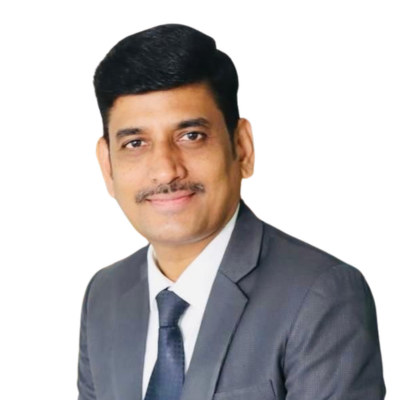
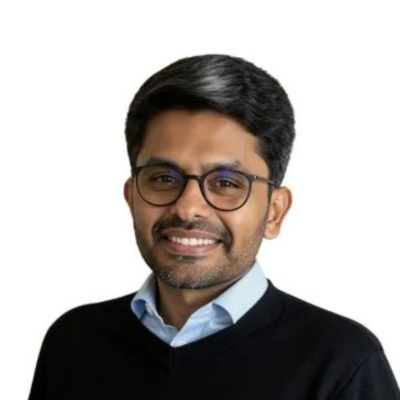
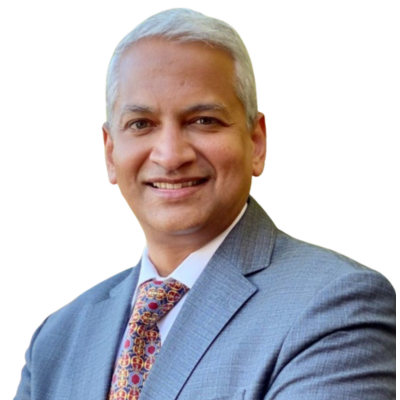
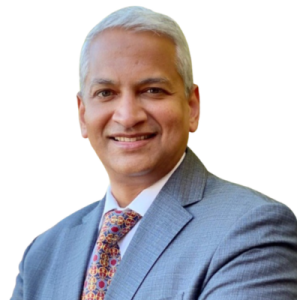
Rajan spearheads IDC’s software research, advisory, and consulting practice in the Middle East, Africa, and Turkey region. He has led several bespoke research and consulting projects for leading global ICT firms and regularly advises senior industry executives on market, product, and competitive strategies. He leads a team of regional research analysts and manages the delivery of syndicated research and trackers that analyze trends in technology areas such as enterprise applications, collaboration, security, storage, databases, and deployment tools, among others.In addition, Rajan has held engagement management and senior consultant roles in management consulting projects for government authorities and bodies in the region, developing strategies and programs for national IT sector development and ICT skills augmentation.Rajan engages closely with chief information officers (CIOs) in the region through workshops, roundtable discussions, and interviews, providing guidance on enterprise IT strategies.Rajan frequently speaks at industry forums and conferences, and is often quoted in the media, providing opinion and analysis on technology trends and strategies in global and emerging markets.Prior to joining IDC, Rajan spent over ten years in the IT industry in roles spanning product management, marketing, channel and business development, and resource management at prominent global IT companies such as Epicor, 3i Infotech and NIIT Technologies.Rajan has a management degree from the Indian Institute of Management (IIM) in Calcutta and a bachelor of technology degree from Cochin University of Science and Technology.


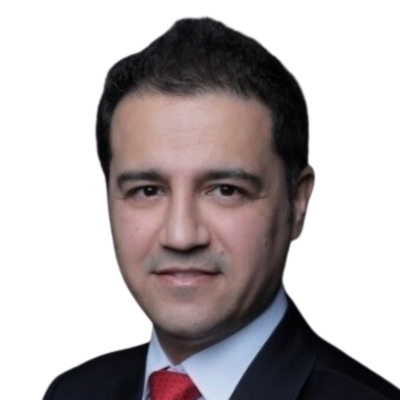
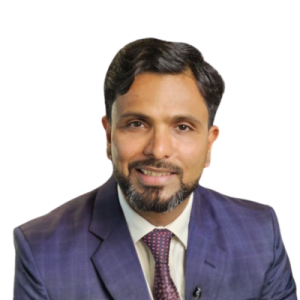
Harish Dunakhe leads IDC’s research & advisory practice for the software program in the Middle East, Africa, and Turkey (META) region.
He is responsible for a team of research analysts and manages the delivery of insights in IDC’s software program and syndicated research. Harish and his team have expertise in studying technology trends to provide our clients with thought leadership and actionable insights. He is based in Dubai.
Harish has a strong understanding of leveraging technologies to solve business problems in the public sector, travel & transportation, hospitality, IT, and retail. He has significant knowledge of emerging technologies such as blockchain, RPA, artificial intelligence, and cloud. He works with clients to understand the intricacies, opportunities, and challenges involved in their technology transformation journeys.
Harish brings more than 17 years of experience working with leading system integrators and other technology companies across the Middle East, South Asia, and India. Prior to joining IDC, he held senior roles spanning technology sales strategy, program governance, and large account business planning at Global MNCs such as Wipro, DXC Technology, and Sonata Software.
Cybersecurity becomes truly effective when it operates like a business capability, not a collection of tools and one-off projects. “Operationalizing” cybersecurity means building a repeatable way to deliver protection, detection, response, and recovery—consistently, measurably, and at scale. The shift is simple but profound: move from activity (“we deployed X”) to impact (“we reduced downtime risk on critical services”).
The foundation is outcome-based delivery. Instead of funding disconnected initiatives, organizations define a small set of outcomes leadership cares about—such as reduced ransomware-driven interruption, faster containment of identity compromise, improved recovery confidence, or stronger assurance for critical suppliers. Each outcome is supported by operational services (e.g., identity, exposure management, detection engineering, incident readiness) delivered through standard workflows and playbooks. Success is measured with performance indicators that demonstrate real change: containment time, restore-test pass rate, patch latency, privileged access coverage, and reduction in high-severity incidents.
To prioritize intelligently, organizations need quantified risk, not just qualitative heatmaps. Scenario-based quantification translates cyber threats into decision-grade business terms: likelihood ranges, loss ranges, and the expected reduction from specific controls. This enables budget optimization using a familiar logic—risk reduction per dollar, time-to-value, and feasibility—while making residual risk explicit and governable.
Finally, the most strategic programs apply resilience-first prioritization. Not every risk matters equally; the focus should be where cyber events threaten operational continuity. Investments that reduce time-to-detect, time-to-contain, time-to-recover, and blast radius typically deliver the highest resilience uplift. When cybersecurity is operationalized through outcomes, quantified risk, and resilience-led priorities, spend becomes easier to justify—and far harder to cut—because it demonstrably protects the organization’s ability to operate.
23 Apr 2026
United Arab Emirates
The Middle East is navigating a period of significant geopolitical and economic change. For technology leaders in the UAE, the priority is not only to manage risk, but also to sustain innovation, resilience, and long-term digital progress in an increasingly complex environment.
The current crisis is introducing new variables into the global technology economy. IDC’s latest outlook indicates that IT spending in the Middle East and Africa is expected to grow by around 5% in 2026, with a downside scenario of 3–4% growth should geopolitical pressures persist. At the same time, IDC expects the near-term impact to be more toward timing and spending mix shifts than by a broad pullback in demand.
The regional picture is unlikely to be uniform. Gulf markets such as the UAE are expected to show greater near-term resilience than more import-dependent economies, giving CIOs in the Emirates a different challenge: how to maintain momentum on strategic priorities while adapting to shifting risk, regulatory, and investment conditions.
The IDC Middle East Virtual Roadshow – UAE Edition will explore how these forces are reshaping CIO priorities in the Emirates and what they mean for technology investment, AI adoption, digital sovereignty, cybersecurity, and enterprise resilience in the months ahead.

Attendees will gain insights into new priorities around resilience, data sovereignty, multi-cloud strategies, and talent transformation as CIOs navigate an increasingly AI-first, regulation-driven, and fast-growing digital economy.
Ranjit Rajan
Vice President, Research (META), IDC
The rules of the digital economy are being rewritten. As Gulf economies navigate an era of unprecedented change, the ability to harness AI while maintaining control over data and digital infrastructure has never been more critical. AI is the new currency of power — and for organizations across the region, harnessing the value whilst maintaining sovereignty and resilience is no longer optional; they are strategic imperatives.
Join ServiceNow as we examine the strategies, technologies and practices needed to build intelligent, sovereign and resilient foundations — ones that withstand disruption and drive sustainable long-term growth.
Ask Questions and stand a chance to win exciting e-gift vouchers.
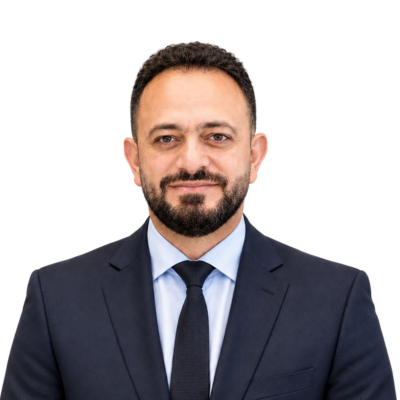
Tolga Tutel
Field CTO, Middle East & Africa, ServiceNow
Shakeel Baig
Specialized Solutions Sales Leader, Saudi Arabia, ServiceNow
This session highlights how to design cloud systems for high availability and resilience. It covers key practices like fault isolation, multi-region architecture, automated recovery, and observability. Attendees will gain practical insights into building systems that stay reliable and responsive—even during failures or peak demand.
Ask Questions and stand a chance to win exciting e-gift vouchers.
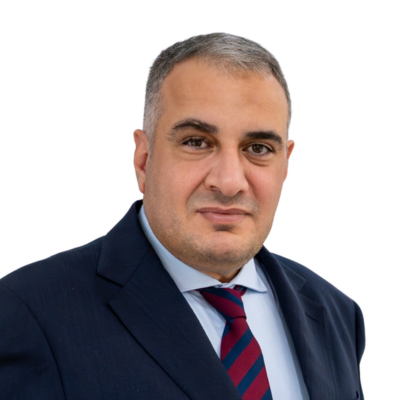
Ahmed I Farrag
Chief Technology Officer, IBM
This session highlights how organizations can optimize costs without slowing innovation. It explores strategies such as smart cloud spending, prioritizing high-impact initiatives, automation, and efficient resource allocation.
Ask Questions and stand a chance to win exciting e-gift vouchers.
This session highlights how disaster recovery is evolving from reactive planning to proactive resilience. It explores strategies such as automated failover, multi-region readiness, continuous data protection, and regular testing to ensure rapid recovery.
Ask Questions and stand a chance to win exciting e-gift vouchers.
Marc Merheb
Director Solutions Consulting, Middle East Region, OpenText
This session highlights how CIOs are reshaping technology investments to deliver greater business value. It explores shifts toward high-impact initiatives like AI, automation, and digital platforms, while optimizing legacy spend and reducing inefficiencies.
Ask Questions and stand a chance to win exciting e-gift vouchers.
Cliff Madru
Vice President, Digital Solutions, Iron Mountain
The role of the CISO is expanding faster than ever. AI adoption is accelerating, regulatory pressure is intensifying, and boards expect clearer answers on risk, resilience, and return on security investment. At the same time, CISOs face growing personal accountability while still being expected to enable innovation rather than slow it down.
In this executive level session, let us unpack the key findings from The CISO Report 2026: From Risk to Resilience in the AI Era and explore what they mean for security leaders
Ask Questions and stand a chance to win exciting e-gift vouchers.
Tom Gamali
Field CTO & Strategic Advisor, MEA-TRC, Splunk
Bilal Issa
Technical Manager, Gulf, TrendAI
Join the tracks to participate in the session kickoff raffle.
Ask Questions and stand a chance to win exciting e-gift vouchers.
Thursday, April 23 2026 11:20 am | Location:
The rules of the digital economy are being rewritten. As Gulf economies navigate an era of unprecedented change, the ability to harness AI while maintaining control over data and digital infrastructure has never been more critical. AI is the new currency of power — and for organizations across the region, harnessing the value whilst maintaining sovereignty and resilience is no longer optional; they are strategic imperatives.
Join ServiceNow as we examine the strategies, technologies and practices needed to build intelligent, sovereign and resilient foundations — ones that withstand disruption and drive sustainable long-term growth.
Ask Questions and stand a chance to win exciting e-gift vouchers.
Thursday, April 23 2026 11:20 am | Location:
The rules of the digital economy are being rewritten. As Gulf economies navigate an era of unprecedented change, the ability to harness AI while maintaining control over data and digital infrastructure has never been more critical. AI is the new currency of power — and for organizations across the region, harnessing the value whilst maintaining sovereignty and resilience is no longer optional; they are strategic imperatives.
Join ServiceNow as we examine the strategies, technologies and practices needed to build intelligent, sovereign and resilient foundations — ones that withstand disruption and drive sustainable long-term growth.
Ask Questions and stand a chance to win exciting e-gift vouchers.
Thursday, April 23 2026 11:35 am | Location:
This session highlights how to design cloud systems for high availability and resilience. It covers key practices like fault isolation, multi-region architecture, automated recovery, and observability. Attendees will gain practical insights into building systems that stay reliable and responsive—even during failures or peak demand.
Ask Questions and stand a chance to win exciting e-gift vouchers.
Thursday, April 23 2026 12:05 pm | Location:
This session highlights how disaster recovery is evolving from reactive planning to proactive resilience. It explores strategies such as automated failover, multi-region readiness, continuous data protection, and regular testing to ensure rapid recovery.
Ask Questions and stand a chance to win exciting e-gift vouchers.
Dr. Alexey Sidorov was born with the “Passion for Data” programmed in his DNA.
Alexey started his carrier 30-years ago building volumetric model of radioactive pollution of Chernobyl nuclear disaster Zone with Russian Academy of Science and since then earned his reputation as the strategic adviser in all aspects of Data Management.
Prior joining Denodo as Chief Evangelist, Alexey built and managed enterprise-wide Data Integration platforms for industry giants like Nokia and Deutsche Bank. In the last 15 years Dr Alexey has been helping many companies across 3 continents to Digitally Transform their business with the edge-cutting Data technologies from Teradata and Informatica.
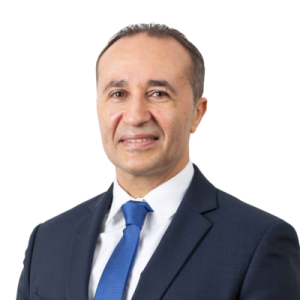
Tareq Momani, Head of Systems Engineering for the Middle East at Infoblox, is a cybersecurity and business strategy leader with nearly 20 years’ experience guiding organizations through complex transformation and building digital resilience.
| With a unique passion for technology, data and information management, Cliff Madru has built a successful career as a high performing digital solutions and services leader.
In his current role as the VP of Iron Cloud and Data Services, he runs cloud services and a team of Digital experts that help businesses develop and execute strategic initiatives which enable digital transformation and business evolution. This includes complex solutions involving digitization, information governance, content management, and data protection for digital assets. This solution design expertise requires a depth of knowledge around traditional and advanced technologies, from physical infrastructure to cloud, data indexing to advanced ML & AI, tape backup to advanced cyber protection and most everything in between. Cliff has been working with technology and information systems his entire career and has held roles as the Director of Technology for multiple start-ups. With this history and his constant engagement with customers, he understands the needs and challenges today’s businesses face around digital information management. Cliff holds degrees in Computer Systems Engineering and Information Systems Management, graduating first in his class and with highest honor.
|
Thursday, April 23 2026 12:50 pm | Location:
Ask Questions and stand a chance to win exciting e-gift vouchers.
Faye Murray is Field Chief Data Officer (EMEA) at Dataiku and a strategic leader in data and AI, with over 15 years of experience driving transformation across organisations from start-ups to $1B+ enterprises.
She specialises in helping organisations move from AI ambition to execution, delivering measurable outcomes including seven-figure cost savings and significant ROI on AI investments. Faye is known for bridging the gap between business and technology, advising C-suite leaders on AI strategy, governance, and scaling data-driven innovation in complex, regulated environments.
A regular keynote speaker, she shares insights on AI governance, digital transformation, and ethical innovation.
Faye holds degrees in Natural Sciences from the University of Cambridge and an Executive MBA with Distinction from Warwick Business School.
Tom Gamali is a seasoned Technology Executive and cybersecurity leader with over 20 years of experience driving strategic security and technology initiatives across Europe and the Middle East. He has served as Group CISO for several leading banks and major conglomerates, and has been a member of board risk committees for financial institutions, advising on cyber risk and digital resilience.
Tom is currently Field CTO and Strategic Advisor at Splunk and has also served on the EMEA Advisory Council for (ISC)², contributing to the advancement of cybersecurity leadership and professional standards across the region.
Thursday, April 23 2026 1:05 pm | Location:
The role of the CISO is expanding faster than ever. AI adoption is accelerating, regulatory pressure is intensifying, and boards expect clearer answers on risk, resilience, and return on security investment. At the same time, CISOs face growing personal accountability while still being expected to enable innovation rather than slow it down.
In this executive level session, let us unpack the key findings from The CISO Report 2026: From Risk to Resilience in the AI Era and explore what they mean for security leaders
Ask Questions and stand a chance to win exciting e-gift vouchers.
Rob Greenman is Principal Sales Engineer at Ping Identity, where he helps enterprises design and deliver secure, seamless digital identity experiences. Drawing on extensive professional services consulting and leadership experience across EMEA, he brings a delivery-focused, consultative approach to pre-sales, partnering with customers to translate complex identity, access management and Zero Trust requirements into practical, scalable architectures that accelerate value. Rob has extensive experience guiding organisations through modernisation initiatives, from legacy access environments to cloud-first, standards-based identity solutions. He is known for aligning technology decisions with measurable business outcomes, enabling improvements in security, customer experience and sustainable growth.
For years, digital transformation was measured by speed, scale, and efficiency. Today, resilience is emerging as a defining metric. As digital infrastructure becomes part of a nation’s critical fabric, disruptions no longer remain confined to IT — they impact economies, public services, and trust itself.
The cybersecurity landscape in the Middle East, Türkiye, and Africa (META) is undergoing a structural shift, propelled by accelerated digital transformation, pervasive AI adoption, and a regulatory environment that is both expanding and fragmenting. IDC forecasts that regional cybersecurity spending will surpass $12.5 billion in 2026 (up 14% year on year), with software and identity security outpacing other segments. The region is evolving from a consumer of cyber innovation to a producer, prioritizing sovereign trust, AI security, and cyber-physical resilience as strategic imperatives.
Agentic AI is moving rapidly from pilot to production, enabling real-time detection, mitigation, and self-healing across IT, OT, and cloud. While 85% of META organizations report having an AI strategy, fewer than 20% have implemented dedicated AI security frameworks — highlighting a critical gap as CISOs elevate AI governance, model security, and adversarial defense. Identity has become the fulcrum of cyber maturity, with GenAI and deepfake-driven fraud now the top threat vector, driving adoption of ITDR, IGaaS, and behavioral analytics, often integrated with national ID systems.
Cyber-physical risk is escalating: over 45% of organizations report increased incidents, and while 70% have integrated IT/OT, less than a quarter have dedicated OT security. Investments are accelerating in OT-MDR, protocol-native AI firewalls, and digital twins, underpinned by critical infrastructure mandates. The region is also shifting from fragmented, best-of-breed tools to platform-centric architectures that unify telemetry and automate response, driven by operational resilience and regulatory alignment rather than vendor lock-in.
CISOs must prioritize platform integration, agentic AI with explainability, robust identity and fraud defense, and cyber-physical security. Operationalizing sovereign trust and modernizing for hybrid/cloud-native environments are essential, as is closing workforce gaps through AI augmentation and upskilling. These actions are foundational for sustaining cyber resilience and regulatory compliance in META’s rapidly evolving threat and compliance landscape.