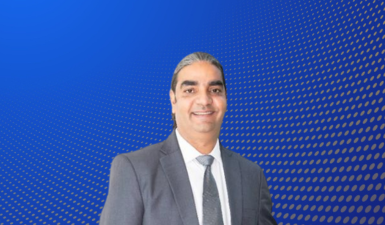
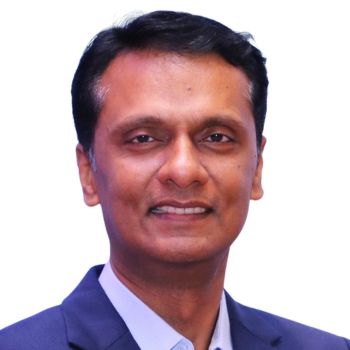
Knowledge Hub / Ibrahim Çallı

Partner Spotlight

Ibrahim Çallı
Sales & Marketing Director
DECE Software

Partner Spotlight

Data Discovery First: Why Modern Data Governance Needs DSPM

Every part of enterprise IT has found its “next-generation” model, yet data governance in many organizations is still being asked to work with assumptions designed for a slower, simpler data world.


That world disappeared quietly, then all at once. Hybrid work normalized new ways of creating and sharing information. Cloud and SaaS accelerated collaboration. Third parties became more embedded in day-to-day operations. And most importantly, the enterprise data estate became far more unstructured, distributed, and fast-moving than most governance playbooks were built to handle.


This is not a “security industry” problem. It’s an every-industry problem.


Financial services, healthcare, retail, telecoms, energy, government; the sector changes, but the pattern stays the same. Sensitive and regulated information ends up spread across shared drives, mailboxes, endpoints, databases, and cloud repositories. The moment you can’t say with confidence where that data is and who can access it, governance becomes a document rather than a discipline. And in 2026, with AI-native execution accelerating and agentic systems moving into real business processes, the tolerance for “we think it’s under control” will only shrink.


Governance starts with discovery, whether we admit it or not


Most governance debates eventually collapse into a few practical questions.


Where is our sensitive data actually living across cloud and on-prem?
What does it contain, and how consistently is it classified?
Who can reach it in practice, including broad groups, inherited permissions, and external sharing?


If those questions can’t be answered continuously, almost everything else becomes fragile: privacy impact work, breach readiness, retention enforcement, audit responses, even basic internal reporting. That’s why data discovery is no longer a project phase. It’s the foundation layer.


In DECE Software’s work with enterprises, the most consistent turning point is when discovery stops being an occasional scan and becomes an always-on capability: continuously making critical data visible and highlighting sensitive findings within content, at scale.


DSPM is the operational layer that makes governance executable


This is where data security posture management (DSPM) fits, not as a replacement for governance, but as the layer that turns governance intent into day-to-day execution. DSPM operationalizes a continuous loop: discover and classify data across the estate, understand exposure and compliance gaps, and support controlled remediation with evidence.


When governance is treated as posture rather than paperwork, it becomes measurable and defensible. You can show what changed, what risk reduced, and what remains without waiting for a quarterly cycle.


Where GEODI becomes practical: discovery, search, masking, anonymization


At DECE Software, we built GEODI around a simple reality: governance doesn’t fail because organizations lack policies. It fails because policies are hard to execute across a distributed, unstructured environment.


GEODI DSPM makes discovery usable at enterprise scale by combining broad connectivity and semantic understanding with governance outcomes. The platform is designed to connect across many data sources and apply semantic search and recognition to make hidden sensitive information discoverable, including in scanned and non-text content, so discovery is not limited to file names or shallow metadata.


Once sensitive data is found, governance often becomes a collaboration challenge. Legal, compliance, audit, and business teams still need to share documents and move work forward. This is where protection must be practical, not disruptive. GEODI supports dynamic masking, where the same document can appear differently based on user permissions, and permanent masking for documents such as PDF and Office files. It also supports database masking when data sets need to be shared safely for development or analysis.


For cases where teams need realistic-looking data without exposing the original, GEODI also supports anonymization by replacing findings with fictional but plausible values. This can be useful for broader sharing while protecting sensitive identifiers.


The point is not to add another tool. The point is to make governance actions, discovery, search, masking, anonymization, and evidence, available as part of an operating rhythm, so organizations can move faster and safer.


The CIO takeaway for 2026


As the region pushes toward AI-native execution, governance needs to keep pace. The enterprises that scale successfully won’t be the ones with the most impressive pilots. They’ll be the ones that can continuously answer what data they hold, where it is, who can access it, and what they can remediate, with proof.


Data governance is now a competitive capability. And it starts, unglamorously but inevitably, with data discovery sustained through DSPM.

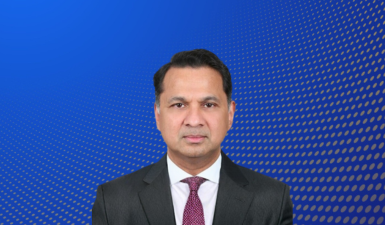
Knowledge Hub / Ehsan Shariff

Partner Spotlight

Ehsan Shariff
Managing Director
Nagarro

Partner Spotlight

From Experimentation to Impact: Why Engineering Must Become AI Native

The next wave of engineering transformation will be defined by who rebuilds engineering around AI as a foundational capability. Many organizations are already experimenting with copilots and automation tools. While deploying intelligent tools in pockets may deliver short-term or incremental gains, it rarely delivers lasting value. Speed alone does not create advantage if it comes at the cost of quality, resilience, or trust.

Real impact is seen only when AI is embedded across the entire engineering life cycle, shaping how systems are designed, built, operated, and continuously improved.


AI-native engineering shifts the focus from isolated efficiency to system-level intelligence, where learning is continuous and every iteration improves both performance and reliability. To get there, organizations must move beyond experimentation toward structural integration. That includes clear governance models that ensure transparency, accountability, and confidence in AI-driven decisions — without which scaling AI can introduce new risks rather than reducing existing ones.


This shift is especially critical in industrial and built-environment contexts, where digital innovation must coexist with physical reliability, safety, and sustainability. Intelligent platforms are now rapidly unifying what used to be disconnected: design data, operational telemetry, energy consumption, and maintenance signals. With this foundation, AI can optimize beyond individual components toward entire environments. When engineering teams can simulate, predict, and adapt in real time, infrastructure becomes more responsive, efficient, and future ready.


Just as important is the human dimension. AI-native engineering does not diminish the role of engineers; it elevates it. Routine and repetitive tasks can be automated, freeing experts to focus on higher-order problem solving, system thinking, and innovation. This evolution, however, requires investment in new skills and roles, and a culture that values collaboration across disciplines. Engineers, architects, operators, and business leaders must share a common language around data, outcomes, and responsibility.


Ultimately, AI-native engineering creates a compounding advantage. Every release, optimization, and operational insight feeds the next cycle of improvement. In an era defined by complexity, engineering with intelligence at the core is no longer optional; it is the defining capability of leading organizations.

Knowledge Hub / Stephen Fernandes

Partner Spotlight

Stephen Fernandes
Chief Growth Officer & Head (Middle East)
Planview

Partner Spotlight

Transforming Digital Leadership: How Middle East CIOs Can Bridge Strategy and Execution

As organizations across the Middle East accelerate their digital transformation journeys under national visions such as UAE Vision 2031 and Saudi Vision 2030, CIOs are confronting a dual mandate: drive innovation at speed while ensuring that transformation efforts consistently translate into measurable business outcomes. This year’s IDC Middle East CIO Summit arrives at a pivotal moment — when technology leadership must evolve from operational stewardship to strategic value orchestration.


Bridging the Visibility Gap


Across the region, enterprises are adopting advanced digital capabilities and AI at a remarkable pace. Yet despite heightened investment, many organizations still struggle to clearly demonstrate the business impact of their technology portfolios. This “visibility gap” often emerges not from a lack of talent or ambition, but from fragmented execution — where strategy, delivery, resources, and outcomes operate in isolated pockets. When these elements lack cohesion, even the most promising initiatives risk delays, misalignment, or unclear value realization. To become true strategic enablers, CIOs must establish unified visibility across their digital investments and connect every initiative to clear, measurable outcomes.


Enabling Strategic Flow Through AI and Connected Intelligence


A growing number of regional leaders are adopting integrated approaches that unify planning, governance, execution, and insights. AI-powered decisioning is becoming a catalyst for this shift — helping CIOs forecast risks, prioritize investments, optimize resources, and adapt plans in real time as conditions change.


This creates what many call “strategic flow” — the seamless translation of vision into value. It also fosters new ways of working that break functional silos, promote collaboration, and increase transparency across the enterprise.


Regional Infrastructure Empowering Innovation


The Middle East’s rapid expansion of local cloud and data infrastructure is playing an essential role in enabling this transformation. With strengthened data residency, sovereignty, and regulatory frameworks, organizations can now adopt advanced AI‑driven portfolio and work‑management capabilities while remaining fully compliant with regional requirements.


This empowers technology leaders to:


• Prioritize initiatives using data‑driven foresight
• Align execution with strategic goals
• Adapt confidently through predictive insights
• Demonstrate measurable outcomes to boards and stakeholders
• Accelerate time to value for mission‑critical programs


The Path Forward


As CIOs convene at the IDC Middle East CIO Summit 2026, the imperative is clear: success lies in building organizations where strategy and execution are continuously connected, adaptive, and outcome driven. The future belongs to leaders who can harness AI, visibility, and cross‑enterprise collaboration to execute with clarity and deliver transformative impact at scale.

Knowledge Hub / Adam Gale

Partner Spotlight

Adam Gale
Chief Technology Officer
NetApp

Partner Spotlight

From Compliance to Control: A CIO’s Guide to Data Sovereignty

Data has become one of the world’s most valuable resources, and it flows across borders instantly. This freedom creates incredible opportunities for innovation and growth. It also creates a tangled web of legal and security challenges. Governments everywhere are tightening their grip on how digital information is stored, processed, and transferred.


What Is Data Sovereignty?


Data sovereignty refers to the principle that digital data is subject to the laws of the country where it is located. In practice, it is incredibly complex. Cloud computing means your data might be fragmented across multiple jurisdictions simultaneously. A single transaction could touch servers in three different countries. This creates a compliance minefield for CIOs and data architects.


The Geopolitical Landscape


We are seeing a rise in digital nationalism. Countries want to protect their citizens’ privacy and secure their national interests. This has led to a surge in data localization laws. These laws require that certain types of data be created and stored within national borders.


Consider the landscape:


• Europe: The GDPR set a global standard for privacy. In addition, new regulations such as DORA and NIS 2, along with initiatives like GAIA-X and the Sovereign Cloud Framework, are shaping a secure, federated infrastructure designed to enhance European digital sovereignty.

• North America: While the U.S. has a more sectoral approach, new state-level privacy acts are adding layers of complexity.

• Middle East: The region has a strong sovereignty foundation and long-term plan, governing not just data, but talent, local resources, and supply chains.


The Challenges You Face


Navigating this environment presents three core hurdles.


• Compliance complexity: Keeping up with changing laws is a full-time job. The cost of noncompliance is high, ranging from massive fines to a complete loss of customer trust.

• Operational inefficiency: Data localization can create silos. If your German team cannot access data stored in Japan, collaboration suffers.

• Security vulnerabilities: More silos often mean more attack surfaces. Ensuring consistent security policies across a fragmented data landscape is difficult. You risk leaving gaps that bad actors can exploit.


Striking the Balance


The goal is to unlock the value of your data while keeping it secure and compliant. The two main control planes of sovereignty are security and control; tightening these often leads to a restriction of innovation. Therefore, balancing is critical.


Security


If you lose security of your data, you lose sovereignty. Your data must be safe from unauthorized access, regardless of where it lives. This requires robust encryption and strict access controls. You need the ability to monitor threats across your entire hybrid cloud estate from a single pane of glass.


Control


If you lose control of your data, you lose sovereignty. You need to know exactly where your data is at all times. You must be able to move it easily if regulations change. Vendor lock-in is a major risk here. If your cloud provider dictates where your data sits, you lose sovereignty. You need the flexibility to place data on premises, in a private cloud, or in a public cloud, depending on specific legal requirements.


Innovation


Compliance should not be a roadblock. Your data teams need access to data sets to build applications and drive insights. A good data fabric allows you to govern data strictly while still making it available to the people and applications that need it.


Practical Steps for Leaders


How do you achieve this balance? Here are actionable steps to take control of your data sovereignty strategy.


• Audit your data landscape: You cannot govern what you do not see. Map out exactly what data you have, where it resides, and how it flows between regions. Identify which data sets contain sensitive personal information or intellectual property.

• Classify data by sensitivity: Not all data needs the same level of protection. Public marketing data has different sovereignty requirements than health records. Distinct classification tiers allow you to apply the right controls without overspending.

• Embrace a hybrid multicloud approach: Relying on a single public cloud provider for everything is risky. A hybrid model gives you options. You can keep highly sensitive sovereign data in a local private cloud while using public cloud resources for less critical workloads.

• Implement policy-based automation. Manual compliance is prone to error. Use tools that allow you to set policies once and enforce them automatically. For example, you can set a rule that data tagged “GDPR” is only eligible to be transferred outside the EU to jurisdictions with adequate safeguards or compliance regimes in place. Automation helps ensure these requirements are met every time.

• Prioritize portability: Ensure your data is not stuck in a proprietary format. Use open standards and technologies that allow you to move workloads between clouds and on-premises environments without friction. This portability is your insurance policy against regulatory shifts.

Knowledge Hub / Sachin Bhatia

Partner Spotlight

Sachin Bhatia
Co-Founder & Chief Growth Officer
Exotel

Partner Spotlight

AI-Human Harmony: The Future of Customer Engagement

Customer engagement is undergoing a profound shift. For years, enterprises relied on a simple formula: automation to scale, humans to empathize. That balance held until customer expectations changed. Today, people want to be recognized and understood instantly, across every channel, with experiences that feel intelligent and human at the same time. Incremental improvements will not meet this demand. What is needed is a complete redesign of how intelligence powers every interaction.


The answer is AI-human harmony, an operating principle where artificial intelligence and human expertise work as one. This is not about replacing people with machines or layering AI onto outdated workflows. It is about creating a living model of engagement where machines bring continuous learning, precision, and scale, while humans provide empathy, judgment, and trust. Together, they form an adaptive, resilient fabric that strengthens with every interaction.


The shift is already delivering measurable outcomes. Contact centers using real-time agent guidance and automation report 30% higher productivity and 25% faster resolution times. AI-led self-service is cutting routine call volumes by up to 30%, while improving containment and satisfaction. Enterprises adopting observability are seeing 15% gains in CSAT, driven by early friction detection and greater transparency. These results show that early adopters are already unlocking tangible business value.


At the core of this transformation are three pillars that make this a practical reality:


– Continuous Learning → Personalized Journeys
Personalization is evolving from static campaigns to real-time learning, where every touch point improves the next.

– Intelligent Orchestration → Frictionless Operations
Automation is advancing from routine execution to orchestrating complex journeys, freeing humans for high-value conversations.

– Observability → Trust at Scale
Engagement is no longer a black box. Enterprises now gain real-time visibility into reliability, compliance, and sentiment, ensuring fairness, transparency, and accountability.


Together, these pillars establish a new operating model for engagement: self-learning, self-optimizing, and trustworthy by design. Instead of fragmented tools and siloed processes, enterprises gain a unified ecosystem that evolves in step with customers. The outcome is experiences that are relevant, reliable, and consistently human.


At Exotel, we believe the future will not be defined by humans or machines in isolation, but by the harmony between them. Enterprises that embrace AI-human harmony as the foundation of their strategy will not only keep pace with change, they will shape the decade ahead, setting new benchmarks for intelligent, human-centered engagement.

Knowledge Hub / Arno van Driel

Partner Spotlight

Arno van Driel
Vice President
ClickHouse

Partner Spotlight

The Real-Time Imperative: Navigating the Velocity of Modern Data

In the rapidly evolving digital landscape of the Middle East, the gap between data generation and actionable insight is closing. For the modern CIO, the challenge is no longer just about storing vast quantities of information; it is about the latency of decision-making. As regional enterprises embrace the “AI-first” era, the underlying architecture must shift from traditional batch processing to a real-time intelligence model.


From Hindsight to Foresight


Historically, data analytics served as a rearview mirror — offering detailed reports on what happened yesterday or last month. While valuable for compliance and long-term planning, this “hindsight” model is insufficient in a market defined by instant consumer demands and volatile global shifts. Whether it is optimizing a supply chain across the GCC or detecting fraudulent financial transactions in milliseconds, the value of data now decays the moment it is created.


The Foundation for Sovereign AI


As the UAE and Saudi Arabia lead the charge in sovereign AI and large language models (LLMs), the quality and freshness of data have become the primary differentiators. AI models are only as effective as the data feeding them. To move beyond pilot projects into production-grade intelligence, organizations require a data layer that can ingest millions of events per second while simultaneously providing sub-second query responses. This convergence of “big data” and “fast data” is what will define the next decade of digital leadership.


Building for Scale and Efficiency


However, speed cannot come at the cost of operational complexity or unsustainable infrastructure spend. The next generation of data strategy focuses on linear scalability. CIOs are now prioritizing decoupled architectures that allow for massive growth without the traditional “performance tax.”

Knowledge Hub / Jim Dwyer

Partner Spotlight

Jim Dwyer
Chief Transformation & Innovation Officer
Sutherland

Partner Spotlight

Agentic AI and the Human Equation: Building Trust-Driven Customer Intelligence

Agentic AI is no longer a theoretical capability — it is entering enterprises as a decision-maker, an actor, and, increasingly, a source of risk. As autonomous systems move from pilot programs into production, CIOs are facing a new reality: success is no longer defined by technical performance alone, but by trust, governance, and accountability.


The stakes are rising quickly. Industry analysts warn that by the end of the decade, a meaningful share of large enterprises could face regulatory action, legal exposure, or executive consequences stemming from poor AI agent governance. This places agentic AI squarely in the realm of leadership responsibility, not just technology innovation.


At the same time, a fundamental tension is emerging between adoption and acceptance. While many organizations are rapidly deploying AI across customer-facing functions, customer confidence has not kept pace. Research indicates that a majority of customers remain cautious — or openly resistant — to AI-driven interactions, even as service leaders accelerate deployment. This disconnect exposes a critical blind spot: organizations are optimizing internal architectures while underestimating external perception.


This is where the human equation becomes decisive. Agentic AI does not simply execute tasks; it shapes experiences, influences outcomes, and alters how accountability is perceived. Forward-looking CIOs are shifting the conversation from “Can we deploy this?” to “Should we — and under what conditions?” Transparency, explainability, and human oversight are emerging as strategic design principles, not compliance afterthoughts.


Building trust-driven customer intelligence requires intentional shaping of agentic AI systems. That means defining clear governance models, embedding escalation paths for human intervention, and aligning autonomous behavior with customer expectations and societal norms. Organizations that fail to do so risk eroding trust faster than innovation can deliver value.


As agentic AI becomes embedded in enterprise operations, competitive advantage will belong to those who deploy it responsibly. The future will favor leaders who understand that trust is not a constraint on innovation — it is the multiplier that makes intelligent autonomy sustainable.

Speakers

Speakers

Hilmi Koçak

Hilmi Koçak

CIO

Eczacıbaşı Group

Read Bio

Barış Fındık

Barış Fındık

CTO

Pegasus

Read Bio

Kaan Konak

Kaan Konak

CIO

Aksigorta

Read Bio

Engin Kavas

Engin Kavas

CTO

Aydem Enerji

Read Bio

Mehmet Bütün

Mehmet Bütün

CIO&CDO

Vakıf Katılım Bankası

Read Bio

Murat Erez

Murat Erez

Head of IT

Kale Holding

Read Bio

Çiğdem Kılıç

Çiğdem Kılıç

CIO

Türkiye Sigorta

Read Bio

Emel Tural

Emel Tural

IT Director

Bosch

Read Bio

Yasin Çarkcı

Yasin Çarkcı

CTO

Tam Finans

Read Bio

Kürşat Alp Yiğit

Kürşat Alp Yiğit

Vice President of Information Technologies

Aras Kargo

Read Bio

Mehmet Tunçkanat

Mehmet Tunçkanat

CTO

İnci Holding

Read Bio

Servet Gül

Servet Gül

IT General Manager

Adalet Bakanlığı

Read Bio

Reha Gerçeker

Reha Gerçeker

SVP, Platforms & Reliability

Akbank

Read Bio

Kerim Turnacı

Kerim Turnacı

CIO

ebebek

Read Bio

Fırat Akın

Fırat Akın

General Manager Of IT

Çokyaşar Holding

Read Bio

Uğur Serkan Taşkın

Uğur Serkan Taşkın

CTO

Koçtaş

Read Bio

Dr. Aslıhan Çandır

Dr. Aslıhan Çandır

CIO

Neova Katılım Sigorta

Read Bio

Hasan Ali Kendir

Hasan Ali Kendir

Group CIO

Bayegan

Read Bio

Gürkan Cağlıoğlu

Gürkan Cağlıoğlu

CTO

MLP Care

Read Bio

Özgür Korkmaz

Özgür Korkmaz

Head of IT

Uludağ İçecek

Read Bio

Köksal Küçükada

Köksal Küçükada

CIO

Sanko Holding

Read Bio

Vefa Erdem

Vefa Erdem

CTO

Kazancı Holding

Read Bio

Enis Ozan Akkaya

Enis Ozan Akkaya

IT Director

Flormar

Read Bio

Serkan Çil

Serkan Çil

CIO

Koç Üniversitesi

Read Bio

Ömer Kara

Ömer Kara

CTO

Viennalife

Read Bio

Serdar Günizi

Serdar Günizi

IT Director

Çelebi Havacılık Holding

Read Bio

Making AI Real: Value, Risk, and Control

Making AI Real: Value, Risk, and Control

Making AI Real: Value, Risk, and Control
Logo

As AI adoption accelerates across the UAE and wider Gulf—with regional spending expected to grow at 44% CAGR through 2028—a critical gap is emerging: 40% of organizations will miss their AI goals in 2026.


The challenge is no longer whether to invest in AI, but how to translate investment into measurable business outcomes. The focus is shifting from promise to practice—delivering tangible value while maintaining control over data, infrastructure, and risk.


Hosted by Intel and IDC, this closed-door roundtable brings senior leaders together to address the strategic questions that matter: Where are you in your AI journey? What’s working in practice? And what’s preventing you from scaling beyond pilots?


Through candid peer exchange, we’ll explore the real constraints organizations face—from governance and security to data sovereignty and infrastructure choices—and surface practical insights on transforming AI from isolated experiments into trusted, enterprise-ready capabilities that drive competitive advantage.

Making AI Real: Value, Risk, and Control

Day 1

6:00 pm

Registration & Networking

6:30 pm

Welcome Address & Keynote: IDC

Shahin Hashim

Shahin Hashim

Associate Research Director (META), IDC

6:45 pm

Introduction by Intel

Eng. Taha M. Khalifa

Eng. Taha M. Khalifa

General Manager (MEA), Intel Corporation

6:55 pm

Curated Discussion

7:45 pm

Summary and Close

8:00 pm

Buffet Dinner and Informal Networking Continues

Speaker

Eng. Taha M. Khalifa

Eng. Taha M. Khalifa

General Manager (MEA)

Intel Corporation

Read Bio

Shahin Hashim

Shahin Hashim

Associate Research Director (META)

IDC

Read Bio

Partner

Venue

Atlantis, The Palm, Dubai

Spice C
Crescent Rd – Nakhlat Jumeira – Dubai

Discover a setting unlike any other. From intimate gatherings to grand, awe-inspiring celebrations, this venue offers spaces designed to create unforgettable experiences. Guests can enjoy an elegant cocktail reception set against the mesmerizing backdrop of a 65,000-marine-animal aquarium or indulge in an exquisite dinner in Dubai’s most exclusive hotel suite. Every detail, from the world-class catering to the impeccable service, ensures each moment is elevated into something truly extraordinary.

Be Part of it!

Register Now

Sovereign Cloud: Powering a Secure Digital Economy

Sovereign Cloud: Powering a Secure Digital Economy

Powering a Secure Digital Economy

Sovereign Cloud: Powering a Secure Digital Economy
Logo Logo

As cloud adoption accelerates in the UAE, expectations around control of data, systems, and AI are more clearly defined. For government and regulated industries, digital sovereignty is no longer a background consideration; it is shaping every major cloud decision. The question is no longer whether to adopt cloud technologies, but how to do so while meeting increasingly precise sovereignty requirements.


IDC data shows that adoption of sovereign cloud offerings in the region is already quite strong, with increased momentum expected through 2026. Organizations in the UAE now view data sovereignty and access to sovereign cloud environments as essential criteria when selecting AI partners.


At this exclusive gala dinner facilitated by IDC, discover how the UAE Sovereign Launchpad by e& enterprise and Amazon Web Services (AWS), enables government and regulated industries to innovate with confidence while maintaining trust, control, and regulatory alignment.


Agenda

Sovereign Cloud: Powering a Secure Digital Economy

Day 1

6:30 pm

Welcome & Networking Reception

7:00 pm

The UAE’s Digital Sovereignty Vision

H.E. Dr. Mohamed Hamad Al Kuwaiti

H.E. Dr. Mohamed Hamad Al Kuwaiti

Head of Cybersecurity Council for the UAE Government,

7:20 pm

Advancing Digital Sovereignty through the e& and AWS partnership

Khalid Murshed

Khalid Murshed

Chief Executive Officer, e& enterprise

Chris Erasmus

Chris Erasmus

General Manager, UAE & RoMENA, AWS

7:35 pm

Executive Panel Discussion: Navigating Cloud Sovereignty in the UAE – From Mandate to Execution

Ranjit Rajan

Ranjit Rajan

Vice President, Research (META), IDC

HE Najyb Al Maskari

HE Najyb Al Maskari

Executive Director, DGE

Mouteih Chaghil

Mouteih Chaghil

Chief Cloud Officer, e& enterprise

Dr. Aleksandar Valjarevic

Dr. Aleksandar Valjarevic

Acting CEO, Help AG

7:55 pm

The UAE Sovereign Launchpad — Enabling Trusted, Compliant Cloud

Steve Mustafa

Steve Mustafa

Director of Solutions Architecture, Bespin Global, an e& enterprise company

8:20 pm

Closing Remarks

Nischal Kapoor

Nischal Kapoor

Chief Revenue Officer, e& enterprise

8:30 pm

Networking dinner

Speakers

H.E. Dr. Mohamed Hamad Al Kuwaiti

H.E. Dr. Mohamed Hamad Al Kuwaiti

Head of Cybersecurity Council for the UAE Government

Read Bio

Khalid Murshed

Khalid Murshed

Chief Executive Officer

e& enterprise

Read Bio

HE Najyb Al Maskari

HE Najyb Al Maskari

Executive Director

DGE

Read Bio

Chris Erasmus

Chris Erasmus

General Manager, UAE & RoMENA

AWS

Read Bio

Ranjit Rajan

Ranjit Rajan

Vice President, Research (META)

IDC

Read Bio

Mouteih Chaghil

Mouteih Chaghil

Chief Cloud Officer

e& enterprise

Read Bio

Dr. Aleksandar Valjarevic

Dr. Aleksandar Valjarevic

Acting CEO

Help AG

Read Bio

Steve Mustafa

Steve Mustafa

Director of Solutions Architecture

Bespin Global, an e& enterprise company

Read Bio

Nischal Kapoor

Nischal Kapoor

Chief Revenue Officer

e& enterprise

Read Bio

Partner

Hosted by

Venue

Atlantis, The Palm, Dubai

Atlantis Ballroom A
Crescent Rd – Nakhlat Jumeira – Dubai

Discover a setting unlike any other. From intimate gatherings to grand, awe-inspiring celebrations, this venue offers spaces designed to create unforgettable experiences. Guests can enjoy an elegant cocktail reception set against the mesmerizing backdrop of a 65,000-marine-animal aquarium or indulge in an exquisite dinner in Dubai’s most exclusive hotel suite. Every detail, from the world-class catering to the impeccable service, ensures each moment is elevated into something truly extraordinary.