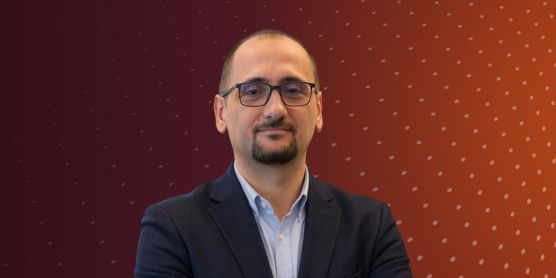
Knowledge Hub / Eng. Taha M. Khalifa

Partner Spotlight

Eng. Taha M. Khalifa
General Manager (MEA)
Intel Corporation

Partner Spotlight

How CIOs Can Architect for Agentic AI at Scale

The Middle East is rapidly emerging as a global hub for artificial intelligence. Saudi Arabia and the UAE are leading major national programs, and by 2030 AI is expected to contribute around 12% of Saudi GDP, 14% of UAE GDP, and 8% of Egypt’s GDP. These projections highlight both the scale of the opportunity and the strategic importance of getting AI infrastructure decisions right.

At the same time, the AI landscape is undergoing a seismic shift — from an era of model building to an era of model execution. For years, the focus was on training models using massive datasets. Today, we have reached a tipping point where inference — models making real‑time predictions and decisions — is becoming the dominant workload in both data centers and at the edge. This transition is being accelerated by the rise of agentic AI: autonomous systems that plan, reason, and execute multi‑step workflows across different software environments.

Complex agentic AI systems will fundamentally reshape enterprise operations, but this leap in capability brings a steep increase in computational demand. By 2028, AI inference is expected to consume around 80% of all data center compute cycles, as model complexity and cost continue to grow. Traditional homogeneous, vertically integrated architectures simply cannot provide the performance per dollar, or the flexibility, to scale effectively.

To move from pilot projects to scalable production, CIOs must champion an AI infrastructure engineered to last, built on three strategic pillars.

First is a heterogeneous architecture. Different parts of agentic systems need different types of compute. Running everything on a single, uniform hardware stack is inefficient and costly. The key to managing this complexity is a unified software abstraction layer that hides hardware diversity from developers. This allows CIOs to mix and match the right compute for each stage of the agentic workflow, while keeping costs under control and time‑to‑value short.

Second, enterprises need an open infrastructure. In a dynamic market like the Middle East, vendor lock‑in is a significant risk. A truly open AI ecosystem promotes interoperability at every level, from rack design and connectivity to software frameworks. This guarantees the freedom to choose the best components for the job and guards against obsolescence. In a region where digital sovereignty and regulatory requirements are evolving fast, open infrastructure is also a sovereignty strategy: it preserves flexibility over where workloads run, which vendors are involved, and how quickly organizations can adapt.

Finally, the infrastructure must build in resilience. The current geopolitical climate adds complexity for the region’s CIOs – AI investments must be protected. This means prioritizing vendors with a secure and sovereign supply chain, hardware‑level data protection, and the ability to distribute AI workloads across data center, edge, and device so that critical services can continue even when networks, cloud access, or external conditions are disrupted.

The investment flowing into Middle East AI is on a collision course with the limitations of legacy infrastructure. CIOs who recognize this challenge early can steer their organizations toward success. By building on a foundation of heterogeneous, open, and resilient architecture, leaders will unlock the potential of agentic AI and translate today’s investments into lasting, measurable business value.

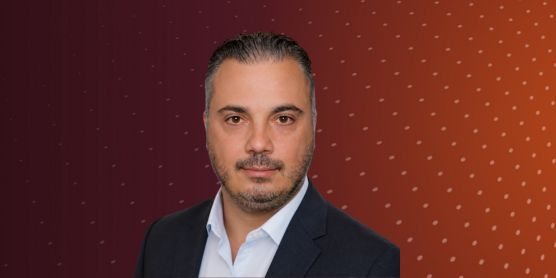
Knowledge Hub_Tarek Kuzbari

Partner Spotlight

Tarek Kuzbari ,
Vice President EMEA
Picus Security
Partner Spotlight

The Patch Gap Is Now an AI Problem

Anthropic’s Project Glasswing confirmed what many security leaders already suspected: AI can find software vulnerabilities faster than any human team can fix them. Mythos discovered thousands of zero-days across every major operating system and browser, some undetected for decades.

The discovery is not the problem. What comes after is.

Fewer than 1% of the vulnerabilities Mythos found were patched at the time of disclosure. The average enterprise remediates just 15% of its vulnerabilities in a given month. Meanwhile, the median time from disclosure to exploitation has collapsed from over two years to single-digit hours. AI does not just accelerate the attacker. It widens the gap between what defenders know and what they can act on.

Visibility without operational speed is just a more detailed inventory of your exposure.

The response cannot be absorbing more findings into an already overwhelmed process. It requires a shift in how validation and remediation work together. Defenders need the ability to ingest a new threat signal, determine whether their controls would actually stop it in their specific environment, and close the gap before an adversary gets there first.

That means moving from periodic testing to real-time, signal-driven validation. It means closing the loop between finding and fixing without manual handoffs. And it means demanding proof of effectiveness from every layer of the stack, not assuming tools work because they were deployed.

The organizations that respond to Glasswing with operational speed, not just vulnerability awareness, are the ones that will stay ahead.

Knowledge Hub- Tarek Kuzbari_Picus

Partner Spotlight

Tarek Kuzbari ,
Vice President EMEA
Picus Security
Partner Spotlight

The Patch Gap Is Now an AI Problem

Anthropic’s Project Glasswing confirmed what many security leaders already suspected: AI can find software vulnerabilities faster than any human team can fix them. Mythos discovered thousands of zero-days across every major operating system and browser, some undetected for decades.

The discovery is not the problem. What comes after is.

Fewer than 1% of the vulnerabilities Mythos found were patched at the time of disclosure. The average enterprise remediates just 15% of its vulnerabilities in a given month. Meanwhile, the median time from disclosure to exploitation has collapsed from over two years to single-digit hours. AI does not just accelerate the attacker. It widens the gap between what defenders know and what they can act on.

Visibility without operational speed is just a more detailed inventory of your exposure.

The response cannot be absorbing more findings into an already overwhelmed process. It requires a shift in how validation and remediation work together. Defenders need the ability to ingest a new threat signal, determine whether their controls would actually stop it in their specific environment, and close the gap before an adversary gets there first.

That means moving from periodic testing to real-time, signal-driven validation. It means closing the loop between finding and fixing without manual handoffs. And it means demanding proof of effectiveness from every layer of the stack, not assuming tools work because they were deployed.

The organizations that respond to Glasswing with operational speed, not just vulnerability awareness, are the ones that will stay ahead.

Knowledge Hub / Ashraf Hassan

Partner Spotlight

Ashraf Hassan
General Manager
Lenovo Infrastructure Group, GULF

Partner Spotlight

Agentic AI in the Middle East: Redefining Economic Growth Through Intelligent Automation

The Middle East is accelerating its position as a global technology and innovation hub, with artificial intelligence increasingly central to national transformation agendas and enterprise strategies. According to the Lenovo CIO Playbook 2026: The Race for Enterprise AI, organizations across Europe and the Middle East are moving beyond experimentation toward enterprise-scale AI adoption, with a growing focus on agentic AI as the next phase of intelligent automation.

Agentic AI refers to AI systems capable of operating with greater autonomy across multi-step workflows, reducing manual intervention while supporting faster, more consistent decision-making. While still emerging, the Playbook identifies preparation for autonomous and agentic AI systems as one of the five strategic imperatives for CIOs in 2026, underscoring its long-term importance rather than near-term maturity.

Enterprise AI momentum, with agentic AI still early-stage

IDC research commissioned by Lenovo shows that AI adoption across the Europe and Middle East region continues to accelerate, with organizations expanding use cases beyond IT into core business functions. Over the past year, AI implementation has grown significantly across IT operations, cybersecurity, data and analytics, and line-of-business areas, with momentum expected to continue into 2026.³

However, the same research highlights that agentic AI remains at an early stage of enterprise deployment. Only 21% of organizations report using agentic AI at scale, while a significant proportion of enterprises remain more than a year away from full readiness. This gap reflects the complexity of introducing autonomous systems safely, particularly in environments with legacy infrastructure, fragmented data, or evolving governance frameworks.

Practical use cases emerging across key sectors

Across the Middle East, organizations are beginning to explore agentic and semi-autonomous AI capabilities in areas where scale, speed, and consistency are critical. Common focus areas highlighted in the Playbook include cybersecurity operations, IT service management, customer support, and industry-specific workflows such as financial services and healthcare.

Examples observed across the region include AI-driven cybersecurity tools supporting faster threat detection, virtual agents enhancing customer interaction models in financial services, and automation of administrative processes in healthcare environments. These examples are illustrative of broader regional trends rather than specific IDC benchmarks, but they reflect how enterprises are testing increasingly autonomous capabilities while maintaining human oversight.

Governance, trust, and human oversight remain critical

The CIO Playbook emphasizes that governance maturity is becoming a decisive factor in an organization’s ability to scale AI. While many enterprises have introduced AI-related controls, only a minority report having fully comprehensive and rigorously enforced AI governance frameworks covering security, privacy, compliance, and AI sovereignty.

For agentic AI in particular, the research highlights the importance of clearly defined autonomy boundaries, escalation mechanisms, and accountability models. CIOs increasingly recognize that successful adoption depends not only on technology, but also on workforce readiness, skills development, and trust in AI-driven decision-making.

Investment confidence and return expectations

AI investment across Europe and the Middle East continues to rise as organizations strengthen value proof. According to the Playbook, enterprises in the region expect an average return of approximately $2.78 for every $1 invested in AI, reflecting growing confidence in AI’s business impact beyond experimentation.

Hybrid deployment models play a central role in this investment strategy. 82% of organizations prefer hybrid AI environments, combining on-premises, edge, and cloud infrastructure to balance performance, data sovereignty, latency, and scalability requirements. This hybrid-first approach is particularly relevant in the Middle East, where regulatory requirements and data residency considerations vary by market and industry.

Preparing for the agentic AI future

While widespread deployment of agentic AI remains a longer-term ambition for many enterprises, the direction of travel is clear. The CIO Playbook positions agentic AI not as an isolated technology trend, but as a natural evolution of enterprise automation enabled by stronger data foundations, hybrid infrastructure, and governance discipline.

Technology partners play an important role in supporting this transition. The Playbook highlights the need for AI-ready infrastructure, trusted hybrid platforms, and consumption-based models that allow organizations to scale AI responsibly while managing risk and complexity.

As adoption continues to evolve, agentic AI is expected to become a core enabler of operational reinvention across industries. For Middle Eastern enterprises, success will depend on aligning ambition with readiness, investing not only in intelligent systems, but also in the governance, skills, and infrastructure required to deploy autonomy with confidence.

Knowledge Hub- Tarek Kuzbari_Picus

Partner Spotlight

Tarek Kuzbari ,
Vice President EMEA
Picus Security
Partner Spotlight

The Patch Gap Is Now an AI Problem

Anthropic’s Project Glasswing confirmed what many security leaders already suspected: AI can find software vulnerabilities faster than any human team can fix them. Mythos discovered thousands of zero-days across every major operating system and browser, some undetected for decades.

The discovery is not the problem. What comes after is.

Fewer than 1% of the vulnerabilities Mythos found were patched at the time of disclosure. The average enterprise remediates just 15% of its vulnerabilities in a given month. Meanwhile, the median time from disclosure to exploitation has collapsed from over two years to single-digit hours. AI does not just accelerate the attacker. It widens the gap between what defenders know and what they can act on.

Visibility without operational speed is just a more detailed inventory of your exposure.

The response cannot be absorbing more findings into an already overwhelmed process. It requires a shift in how validation and remediation work together. Defenders need the ability to ingest a new threat signal, determine whether their controls would actually stop it in their specific environment, and close the gap before an adversary gets there first.

That means moving from periodic testing to real-time, signal-driven validation. It means closing the loop between finding and fixing without manual handoffs. And it means demanding proof of effectiveness from every layer of the stack, not assuming tools work because they were deployed.

The organizations that respond to Glasswing with operational speed, not just vulnerability awareness, are the ones that will stay ahead

Advisory Council KSA Summit

IDC Saudi Arabia Advisory Council 2026

Yazeed Alotaibi

Yazeed Alotaibi

Assitant Deputy Minister for Planning & Digital Transformation

Ministry of Health (MOH)

Read bio

Dr. Abdulrahman Al Khnaifer

Dr. Abdulrahman Al Khnaifer

Chief Information Officer

King Saud University (KSU)

Read bio

Dr. Akram Nour

Dr. Akram Nour

Chief of Digital Transformation

Misk Foundation

Read bio

Dr. Eyad Buhulaiga

Dr. Eyad Buhulaiga

Chief Data & Digital Strategy Officer

Saudi Electricity Company (SEC)

Read bio

Ibraheem Sheerah

Ibraheem Sheerah

Group Chief Transformation Officer

Saudia Airlines

Read bio

Jayesh Maganlal

Jayesh Maganlal

Chief Information & Digital Officer

ROSHN

Read bio

Paul Potgieter

Paul Potgieter

Chief Information Officer

NEOM

Read bio

Eng. Manal Al-Bawardi

Eng. Manal Al-Bawardi

Chief Information Officer

King Fahd University of Petroleum & Minerals (KFUPM)

Read bio

Knowledge Hub / Yağız Furtun

Partner Spotlight

Yağız Furtun
Intelligent Automation Technologies Manager
Norm Digital
Partner Spotlight

Belge Kaosuna Karşı Akıllı Kararlar: Yeni Nesil Otomasyon Neden Farklı Bir Yaklaşım Gerektiriyor?

Her kurum belgeler üzerine çalışır. Faturalar, sözleşmeler, uyumluluk formları — her yerdeler. Ama dijital dönüşümün en inatçı darboğazlarından biri olmaya devam ediyorlar. Öngörülemeyen formatlarda geliyor, farklı sistemlere dağılıyor ve neredeyse her adımda insan eli gerektiriyor.

Geleneksel otomasyon bir yere kadar işe yaradı. Kural tabanlı robotlar yapılandırılmış şablonlarda gayet iyi çalışıyordu. Ama belge biraz farklı göründüğü an — yeni bir fatura düzeni, beklenmeyen bir sözleşme formatı — robot duruyordu, insan devreye giriyordu. Tam otomasyonun vaadi havada kalıyordu.

Agentic sistemler bu tabloyu kökten değiştiriyor. Katı senaryolar izlemek yerine, akıllı belge yakalama, yapay zeka destekli sınıflandırma ve bağlamsal karar vermeyi tek bir akışta birleştiriyorlar. Belgeyi sadece okumuyorlar — amacını anlıyor, iş kurallarına göre doğruluyor ve otonom şekilde aksiyon alıyorlar. Beklenmeyen bir durumda sessizce durmak yerine akıllıca eskalasyon yapıyorlar.

CIO’lar için bu sadece verimlilik meselesi değil. Belge yoğun süreçler finans, uyumluluk, satın alma ve müşteri deneyiminin tam ortasında duruyor. Bunları otonom hale getirmek daha hızlı kararlar, daha düşük risk ve en yetenekli çalışanlarınızın gerçekten insan yargısı gerektiren işlere odaklanması demek.

Ama sadece daha akıllı bir yapay zeka devreye almak yetmiyor. Başarı için süreç mimarisini yeniden düşünmek, otonom kararların sınırlarını net çizmek ve yüksek hacimli süreçlerden başlayarak ölçeklenmek gerekiyor.

Belge kaosunu bitirerecek teknoloji bugün mevcut. Tek soru, ne kadar hızlı hareket edeceğiniz.

IDC and AMD Digital Roundtable

IDC and AMD Digital Roundtable

AI-Era Compute Economics: Precision, Sovereignty and Scale

Advanced By

Logo

The economics of enterprise compute have fundamentally changed. New competitive dynamics in server processors and AI accelerators, the rise of hybrid-private architectures, and the growing urgency of sovereign infrastructure are reshaping how organizations evaluate, procure, and deploy datacenter technology.


For the first time in over a decade, infrastructure leaders have genuine choice in x86 server compute and AI acceleration. This changes the math on everything: power and cooling, storage throughput, software platform complexity, workload consolidation, and long-term total cost of ownership. Organizations that understand these new economics and treat infrastructure as an integrated architectural decision, rather than a component-by-component purchase, will be the ones that extract lasting value from their investments.


At the same time, sovereignty has moved from a policy conversation to an infrastructure design problem. Data residency alone is no longer sufficient. Organizations and national programs across the region are rethinking how compute architecture, software platforms, and operational control models need to be designed from the ground up to deliver genuine sovereign capability.


This event brings together infrastructure leaders, technology practitioners, and industry experts to explore what these shifts mean in practice. Hosted by AMD and IDC, the program combines independent research perspectives, hands-on technology deep dives, and structured peer dialogue, all designed to help attendees make more informed compute and infrastructure decisions in a landscape where the rules are being rewritten.

Why attend?

Join AMD and IDC to gain actionable insights into the new economics of compute, the role of AI acceleration in enterprise infrastructure, and the architectural decisions that will shape datacenter strategy for years to come. This session is designed for infrastructure and technology leaders seeking research-grounded perspectives and peer dialogue on the decisions that matter most. You’ll hear about:

  • Compute architecture as a system decision
  • AI workload reality
  • Peer benchmarking from IDC’s latest META surveys
  • Sovereignty as infrastructure architecture
  • Hands-on technology depth

Agenda

IDC and AMD Digital Roundtable

One Day Event

11:00 am

Welcome Address

11:05 am

IDC Keynote: Making Every Infrastructure Decision Count

Shahin Hashim

Shahin Hashim

Associate Research Director (META), IDC

11:20 am

Data Centers, Reimagined by AMD

Zaid Ghattas

Zaid Ghattas

General Manager – METAP, AMD

11:35 am

Open Discussion – AI Infrastructure: Decisions, Trade-offs, and What We’d Do Differently

Shahin Hashim

Shahin Hashim

Associate Research Director (META), IDC

Zaid Ghattas

Zaid Ghattas

General Manager – METAP, AMD

Dr. Mohammed Shaheen

Dr. Mohammed Shaheen

Chief Technology Executive, HUMAIN

11:55 am

Summary & Takeaways

Speakers

Shahin Hashim

Shahin Hashim

Associate Research Director (META)

IDC

Read bio

Zaid Ghattas

Zaid Ghattas

General Manager – METAP

AMD

Read bio

Dr. Mohammed Shaheen

Dr. Mohammed Shaheen

Chief Technology Executive

HUMAIN

Read bio

Advanced By

Be Part of it!

Register Now

Knowledge Hub / Orkun Şentürk

Partner Spotlight

Orkun Şentürk
Country Sales Manager
Ixpanse
Partner Spotlight

Dijital Dönüşümde Yeni Denklem: Çevik Altyapı ve Regülatif Güven

Teknoloji dünyası artık sadece “yeni araçlar edinme” evresini geride bıraktı; bugün asıl mesele, bu araçların üzerinde koşacağı zemini ne kadar sağlam ve çevik kurguladığımızdır. Yapay zekanın ve otonom sistemlerin kurumsal DNA’ya entegre olduğu bu yeni dönemde, altyapıyı bir operasyon kalemi değil, stratejik bir büyüme kaldıracı olarak görüyorum.
Modern işletmelerin ihtiyacı olan hız, ancak talebe göre esneyebilen ve veriyi bulunduğu yerde koruyan hibrit mimarilerle mümkündür. Global standartları yerel hassasiyetlerle birleştirmek, bugün bir tercihten öte zorunluluk haline geldi. Bu noktada veri güvenliğini sadece teknik bir konu değil; KVKK, GDPR ve PCI/DSS uyumluluğuyla örülmüş bir operasyonel disiplin olarak ele almalıyız.
Bence bir teknoloji liderinin önündeki en büyük engel, karmaşık altyapı süreçleri ve regülasyon bariyerleridir. Eğer bu engelleri esnek ve güvenli modellerle aşabilirsek, enerjimizi sadece inovasyona ve iş değerine odaklayabiliriz.

Speakers

Meet Our Speakers

Uncover breakthrough insights from IDC experts and exclusive sessions featuring influential voices transforming technology and leadership today

Meet Our Speakers

Speakers

Matt Eastwood

Matt Eastwood

SVP, World Wide Research

IDC

Read bio

Harish Dunakhe

Harish Dunakhe

Senior Research Director, Software & Cloud (META)

IDC

Read bio

Shilpi Handa

Shilpi Handa

Associate Research Director (META)

IDC

Read bio

Be a Part of it!

REGISTER NOW