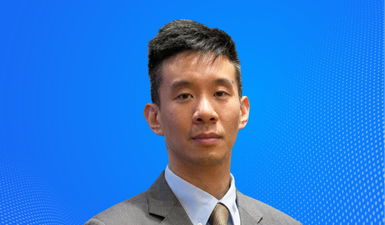
Knowledge Hub / Köksal Küçükada

Advisory Board Spotlight

Köksal Küçükada
CIO
Sanko Holding
Advisory Board Spotlight

SANKO Holding olarak, dijital dönüşümü, iş süreçlerini daha hızlı, esnek ve akıllı hale getiren stratejik bir kaldıraç olarak görüyoruz. 2026 yılı teknoloji gündemimizde yapay zeka, RPA, otonom ajan teknolojileri ve robotik sistemlerin kurumsal süreçlerle entegrasyonu önemli bir yer tutuyor.

RPA çözümleri operasyonel süreçlerde tekrarlayan işleri otomatikleştirerek verimliliği artırırken, yeni nesil otonom ajanlar veri akışını yorumlayabilen ve süreçler arasında karar destek mekanizmaları oluşturabilen bir katman oluşturuyor. Bunun bir adım ötesinde ise kurumsal yazılımlarla fiziksel robotik sistemlerin aynı veri altyapısı üzerinden çalıştığı yeni bir dönem şekilleniyor. Özellikle üretim, lojistik ve depo operasyonlarında robotların ERP ve iş uygulamalarından gelen gerçek zamanlı verilerle yönlendirilmesi, dijital süreçlerle fiziksel operasyonlar arasındaki bağı güçlendiriyor.

Bu gelişmeler, teknoloji ile iş süreçlerinin birlikte evrildiği yeni bir çalışma modelinin de temelini oluşturuyor. Bu çerçevede biz de teknoloji mimarimizi geleceğin otonom ve entegre iş modellerine uyumlu şekilde geliştirmeye devam ediyoruz.

Proceedings

Proceedings

Presentations

Redefining Security Priorities in the Age of Generative and Agentic Intelligence

Yeşim Öztürk
| IDC
Senior Research Manager Türkiye
Download

The First Hyperscaler That Invests in Türkiye

Özben Miçooğulları
| Cloudflare
Sr. Sales Manager Türkiye & Qatar
Download

Secure Browser + Zero Trust in the Insurance Industry

Cemil Keser
| Aksigorta
Cyber Security Solutions Manager
Download

Securing an AI-Powered Business

Kemal Artıkarslan
| Forcepoint
Sales Engineering Manager
Download

Data Security for AI

Hakan Özdamar
| Forcepoint
Senior Sales Engineer
Download

From Reactive Cybersecurity to Proactive Cyber Resilience

Cengiz Gürer
| Karmasis
Deputy General Manager, Strategy & BD
Download

Knowledge Hub / Johan Nepgen

Partner Spotlight

Johan Nepgen
Principal Sales Engineer
Mimecast

Partner Spotlight

The Human Risk in Cybersecurity: Key Insights from the 2026 Report

Organizations have invested billions in advanced cybersecurity tools like firewalls, SIEM platforms, and zero-trust architectures. Yet, breaches persist. The root cause is not a technology gap but a human challenge. Mimecast’s The State of Human Risk 2026 report, based on input from 2,500 IT professionals across nine countries, highlights this stark reality: organizations know their vulnerabilities but aren’t acting quickly enough to address them.


The Cost of Inaction


The financial stakes are severe. A single insider-driven data exposure event costs organizations $13.1 million on average. With six such incidents per month, organizations face an estimated $943 million in annual losses. These incidents often occur across email inboxes, collaboration platforms, and internal communication channels—highlighting the growing complexity of modern cyber threats.


The Recognition-Action Gap


A key finding from the report is the gap between awareness and action. While 96% of organizations acknowledge incomplete protection and 91% face compliance challenges, only 28% implement two essential practices: regular security awareness training and continuous monitoring for policy violations. This disconnect creates opportunities for attackers who exploit what organizations fail to act on, rather than what they fail to see.


Five Critical Gaps in Cybersecurity


The report outlines five interconnected gaps traditional defenses fail to address:


1. Attack Surface Explosion
Threats now span email, Slack, Teams, Zoom, and other platforms. Despite 71% of organizations expecting negative business impacts from collaboration tool attacks, 38% still rely solely on inadequate native security controls.


2. Insider Risk Crisis
Just 8% of employees account for 80% of security incidents, often due to fatigue or social engineering. Organizations rarely coordinate prevention strategies across negligent, compromised, and malicious insider profiles.


3. Integration Paradox
While 65% of organizations struggle with integrating tools, those who succeed report 40% faster threat remediation. Failed integrations, however, lead to tool sprawl and reduced visibility.


4. Governance Breakdown
Despite the importance of governance, 59% lack confidence in locating data quickly for compliance needs. Manual processes, still used by 36%, cannot keep up with growing data demands.


5. AI Readiness Gap
Although 69% expect AI-driven attacks soon, only 40% have strategies to counter them. This 29-point recognition-readiness gap leaves organizations exposed to AI-enabled phishing and deepfake threats.


The Role of AI: Threat and Opportunity


AI amplifies the risks outlined above. Attackers leverage AI to craft highly convincing phishing emails, voice deepfakes, and sustained business email compromise attacks. Defensively, AI adoption is growing—over half of organizations now use AI for threat detection—but unevenly. While 48% invest in AI monitoring tools, fewer train employees (44%) or establish AI usage policies (41%). This imbalance leaves people vulnerable to AI-driven exploitation.


Moving from Awareness to Execution


Mimecast recommends five priorities for addressing human risk: securing all communication channels, managing risk with behavioral analytics, automating compliance, consolidating tools into integrated platforms, and preparing for AI threats with both defensive AI and governance frameworks. These strategies are interconnected, creating a unified, operationally feasible approach to cybersecurity.


The Bottom Line


With nearly $1 billion in annual insider risk exposure and AI transforming the threat landscape, 2026 must be the year organizations act decisively. The cost of inaction far outweighs the investment required to mitigate human risk. Security leaders face a critical question: will you act before the next incident—or after? Download Mimecast’s report for detailed findings and actionable recommendations. https://www.mimecast.com/resources/ebooks/state-of-human-risk/

UAE Financial Services Congress

UAE Financial Services Congress

Building Resilient Finance in the Age of Intelligence

19 Nov 2026 Intercontinental Festival City

The UAE has been the Middle East’s financial epicentre – a hub where global banks, fintech unicorns, and progressive regulators shape the region’s digital finance agenda. In 2026, the sector entered a defining period as new regulatory milestones, including the New Banking Law, Open Finance regulation, and the UAE’s Financial Infrastructure Transformation (FIT) Programme, accelerate industry-wide transformation.​


​AI, GenAI, and emerging agentic AI are rapidly reshaping how UAE institutions lend, assess risk, manage fraud, advise customers, and run operations. Yet IDC research shows that while 81% of MEA BFSI firms report performance gains from digital and operational transformation, and 100% now use public cloud, only 16% have a fully integrated enterprise-wide AI strategy. Scaling AI responsibly with strong governance, explainability, and data maturity, is becoming a strategic imperative for banking-sector leaders. ​


​At the same time, the UAE’s fintech ecosystem is transforming financial services through digital onboarding, open APIs, embedded finance, payments innovation, and core banking modernization. Initiatives such as the Digital Dirham (CBDC), tokenization pilots, and instant payments are redefining cross-border trade, consumer experience, and national competitiveness. Cyber resilience, Zero Trust architecture, and operational resilience are now central to regulatory expectations.​


​The UAE Financial Services Congress 2026 brings together technology, risk, data, and business leaders across the financial services ecosystem. Through IDC insights, peer-led discussions, and practical frameworks, attendees will gain actionable strategies for building intelligent, resilient, and future-ready financial institutions in the UAE.

Get Ready to be Inspired: Announcing Our IDC Keynote Speaker

Hear from thought leaders and visionary CIOs speakers redefining technology, leadership, and innovation.

4:35 pm

IDC Keynote: The Great Reset: Redefining Financial Services in the UAE

The UAE’s financial sector is undergoing a fundamental reset, driven by new banking law, open finance regulation, and the FIT Programme. Drawing on IDC’s latest MEA BFSI research, this keynote explores the strategic choices facing banks and fintechs as they navigate compliance, reimagine business models, and race to deploy AI and open APIs at scale.

Michael Yeo | Asia/Pacific IDC

Read Bio
Michael Yeo

Partners

Venue

Knowledge Hub

UAE Financial Services in 2026: Sovereign Rails, Applied AI and the Fight Against Fraud

On November 19, 2026, key leaders from the financial services community of the UAE will convene at the UAE financial service congress. At this year’s event. conversations amongst the guests will be focused not on whether to enact a digital transformation program but on key operational and strategic issues of who controls the new hybrid infrastructure, how fast AI can be scaled safely, and how to stay ahead of increasingly synthetic fraud threats. IDC data points to five trends that define the market in the Middle east market.

Michael Yeo
| IDC
Associate Research Director
Read More

Be Part of it!

REGISTER NOW

Knowledge Hub / Essa Haidar

CXO Spotlight

Essa Haidar
Chief Technology Officer
Ooredoo

CXO Spotlight

Intelligent Networks, Intelligent Enterprises: Leading in the Age of AI Native Infrastructure

The digital economy is entering a decisive new phase — one where competitiveness is no longer determined by connectivity alone, but by intelligence built directly into infrastructure. Around the world, executive leaders are shifting from traditional transformation programs to a more ambitious mandate: creating enterprises that can sense, decide, and act in real time. This next frontier is defined by two powerful forces converging at scale: next‑generation networks and applied AI woven throughout the enterprise fabric.


The Network Becomes Intelligent: The 5G‑Advanced Era


Over the past decade, global operators made extraordinary strides advancing mobile broadband. Now, the leap to 5G‑Advanced (5G‑A) and 5G Standalone (5G SA) marks the most consequential shift since LTE. More than 180 operators are on track to deploy these capabilities by 2025, a signal that the industry has reached an inflection point.


5G‑A brings an immediate 20–30% improvement in network efficiency, delivering higher capacity and better user experience. Meanwhile, 5G SA — built on a fully cloud‑native architecture — achieves single‑digit millisecond latency, making real‑time industrial control, robotics, and immersive experiences commercially viable. Cloud‑native cores reduce energy per bit by 30–50%, drive faster innovation cycles, and streamline lifecycle management.


But the true transformation lies in the Service‑Based Architecture (SBA) underpinning 5G SA. This architecture is inherently programmable, enabling networks to behave less like infrastructure and more like intelligent digital systems.


Two capabilities exemplify this shift:


NWDAF — From Transport Layer to Decision Engine


The Network Data Analytics Function (NWDAF) infuses machine‑learning‑based analytics directly into the 5G core. It continuously monitors behavior, predicts mobility and traffic patterns, allocates resources intelligently, and automates policy decisions. In effect, NWDAF turns the network into an AI‑powered decision engine, capable of self‑optimization and real‑time experience assurance.


NEF — Exposing Intelligence to the Ecosystem


The Network Exposure Function (NEF) opens network capabilities securely to developers and enterprises. Through standardized APIs, organizations gain access to quality‑on‑demand, slicing control, real‑time analytics, location data, and event triggers that enable new industry applications. NEF transforms the network from a connectivity provider into a platform for ecosystem innovation.


Together, NWDAF and NEF redefine what a network can be — moving operators beyond bandwidth economics into the era of intelligent digital services.


AI at Scale: The Enterprise’s New Growth Engine


If 5G SA represents the digital nervous system, AI is the intelligence that activates it. Across industries, CEOs and technology leaders are now centering their strategies on three AI‑driven impact pillars:


1. Operational Efficiency That Moves the P&L


AI‑driven automation is delivering returns once considered aspirational: up to 35% OPEX reduction through predictive maintenance and automated configuration, over 20% improvement in capacity planning accuracy, and 30–50% fewer outages thanks to proactive anomaly detection and root‑cause acceleration. Efficiency is no longer a cost‑cutting exercise — it is a catalyst for reinvestment and growth.


2. Customer Experience Orchestrated, Not Managed


AI agents resolve 60–70% of engagement scenarios, enabling human experts to focus on complex needs. Predictive detection prevents issues before they reach the customer, cutting complaints by 25–40%. Personalized digital journeys deliver 15–25% conversion gains. Enterprises are evolving from reactive service models to proactive, end‑to‑end experience orchestration.


3. New Revenue Through Intelligent Network Services


Dynamic slicing, edge computing, and AI‑driven charging are expected to generate USD 130–150 billion globally by 2030. Industry‑specific applications — especially in logistics, manufacturing, and healthcare — now rely on real‑time network intelligence. With NEF‑enabled API monetization, operators are emerging as strategic enablers of national and sector‑wide digital transformation.


Advanced Compute: Accelerating AI for Every Enterprise


To unlock these capabilities, enterprises are modernizing their compute environments. Demand for GPU‑accelerated infrastructure is growing at 30%+ CAGR, driven by large‑scale training, inference, and real‑time analytics. Smart datacenters equipped with NVIDIA‑class GPUs deliver 3–10× faster training, secure AI experimentation, and high‑density efficiency. GPU‑as‑a‑Service models further democratize access, removing CAPEX barriers and speeding adoption.


The Path Forward: Building the AI‑Native Enterprise


The convergence of next generation networks, AI at scale, and GPU‑accelerated compute signals the dawn of the AI‑native enterprise. For leaders, the mandate is clear: build intelligent networks, activate enterprise‑wide AI, and transform infrastructure into a platform for innovation and growth.


Those who do will define the next era of digital leadership.

Knowledge Hub / Huda Ahmed Mohsen

CXO Spotlight

Eng. Huda Ahmed Mohsen
Ministry of Information (Bahrain)
Chief of Information Technology

CXO Spotlight

Breaking Barriers and Building Resilience: Women’s Leadership in Cybersecurity

Advancing the Frontlines of Cyber Resilience


In today’s rapidly evolving digital landscape, cyber threats are more sophisticated and relentless than ever before. Organizations across industries are investing heavily in technologies and strategies to defend their networks, data, and users. Yet one of the most profound strengths in building cyber resilience is often overlooked: the leadership and impact of women in cybersecurity.


While women remain underrepresented in cybersecurity roles globally — and particularly in leadership positions — those who have risen to leadership have demonstrated exceptional capability in shaping strategic decisions, strengthening organisational culture, and championing risk-aware innovation. Their contributions are not only valuable but redefine what strong leadership looks like in a sector driven by complexity, strategy, and human behaviour.


The Strategic Value of Women Leaders in Cybersecurity


Cybersecurity today is no longer just a technical function; it is a strategic business imperative, influencing governance, risk management, collaboration, and enterprise culture. Women leaders consistently bring strengths that align with these broader organisational needs:


Holistic Decision-Making


Women often adopt a systems-level approach to problem solving — integrating technical considerations with organisational dynamics, user behaviour, and business impact. This holistic thinking is vital in defending against sophisticated threats, where success depends not only on technology but on aligning people and processes with security objectives.


Collaborative Leadership Across Functions


Effective security demands teamwork spanning IT, risk, legal, human resources, and executive leadership. Women’s leadership styles — often inclusive and collaborative — help break down traditional silos, ensuring that security strategies are embedded across the enterprise rather than left isolated within technical teams.


Risk Awareness and Governance


Governance and risk management are core elements of resilient cybersecurity. Women leaders have a strong track record in balancing ambitious innovation with prudent risk mitigation, enabling organisations to advance securely while navigating rapid technological change.


Championing Cultural Change


Security is as much about behaviour as it is about technology. Women leaders frequently emphasise awareness, education, and communication — helping organisations cultivate a security mindset among employees, partners, and leadership alike.

Knowledge Hub / Massimiliano Claps

Analyst Spotlight

Massimiliano Claps
Research Director
IDC

Analyst Spotlight

Vision to Reality: How Governments are Empowering the Middle East’s AI Future

IDC predicts that AI will have a cumulative global economic impact of $19.9 trillion by 2030, driving 3.5% of global GDP growth. Governments will play a strategic dual role – both shaping policies for secure, impactful, and responsible adoption of AI across industries, and acting as major buyers of AI to transform public programs and services, enhancing operational efficiency and achieving mission outcomes.


The Gulf countries have ambitious aspirations to lead the global AI economy. Empowering public service transformation through AI has become both an economic competitiveness and national security imperative for the region. In fact, IDC predicts that by 2029, 40% of national governments, led by EU and GCC countries, will use agentic AI to digitize public services by life events, reducing the cost to operate digital channel infrastructure and platforms by 25%.


For instance, the Abu-Dhabi Government Digital Strategy 2025-2027 aims to “…position the emirate as a global leader in AI-driven government and will deploy AED13 billion through 2025-2027 to foster innovation and technology adoption in the emirate…”. Likewise, the Kingdom of Saudi Arabia wants to position itself as “…one of the leading countries in the field of AI at the global level”, and through its AI investment vehicle, Humain, plans to build up to six gigawatts of data center capacity nationwide by 2034.


The early applications of AI agents in government focused primarily on back-office functions such as HR, procurement, and IT, assisting with automating code documentation, software development, testing, engineering, and compliance with security regulations. However, AI agents are rapidly enabling governments to automate more complex, multi-step processes that cannot easily be codified through rules. These include mission-critical areas such as border control, public health, social benefits, and grants management.


Across these mission areas, AI solutions, like TAMM AI Assistant can drive more responsive, personalized, and convenient services that enhance citizen satisfaction and trust by addressing the challenges of bureaucratic, siloed delivery. They also have the potential to improve urban quality of life, as seen in initiatives, such as the KAFD smart traffic management project, or Dubai Police’s advanced computer vision systems for traffic safety.


Governments that are leading the AI race are focusing their strategies on key aspects namely – organizational change, responsible use, data readiness, and digital sovereignty.


Let’s explore how each of these elements will play a critical role in 2026.


Organizational Change


Implementing AI requires upskilling the entire government workforce to explore its potential and understand how their roles will evolve. Specialized technical expertise will be critical, not only in AI model development but also in agent and model orchestration, AI stack security, and cost control (e.g., managing per-token charges from third-party providers or optimizing GPU cluster deployment in private cloud environments).


Responsible Use of AI


Robust output validation, oversight, and monitoring are essential, particularly in use cases involving sensitive national security missions or government programs that impact vulnerable populations. Clear accountability and ethical frameworks will strengthen public trust.


Data Readiness


While accuracy is improving with newer large language models, fine-tuning and grounding models for specific government programs remain paramount. In some mission areas, small language models (SLMs) may also be more appropriate.


IDC’s 2025 Government Insights Survey reveals that 45% of governments plan to fine-tune GenAI models, and 35% plan to ground them using retrieval-augmented generation (RAG) frameworks. High-quality, secure, and accessible data is crucial for training, grounding, and operating AI agents. This is especially vital for autonomous agents, whose performance depends on memory and self-learning from prior interactions.


AI Sovereignty


Governments increasingly seek flexibility in AI deployment environments. According to IDC’s 2025 Government Insights Survey, only 32% of governments prefer the public cloud for AI. The majority favor private, hybrid, or sovereign setups.


IDC predicts that by 2026, 55% of governments will adopt hybrid sovereign cloud stacks – blending hyperscaler scale with national control to ensure compliance, security, and strategic autonomy of AI.


Sovereign control of the end-to-end AI ecosystem – from infrastructure to data, models, operations, and talent – is a top priority in the Gulf. For example, the Abu-Dhabi Government Digital Strategy 2025-2027, which aims to “… to establish a robust digital infrastructure, creating a flexible and scalable foundation to achieve 100% adoption of sovereign cloud computing for government operations and digitizing and automating 100% of processes.”


The Quantum Future


Beyond AI, quantum computing is emerging as a transformative technology for government, offering the potential to solve complex challenges in national security, scientific discovery, and critical infrastructure management. The integration of quantum and classical compute technologies will empower governments to operate more securely, efficiently, and strategically, laying the foundation for a new era of computational capability that strengthens economic competitiveness, national resilience, and global leadership for Saudi Arabia, the UAE and the whole region.


Regional Vision, Global Intelligence


The Gulf Region stands at the forefront of the global AI economy. At the IDC Qatar CIO Summit 2026, government leaders will have the opportunity to engage with regional peers, global IDC experts, and technology partners to accelerate their transformation journey and realize the benefits of disruptive technologies like AI and quantum.


Knowledge Hub / Bob Parker

Analyst Spotlight

Bob Parker
SVP, Software and Services Research
IDC

Analyst Spotlight

Getting Your Data AI Ready

It has become a common refrain – getting data governance right is key to a successful AI strategy!  This conventional wisdom is very true, but it is not a new problem.  For as long as I have been involved in IT, both as an analyst and as a CIO, companies have struggled with wrangling the various data sets across the applications running at the organization.


Much of this prior effort focused on structured data sitting in relational databases.  From data warehousing to data lakes and now to data lakehouses, companies have incrementally built better cataloging and semantic mapping.  This category of data provides a performance context; it is where a company keeps score whether it is for financial reporting, operational status, sales pipelines, or workforces.


While much of the effort historically has been on this structured data, for the average company it only represents about 20% of the information corpus.  The rest is in the form of unstructured information in the form of documents, video, voice, or structures (e.g., blueprints or chemical models).  A central benefit of the transformer algorithms that build the language models used in generative AI is that they introduce some structure into this mess via vectoring.  This category of data represents the knowledge context at an enterprise – the collective knowledge of the organization is locked in these documents, videos, voice recordings, and structures.


There is a third category of information as well – streaming data.  This is the telemetry of the organization.  It could come in the form of sensors on a factory floor, the readings from health monitors, or click streams on a website.  This type of data usually is delivered in some time-series form and needs specific governance, usually tag repositories, to understand and apply the data.  This data provides the situational context, a view of what is happening in real time.


Efforts to organize, govern and utilize the data must link all three categories of information.  To achieve the tremendous potential of agentic AI, a company must be able to link the knowledge to the situational and performance context.  This requires advanced tools for semantic graphing and knowledge mapping with a strong commitment from the organization to elevate comprehensive data management to a strategic priority.


IDC does advise companies that they don’t have to get this all done before they undertake agentic efforts.  Rather, it is important to have the tools, organization, and policies in place and then synchronize the data domains with the agentic priorities.  For example, if the company wants to focus on marketing, then the information relevant to that function should be prioritized for governance.


It is easy to acknowledge that data is critical to AI success, but realization requires a comprehensive approach to data across all categories.

Knowledge Hub / Matt Eastwood

Analyst Spotlight

Matt Eastwood
SVP, WW Research
IDC

Analyst Spotlight

AI Infrastructure: The Foundation of the Agentic Era

The world is entering a defining moment for digital infrastructure. Artificial intelligence has moved from experimentation to ubiquity, and with it, a new operational paradigm is taking shape — one where agents rather than applications become the primary engines of digital value creation. This is the dawn of the agentic AI era, and its success depends on one thing above all else: robust, intelligent, and scalable infrastructure.


From Automation to Autonomy


For decades, infrastructure strategy has focused on efficiency – making IT faster, cheaper, and more reliable. But AI is forcing a step change. IDC’s Worldwide IT Industry 2026 FutureScape predicts that by 2028, nearly half of all IT product and service interactions will be mediated by AI agents. These systems are not just automating tasks; they are reasoning, collaborating, and acting in context – continuously learning from data to improve business outcomes.


Supporting this shift requires infrastructure that can think for itself. IDC’s Future of Digital Infrastructure research shows that by 2029, 70% of new operating systems will ship with built-in infrastructure operations agents and model context servers to drive efficiency, security, and sustainability. In short, we are moving from systems that are operated to systems that operate themselves.


AI Factories and the Rise of Private Intelligence


The massive growth of generative and agentic AI has triggered a global infrastructure renaissance. Enterprises and hyperscalers alike are building “AI factories”. These are the next-generation data centers purpose-built for high-density and GPU-driven workloads. AI-ready data center spending in the U.S. has tripled in three years and forecast anticipate that demand for AI-ready capacity will grow 33% annually through 2030.


IDC’s recent Private AI Infrastructure Systems MarketScape underscores why this matters: as AI workloads scale, organizations need hybrid models that balance performance, cost, and control. Leaders like Dell Technologies, HPE, and Cisco are responding with turnkey private AI systems that integrate compute, storage, networking, and model management software into secure, cloud-consistent platforms. These systems form the backbone of enterprise AI, where data sovereignty, security, and latency matter most.


The Power, Cooling, and Connectivity Challenge


The scale of AI infrastructure buildout is also testing physical limits. High-density GPU clusters can draw tens of kilowatts per rack, driving record levels of power demand and forcing innovation in liquid cooling and grid optimization. IDC predicts that by 2030, 70% of new liquid-cooled deployments will adhere to open standards, improving compatibility and reducing deployment costs by one-third. The infrastructure bottleneck is shifting from compute to power and cooling, making sustainability not just an ESG issue but an operational imperative.


Toward the Autonomous Enterprise


Agentic AI doesn’t live in isolation – it depends on a digital fabric that spans datacenters, clouds, and edge environments. By 2027, IDC expects 80% of enterprises to deploy distributed edge infrastructure to support low-latency AI inferencing, and 75% will use interconnection-oriented networks to secure and orchestrate AI workloads. This fusion of automation, intelligence, and interconnection is paving the way toward autonomous IT operations, where humans remain in the loop but not in the way.


Why It Matters Now


CIOs in the Middle East and beyond are standing at the intersection of two transformations: the modernization of infrastructure and the emergence of the agentic enterprise. The winners will be those who view AI infrastructure not as a cost center but as a catalyst – the intelligent backbone that allows agents, data, and humans to collaborate seamlessly.


At the IDC CIO Summit 2026, we’ll explore how forward-thinking leaders are reimagining infrastructure for this new era by building the secure, sustainable, and scalable foundations of an intelligent enterprise. Because in the age of agentic AI, infrastructure isn’t just the platform for innovation. It is the innovation.

Knowledge Hub Qatar

Knowledge Hub

Discover thought-provoking articles from IDC analysts, strategic partners, and end-user speakers. Explore expert viewpoints on the latest tech trends, real-world transformation stories, and forward-looking insights shaping the digital future.

AI Infrastructure: The Foundation of the Agentic Era

The world is entering a defining moment for digital infrastructure. Artificial intelligence has moved from experimentation to ubiquity, and with it, a new operational paradigm is taking shape — one where agents rather than applications become the primary engines of digital value creation. This is the dawn of the agentic AI era, and its success depends on one thing above all else: robust, intelligent, and scalable infrastructure.

Matt Eastwood
| IDC
SVP, WW Research
read more

Getting Your Data AI Ready

It has become a common refrain – getting data governance right is key to a successful AI strategy! This conventional wisdom is very true, but it is not a new problem. For as long as I have been involved in IT, both as an analyst and as a CIO, companies have struggled with wrangling the various data sets across the applications running at the organization.

Bob Parker
| IDC
SVP, Software and Services Research
read more

Vision to Reality: How Governments are Empowering the Middle East’s AI Future

IDC predicts that AI will have a cumulative global economic impact of $19.9 trillion by 2030, driving 3.5% of global GDP growth. Governments will play a strategic dual role – both shaping policies for secure, impactful, and responsible adoption of AI across industries, and acting as major buyers of AI to transform public programs and services, enhancing operational efficiency and achieving mission outcomes.

Massimiliano Claps
| IDC
Research Director
read more