IDC & IBM Executive Dinner

IDC & IBM Executive Dinner

Reinventing Application Operations: Freeing Up Run Costs to Power Innovation

Logo

Reinvent your Application Operations model with AI‑first automation and unlock the capacity your organization needs to move from experimentation to scaled impact.

A peer-to-peer dinner roundtable

Recent IDC research shows that as Nordic organizations explore how to apply AI across their application estates and operations, many are also uncovering significant opportunities for improvement. While more than half encounter readiness barriers including skill gaps, integration complexity, aging delivery platforms, and data governance challenges these same areas represent high‑impact levers for future value creation. Capabilities such as automated incident detection, root‑cause analysis, self‑healing, and workflow automation are already being tested, and there is substantial upside as organizations move from experimentation toward scaled adoption.

This readiness gap is emerging at a pivotal moment: IDC finds that over half of Swedish organizations believe they must reinvent themselves within the next five years to remain competitive. Yet few feel they’ve fully made the changes needed to capture the next wave of business transformation. This growing disconnect between ambition and execution underscores a clear opportunity: while AI sits high on strategic agendas, strengthening operational foundations is essential to translating intent into meaningful outcomes. Modernizing Application Operations has therefore become a critical enabler for CIOs aiming to close this gap, reduce operational drag, and unlock the capacity to shift from “run” to “innovate.”

Key Topics

What’s holding back modern Application Operations?

Preparing for an automation‑ and AI‑first future: moving from pilots to scale

Rebalancing Run vs. Change: Creating capacity to reinvest in innovation

Why you should attend?

This IDC and IBM Executive Dinner provides a private forum to share thought leadership, experiences, compare strategies, and discuss how modern, autonomous, or “zero‑touch” Application Operations models can unlock new capacity, resilience, and business value. During this exclusive event, we will address:

  • What’s holding back modern Application Operations?
    We’ll uncover today’s roadblocks, from manual processes and fragmented estates to skills pressures and operational silos.
  • Preparing for an automation‑ and AI‑first future: moving from pilots to scale
    Understanding where automation and AI are already delivering value, why so many initiatives stall before scaling, and what foundations are needed to achieve more autonomous or “zero‑touch” operations.
  • Rebalancing Run vs. Change: Creating capacity to reinvest in innovation
    How optimizing Application Operations can unlock budget, capacity, and talent allowing CIOs to accelerate AppDev, modernization, and business‑driven transformation initiatives.

Speakers

Jennifer Thomson

Jennifer Thomson

Associate Vice President

Global Services Insights, IDC

Read bio

Anna Johansson

Anna Johansson

Partner, IBM Consulting Leader Sweden & Norway

IBM

Read bio

Venue

Restaurant Petri

Kommendörsgatan 16, 114 48 Stockholm

Agenda

IDC & IBM Executive Dinner

One Day Event

5:30 pm

Champagne Reception

Guest arrival with welcome drinks and networking

5:50 pm

IDC & IBM Welcome Address

Jennifer Thomson

Jennifer Thomson

Associate Vice President Global Services Insights, IDC

Anna Johansson

Anna Johansson

Partner, IBM Consulting Leader Sweden & Norway, IBM

6:30 pm

Starter Courses – First Discussion Topic

What’s holding back modern Application Operations?

We’ll uncover today’s roadblocks, from manual processes and fragmented estates to skills pressures and operational silos

7:30 pm

Main Course – Second Discusson Topic

Preparing for an automation‑ and AI‑first future: moving from pilots to scale

Understanding where automation and AI are already delivering value, why so many initiatives stall before scaling, and what foundations are needed to achieve more autonomous or “zero‑touch” operations.

8:20 pm

Dessert – Third Discussion Topic

Rebalancing Run vs. Change: Creating capacity to reinvest in innovation

How optimizing Application Operations can unlock budget, capacity, and talent allowing CIOs to accelerate AppDev, modernization, and business‑driven transformation initiatives.

9:00 pm

Summary of discussions and key takeaways

Jennifer Thomson

Jennifer Thomson

Associate Vice President Global Services Insights, IDC

Anna Johansson

Anna Johansson

Partner, IBM Consulting Leader Sweden & Norway, IBM

9:30 pm

Event close

Sponsors

Powered by

AI & Data Summit MY – Key Themes

Why Attend?

The Summit is more than just a conference. It’s where the region’s technology leaders come together to shape the future of AI-driven enterprises.

Network with the Region’s Elite

Connect with 80+ qualified attendees, including 60% CIOs, CTOs, CSOs, and Heads of IT from across the Country.

Learn from the Best
Hear directly from IDC analysts, global experts, and pioneering CIOs on how to scale AI, Data, GenAI, and agentic systems across industries.

Discover Real-World Use Cases
Gain insights into how leading organizations are implementing AI-driven automation to improve agility, resilience, and customer value.

Future-Proof Your Strategy
Understand the long-term business implications of agentic systems, ensuring your organization thrives in a rapidly evolving digital economy.

Master AI Security & Trust
Explore strategies to tackle data privacy, AI observability, model integrity, and digital trust challenges.

Cloud as the AI Foundation
Discover how cloud platforms, edge computing, and 5G enable scalable, secure, and sovereign AI deployments

Key Themes

The summit this year will spotlight how innovation, intelligence, and resilience are reshaping enterprises through AI, cloud modernization, agentic architectures, and cybersecurity.

Scaling AI: From Pilot to Enterprise Deployment 

Explore the frameworks, architectures, and playbooks that move AI beyond experiments into secure, reliable, organization wide deployment.

Data Sovereignty, Governance and Interoperability 

Understand the impact of Malaysia’s evolving PDPA, cross-border data rules, and interoperability needs on secure, compliant data ecosystems.

Generative and Agentic AI: The Next Frontier 

Discover the next wave of GenAI and autonomous AI agents transforming workflows, customer experience, and decision-making across Malaysia’s industries.

Cybersecurity, AI Safety & Resilience

Malaysia is tightening its PDPA, implementing breach notification rules, and experiencing rapid digitisation across industries. As enterprises scale AI, cybersecurity, AI safety, model integrity, and resilience against data breaches or AI-enabled attacks are becoming critical national priorities.

Data Value Reinvention in the Age of AI

Unlock how Malaysian organizations are transforming siloed, archived, and operational data into high-value strategic assets through AI-driven discovery and analytics.

AI Governance: Trust, Transparency and Responsible AI

Navigate emerging ethical standards and regulatory expectations to build AI systems that are fair, explainable, accountable, and trusted by users.

Infrastructure Evolution: Edge, Cloud and AI Platforms

Examine the infrastructure foundations: cloud, edge, network, and real-time processing that enable scalable, low-latency AI innovation nationwide.

Business Value and ROI from AI & Data​

Learn how Malaysian enterprises are measuring impact, achieving cost optimisation, and driving competitive advantage through AI and modern data strategies.

Future Regulation and Strategic Foresight

Gain foresight into upcoming policies, national AI governance structures, and long-term regulatory shifts shaping Malaysia’s AI-enabled future.

Ecosystems, Partnerships and Innovation Models 

Explore the collaborative models involving government, enterprises, startups, academia, and technology providers powering Malaysia’s AI ecosystem.

People, Culture and AI Readiness​

Address the skills, mindsets, and organisational change required to build a workforce ready to adopt and collaborate with AI.

AI & Data Summit MY – Why Partner

Why Partner

Position your brand at the forefront of the region’s premier CIO community. This results-driven platform is designed to maximize engagement and ROI for solution providers.

Become a Partner
Why Partner

Access Key Decision Makers

Directly engage with 200+ qualified technology buyers and influencers from the country.

ROI-Focused Lead Generation

Unlock opportunities through power meetings, roundtables, and workshops designed to connect partners with active buyers.

Brand Elevation & Visibility

Showcase your solutions at the most premium CIO event in the region, amplifying your presence across the technology ecosystem.

Research-Backed Intelligence

Leverage exclusive IDC insights and CIO surveys to better understand market trends and strengthen your go-to-market strategy.

Workshop Partner

AgendaKnowledge Hub / Matt EastwoodAgenda

Analyst Spotlight

Matt Eastwood
SVP, WW Research
IDC

Analyst Spotlight

AI Infrastructure: The Foundation of the Agentic Era

The world is entering a defining moment for digital infrastructure. Artificial intelligence has moved from experimentation to ubiquity, and with it, a new operational paradigm is taking shape — one where agents rather than applications become the primary engines of digital value creation. This is the dawn of the agentic AI era, and its success depends on one thing above all else: robust, intelligent, and scalable infrastructure.


From Automation to Autonomy

For decades, infrastructure strategy has focused on efficiency – making IT faster, cheaper, and more reliable. But AI is forcing a step change. IDC’s Worldwide IT Industry 2026 FutureScape predicts that by 2028, nearly half of all IT product and service interactions will be mediated by AI agents. These systems are not just automating tasks; they are reasoning, collaborating, and acting in context – continuously learning from data to improve business outcomes.


Supporting this shift requires infrastructure that can think for itself. IDC’s Future of Digital Infrastructure research shows that by 2029, 70% of new operating systems will ship with built-in infrastructure operations agents and model context servers to drive efficiency, security, and sustainability. In short, we are moving from systems that are operated to systems that operate themselves.


AI Factories and the Rise of Private Intelligence

The massive growth of generative and agentic AI has triggered a global infrastructure renaissance. Enterprises and hyperscalers alike are building “AI factories”. These are the next-generation data centers purpose-built for high-density and GPU-driven workloads. AI-ready data center spending in the U.S. has tripled in three years and forecast anticipate that demand for AI-ready capacity will grow 33% annually through 2030.


IDC’s recent Private AI Infrastructure Systems MarketScape underscores why this matters: as AI workloads scale, organizations need hybrid models that balance performance, cost, and control. Leaders like Dell Technologies, HPE, and Cisco are responding with turnkey private AI systems that integrate compute, storage, networking, and model management software into secure, cloud-consistent platforms. These systems form the backbone of enterprise AI, where data sovereignty, security, and latency matter most.


The Power, Cooling, and Connectivity Challenge

The scale of AI infrastructure buildout is also testing physical limits. High-density GPU clusters can draw tens of kilowatts per rack, driving record levels of power demand and forcing innovation in liquid cooling and grid optimization. IDC predicts that by 2030, 70% of new liquid-cooled deployments will adhere to open standards, improving compatibility and reducing deployment costs by one-third. The infrastructure bottleneck is shifting from compute to power and cooling, making sustainability not just an ESG issue but an operational imperative.


Toward the Autonomous Enterprise

Agentic AI doesn’t live in isolation – it depends on a digital fabric that spans datacenters, clouds, and edge environments. By 2027, IDC expects 80% of enterprises to deploy distributed edge infrastructure to support low-latency AI inferencing, and 75% will use interconnection-oriented networks to secure and orchestrate AI workloads. This fusion of automation, intelligence, and interconnection is paving the way toward autonomous IT operations, where humans remain in the loop but not in the way.


Why It Matters Now

CIOs in Malaysia and beyond are standing at the intersection of two transformations: the modernization of infrastructure and the emergence of the agentic enterprise. The winners will be those who view AI infrastructure not as a cost center but as a catalyst – the intelligent backbone that allows agents, data, and humans to collaborate seamlessly.

At the IDC AI & Data Summit Malaysia 2026, we’ll explore how forward-thinking leaders are reimagining infrastructure for this new era by building the secure, sustainable, and scalable foundations of an intelligent enterprise. Because in the age of agentic AI, infrastructure isn’t just the platform for innovation. It is the innovation.

Knowledge Hub / Ali Sallam

Partner Spotlight

Ali Sallam
Digital Solutions Architect
Iron Mountain

Partner Spotlight

Your Competitive Edge Isn’t AI — It’s What Comes Before It

AI has become a board-level priority across industries. Organizations are investing heavily in advanced models, automation platforms, and intelligent agents, all in pursuit of faster decisions, improved efficiency, and competitive differentiation. Yet, despite this momentum, many AI initiatives struggle to move beyond pilots or fail to deliver meaningful, lasting impact.


The issue is rarely the technology itself.


In practice, AI failures are often quiet rather than dramatic. Systems continue to run, dashboards remain available, and funding persists; but adoption fades, trust erodes, and decision-making remains unchanged. These outcomes point to a deeper challenge: AI does not create alignment, discipline, or clarity. It assumes they already exist.


What determines success sits beneath the surface. Trusted data, stable and well-understood processes, coherent enterprise systems, and organizational readiness all play a far greater role than model sophistication alone. Cultural factors, such as trust in automated decisions, willingness to change established workflows, and tolerance for ambiguity, often shape outcomes more decisively than algorithms or infrastructure.


Compounding this challenge is the growing complexity of the AI ecosystem itself. CIOs are navigating an expanding array of platforms, consumption models, governance requirements, and regulatory expectations. In many cases, the true cost of AI only becomes visible well after implementation, while return on investment remains difficult to measure or articulate in the early stages.


The result is a growing gap between AI’s promise and its realized value.


To close that gap, organizations must shift their focus from “how fast can we deploy AI?” to “how ready are we to sustain it?” This means investing earlier in information governance, data quality, process clarity, and organizational alignment; long before AI is introduced into critical workflows.


The future of enterprise AI will not be defined by who adopts the most advanced tools first, but by who builds the strongest foundations. Competitive advantage, ultimately, belongs to those who understand that what comes before AI matters far more than what comes after.

Knowledge Hub / Sonny Tran

Partner Spotlight

Sonny Tran
Director, Strategic Growth & Network Strategy
EdgeNext

Partner Spotlight

From CDN to IDN: Why the Shift, and Why Now?

As digital services become mission-critical to enterprise growth, the question facing CIOs is no longer whether delivery performance matters — but whether today’s delivery architectures are still fit for purpose.


Global digital traffic continues to grow at 20%+ annually, driven by video-heavy consumption, cloud-native applications, real-time services, and AI-enabled platforms.


At the same time, user tolerance is shrinking: when a page takes more than 4 seconds to load, roughly one in four users abandon the experience. Performance is no longer a backend detail — it directly shapes engagement, conversion, and brand trust. For CIOs, delivery performance has moved beyond a technical metric; it increasingly influences revenue, resilience, and competitive differentiation.


Yet delivery is becoming harder to manage. Applications are dynamic by design. Infrastructure is increasingly multi-cloud and multi-region. Network conditions shift constantly. In this environment, outcomes depend less on “where content sits” and more on “how traffic decisions are made”— in real time.


This is the backdrop to a clear industry shift: from content delivery networks (CDNs) to intelligent delivery networks (IDNs).


Traditional CDNs were built to cache and distribute content efficiently. IDNs build on that foundation, extending the delivery layer with real-time intelligence, adaptive routing, automation, and integrated security — so optimization happens proactively, not after degradation or disruption.


For CIOs, the priorities are straightforward:


– Treat delivery as a measurable business risk surface — quantify downtime exposure, define risk ownership, and track it alongside other operational and financial risks.

– Manage latency and availability as customer-experience levers — set clear thresholds tied to engagement and conversion, and enforce accountability across teams and vendors.

– Build real-time visibility and control at the traffic layer — ensure you can detect degradation early and dynamically steer traffic across multi-cloud, multi-region environments.

– Integrate security into delivery decisions — make protection part of the delivery path (not an add-on) so performance, resilience, and security scale together.

Knowledge Hub / Nadeem Qureshi

Partner Spotlight

Nadeem Qureshi
Sales Director
Integra Technologies

Partner Spotlight

Modernizing for Autonomy: How Migration and Platforms Enable Agentic AI

As enterprises move toward agentic AI, systems capable of acting autonomously and making decisions, the greatest barrier is rarely intelligence. Instead, it is the readiness of enterprise platforms. Most organizations continue to operate on architectures designed for stability, predictability, and human-led decision-making. While effective for traditional workloads, these environments struggle to support autonomous decision loops without introducing operational risk.


Agentic AI places fundamentally different demands on enterprise systems. Decisions must be made in real time, data must be accessible and reliable, and outcomes must be observable, reversible, and governed. In this context, modernization and migration are no longer parallel transformation initiatives; they become essential enablers of autonomy.


In practice, agentic AI adoption starts with building the right enterprise foundation, modern, scalable platforms that can safely support autonomy. Cloud-native infrastructure provides the scalability, resilience, and elasticity required for dynamic decisioning. Open platforms enable workload portability, policy-driven governance, and consistent operations across hybrid environments. Modern DevSecOps practices allow autonomous behaviors to be developed, tested, and governed continuously, rather than frozen into rigid release cycles. Ecosystems built around platforms such as Amazon Web Services, Red Hat, and GitLab are increasingly used to support this incremental, controlled modernization approach.


What emerges is a reinforcing cycle. Modernized platforms enable early agentic capabilities in bounded decision domains such as incident response, operational optimization, and security triage. Once deployed, these agentic systems expose new requirements, greater observability, cleaner data paths, stronger integration patterns, and faster recovery mechanisms, driving further modernization across applications, infrastructure, and operations. Rather than slowing transformation, agentic AI accelerates it by revealing where enterprise foundations must evolve next.


Successful enterprises treat autonomy as something that must be engineered and governed, not simply enabled. They scale agentic capabilities through disciplined architecture and platform controls. Migration plays a critical role in this process, helping decouple legacy complexity, simplify operational models, and establish environments where autonomous systems can operate safely and predictably.


At Integra Technologies, this intersection of modernization, migration, and emerging autonomy defines how enterprises prepare for agentic AI, not as a standalone initiative, but as the next phase of digital maturity.


As systems begin to decide, the differentiator will not be intelligence alone, but the strength of the foundations beneath it. Enterprises that invest in modernization today will be the ones trusted to lead in an agentic AI–driven world.

Agenda

Agenda

The IDC CIO Summit Switzerland 2026 is designed for CIOs, CTOs, and transformation leaders. This one-day summit delivers actionable insights on Switzerland’s top priorities for 2026: secure digital modernization, AI and Agentic AI adoption, cybersecurity resilience, and aligning IT with business value in an increasingly regulated and sustainability-focused environment.

Agenda

CIO Summit

Day 1

8:30 am

Event Opening & Welcome

9:10 am

IDC Opening Keynote

Thomas Meyer

Thomas Meyer

SVP, IDC WW Research, IDC

9:30 am

Enduser Keynote

9:50 am

Host Keynote

10:05 am

Enduser Panel

10:30 am

Coffee Break & Networking

11:00 am

Strategic Partner Keynote

11:15 am

Strategic Partner Keynote

11:30 am

Enduser Keynote

11:50 am

Pitches for Connect Roundtable Sessions

12:00 pm

Connect Roundtable Sessions

12:45 pm

Lunch & Networking Break

2:00 pm

Enduser Keynote

2:20 pm

Tech Talk Session

3:00 pm

Enduser Keynote

3:20 pm

Coffee Break & Networking

3:50 pm

Enduser Panel

4:20 pm

Enduser Keynote

4:40 pm

IDC Closing Keynote

4:55 pm

Summary & Wrap-up

5:00 pm

Apéro & Networking

CIO Summit

CIO Summit

The Rise of Agentic Systems

Slide
Slide
Slide
Slide

Modernisieren. Absichern. Gestalten. IT-Leadership im Zeitalter von AI neu definieren

Die Schweiz stärkt ihre Position als europäische Vorreiterin für sichere, verantwortungsvolle und innovationsgetriebene digitale Transformation. Mit einem starken Finanzdienstleistungssektor, einer hochentwickelten industriellen Basis und einem ausgeprägten Engagement für Datenschutz beschleunigt das Land seine Investitionen in Cloud-Modernisierung, Automatisierung und Künstliche Intelligenz – einschließlich der nächsten Evolutionsstufe: Agentic AI.

Für Schweizer CIOs bringt das Jahr 2026 neue Herausforderungen und Chancen: die Steuerung des Zusammenspiels von Innovation und Regulierung, die Modernisierung von Legacy-Systemen unter Einhaltung strenger Datenschutzanforderungen sowie die Integration intelligenter Automatisierung, ohne Sicherheit oder ethische Verantwortlichkeit zu gefährden. Mit der zunehmenden Verbreitung von KI und Agentic AI übernehmen CIOs eine zentrale Rolle bei der Definition von Governance-Modellen, die Transparenz, Vertrauen und messbaren geschäftlichen Mehrwert gewährleisten.

Agenda

Unsere CIO Summit Agenda ist darauf ausgerichtet, zu inspirieren, herauszufordern und zu vernetzen. Von Keynote-Vorträgen mit Branchenführern über interaktive Roundtable bis hin zu Networking-Möglichkeiten – jeder Programmpunkt soll neue Ideen anstoßen und praxisnahe Einblicke bieten. Entdecken Sie das Programm und planen Sie Ihre Teilnahme.

Advisory Board

Fabian Ringwald

Fabian Ringwald

CIO und Mitglied der Geschäftsleitung

SWICA

Read Bio

Holger Spielberger

Holger Spielberger

Former Global Chief Information Officer & Chief Digital Officer

Georg Fischer Piping Systems

Read Bio

Referenten

Thomas Meyer

Thomas Meyer

SVP, IDC WW Research

IDC

Read bio

Anja Lange

Anja Lange

Moderator

Read bio

Priscilla Schneider

Priscilla Schneider

Head of Core Infrastructure

Bank for International Settlements (BIS)

Read bio

Marcus Hug

Marcus Hug

Leiter Informatik & Mitglied der Geschäftsleitung

Michel Gruppe AG (Michel Services)

Read bio

Dr. Sascha Tayefeh

Dr. Sascha Tayefeh

Fachstellenleiter Digitalisierung

Universität Bern

Read bio

Matthias von Alten

Matthias von Alten

Managing Partner & Head of Consulting DACH

Wipro

Read bio

Christian Probst

Christian Probst

Leiter Querschnittsapplikationen

Finanzdepartement des Kantons Basel-Stadt

Read bio

Oliver Köth

Oliver Köth

Managing Director Technology & Innovation

NTT DATA

Read bio

Thomas Greuter

Thomas Greuter

CIO

Migros Bank

Read bio

Thomas Jung

Thomas Jung

Chief Data Officer

Syngenta Group

Read bio

Jan Freudenreich

Jan Freudenreich

Head of IT Security

Basler Kantonalbank

Read bio

Boris Bialek

Boris Bialek

Vice President Industries and Global Field Chief Technology Officer

MongoDB

Read bio

Daleen Langer

Daleen Langer

Senior Account Executive ALPS

Tanium

Read bio

Dorian Klimczyk

Dorian Klimczyk

ICT Senior Project Manager

Comarch

Read bio

Veranstaltungsort

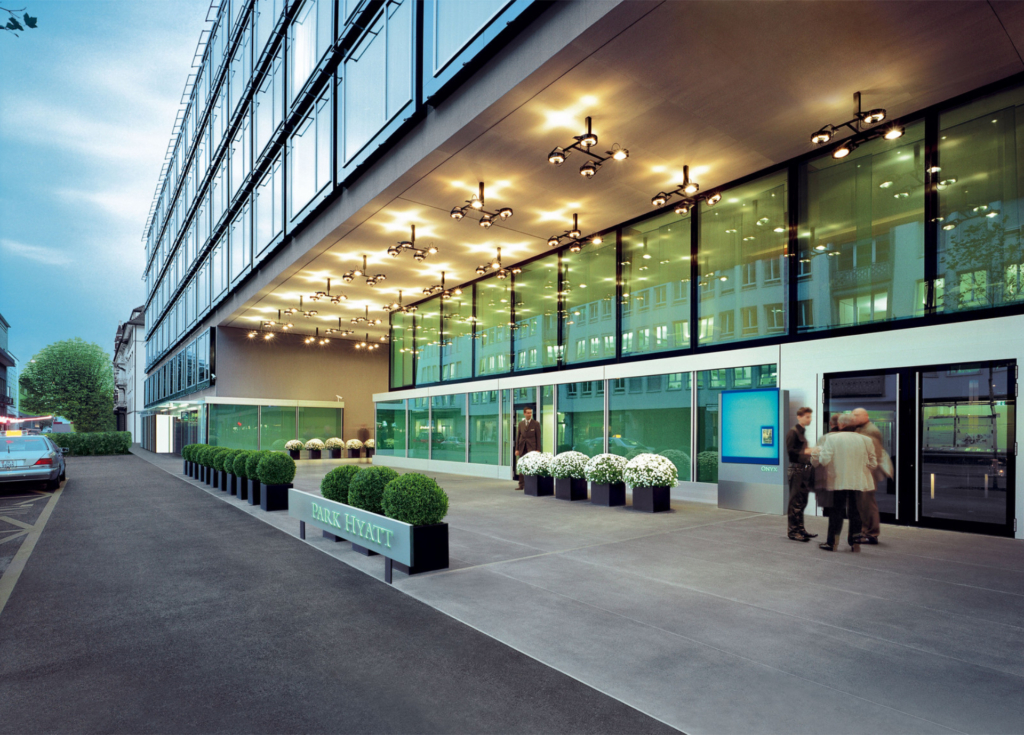
Park Hyatt Zurich

Beethovenstrasse 21, 8002 Zurich, Schweiz

Park Hyatt Zurich Website

Prognose 2026

Bis 2027 werden 55 % der CIOs der G1000 damit beauftragt sein, unternehmensweite KI-Value-Playbooks zu entwickeln, die erweiterte ROI-Modelle enthalten, um die Auswirkungen von KI auf Effizienz, Wachstum und Innovation zu definieren, zu messen und sichtbar zu machen.

Kernthemen

Der CIO als Business Strategist​

CIOs haben sich von operativen Führungskräften zu strategischen Gestaltern des Unternehmens entwickelt. Während die digitale Transformation jedes Geschäftsmodell verändert, definiert technologische Führung heute die Wettbewerbsfähigkeit. Der moderne CIO muss IT-Prioritäten mit Geschäftsergebnissen in Einklang bringen, die Agenda im Vorstand mitgestalten und Innovationen vorantreiben, die messbaren Mehrwert liefern.

Modernization, Legacy and Technical Debt​

Der Umgang mit “technical debt” ist längst nicht mehr nur ein Wartungsthema, sondern eine strategische Priorität. Die Modernisierung von legacy Systemen, die Vereinfachung von Architekturen und die Optimierung von Kostenstrukturen ermöglichen es Unternehmen, Ressourcen von der Instandhaltung hin zu Innovationen zu verlagern. Verschlankte Technologieportfolios schaffen die Agilität, die notwendig ist, um in einer digitalen Wirtschaft wettbewerbsfähig zu bleiben.

Agentic AI Revolution​

Agentic AI markiert den Übergang von Automatisierung zu Autonomie. CIOs stehen vor der Aufgabe, autonome KI-Systeme verantwortungsvoll zu steuern, zu skalieren und in die Organisation zu integrieren – und dabei Chancen mit der notwendigen Governance und Kontrolle in Einklang zu bringen, um intelligente, selbststeuernde Unternehmen zu schaffen.

Resilience by Design​

Resilienz entwickelt sich zur entscheidenden Fähigkeit moderner Unternehmen. Adaptive Architekturen, sichere Infrastrukturen und integrierte Kontinuitätsplanung versetzen Organisationen in die Lage, Störungen standzuhalten – sei es durch wirtschaftliche Unsicherheiten, regulatorische Veränderungen oder Cyberbedrohungen – und dabei Wachstum sowie Vertrauen nachhaltig zu sichern.

Cybersecurity, Trust, und Digital Sovereignty​

Mit der Ausweitung digitaler Ökosysteme wird Vertrauen zu einer entscheidenden Währung. CIOs müssen Cybersicherheit, Datensouveränität und Compliance ganzheitlich adressieren und sicherstellen, dass Cloud-Strategien sowie grenzüberschreitende Aktivitäten mit den sich wandelnden regulatorischen Anforderungen im Einklang stehen. Der Aufbau digitalen Vertrauens schafft zugleich Schutz und einen nachhaltigen Wettbewerbsvorteil.

Aufbau des intelligenten Unternehmens

Daten bilden das Fundament jeder intelligenten Organisation. Verlässliche, gut gesteuerte und zugängliche Datenarchitekturen ermöglichen den skalierbaren Einsatz von KI, Automatisierung und Analytics. Unternehmen, die in robuste Datenfundamente investieren, sind besser positioniert, Erkenntnisse zu gewinnen, Veränderungen frühzeitig zu antizipieren und intelligentere sowie schnellere Geschäftsergebnisse zu erzielen.

Prognose 2026

Composite AI: Im Jahr 2026 wird ein erneuter Fokus auf Interpretierbarkeit und Zuverlässigkeit klassischer KI dazu führen, dass 70 % der Unternehmen Composite AI einsetzen, indem sie generative, präskriptive, prädiktive und agentische Technologien miteinander kombinieren.

Partner

Teilnahmebedingungen

Bitte VOR Ihrer Registrierung lesen:


Der IDC CIO Summit richtet sich an IT- und Fachpersonal aus IT-Anwenderunternehmen in der Schweiz.

Im Sinne dieser Teilnahmebedingungen gelten als IT-Anwenderunternehmen alle Unternehmen, die selbst keine Beratungsdienstleistungen erbringen und/oder keine Produkte oder Dienstleistungen der Informations- und Kommunikationstechnologie (IKT) entwickeln, herstellen oder vertreiben.

Mitarbeiter von ausgelagerten IT-Unternehmen, die ausschließlich für die Muttergesellschaft tätig sind und keine Geschäfte mit Dritten tätigen, sind ebenfalls teilnahmeberechtigt. Mitarbeiter von IT-Dienstleistungsunternehmen haben in der Regel nur über Sponsoring Zugang zu unseren Veranstaltungen.

IT-Anbieterunternehmen im Sinne dieser Teilnahmebedingungen sind Hardware-, Software-, Dienstleistungs- und Telekommunikationsunternehmen sowie Beratungsfirmen und ICT-Dienstleister.

IDC behält sich ausdrücklich das Recht vor, Anmeldungen von Personen abzulehnen, die nicht zur oben genannten Zielgruppe gehören, auch wenn die Einladung von einem unserer Partner, versehentlich von IDC selbst oder durch die Teilnahme an einer Online-Umfrage ausgesprochen wurde.

Nach der Registrierung über das Online-Anmeldeformular und der erfolgreichen Überprüfung durch IDC erhalten Sie eine verbindliche Anmeldebestätigung per E-Mail.

Knowledge Hub

The AI homework nobody asked for (but everyone’s getting anyway)

Artificial Intelligence has officially reached the “you can do anything with it” stage of technological hype. Judging just by AI vendor narratives, and by some of the media, it’s the golden key to productivity, efficiency, optimization and innovation.

Read more

The Agentic Business Future: Driving Resilience, Sovereignty, and Innovation in EMEA

As organizations navigate an era defined by economic uncertainty, geopolitical shifts, and relentless technological change, one truth stands out: the future belongs to those who can harness AI, automation, and sovereignty to build resilience, drive innovation, and unlock growth.

Read more

EMEA’s Tech Evolution – 7 Key Themes Transforming Business in 2025

The technology landscape across Europe, Middle East, and Africa (EMEA) is changing rapidly in 2025, with innovations actively reshaping industries and creating new business opportunities.

Mehr erfahren

Nicht das richtige Event für Sie?

Keine Sorge! Wir organisieren eine Vielzahl von Events, die dazu gedacht sind, zu inspirieren, aktuelle Branchen-Insights zu teilen und Fachleute wie Sie miteinander zu vernetzen. Melden Sie sich einfach für Event-Einladungen an, und wir informieren Sie, sobald ein neues Event Ihren Interessen entspricht.

Hier anmelden

Sovereign Cloud: Powering a Secure Digital Economy

Sovereign Cloud: Powering a Secure Digital Economy

Powering a Secure Digital Economy

Logo Logo

As cloud adoption accelerates in the UAE, expectations around control of data, systems, and AI are more clearly defined. For government and regulated industries, digital sovereignty is no longer a background consideration; it is shaping every major cloud decision. The question is no longer whether to adopt cloud technologies, but how to do so while meeting increasingly precise sovereignty requirements.

 

IDC data shows that adoption of sovereign cloud offerings in the region is already quite strong, with increased momentum expected through 2026. Organizations in the UAE now view data sovereignty and access to sovereign cloud environments as essential criteria when selecting AI partners.


At this exclusive gala dinner facilitated by IDC, discover how the UAE Sovereign Launchpad by e& enterprise and Amazon Web Services (AWS), enables government and regulated industries to innovate with confidence while maintaining trust, control, and regulatory alignment.


Agenda

Sovereign Cloud: Powering a Secure Digital Economy

Day 1

6:30 pm

Welcome & Networking Reception

7:00 pm

The UAE’s Digital Sovereignty Vision

H.E. Dr. Mohamed Hamad Al Kuwaiti

H.E. Dr. Mohamed Hamad Al Kuwaiti

Head of Cybersecurity Council for the UAE Government

7:20 pm

Advancing Digital Sovereignty through the e& and AWS partnership

Khalid Murshed

Khalid Murshed

Chief Executive Officer, e& enterprise

Chris Erasmus

Chris Erasmus

General Manager, UAE & RoMENA, AWS

7:35 pm

Executive Panel Discussion: Navigating Cloud Sovereignty in the UAE – From Mandate to Execution

Ranjit Rajan

Ranjit Rajan

Vice President, Research (META), IDC

HE Najyb Al Maskari

HE Najyb Al Maskari

Executive Director, DGE

Mouteih Chaghil

Mouteih Chaghil

Chief Cloud Officer, e& enterprise

Dr. Aleksandar Valjarevic

Dr. Aleksandar Valjarevic

Acting CEO, Help AG

7:55 pm

The UAE Sovereign Launchpad — Enabling Trusted, Compliant Cloud

Steve Mustafa

Steve Mustafa

Director of Solutions Architecture, Bespin Global, an e& enterprise company

8:20 pm

Closing Remarks

Nischal Kapoor

Nischal Kapoor

Chief Revenue Officer, e& enterprise

8:30 pm

Networking dinner

Speakers

H.E. Dr. Mohamed Hamad Al Kuwaiti

H.E. Dr. Mohamed Hamad Al Kuwaiti

Head of Cybersecurity Council for the UAE Government

Read bio

Khalid Murshed

Khalid Murshed

Chief Executive Officer

e& enterprise

Read bio

HE Najyb Al Maskari

HE Najyb Al Maskari

Executive Director

DGE

Read bio

Chris Erasmus

Chris Erasmus

General Manager, UAE & RoMENA

AWS

Read bio

Ranjit Rajan

Ranjit Rajan

Vice President, Research (META)

IDC

Read bio

Mouteih Chaghil

Mouteih Chaghil

Chief Cloud Officer

e& enterprise

Read bio

Dr. Aleksandar Valjarevic

Dr. Aleksandar Valjarevic

Acting CEO

Help AG

Read bio

Steve Mustafa

Steve Mustafa

Director of Solutions Architecture

Bespin Global, an e& enterprise company

Read bio

Nischal Kapoor

Nischal Kapoor

Chief Revenue Officer

e& enterprise

Read bio

Partner

Hosted by

Venue

Atlantis, The Palm, Dubai

Atlantis Ballroom A
Crescent Rd – Nakhlat Jumeira – Dubai

Discover a setting unlike any other. From intimate gatherings to grand, awe-inspiring celebrations, this venue offers spaces designed to create unforgettable experiences. Guests can enjoy an elegant cocktail reception set against the mesmerizing backdrop of a 65,000-marine-animal aquarium or indulge in an exquisite dinner in Dubai’s most exclusive hotel suite. Every detail, from the world-class catering to the impeccable service, ensures each moment is elevated into something truly extraordinary.