Agenda

AGENDA

This year’s CIO Summit program has been designed as a coherent, strategic narrative reflecting the realities of an IT leader’s role in 2026. We have focused on debates, contrasting perspectives, and practitioner-led discussions. As a result, we go beyond traditional presentations to provide a comprehensive view of the challenges, decisions, and responsibilities today’s CIOs face.

April 22, 2026

CIO Summit

One Day Event

8:00 am

Registration & Welcome Coffee

9:00 am

Welcome & Opening

The official opening of CIO Summit Poland 2026, introducing the key themes of this year’s edition. The session will outline the strategic context of the event, highlight the most pressing challenges facing IT leaders in 2026, and present the main topics that will be explored in the subsequent agenda blocks.

Radek Brzózka

Radek Brzózka

Science journalist, technology enthusiast, and television presenter, Telewizja Polska

Keynote
One Day Event
9:10 am

CIOs Leading the AI Supercycle – Life Beyond Efficiency

As organizations accelerate digital investment, CIOs face a complex set of challenges: modernizing legacy systems, addressing rising technical debt, embedding cybersecurity, ensuring regulatory compliance, and preparing their workforce for technology-driven change. IDC research shows that nearly 40% of CIOs expect to overspend on digital infrastructure within the next 18 months, with technical debt cited as a primary driver, while only a fraction of digital initiatives deliver measurable business impact. At the same time, global digital transformation spend is set to surpass $4 trillion by 2027, underscoring the urgency for CIOs to deliver value, not just investment.

Lapo Fioretti | IDC

Senior Research Analyst, EMEA AI-Fueled Business Strategies

Read Bio LinkedIn
Lapo Fioretti
9:30 am

Architecture of Freedom – How Technological Sovereignty Becomes the Foundation of Strategy

In a world of escalating hybrid conflicts, technological sovereignty is becoming the foundation for the survival of every organization’s digital fortress. The Sovereignty by Design approach enables organizations to regain real control over their data and infrastructure, eliminating risks associated with unpredictable jurisdictions and global dependencies.

In this session, we will explore how to turn digital autonomy into a strategy that ensures long-term business continuity in the face of geopolitical disruption. This is not just about security — it is a critical insurance policy, ensuring that when it matters most, you retain the keys to your own kingdom.

This is not a choice between innovation and isolation, but a deliberate approach to designing security that guarantees resilience in an unpredictable world.

Jakub Łukasiewicz

Jakub Łukasiewicz

Regional Sales Director, HCL Software | CEE

9:45 am

Board Perspective: What Does the Business Expect from CIOs This Year? + Q&A

This time, the CIO does not take the floor — the CIO becomes the subject of the discussion.

On stage, CFOs, COOs, CROs and CEOs will share their perspectives. They work with technology leaders every day and have well-formed and not always comfortable opinions. What does the board really expect from the CIO in the era of AI? How do they assess the CIO’s role in shaping key business decisions? When does a CIO become a true strategic partner, and when do they remain a highly capable executor of others’ plans?

This panel offers a rare opportunity to hear a perspective that usually remains behind closed boardroom doors – candid, thought-provoking, and relevant for both technology and business leaders.

Jacek Nawrot

Jacek Nawrot

Senior ICT Executive, IDC

Robert Cegliński

Robert Cegliński

Vice President of the Management Board, Chief Risk Officer, PayPo

Aneta Gawrońska

Aneta Gawrońska

Chief Financial Director, Medicover Sport

Monika Kozakiewicz

Monika Kozakiewicz

CEO, NAUTA Shiprepair Yard

Diana Skotnicka

Diana Skotnicka

CFO, Respect Energy Holding

10:35 am

Stopping Fraud Before It Starts: Identity Intelligence Meets Agentic AI

Professionals across industries are in search for solutions to effectively prevent fraud while ensuring legitimate customers never feel the friction of fraud prevention. This requires combatting account takeover, unauthorized access, and new account fraud by integrating fraud prevention directly into the user journey. Many times, this involves incorporating friction when and where it is needed by building adaptive user journeys that evaluate and act on risk signals at key points such as registration, login, profile management, and transaction (either payment, check-out or subscription activation).

Marcin Zimny

Marcin Zimny

Principal Solutions Architect, Ping Identity

Andrei Dumitru

Andrei Dumitru

Executive Partner, IT Smart Systems

10:50 am

CIO’s Challenges in 2026 + Q&A

The role of the CIO has never been more strategic  and never more demanding.

Transforming IT into a true business partner, leveraging AI as a source of real competitive advantage, building cyber-resilience as an operational foundation, and scaling innovation securely across complex organizations, these are the challenges technology leaders face every day.

CIOs from different industries come together for an honest conversation about what truly defines effective technology leadership in 2026.

Moderator

Lucyna Michniewicz-Ślaska

Lucyna Michniewicz-Ślaska

CIO, VOX Group
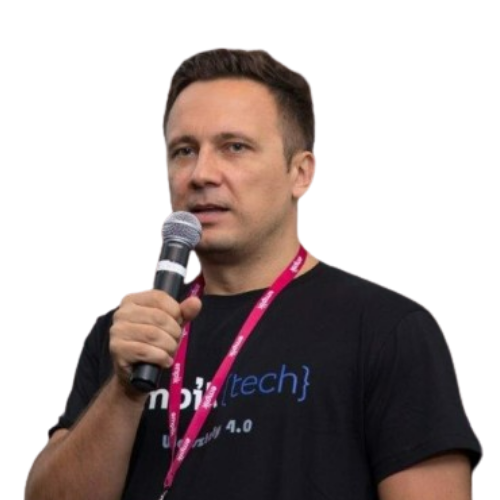
Rafał Zbiróg

Rafał Zbiróg

Group CIO, Inter Cars

Tomasz Bednarczuk

Tomasz Bednarczuk

CIO, Kaczmarski Group

Robert Tomaka

Robert Tomaka

CIO, Diagnostyka

Alicja Rybczyńska

Alicja Rybczyńska

Chief Information Officer, Veolia Poland

11:35 am

Turning CIO Challenges into Measurable Outcomes with Oobeya

CIOs can transform today’s most pressing challenges, ranging from AI adoption and fragmented data to lack of execution visibility into measurable business outcomes. By leveraging engineering intelligence, Oobeya connects data across the software development lifecycle, turning insights into actionable decisions. Attendees will discover how to identify bottlenecks, align technology with business goals, and drive continuous improvement without manual reporting. The talk highlights a practical approach to moving from insight to execution, enabling CIOs and CTOs to deliver real, scalable impact in the age of AI.

Şükrü Çakmak

Şükrü Çakmak

CTO & Co-Founder, Oobeya

11:40 am

Coffee Break & networking

12:10 pm

The Private AI Paradigm

This session unveils Cloudera’s Private AI Anywhere, a sophisticated framework designed to bring high-performance intelligence directly to your data, regardless of whether it resides in the cloud, the data center, or at the edge.

We will explore a comprehensive architecture that empowers organizations to build and scale AI applications with absolute, end-to-end governance over every model, agent, and inference point.

Key Takeaways

Sovereignty & Compliance → Secure data and model integrity within the most rigorous regulatory environments.
Operational Excellence → Eliminate “cloud tax” and accelerate ROI by deploying enterprise AI at scale.
Unrivaled Portability → Experience the true flexibility of an “Anywhere Cloud” infrastructure.

Peter Rizvi

Peter Rizvi

Territory Account Executive, Cloudera

12:20 pm

Stochastic Mind: Evaluating Response Stability in Large Language Models

As organizations deploy language models in production environments, accuracy metrics alone are no longer sufficient. Equally important is the consistency of model behavior across different tasks. During this session, I will present the first results of a large-scale study on the consistency of language models, offering new insights into their application in agent-based systems. Conducted repeatedly under varying configurations, the study reveals not only what models get right, but also how reliable they are in practice—and where their consistency breaks down under real-world conditions. Attendees will gain a new perspective on selecting and evaluating language models, as well as a shared framework for discussing consistency as a key quality criterion in agent-based systems.

Dariusz Korzun

Dariusz Korzun

Director, Applied AI, Global Cloud Solution Architecture, PepsiCo

12:35 pm

AI in Żabka’s communication – case study

A case study demonstrating how AI can support and enhance communication across the Żabka Group’s channel ecosystem.
We will explore how AI contributes to faster processes and improved business efficiency from the perspectives of operations, marketing, sales, and Żabka ADS.

Paweł Grabowski

Paweł Grabowski

Head of Digital B2B, Żabka Group

12:45 pm

How does spatial AI open up a new dimension of business opportunities?

The development of AI, especially generative 2D models, is transforming the way marketing content is created. However, current tools do not address the challenges of scale and interactivity – two key issues for the fashion industry. During the session, we will discuss how leveraging 3D models can significantly reduce the cost of producing marketing materials and what new digital experiences we can expect in the near future.

Moderator

Radek Brzózka

Radek Brzózka

Science journalist, technology enthusiast, and television presenter, Telewizja Polska

Maciej Borowski

Maciej Borowski

Co-founder & COO, Pirxe

Przemysław Kadula

Przemysław Kadula

Co-founder & CBO, Pirxe

12:55 pm

Leading Change for AI Adoption: Aligning Technology, Skills and Organization

Evghenia Iarina

Evghenia Iarina

Strategic Partnerships Director, Coursera

1:05 pm

The CIO Mandate: Scaling Enterprise Intelligence and Business Value

In the Future of Work defined by Human & Machine Collaboration, IT Executives are the lead architects. They need to scale not only AI adoption, but more than ever also assure Business Outcomes, Security & Governance. Learn how Workday can accelerate this Transformation, act as an operational multiplier while seemlessly intetrating in your Business Platform Stack.

Jens Löhmar

Jens Löhmar

CTO Continental Europe & DACH, Workday

1:15 pm

AI Reality Check + Q&A

Every company is “doing something with AI”  but what has it actually delivered?

Practitioners from retail, fintech, media, and industry take stock of three years of experimentation: what has proven to be a central element of the CIO’s strategy, what real AI management looks like – from governance and risk assessment to measuring ROI, and why moving from pilot projects to full-scale deployment has turned out to be more difficult than anyone expected.

A conversation about what has actually been done, not what should have been done.

Moderator

Ewa Zborowska

Ewa Zborowska

Research Director, IDC

Dariusz Korzun

Dariusz Korzun

Director, Applied AI, Global Cloud Solution Architecture, PepsiCo

Paweł Grabowski

Paweł Grabowski

Head of Digital B2B, Żabka Group

Małgorzata McCarthy

Małgorzata McCarthy

Technology Product Leader – Analytics, AI & Data, ManpowerGroup

Paweł Majek

Paweł Majek

Product Director, Poland Go To Market, Visa

2:00 pm

Networking Lunch

2:50 pm

Digital Transformation Exposes the True Capabilities of CxOs

Let’s be honest: most “digital transformations” are just cloud migrations, a new CRM, and a polished dashboard for the board.
The P&L doesn’t move. Customers don’t feel a difference. And 18 months later, someone asks: “So what did we actually gain?”

Meanwhile, the world has changed.
AI is making decisions – where does the human leader fit in?
Edge computing is pushing intelligence to the edge of the network.
Data flows in real time from factories, warehouses, and hospitals.

In this new reality, a CxO who is still “the head of IT” is like a sailboat captain on a highway – moving, but not in the right direction.

So let’s talk about it without the buzzwords:

→ Why “digital strategy” is an oxymoron (there is only one strategy: business strategy)
→ How AI and edge computing are reshaping the value chain
→ The new CxO capability: not managing IT, but orchestrating value

Robert Pławiak

Robert Pławiak

CDIO/CTO, Polpharma

Agnieszka Bochacka

Agnieszka Bochacka

Global Digital Transformation Director, GE Healthcare

3:00 pm

Technology Knockout: Finding Strategy in the Chaos

Digital arena, real challenges, and one key principle: the winner is the one who understands strategy best.

This presentation offers a perspective on the evolving world of technology and addresses the question of how to regain control amid chaos, AI pressure, and increasing complexity.

It is not a story about tools, but about mindset: how to stop “taking punches” and start building an advantage through a conscious, well-defined strategy.
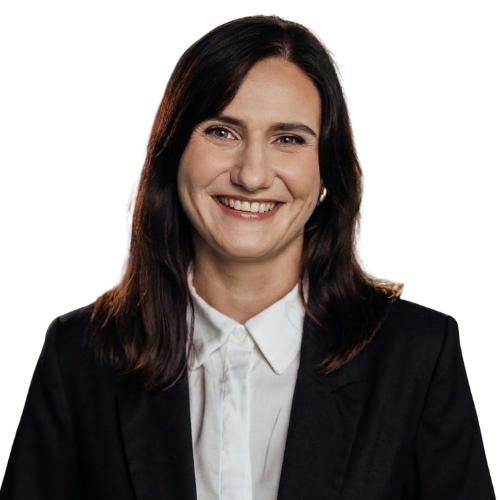
Edyta Zborowska

Edyta Zborowska

Business Development Manager, vSoft

3:10 pm

Technological sovereignty – strategy or necessity? + Q&A

Dependence on foreign technology providers is no longer solely an economic issue. In the face of rising geopolitical tensions and cyber threats, it has become a matter of national security. Poland and Europe now face a fundamental question: is building their own technological capabilities, sovereign computing infrastructure, and independent AI models a realistic strategy, or merely a political declaration?

Moderator

Jarosław Smulski

Jarosław Smulski

Senior Program Manager, Systems & Infrastructure Solutions, IDC

Radosław Maćkiewicz

Radosław Maćkiewicz

Director Centre for Information Technology, Centralny Ośrodek Informatyki

Grzegorz Zalewski

Grzegorz Zalewski

CEO, Aplikacje Krytyczne

Wiesław Wilk

Wiesław Wilk

CEO, Polska Chmura

Wojciech Wilk

Wojciech Wilk

Regional Director, CEE, HCLSoftware

Artur Kurcweil

Artur Kurcweil

CISO / CSO, Bank Millennium

3:55 pm

The Missing Layer Between AI Agents and Your Enterprise – Governance, Security & Operational Control in the Age of AI

Employees and AI agents are connecting to enterprise systems faster than security and governance teams can keep up. This session explores the emerging control gap, where agents access sensitive data, trigger actions, and consume resources without centralized oversight. Drawing from real enterprise experiences, we’ll walk through a practical architecture for a secure gateway layer that gives CIOs visibility, policy enforcement, and cost control across all AI tool usage – without slowing down innovation.

Marcin Mazurek

Marcin Mazurek

Co-Founder, Bitropy

4:05 pm

Technology, Business, and People — How a Great CTO Brings Together Worlds That Can’t Be Separated

Ewa Zborowska

Ewa Zborowska

Research Director, IDC

Norbert Franke

Norbert Franke

CTO, Publicis Groupe Poland

4:15 pm

Secure by Design – when security, infrastructure, and business speak with one voice + Q&A

Cybersecurity is no longer the sole domain of the IT department. Today it is a strategic foundation of the entire business, challenged by AI, regulation, and the growing complexity of hybrid environments. Panel participants will address key questions around resilience architecture, risk management, and building a culture of security in organizations that aim to treat cybersecurity not as a cost, but as a real competitive advantage.

Moderator

Marek Laskowski

Marek Laskowski

CIO, Kancelaria Prawna Domański Zakrzewski Palinka

Marek Ługowski

Marek Ługowski

Head of Infrastructure, Swiss Krono Group

Tomasz Kędziora

Tomasz Kędziora

Dyrektor Departamentu Cyberbezpieczeństwa, CISO, P4

Przemysław Szulecki

Przemysław Szulecki

Cyber Risk Senior Manager, HSBC

4:50 pm

Simulation of Emotions by Artificial Intelligence: Care Algorithms in the Attachment Economy

Algorithms are, above all, a powerful social force. As technologies capable of simulating empathic responsiveness evolve, relationships with AI are becoming deeply engaging—especially for the youngest generations (AI Natives). AI companions encourage the exploration of new forms of intimacy and act as mechanisms reshaping existing structures of emotional relationships.

I will focus on the growing phenomenon of artificial companions and computer-generated influencers – anthropomorphic, hyper-realistic figures that simulate human experiences and emotions. The universe of virtual influencers and lovebots is shaping the worldview of the youngest generation growing up in an environment of synthetic media. Digitally embodied and socially interactive agents are taking on opinion-forming roles, while their operators deploy a wide range of influence techniques.

Empathy-simulating AI learns human responses, anticipates needs, and communicates in ways that, for younger users, can feel safer, more intuitive, and more desirable than interaction with other people. According to affective bonding theory, humans are predisposed to form emotional relationships not only with other humans but also with artificial entities-provided these fulfill social and communicative functions.

In this way, power in capitalism increasingly operates through emotional attachment.

dr Ada Florentyna Pawlak

dr Ada Florentyna Pawlak

Technology Anthropoligist,

5:15 pm

IDC Wrap-up + Q&A + Host Partner Wrap-up

5:20 pm

Networking Cocktail

Knowledge Hub / Workday

Partner Spotlight

Rani Johnson
Chief Information Officer
Workday

Partner Spotlight

Transforming the Friction of AI Into Flow

To truly capture the return on AI investment, we must pivot from counting tasks to measuring the wins that matter.


There is incredible energy in our workforce right now. If you look at the dashboards, the numbers are climbing. Adoption of new tools is skyrocketing, and people are moving faster than ever before.


But capability is not the same as impact.


For the last few years, we have been laser-focused on gross efficiency—how many tasks we check off, tickets we close, and code we ship. We have become excellent at volume. But in an AI-driven world, raw speed is just the baseline.


To unlock the untapped potential of our teams, we must pivot to a new metric. We need to stop asking how fast did we finish? and start asking how well did we solve it?


Turn the AI Tax Into Hidden Potential


Let’s look at the data with clear eyes. We know that AI is driving productivity—77% of employees report they are more productive today than they were a year ago. That’s a huge win.


But we’re also seeing a few growing pains. New research shows that for every 10 hours of productivity gained, we pay back about four hours in rework—correcting, clarifying, and refining AI output.


Some call this an “AI Tax.” I prefer to call it hidden potential.


Think about that. Nearly 40% of possible gains are silently lost to rework. If we can reclaim that time by focusing on quality over quantity, we don’t just get those hours back—we get the brainpower back.


We can turn that friction into flow. We just have to shift our focus from doing things fast to getting things right.


Read more on the Workday Blog here.

IDC Dinner Roundtable München

IDC Dinner Roundtable München

Logo Logo

Navigating Digital Sovereignty – Kontrolle und Innovation im Gleichgewicht

Digitale Souveränität ist für europäische und deutsche Unternehmen zu einer strategischen Kernfrage geworden. Neu geschaffene Modelle der operativer Unabhängigkeit bieten IT-Verantwortlichen in einem weltpolitisch fragilen Umfeld hierfür neue Chancen und Herausforderungen.


Wie lassen sich Datenkontrolle und Innovationsfähigkeit – insbesondere im Bereich Cloud und KI – sinvoll miteinander vereinbaren? Und wie können moderne Cloud-Architekturen, hybride Modelle und offene Standards dabei helfen, Flexibilität und Zukunftssicherheit zu gewährleisten?

Darüber und mehr wollen wir sprechen:

Gemeinsam werden in einer vertraulichen Runde unter anderem folgende Fragen diskutiert:

  • Welche Anforderungen an digitale Souveränität sind wirklich geschäftskritisch?
  • Gibt es das optimale Gleichgewicht zwischen Innovation und Kontrolle?
  • Welche Cloud-Modelle schaffen deutschen Unternehmen wirklich nachhaltige Resilienz?

Freuen Sie sich auf einen Austausch auf Augenhöhe, praxisnahe Impulse und wertvolle Einblicke in Strategien, die digitale Souveränität und Wachstum erfolgreich verbinden.

Agenda

IDC Dinner Roundtable München

One Day Event

5:30 pm

Empfang

Networking bei Drinks und Canapés

6:00 pm

Begrüßung & Vorstellung der Themen des Abends

Carla Arend

Carla Arend

Associate Vice President, Research, Cloud in Europe, IDC

Armin Oppitz

Armin Oppitz

Mitgründer & Vorstand, Liongate

Axel Clauberg

Axel Clauberg

Direktor, AWS Partner Solutions Architects, EMEA, AWS

6:40 pm

Vorspeise – Erstes Diskussionsthema

Digitale Souveränität ist für viele Unternehmen zur strategischen Kernfrage geworden. Doch was bedeutet sie konkret für Ihr Unternehmen – wo entstehen reale Abhängigkeiten technologisch, geopolitisch, wirtschaftlich?

7:20 pm

Hauptgang – Zweites Diskussionsthema

Cloud und KI treiben Innovation massiv voran. Gleichzeitig wachsen Anforderungen an Kontrolle und Transparenz – verlangsamt Souveränität Innovation, oder macht sie nachhaltiger?

8:00 pm

Dessert – Drittes Diskussionsthema

Wenn wir digitale Souveränität nicht nur als Prinzip, sondern als Architekturfrage verstehen, wie sollte eine zukunftssichere IT-Landschaft konkret aussehen – Hybrid, Multi-Cloud, Sovereign Cloud, was ist Strategie, was Taktik?

8:40 pm

Zusammenfassung und Ausblick

Carla Arend

Carla Arend

Associate Vice President, Research, Cloud in Europe, IDC

Armin Oppitz

Armin Oppitz

Mitgründer & Vorstand, Liongate

Axel Clauberg

Axel Clauberg

Direktor, AWS Partner Solutions Architects, EMEA, AWS

9:00 pm

Offizielles Ende des Dinner Roundtables

Sprecher

Carla Arend

Carla Arend

Associate Vice President, Research, Cloud in Europe

IDC

Read bio

Armin Oppitz

Armin Oppitz

Mitgründer & Vorstand

Liongate

Read bio

Axel Clauberg

Axel Clauberg

Direktor, AWS Partner Solutions Architects, EMEA

AWS

Read bio

Partner

Veranstaltungsort

The Charles Hotel

Teilnahmebedingungen

IDC Roundtables richten sich an IT- und Fachbereichsmitarbeitende aus IT-Anwenderunternehmen mit Sitz in Deutschland. IT-Anwenderunternehmen im Sinne dieser Teilnahmebedingungen sind alle Organisationen, die selbst keine Beratungsdienstleistungen erbringen und/oder ITK-Produkte oder -Dienstleistungen entwickeln, herstellen oder vertreiben. Mitarbeitende von ausgegründeten IT-Gesellschaften, die ausschließlich für den Mutterkonzern arbeiten und kein Drittgeschäft machen, sind ebenfalls teilnahmeberechtigt. IDC behält sich ausdrücklich das Recht vor, Registrierungen von Personen, die nicht zur o.g. Zielgruppe gehören – auch wenn die Einladung durch einen unserer Partner, irrtümlich durch IDC selbst oder durch die Teilnahme an einer Online-Umfrage ausgesprochen wurde – nicht zu bestätigen. Nach Ihrer Anmeldung über das Online-Registrierungsformular und erfolgreicher Prüfung durch IDC erhalten Sie eine verbindliche Anmeldebestätigung per E-Mail.

Knowledge Hub / Citrix

Partner Spotlight

Simon Ng
Channel Director
Citrix Asean and South Asia

Partner Spotlight

Securing the Work: A Security First Blueprint for APAC Enterprises

Across Asia Pacific, many organizations continue to treat cybersecurity as a control layered onto digital growth. That model is no longer sufficient. Rapid cloud adoption, regional expansion, and cross border data exchange have permanently shifted the risk landscape. Security must now shape how work is designed, delivered, and governed. 


The first principle is clear: move beyond network centric thinking. The perimeter has dissolved. VPN based models that extend implicit trust into the network introduce structural weakness. Once inside, attackers can move laterally with speed. The more relevant question is not who is on the network, but who should access a specific application, under what conditions, and for how long.


Zero Trust Network Access represents a foundational shift. It is not simply a technology choice, but an architectural stance. Access must be identity driven, context aware, and continuously verified. Every session should be treated as dynamic. User identity, device posture, behavior signals, and risk scoring must inform policy decisions in real time. Trust must be granular and revocable, not broad and persistent.


Protection should also move decisively to the application layer. Critical workloads remain inside controlled data centers or cloud environments, while users access them through virtual apps and desktops that centralize data and reduce endpoint exposure. When information does not reside on local devices, the attack surface shrinks. This approach also aligns with regulatory and data residency expectations across APAC markets.


Web access requires equal attention. Browser isolation and secure web controls contain untrusted content away from user devices, reducing phishing impact and limiting data loss without disrupting productivity.


Operating system security underpins the entire model. Hardened baselines, disciplined patch management, and device posture validation ensure that each session begins from a trusted state. A compromised operating system weakens every control layered above it.


For boards and security leaders, the path forward is strategic:

– Reduce complexity across the security environment.

– Bring policy control under a single governance layer.

– Treat session level insight as a board priority.

– Move toward adaptive access that adjusts in real time based on live risk signals, rather than predefined rules alone.

– Engineer security into how work is delivered rather than reacting after incidents occur.


Resilience will not come from adding more tools. It will come from deliberate architecture choices that assume breach, minimize trust, and protect the work at its core.

Advisory Council Egypt 26

IDC Egypt Advisory Council 2026

Kamal Khafagy

Kamal Khafagy

Chief Information Technology Officer (CITO)

GB Corp

Read bio

Ismail Farid

Ismail Farid

Chief Technology & Information Officer

Ebank

Read bio

Saied El Menshawy

Saied El Menshawy

Group Technology Director

Talaat Moustafa Group

Read bio

Eng. Mohamed Fathy

Eng. Mohamed Fathy

Group Chief Information Officer

EFG Holding

Read bio

Dr. Mohamed Salem

Dr. Mohamed Salem

Chief Information Officer

Juhayna

Read bio

Dr. Amr Alashkar

Dr. Amr Alashkar

Chief Information Officer

Cleopatra Hospitals Group

Read bio

Micheal Mounir

Micheal Mounir

Group Director, AI, IT and Digital

Eva Pharma

Read bio

Rafik ElRaheb

Rafik ElRaheb

Chief Information Officer

Abu Dhabi Islamic Bank (ADIB)

Read bio

Eng. Waleed Al-Assuti

Eng. Waleed Al-Assuti

Chief Information Officer

Banque Misr

Read bio

IDC and Neo4j Roundtable

22 May 2026 Jio World Convention Centre

IDC and Neo4j Roundtable

Graph Intelligence in Action: Driving Trusted GenAI for Enterprise Decisions

22 May 2026 Jio World Convention Centre

In Partnership With

Logo

Connecting Data, Context, and Governance to Scale AI with Confidence

By 2026, generative AI will be embedded across core enterprise workflows, shaping customer interactions, operational efficiency, and risk decisions. While adoption across Asia/Pacific continues to accelerate, scaling GenAI safely, responsibly, and at enterprise scale remains a significant challenge. IDC research highlights that by 2027, organisations that fail to prioritise high-quality, AI-ready data could see up to a 20% productivity loss, even as many move toward composite AI approaches to improve reliability and outcomes. For enterprises in regulated environments, this brings a critical shift—from focusing on model performance to addressing data and context risk. Without a connected understanding of enterprise data, relationships, and policies, AI systems struggle with accuracy, explainability, and trust. 

 

This executive roundtable brings together CIOs and senior leaders to explore why GenAI breaks down at scale, how organisations can move from model-centric to context-aware approaches, and the role of explainability and observability as key enablers in building reliable, governed, and production-ready AI systems powered by connected data and graph intelligence.

Why Attend

. Gain Research Insights: Learn from IDC’s latest global and APeJ research on AI and GenAI adoption, trends, and enterprise challenges.

. Understand Connected Data: Discover why connected intelligence is critical for scaling AI and improving decision-making.

. See Graph Technology in Action: Learn how graph-based approaches help organizations enhance AI accuracy, explainability, and trust.

Agenda

IDC and Neo4j Roundtable

One Day Event

6:00 pm

Registration & Networking

6:30 pm

Welcome Address

Navkendar Singh

Navkendar Singh

Associate Vice President – Data & Analytics, IDC

6:35 pm

The Future of Enterprise AI: From Data Silos to Connected Intelligence

As AI adoption accelerates, data silos remain a major barrier to scale. This session explores how enterprises can unify fragmented data, enable real-time insights, and build connected intelligence that drives smarter decisions and business growth.

Navkendar Singh

Navkendar Singh

Associate Vice President – Data & Analytics, IDC

6:45 pm

Graph Intelligence in Action: Real-World AI Use Cases Across Industries

Graph intelligence is transforming how organisations uncover relationships, detect patterns, and generate actionable insights.

Mark Woodhams

Mark Woodhams

Chief Revenue Officer, Neo4j

Ish Thukral

Ish Thukral

Head of APAC, Neo4j

7:00 pm

Open Discussion: Scaling Trusted GenAI: Why Connected Data Is the Missing Link

Explore how connected, contextual data helps enterprises scale Generative AI responsibly by improving accuracy, trust, and governance while reducing risk.

Moderator

Navkendar Singh

Navkendar Singh

Associate Vice President – Data & Analytics, IDC

Pawan Mall

Pawan Mall

Sr Solution Engineer, Neo4j

Suhail Gulzar

Suhail Gulzar

Sr Manager Solutions Engineering, Neo4j

8:00 pm

Summary & Close

Navkendar Singh

Navkendar Singh

Associate Vice President – Data & Analytics, IDC

8:10 pm

Dinner and Networking

Speakers

Navkendar Singh

Navkendar Singh

Associate Vice President – Data & Analytics

IDC

Read bio

Mark Woodhams

Mark Woodhams

Chief Revenue Officer

Neo4j

Read bio

Ish Thukral

Ish Thukral

Head of APAC

Neo4j

Read bio

Pawan Mall

Pawan Mall

Sr Solution Engineer

Neo4j

Read bio

Suhail Gulzar

Suhail Gulzar

Sr Manager Solutions Engineering

Neo4j

Read bio

Partner

In Partnership With

Venue

Jio World Convention Centre

Meeting Room: Suite 103, Level 1
G Block, Bandra Kurla Complex, Bandra East, Mumbai, Maharashtra 400098, India

Nos partenaires

Partners

Partners

Tech Talk

Dialogue & Tech Pitch

IDC & Akamai Executive Dinner

30 Apr 2026 Andaz London Liverpool Street

IDC & Akamai Executive Dinner

30 Apr 2026 Andaz London Liverpool Street
Logo

API Security: The New Frontline of Security in an Agentic World

AI is everywhere, touching every part of business. As AI spreads across businesses, it connects applications and data in ways never previously imagined. With the advent of AI agents, the interconnectedness required to run modern systems is reaching unprecedented heights.

At the centre of this integration of apps, data and agents is the humble API, the glue that stitches together resources from across and beyond the organisation. But these interfaces have a dark side: their openness to connection means they are a gateway to intruders. API security now rises from niche consideration to the frontline of security, with the drive towards AI accelerating the importance of securing APIs comprehensively and consistently.

API-related risks are many and various: from simple lack of visibility to misconfigurations, from web exploits to bots, DDoS and business logic abuse. Few organisations have the complete knowledge and awareness to secure APIs. This must change as they continue to accelerate in prominence and volume.


Join Akamai and IDC for an executive discussion on how leading organisations are increasing their use and scope of APIs, the security risks involved, and how they are approaching securing their API estate.

At this Roundtable we’ll explore:

  • What does the modern API architecture look like, in terms of number, breadth and importance of connected systems and data? What impact is AI having on API estates?
  • What risks are associated with their usage? What are CISOs – and businesses – most worried about?
  • What modern approaches to API security exist and where can organisations start to reduce their exposure to API vulnerabilities?

We’ll connect strategy to execution, discussing how organisations can increase visibility of API usage, identify threats, and move to a safe approach to connectedness through robust governance frameworks.

Agenda

IDC & Akamai Executive Dinner

One Day Event

6:00 pm

Welcome & Champagne Reception

6:30 pm

Welcome Address from IDC & Akamai

Duncan Brown

Duncan Brown

Group Vice President, IDC Europe, IDC

Richard Meeus

Richard Meeus

Senior Director of Security Technology and Strategy EMEA, Akamai

6:45 pm

Delegate Introductions

7:00 pm

Starter Discussion Topic & Feedback – The Current State of API Usage

7:35 pm

Main Course Discussion Topic & Feedback – API Risks in the Era of AI Everywhere

8:15 pm

Dessert Discussion Topic & Feedback – Towards a Modern API Architecture

8:45 pm

Coffee Served & Evaluations Forms Distributed

9:00 pm

Event Close

Speakers

Duncan Brown

Duncan Brown

Group Vice President, IDC Europe

IDC

Read bio

Richard Meeus

Richard Meeus

Senior Director of Security Technology and Strategy EMEA

Akamai

Read bio

Partner

In Association With

Venue

Andaz London Liverpool Street

40 Liverpool St, London EC2M 7QN


Knowledge Hub Australia

Knowledge Hub

Discover thought-provoking articles from IDC analysts, strategic partners, and end-user speakers. Explore expert viewpoints on the latest tech trends, real-world transformation stories, and forward-looking insights shaping the digital future.

AI Infrastructure: The Foundation of the Agentic Era

The world is entering a defining moment for digital infrastructure. Artificial intelligence has moved from experimentation to ubiquity, and with it, a new operational paradigm is taking shape — one where agents rather than applications become the primary engines of digital value creation. This is the dawn of the agentic AI era, and its success depends on one thing above all else: robust, intelligent, and scalable infrastructure.

Matt Eastwood
| IDC
SVP, WW Research
Read More

Parallels Perspective: Navigating the New Era of Application Delivery with Flexibility, Security, and Choice

The way organizations deliver applications has undergone a significant shift over the past few years. Pre-pandemic, virtual desktop infrastructure (VDI) was often seen as a niche solution for specific use cases. Post-pandemic, it has become a cornerstone of modern IT strategies, driven by the rise of remote work and the need for secure, scalable access to business-critical applications.

Steven Dewinter
| Parallels
Senior Global Director, Sales Engineering
Read More

AI Is Reshaping Enterprise Economics

AI is reshaping enterprise economics, and it’s happening faster than most organisations can keep up with. On one side, investment in AI is accelerating across models, compute, and data. On the other, labour is shifting as manual work declines and roles evolve. The expectation is clear: productivity should rise. But it isn’t that simple. Right in the middle of these changes is a critical gap, organisations don’t actually understand productivity.

Blake Davidson
| MagicOrange
Chief Operating Officer
Read More

Knowledge Hub- Shilpi Handa

IDC Spotlight

Shilpi Handa,
Associate Research Director (META)
IDC
IDC Spotlight

Future Trends and Outlook for Cybersecurity in the META Region

The cybersecurity landscape in the Middle East, Türkiye, and Africa (META) is undergoing a structural shift, propelled by accelerated digital transformation, pervasive AI adoption, and a regulatory environment that is both expanding and fragmenting. IDC forecasts that regional cybersecurity spending will surpass $12.5 billion in 2026 (up 14% year on year), with software and identity security outpacing other segments. The region is evolving from a consumer of cyber innovation to a producer, prioritizing sovereign trust, AI security, and cyber-physical resilience as strategic imperatives.


Agentic AI is moving rapidly from pilot to production, enabling real-time detection, mitigation, and self-healing across IT, OT, and cloud. While 85% of META organizations report having an AI strategy, fewer than 20% have implemented dedicated AI security frameworks — highlighting a critical gap as CISOs elevate AI governance, model security, and adversarial defense. Identity has become the fulcrum of cyber maturity, with GenAI and deepfake-driven fraud now the top threat vector, driving adoption of ITDR, IGaaS, and behavioral analytics, often integrated with national ID systems.


Cyber-physical risk is escalating: over 45% of organizations report increased incidents, and while 70% have integrated IT/OT, less than a quarter have dedicated OT security. Investments are accelerating in OT-MDR, protocol-native AI firewalls, and digital twins, underpinned by critical infrastructure mandates. The region is also shifting from fragmented, best-of-breed tools to platform-centric architectures that unify telemetry and automate response, driven by operational resilience and regulatory alignment rather than vendor lock-in.


CISOs must prioritize platform integration, agentic AI with explainability, robust identity and fraud defense, and cyber-physical security. Operationalizing sovereign trust and modernizing for hybrid/cloud-native environments are essential, as is closing workforce gaps through AI augmentation and upskilling. These actions are foundational for sustaining cyber resilience and regulatory compliance in META’s rapidly evolving threat and compliance landscape.