Knowledge Hub / Citrix

Partner Spotlight

Simon Ng
Channel Director
Citrix Asean and South Asia

Partner Spotlight

Securing the Work: A Security First Blueprint for APAC Enterprises

Across Asia Pacific, many organizations continue to treat cybersecurity as a control layered onto digital growth. That model is no longer sufficient. Rapid cloud adoption, regional expansion, and cross border data exchange have permanently shifted the risk landscape. Security must now shape how work is designed, delivered, and governed. 


The first principle is clear: move beyond network centric thinking. The perimeter has dissolved. VPN based models that extend implicit trust into the network introduce structural weakness. Once inside, attackers can move laterally with speed. The more relevant question is not who is on the network, but who should access a specific application, under what conditions, and for how long.


Zero Trust Network Access represents a foundational shift. It is not simply a technology choice, but an architectural stance. Access must be identity driven, context aware, and continuously verified. Every session should be treated as dynamic. User identity, device posture, behavior signals, and risk scoring must inform policy decisions in real time. Trust must be granular and revocable, not broad and persistent.


Protection should also move decisively to the application layer. Critical workloads remain inside controlled data centers or cloud environments, while users access them through virtual apps and desktops that centralize data and reduce endpoint exposure. When information does not reside on local devices, the attack surface shrinks. This approach also aligns with regulatory and data residency expectations across APAC markets.


Web access requires equal attention. Browser isolation and secure web controls contain untrusted content away from user devices, reducing phishing impact and limiting data loss without disrupting productivity.


Operating system security underpins the entire model. Hardened baselines, disciplined patch management, and device posture validation ensure that each session begins from a trusted state. A compromised operating system weakens every control layered above it.


For boards and security leaders, the path forward is strategic:

– Reduce complexity across the security environment.

– Bring policy control under a single governance layer.

– Treat session level insight as a board priority.

– Move toward adaptive access that adjusts in real time based on live risk signals, rather than predefined rules alone.

– Engineer security into how work is delivered rather than reacting after incidents occur.


Resilience will not come from adding more tools. It will come from deliberate architecture choices that assume breach, minimize trust, and protect the work at its core.

Advisory Council Egypt 26

IDC Egypt Advisory Council 2026

Kamal Khafagy

Kamal Khafagy

Chief Information Technology Officer (CITO)

GB Corp

Read bio

Ismail Farid

Ismail Farid

Chief Technology & Information Officer

Ebank

Read bio

Saied El Menshawy

Saied El Menshawy

Group Technology Director

Talaat Moustafa Group

Read bio

Eng. Mohamed Fathy

Eng. Mohamed Fathy

Group Chief Information Officer

EFG Holding

Read bio

Dr. Mohamed Salem

Dr. Mohamed Salem

Chief Information Officer

Juhayna

Read bio

Dr. Amr Alashkar

Dr. Amr Alashkar

Chief Information Officer

Cleopatra Hospitals Group

Read bio

Micheal Mounir

Micheal Mounir

Group Director, AI, IT and Digital

Eva Pharma

Read bio

Rafik ElRaheb

Rafik ElRaheb

Chief Information Officer

Abu Dhabi Islamic Bank (ADIB)

Read bio

Graph Intelligence in Action: Driving Trusted GenAI for Enterprise Decisions

22 May 2026 Jio World Convention Centre

Graph Intelligence in Action: Driving Trusted GenAI for Enterprise Decisions

Connecting Data, Context, and Governance to Scale AI with Confidence

22 May 2026 Jio World Convention Centre

In Partnership With

Logo

Overview

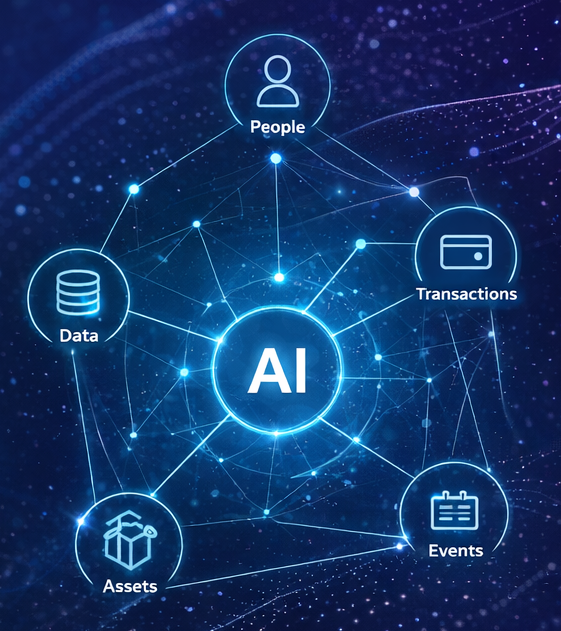
By 2026, generative AI will be embedded across core enterprise workflows, shaping customer interactions, operational efficiency, and risk decisions. While adoption across Asia/Pacific continues to accelerate, scaling GenAI safely, responsibly, and at enterprise scale remains a significant challenge. IDC research highlights that by 2027, organisations that fail to prioritise high-quality, AI-ready data could see up to a 20% productivity loss, even as many move toward composite AI approaches to improve reliability and outcomes. For enterprises in regulated environments, this brings a critical shift—from focusing on model performance to addressing data and context risk. Without a connected understanding of enterprise data, relationships, and policies, AI systems struggle with accuracy, explainability, and trust. 


This executive roundtable brings together CIOs and senior leaders to explore why GenAI breaks down at scale, how organisations can move from model-centric to context-aware approaches, and the role of explainability and observability as key enablers in building reliable, governed, and production-ready AI systems powered by connected data and graph intelligence.

Why Attend

. Gain Research Insights: Learn from IDC’s latest global and APeJ research on AI and GenAI adoption, trends, and enterprise challenges.

. Understand Connected Data: Discover why connected intelligence is critical for scaling AI and improving decision-making.

. See Graph Technology in Action: Learn how graph-based approaches help organizations enhance AI accuracy, explainability, and trust.

Agenda

Graph Intelligence in Action: Driving Trusted GenAI for Enterprise Decisions

One Day Event

6:00 pm

Registration & Networking

6:30 pm

Welcome Address

Navkendar Singh

Navkendar Singh

Associate Vice President – Data & Analytics, IDC

6:35 pm

The Future of Enterprise AI: From Data Silos to Connected Intelligence

As AI adoption accelerates, data silos remain a major barrier to scale. This session explores how enterprises can unify fragmented data, enable real-time insights, and build connected intelligence that drives smarter decisions and business growth.

Navkendar Singh

Navkendar Singh

Associate Vice President – Data & Analytics, IDC

6:45 pm

Graph Intelligence in Action: Real-World AI Use Cases Across Industries

Graph intelligence is transforming how organisations uncover relationships, detect patterns, and generate actionable insights.

Mark Woodhams

Mark Woodhams

Chief Revenue Officer, Neo4j

Ish Thukral

Ish Thukral

Head of APAC, Neo4j

7:00 pm

Open Discussion: Scaling Trusted GenAI: Why Connected Data Is the Missing Link

Explore how connected, contextual data helps enterprises scale Generative AI responsibly by improving accuracy, trust, and governance while reducing risk.

Moderator

Navkendar Singh

Navkendar Singh

Associate Vice President – Data & Analytics, IDC

Pawan Mall

Pawan Mall

Sr Solution Engineer, Neo4j

Suhail Gulzar

Suhail Gulzar

Sr Manager Solutions Engineering, Neo4j

8:00 pm

Summary & Close

Navkendar Singh

Navkendar Singh

Associate Vice President – Data & Analytics, IDC

8:10 pm

Dinner and Networking

Speakers

Navkendar Singh

Navkendar Singh

Associate Vice President – Data & Analytics

IDC

Read bio

Mark Woodhams

Mark Woodhams

Chief Revenue Officer

Neo4j

Read bio

Ish Thukral

Ish Thukral

Head of APAC

Neo4j

Read bio

Pawan Mall

Pawan Mall

Sr Solution Engineer

Neo4j

Read bio

Suhail Gulzar

Suhail Gulzar

Sr Manager Solutions Engineering

Neo4j

Read bio

Partner

In Partnership With

Venue

Jio Convention Centre

Meeting Room: Suite 103, Level 1
G Block, Bandra Kurla Complex, Bandra East, Mumbai, Maharashtra 400098, India

Nos partenaires

Partners

Partners

Tech Talk

Dialogue & Tech Pitch

IDC & Akamai Executive Dinner

30 Apr 2026 Andaz London Liverpool Street

IDC & Akamai Executive Dinner

30 Apr 2026 Andaz London Liverpool Street
Logo

API Security: The New Frontline of Security in an Agentic World

AI is everywhere, touching every part of business. As AI spreads across businesses, it connects applications and data in ways never previously imagined. With the advent of AI agents, the interconnectedness required to run modern systems is reaching unprecedented heights.

At the centre of this integration of apps, data and agents is the humble API, the glue that stitches together resources from across and beyond the organisation. But these interfaces have a dark side: their openness to connection means they are a gateway to intruders. API security now rises from niche consideration to the frontline of security, with the drive towards AI accelerating the importance of securing APIs comprehensively and consistently.

API-related risks are many and various: from simple lack of visibility to misconfigurations, from web exploits to bots, DDoS and business logic abuse. Few organisations have the complete knowledge and awareness to secure APIs. This must change as they continue to accelerate in prominence and volume.


Join Akamai and IDC for an executive discussion on how leading organisations are increasing their use and scope of APIs, the security risks involved, and how they are approaching securing their API estate.

At this Roundtable we’ll explore:

  • What does the modern API architecture look like, in terms of number, breadth and importance of connected systems and data? What impact is AI having on API estates?
  • What risks are associated with their usage? What are CISOs – and businesses – most worried about?
  • What modern approaches to API security exist and where can organisations start to reduce their exposure to API vulnerabilities?

We’ll connect strategy to execution, discussing how organisations can increase visibility of API usage, identify threats, and move to a safe approach to connectedness through robust governance frameworks.

Agenda

IDC & Akamai Executive Dinner

One Day Event

6:00 pm

Welcome & Champagne Reception

6:30 pm

Welcome Address from IDC & Akamai

Duncan Brown

Duncan Brown

Group Vice President, IDC Europe, IDC

Richard Meeus

Richard Meeus

Senior Director of Security Technology and Strategy EMEA, Akamai

6:45 pm

Delegate Introductions

7:00 pm

Starter Discussion Topic & Feedback – The Current State of API Usage

7:35 pm

Main Course Discussion Topic & Feedback – API Risks in the Era of AI Everywhere

8:15 pm

Dessert Discussion Topic & Feedback – Towards a Modern API Architecture

8:45 pm

Coffee Served & Evaluations Forms Distributed

9:00 pm

Event Close

Speakers

Duncan Brown

Duncan Brown

Group Vice President, IDC Europe

IDC

Read bio

Richard Meeus

Richard Meeus

Senior Director of Security Technology and Strategy EMEA

Akamai

Read bio

Partner

In Association With

Venue

Andaz London Liverpool Street

40 Liverpool St, London EC2M 7QN


Knowledge Hub Australia

Knowledge Hub

Discover thought-provoking articles from IDC analysts, strategic partners, and end-user speakers. Explore expert viewpoints on the latest tech trends, real-world transformation stories, and forward-looking insights shaping the digital future.

AI Infrastructure: The Foundation of the Agentic Era

The world is entering a defining moment for digital infrastructure. Artificial intelligence has moved from experimentation to ubiquity, and with it, a new operational paradigm is taking shape — one where agents rather than applications become the primary engines of digital value creation. This is the dawn of the agentic AI era, and its success depends on one thing above all else: robust, intelligent, and scalable infrastructure.


Matt Eastwood
| IDC
SVP, WW Research
Read more

Parallels Perspective: Navigating the New Era of Application Delivery with Flexibility, Security, and Choice

The way organizations deliver applications has undergone a significant shift over the past few years. Pre-pandemic, virtual desktop infrastructure (VDI) was often seen as a niche solution for specific use cases. Post-pandemic, it has become a cornerstone of modern IT strategies, driven by the rise of remote work and the need for secure, scalable access to business-critical applications.

Steven Dewinter
| Parallels
Senior Global Director, Sales Engineering
Read more

Knowledge Hub- Shilpi Handa

IDC Spotlight

Shilpi Handa,
Associate Research Director (META)
IDC
IDC Spotlight

Future Trends and Outlook for Cybersecurity in the META Region

The cybersecurity landscape in the Middle East, Türkiye, and Africa (META) is undergoing a structural shift, propelled by accelerated digital transformation, pervasive AI adoption, and a regulatory environment that is both expanding and fragmenting. IDC forecasts that regional cybersecurity spending will surpass $12.5 billion in 2026 (up 14% year on year), with software and identity security outpacing other segments. The region is evolving from a consumer of cyber innovation to a producer, prioritizing sovereign trust, AI security, and cyber-physical resilience as strategic imperatives.


Agentic AI is moving rapidly from pilot to production, enabling real-time detection, mitigation, and self-healing across IT, OT, and cloud. While 85% of META organizations report having an AI strategy, fewer than 20% have implemented dedicated AI security frameworks — highlighting a critical gap as CISOs elevate AI governance, model security, and adversarial defense. Identity has become the fulcrum of cyber maturity, with GenAI and deepfake-driven fraud now the top threat vector, driving adoption of ITDR, IGaaS, and behavioral analytics, often integrated with national ID systems.


Cyber-physical risk is escalating: over 45% of organizations report increased incidents, and while 70% have integrated IT/OT, less than a quarter have dedicated OT security. Investments are accelerating in OT-MDR, protocol-native AI firewalls, and digital twins, underpinned by critical infrastructure mandates. The region is also shifting from fragmented, best-of-breed tools to platform-centric architectures that unify telemetry and automate response, driven by operational resilience and regulatory alignment rather than vendor lock-in.


CISOs must prioritize platform integration, agentic AI with explainability, robust identity and fraud defense, and cyber-physical security. Operationalizing sovereign trust and modernizing for hybrid/cloud-native environments are essential, as is closing workforce gaps through AI augmentation and upskilling. These actions are foundational for sustaining cyber resilience and regulatory compliance in META’s rapidly evolving threat and compliance landscape.

Knowledge Hub

Knowledge Hub

IDC Spotlight: Future Trends and Outlook for Cybersecurity in the META Region

The cybersecurity landscape in the Middle East, Türkiye, and Africa (META) is undergoing a structural shift, propelled by accelerated digital transformation, pervasive AI adoption, and a regulatory environment that is both expanding and fragmenting.

Shilpi Handa
| IDC
Associate Research Director (META)
Read More

Partner Spotlight: Operationalizing Cybersecurity Through Outcome-Based Delivery

Cybersecurity becomes truly effective when it operates like a business capability, not a collection of tools and one-off projects. “Operationalizing” cybersecurity means building a repeatable way to deliver protection, detection, response, and recovery—consistently, measurably, and at scale.

Notis Iliopoulos
| Obrela
EVP of MRC
Read More

Partner Spotlight: The Patch Gap Is Now an AI Problem

AI is accelerating vulnerability discovery faster than teams can respond- turning visibility into risk when action lags behind insight. The edge now belongs to organizations that validate, prioritize, and remediate in real time- closing the gap before threats become impact.

Tarek Kuzbari
| Picus Security
Vice President EMEA
Read More

Knowledge Hub- Shilpi Handa

IDC Spotlight

Shilpi Handa,
Associate Research Director (META)
IDC
IDC Spotlight

Future Trends and Outlook for Cybersecurity in the META Region

The cybersecurity landscape in the Middle East, Türkiye, and Africa (META) is undergoing a structural shift, propelled by accelerated digital transformation, pervasive AI adoption, and a regulatory environment that is both expanding and fragmenting. IDC forecasts that regional cybersecurity spending will surpass $12.5 billion in 2026 (up 14% year on year), with software and identity security outpacing other segments. The region is evolving from a consumer of cyber innovation to a producer, prioritizing sovereign trust, AI security, and cyber-physical resilience as strategic imperatives.


Agentic AI is moving rapidly from pilot to production, enabling real-time detection, mitigation, and self-healing across IT, OT, and cloud. While 85% of META organizations report having an AI strategy, fewer than 20% have implemented dedicated AI security frameworks — highlighting a critical gap as CISOs elevate AI governance, model security, and adversarial defense. Identity has become the fulcrum of cyber maturity, with GenAI and deepfake-driven fraud now the top threat vector, driving adoption of ITDR, IGaaS, and behavioral analytics, often integrated with national ID systems.


Cyber-physical risk is escalating: over 45% of organizations report increased incidents, and while 70% have integrated IT/OT, less than a quarter have dedicated OT security. Investments are accelerating in OT-MDR, protocol-native AI firewalls, and digital twins, underpinned by critical infrastructure mandates. The region is also shifting from fragmented, best-of-breed tools to platform-centric architectures that unify telemetry and automate response, driven by operational resilience and regulatory alignment rather than vendor lock-in.


CISOs must prioritize platform integration, agentic AI with explainability, robust identity and fraud defense, and cyber-physical security. Operationalizing sovereign trust and modernizing for hybrid/cloud-native environments are essential, as is closing workforce gaps through AI augmentation and upskilling. These actions are foundational for sustaining cyber resilience and regulatory compliance in META’s rapidly evolving threat and compliance landscape.

Knowledge Hub

Knowledge Hub

IDC Spotlight: Future Trends and Outlook for Cybersecurity in the META Region

The cybersecurity landscape in the Middle East, Türkiye, and Africa (META) is undergoing a structural shift, propelled by accelerated digital transformation, pervasive AI adoption, and a regulatory environment that is both expanding and fragmenting.

Shilpi Handa
| IDC
Associate Research Director (META)
Read More

Partner Spotlight: Operationalizing Cybersecurity Through Outcome-Based Delivery

Cybersecurity becomes truly effective when it operates like a business capability, not a collection of tools and one-off projects. “Operationalizing” cybersecurity means building a repeatable way to deliver protection, detection, response, and recovery—consistently, measurably, and at scale.

Notis Iliopoulos
| Obrela
EVP of MRC
Read More

Partner Spotlight: The Patch Gap Is Now an AI Problem

AI is accelerating vulnerability discovery faster than teams can respond- turning visibility into risk when action lags behind insight. The edge now belongs to organizations that validate, prioritize, and remediate in real time- closing the gap before threats become impact.

Tarek Kuzbari
| Picus Security
Vice President EMEA
Read More