The 2027 Imperative:

27 Apr 2026 Digital Roundtable

The 2027 Imperative:

Modernization for Business Growth, Transformation & Continuity

27 Apr 2026 Digital Roundtable

Sponsored By

Logo

Overview

Organizations today are navigating a more demanding technology environment where maintaining
operational resilience while continuing to innovate has become a top priority for CIOs.
Ensuring the continuity of mission-critical enterprise systems is no longer just an IT objective. It is a business imperative. Enterprises are therefore rethinking the role of core enterprise applications. With SAP ECC support ending in 2027, organizations face a pivotal moment: whether to continue relying on legacy systems or modernize their SAP environments to support greater agility, reliability, and long-term business continuity. Migrating SAP systems to the cloud is increasingly being viewed as a strategic step toward strengthening resilience, improving disaster recovery capabilities, and ensuring
uninterrupted business operations.


IDC research reveals that more than 77% of organizations in Saudi Arabia consider themselves
digital businesses, where value creation is closely tied to digital technologies across processes,
products, services, and customer experiences. However, many enterprises still face challenges
navigating the complexity of SAP modernization, cloud migration, and integrating advanced cloud native capabilities into their enterprise environments. Modernizing SAP environments is therefore not only about enabling innovation. It is also about building resilient digital foundations that can support continuous operations, safeguard critical data, and respond quickly to disruption.


Join this exclusive virtual roundtable to hear from IDC and AWS experts on market insights, real-world experiences, and practical strategies for modernizing SAP in the cloud while strengthening enterprise resilience. This session will also provide an opportunity to exchange perspectives with peers and explore how organizations across the region are preparing their mission-critical SAP environments for a more resilient, cloud-enabled future.

Agenda

The 2027 Imperative:

One Day Event

11:00 am

Welcome Address

Uzair Mujtaba

Uzair Mujtaba

Senior Research Manager, IDC

11:05 am

Scaling Cloud, AI, and Sovereign Readiness in Saudi Arabia

Saudi organizations are scaling cloud and AI investments, but execution gaps persist. This session examines what must change before 2027 across modernization, skills, sovereignty, and operating models to convert infrastructure growth into measurable business resilience and outcomes.

Uzair Mujtaba

Uzair Mujtaba

Senior Research Manager, IDC

11:15 am

Cloud as the Platform for Modernization: Enabling Resilience, Agility, and Scale

CIOs are navigating a tougher tech landscape where resilience and innovation must move in lockstep—making system continuity a business-critical priority. With SAP ECC support ending in 2027, organizations face a defining choice: sustain legacy systems or modernize for greater agility and reliability. Cloud migration is emerging as the path forward, strengthening resilience, enabling robust disaster recovery, and ensuring uninterrupted operations.

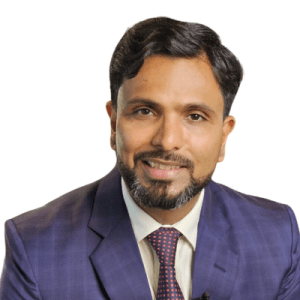
Asif Mujawar

Asif Mujawar

MENAT Specialist SA Leader, AWS

11:25 am

Modernizing Core Systems for Continuity and Resilience

Riccardo Giorgi

Riccardo Giorgi

Director – RISE with SAP advisory EMEA, SAP

11:32 am

Transform to Compete: Unlocking Growth, Speed, and Continuity with SAP Cloud

Reda Diab

Reda Diab

Director and Head of SAP Transformation Services, IBM Consulting

11:40 am

Open Discussion: From ECC to Cloud: Navigating SAP Modernization Complexities

Uzair Mujtaba

Uzair Mujtaba

Senior Research Manager, IDC

Asif Mujawar

Asif Mujawar

MENAT Specialist SA Leader, AWS

Reda Diab

Reda Diab

Director and Head of SAP Transformation Services, IBM Consulting

Riccardo Giorgi

Riccardo Giorgi

Director – RISE with SAP advisory EMEA, SAP

12:00 pm

Summary & Closing Remarks

Speakers

Uzair Mujtaba

Uzair Mujtaba

Senior Research Manager

IDC

Read bio

Asif Mujawar

Asif Mujawar

MENAT Specialist SA Leader

AWS

Read bio

Reda Diab

Reda Diab

Director and Head of SAP Transformation Services

IBM Consulting

Read bio

Riccardo Giorgi

Riccardo Giorgi

Director – RISE with SAP advisory EMEA

SAP

Read bio

Be Part of it!

Register Now

Network Intelligence, AI and Open APIs: Reducing Fraud and Enabling New Digital Products in BFSI

23 Apr 2026 Johannesburg Marriott Hotel Melrose Arch

Network Intelligence, AI and Open APIs: Reducing Fraud and Enabling New Digital Products in BFSI

23 Apr 2026 Johannesburg Marriott Hotel Melrose Arch

Hosted By

Logo

Network Intelligence, AI and Open APIs: Reducing Fraud and Enabling New Digital Products in BFSI

Digital banking crime in South Africa is rising at an unprecedented rate. According to SABRIC, digital banking crime increased by 86% in 2024. Financial institutions are under growing pressure to reduce fraud without adding customer friction.


Organisations are increasingly turning to telco network intelligence to strengthen onboarding, authentication, and payment decisioning. Capabilities such as SIM Swap Status, Number Verification, Device Binding, Location Consistency, Roaming Status, IP-SIM Correlation, and Device Change Frequency provide real-time signals that help detect and prevent fraud.


These capabilities are now being standardised and exposed through the GSMA Open Gateway initiative. South African mobile operators are implementing Number Verification and SIM Swap APIs, enabling banks and insurers to integrate trusted network intelligence directly into their fraud prevention strategies.


Join us for this executive roundtable discussion, hosted by MTN Business in association with IDC, to explore how financial institutions can reduce account takeover (ATO), lower false positives, improve onboarding conversion, and enable safer digital products by combining AI with Open APIs.

Agenda

Network Intelligence, AI and Open APIs: Reducing Fraud and Enabling New Digital Products in BFSI

One Day Event

8:00 am

Registration & Networking Breakfast

9:30 am

Welcome Address

Jonathan Tullett

Jonathan Tullett

Associate Research Director, IDC

9:35 am

IDC Keynote: Transforming Cybersecurity to Deal with Modern Threats

Jonathan Tullett

Jonathan Tullett

Associate Research Director, IDC

9:50 am

Fortifying Security and Compliance: AI in Fraud Detection

Hemu Choonilal

Hemu Choonilal

Enterprise Architecture & BFSI Industry Vertical, MTN

10:20 am

Roundtable Open Discussion

10:50 am

Networking

Speakers

Jonathan Tullett

Jonathan Tullett

Associate Research Director

IDC

Read bio

Hemu Choonilal

Hemu Choonilal

Enterprise Architecture & BFSI Industry Vertical

MTN

Read bio

Partner

Venue

Johannesburg Marriott Hotel Melrose Arch

Meeting Room 1

42 The High St, Melrose, Johannesburg

Be Part of it!

Register Now

Knowledge Hub / CtrlS

Analyst Spotlight

Analyst Spotlight

AI, Regulation, and Energy: 9 Datacenter Priorities CXOs Must Prepare for in 2026

In 2026, datacenter strategy is no longer reacting to change; it is being shaped by it. AI workloads are intensifying, energy is becoming scarce, and regulation is tightening across regions. For CXOs, infrastructure can no longer sit quietly in the background as a utility. Growth now depends on how well power access, efficiency, compliance, resilience, and workload realities are aligned from day one.


So what does that actually mean in practice?


It comes down to nine priorities that will define how datacenters are planned, built, and scaled in the years ahead.


1. AI-driven infrastructure scaling is no longer linear
The old CPU-led model assumed predictable, steady growth. AI breaks that assumption. Workloads are spiky, rack densities are extreme, and demand can surge overnight. Infrastructure planning must become modular and flexible, allowing capacity to scale incrementally without disrupting live environments. Designing for high-density GPU clusters is now foundational.


2. Power availability has become the single biggest strategic constraint
Land and capital matter, but electricity now decides where growth is even possible. Grid access timelines, substations, and long-term power contracts are shaping expansion decisions. With datacenter electricity demand projected to nearly double by 2030, energy planning has moved firmly into the boardroom.


3. Energy efficiency must become AI-aware
Traditional metrics like Power Usage Effectiveness (PUE) still matter, but they no longer tell the full story. AI workloads behave differently, drawing power in peaks rather than steady cycles. Real efficiency now depends on workload-level visibility, knowing which models, GPUs, and clusters consume how much power, and when.


4. Cooling has turned into a strategic differentiator
As rack densities rise, air cooling reaches its limits. Liquid cooling, direct-to-chip, and hybrid approaches are fast becoming the norm. Cooling failures remain one of the leading causes of outages, making thermal design a mission-critical decision.


5. Clean energy is no longer a side initiative
Customers, regulators, and investors increasingly expect verifiable renewable usage. Power procurement strategies (PPAs, captive generation, and hybrid energy models) directly influence scalability, compliance, and uptime.


6. Regulatory readiness must be built in
Energy reporting mandates, AI governance frameworks, and data sovereignty rules are expanding and diverging globally. Retrofitting compliance later is expensive and risky. Future-ready datacenters embed auditability and policy alignment at the design stage.


7. Resilience must be viewed globally
High-density environments amplify the impact of failures, while supply chains and geopolitics introduce new vulnerabilities. Redundancy alone is no longer enough; resilience must span infrastructure, policy, and procurement.


8. Operating models must evolve
AI infrastructure sits at the intersection of power engineering, thermal management, automation, and compliance. Traditional IT operations are stretched thin. New skills, orchestration frameworks, and intelligent automation are now essential.


9. Financial discipline becomes a core strategy
AI infrastructure carries volatile operating costs, rapid hardware refresh cycles, and exposure to energy price fluctuations. RoI calculations must factor in performance, energy risk, and regulatory uncertainty; not just upfront cost.


Together, these priorities reflect a simple reality: in the age of AI, infrastructure success is defined as much by constraints as by ambition.


To learn more about how CtrlS is building future-ready datacenter infrastructure, visit: https://www.ctrls.com

Leading in the Age of AI-Native Organizations: From AI Ambition to Execution

4 May 2026 The St. Regis Doha

Leading in the Age of AI-Native Organizations: From AI Ambition to Execution

4 May 2026 The St. Regis Doha

Sponsored By

Logo

Overview

AI investment across the Middle East is entering a decisive growth phase. IDC projects that regional AI spending in META will reach $25.9 billion by 2029, expanding at a 42% CAGR, driven by national and enterprise commitments to building AI-powered digital economies.

As AI strategies mature, conversations are moving beyond proofs of concept toward proof of value, embedding AI into mission-critical environments. However, the path to scale remains complex. IDC research indicates that, on average, only two out of nine AI use cases successfully progress from initial idea to measurable impact.

As Qatar works toward its vision to be a global leader in AI, the focus is increasingly on operationalizing AI responsibly, securely, and at scale.

Hosted by UnifyApps in collaboration with IDC, Leading in the Age of AI-Native Enterprises, is a closed-door executive roundtable convening senior leaders from government and enterprise organizations to examine how AI is advancing from experimentation to real-world execution.

Structured as a peer-led, discussion-first forum, the session emphasizes practical insights, shared experiences, and execution realities prioritizing meaningful dialogue over theory or product-centric narratives.

Key Discussion Themes:

How Leadership decisions evolve as AI scales across mission-critical environments

Operating models that enable enterprise-wide AI execution

Architectural foundations for secure, scalable AI deployment

Governance frameworks aligned to public-sector and large-enterprise constraints

Agenda

Leading in the Age of AI-Native Organizations: From AI Ambition to Execution

One Day Event

9:30 am

Registrations & Welcome

10:00 am

UnifyApps Welcome Address

Abdullah Abu-Hakmeh

Abdullah Abu-Hakmeh

Country Manager, Qatar, UnifyApps

10:05 am

Welcome & IDC Keynote – From Experimentation to Business Value: Navigating the Great AI Shift

Harish Dunakhe

Harish Dunakhe

Senior Research Director, Software & Cloud (META), IDC

10:25 am

From AI Pilots to AI-Native Organizations: Unifying Data, Governance & Actionability

Rami Bou Hamdan

Rami Bou Hamdan

Vice President, UnifyApps

10:50 am

Beyond AI Pilots: The Architecture That Scales

Roland Boulos

Roland Boulos

Vice President, Go-to-Market, UnifyApps

11:15 am

Coffee Break

11:30 am

Panel Discussion – From AI Ambition to Execution: What It Really Takes to Run AI at Scale

Harish Dunakhe

Harish Dunakhe

Senior Research Director, Software & Cloud (META), IDC

Fatma Al Sowaidi

Fatma Al Sowaidi

IT Director, Qatar Financial Centre Regulatory Authority (QFCRA)

Bashar Yaieesh

Bashar Yaieesh

ISV Leader – Middle East, North Africa and Turkey, Google Cloud

Rami Bou Hamdan

Rami Bou Hamdan

Vice President, UnifyApps

12:15 pm

Closing Remarks

Rami Bou Hamdan

Rami Bou Hamdan

Vice President, UnifyApps

12:20 pm

Networking Lunch

Speakers

Fatma Al Sowaidi

Fatma Al Sowaidi

IT Director

Qatar Financial Centre Regulatory Authority (QFCRA)

Read bio

Abdullah Abu-Hakmeh

Abdullah Abu-Hakmeh

Country Manager, Qatar

UnifyApps

Read bio

Rami Bou Hamdan

Rami Bou Hamdan

Vice President

UnifyApps

Read bio

Roland Boulos

Roland Boulos

Vice President, Go-to-Market

UnifyApps

Read bio

Bashar Yaieesh

Bashar Yaieesh

ISV Leader – Middle East, North Africa and Turkey

Google Cloud

Read bio

Harish Dunakhe

Harish Dunakhe

Senior Research Director, Software & Cloud (META)

IDC

Read bio

Venue

The St. Regis Doha

Be Part of it!

REGISTER NOW

Leading in the Age of AI-Native Organizations: From AI Ambition to Execution

19 May 2026 Emirates Palace Mandarin Oriental, Abu Dhabi

Leading in the Age of AI-Native Organizations: From AI Ambition to Execution

19 May 2026 Emirates Palace Mandarin Oriental, Abu Dhabi

Sponsored By

Logo

Overview

AI investment across the Middle East is entering a decisive growth phase. IDC projects that regional AI spending in META will reach $25.9 billion by 2029, expanding at a 42% CAGR, driven by national and enterprise commitments to building AI-powered digital economies.

As AI strategies mature, conversations are moving beyond proofs of concept toward proof of value, embedding AI into mission-critical environments. However, the path to scale remains complex. IDC research indicates that, on average, only two out of nine AI use cases successfully progress from initial idea to measurable impact.

In the UAE, where 60% of organizations rank AI as their top digital investment priority, the focus is increasingly on operationalizing AI responsibly, securely, and at scale.

Hosted by UnifyApps in collaboration with IDC, Leading in the Age of AI-Native Enterprises, is a closed-door executive roundtable convening senior leaders from government and enterprise organizations to examine how AI is advancing from experimentation to real-world execution.

Structured as a peer-led, discussion-first forum, the session emphasizes practical insights, shared experiences, and execution realities prioritizing meaningful dialogue over theory or product-centric narratives.


Key Discussion Themes:

How Leadership decisions evolve as AI scales across mission-critical environments

Operating models that enable enterprise-wide AI execution

Architectural foundations for secure, scalable AI deployment

Governance frameworks aligned to public-sector and large-enterprise constraints

Agenda

Leading in the Age of AI-Native Organizations: From AI Ambition to Execution

One Day Event

9:30 am

Registrations & Welcome

10:00 am

UnifyApps Welcome Address

Abdullah Abu-Hakmeh

Abdullah Abu-Hakmeh

Country Manager, Qatar, UnifyApps

10:05 am

Welcome & IDC Keynote – From Experimentation to Business Value: Navigating the Great AI Shift

Harish Dunakhe

Harish Dunakhe

Senior Research Director, Software & Cloud (META), IDC

10:25 am

From AI Pilots to AI-Native Organizations: Unifying Data, Governance & Actionability

Rami Bou Hamdan

Rami Bou Hamdan

Vice President, UnifyApps

10:50 am

Beyond AI Pilots: The Architecture That Scales

Roland Boulos

Roland Boulos

Vice President, Go-to-Market, UnifyApps

11:15 am

Coffee Break

11:30 am

Panel Discussion – From AI Ambition to Execution: What It Really Takes to Run AI at Scale

Harish Dunakhe

Harish Dunakhe

Senior Research Director, Software & Cloud (META), IDC

Fatma Al Sowaidi

Fatma Al Sowaidi

IT Director, Qatar Financial Centre Regulatory Authority (QFCRA)

Bashar Yaieesh

Bashar Yaieesh

ISV Leader – Middle East, North Africa and Turkey, Google Cloud

Rami Bou Hamdan

Rami Bou Hamdan

Vice President, UnifyApps

12:15 pm

Closing Remarks

Rami Bou Hamdan

Rami Bou Hamdan

Vice President, UnifyApps

12:20 pm

Networking Lunch

Speakers

Harish Dunakhe

Harish Dunakhe

Senior Research Director, Software & Cloud (META)

IDC

Read bio

Rami Bou Hamdan

Rami Bou Hamdan

Vice President

UnifyApps

Read bio

Roland Boulos

Roland Boulos

Vice President, Go-to-Market

UnifyApps

Read bio

Venue

Emirates Palace Mandarin Oriental

Be Part of it!

REGISTER NOW

Knowledge Hub / Githen Ronney

Analyst Spotlight

Githen Ronney
SAP Analytics – Practice Head
Blueprint Technologies

Analyst Spotlight

The Difference Between Data and Insight

When we talk about data, we often assume that numbers speak for themselves. In reality, they don’t. A number without context can easily mislead—even if it is technically correct.


I’ve seen situations where a dashboard shows a sharp increase in sales, and the immediate reaction is to celebrate. But when you look closer, it turns out to be a one-time bulk order or a seasonal effect. Without that context, the data is not just incomplete—it’s misleading. The same applies to almost every KPI we track. Metrics only start making sense when you understand the business situation behind them.


From an analytics perspective, context comes from dimensions like time, region, customer segment, and business process. A drop in revenue, for example, might look like a problem until you realize a product line was intentionally phased out. If the analyst or decision-maker doesn’t know this, the insight becomes noise.


This challenge becomes even more critical in AI and machine learning. Models learn from historical data, but they don’t inherently understand business reality. If the data lacks context, the model will still find patterns—but those patterns may not be meaningful. In one case, a churn model flagged several high-value customers as risks, simply because it didn’t consider long-term contracts. Technically, the model was correct based on the data—but practically, it was wrong.


Another common issue is how data is defined across systems. In many organizations, the same
metric—like “revenue” or “customer”—is calculated differently in different systems. When these are combined without a common understanding, it leads to conflicting insights. This is where context, especially in the form of business definitions and semantic layers, becomes essential. Without it, even advanced analytics platforms struggle to deliver consistent results.


There is also a growing expectation around explainability. Business users don’t just want predictions; they want to know why something is happening. A number or a prediction without explanation is hard to trust. Context bridges that gap—it connects data to real business scenarios.


At the end of the day, data on its own doesn’t create value. It’s the interpretation, backed by business context, that drives decisions. Analytics and AI can process massive volumes of data, but without context, they are just producing outputs—not insights.


In my experience, the real shift happens when organizations stop focusing only on data collection and start focusing on making data meaningful. That’s where the true value lies.

Agenda

AGENDA

Tegoroczny program CIO Summit został zaprojektowany jako spójna, strategiczna opowieść odzwierciedlająca realia pracy lidera IT w 2026 roku. Skupiliśmy się na debatach, konfrontacji perspektyw oraz rozmowach prowadzonych przez praktyków.

22 kwietnia 2026

CIO Summit

One Day Event

8:00 am

Rejestracja uczestników i powitalny poczęstunek

9:00 am

Powitanie i Otwarcie Konferencji

Oficjalne otwarcie CIO Summit Poland 2026, wprowadzające w kluczowe tematy tegorocznej edycji. Sesja nakreśli strategiczny kontekst wydarzenia, przedstawi najważniejsze wyzwania stojące przed liderami IT w 2026 roku oraz zaprezentuje główne wątki, które będą rozwijane w kolejnych blokach agendy.

Radek Brzózka

Radek Brzózka

Science journalist, technology enthusiast, and television presenter, Telewizja Polska

Keynote
One Day Event
9:10 am

CIOs Leading the AI Supercycle – Life Beyond Efficiency

W miarę jak organizacje przyspieszają inwestycje cyfrowe, CIO mierzą się z coraz bardziej złożonym zestawem wyzwań: modernizacją systemów legacy, rosnącym długiem technologicznym, wbudowywaniem cyberbezpieczeństwa w architekturę organizacji, zapewnianiem zgodności regulacyjnej oraz przygotowaniem pracowników na zmiany napędzane technologią. Badania IDC pokazują, że niemal 40% CIO spodziewa się przekroczenia budżetów na infrastrukturę cyfrową w ciągu najbliższych 18 miesięcy, przy czym główną przyczyną jest właśnie dług technologiczny. Jednocześnie tylko część inicjatyw cyfrowych przekłada się na mierzalne efekty biznesowe. W tym samym czasie globalne wydatki na transformację cyfrową mają przekroczyć 4 biliony dolarów do 2027 roku, co podkreśla pilną potrzebę dostarczania realnej wartości biznesowej – nie tylko inwestycji.

Lapo Fioretti | IDC

Senior Research Analyst, EMEA AI-Fueled Business Strategies

Read Bio LinkedIn
Lapo Fioretti
9:30 am

Architecture of Freedom – Jak suwerenność technologiczna staje się fundamentem strategii.

W świecie eskalujących konfliktów hybrydowych suwerenność technologiczna staje się fundamentem przetrwania cyfrowej twierdzy każdej organizacji. Podejście Sovereignty by Design pozwala odzyskać realną kontrolę nad danymi i infrastrukturą, eliminując ryzyko związane z nieprzewidywalnymi jurysdykcjami i globalnymi zależnościami. Podczas sesji przyjrzymy się, jak przekuć cyfrową autonomię w strategię, która trwale zabezpiecza ciągłość biznesu przed wstrząsami geopolitycznymi. To nie tylko kwestia bezpieczeństwa, ale kluczowa polisa ubezpieczeniowa, gwarantująca, że w godzinie próby to Państwo zachowają klucze do własnego królestwa.

To nie jest wybór między innowacją a izolacją, lecz świadome projektowanie bezpieczeństwa, które gwarantuje przetrwanie w nieprzewidywalnym świecie.

Jakub Łukasiewicz

Jakub Łukasiewicz

Regional Sales Director, HCL Software | CEE

9:45 am

Perspektywa Zarządu: Czego w tym roku biznes oczekuje od CIO? + Q&A

Tym razem to nie CIO zabiera głos – to on jest tematem rozmowy.

Na scenie pojawią się CFO, COO, CRO i CEO, którzy dzień w dzień współpracują z liderami technologicznymi i mają na ten temat wyrobione, nie zawsze wygodne zdanie. Czego zarząd naprawdę oczekuje od CIO w erze AI? Jak ocenia jego rolę w podejmowaniu kluczowych decyzji biznesowych? Kiedy CIO staje się prawdziwym partnerem strategicznym, a kiedy pozostaje sprawnym wykonawcą cudzych planów? Panel to rzadka okazja, by usłyszeć perspektywę, która zwykle pozostaje za zamkniętymi drzwiami sal zarządów – szczerą, nieoczywistą i skłaniającą do refleksji zarówno liderów IT, jak i biznesu.

Moderator

Jacek Nawrot

Jacek Nawrot

Senior ICT Executive, IDC

Robert Cegliński

Robert Cegliński

Vice President of the Management Board, Chief Risk Officer, PayPo

Aneta Gawrońska

Aneta Gawrońska

Chief Financial Director, Medicover Sport

Monika Kozakiewicz

Monika Kozakiewicz

CEO, NAUTA Shiprepair Yard

Diana Skotnicka

Diana Skotnicka

CFO, Respect Energy Holding

10:35 am

Stopping Fraud Before It Starts: Identity Intelligence Meets Agentic AI

Specjaliści z różnych branż poszukują rozwiązań, które pozwolą skutecznie zapobiegać oszustwom, jednocześnie nie utrudniając życia uczciwym użytkownikom.

Wymaga to przeciwdziałania przejęciom kont, nieautoryzowanemu dostępowi oraz oszustwom przy zakładaniu nowych kont poprzez bezpośrednie wbudowanie mechanizmów zapobiegania fraudom w ścieżkę użytkownika.

Często oznacza to wprowadzanie dodatkowych zabezpieczeń (tzw. „tarcia”) dokładnie tam i wtedy, gdzie są one potrzebne – poprzez tworzenie adaptacyjnych ścieżek użytkownika, które analizują sygnały ryzyka i odpowiednio reagują na kluczowych etapach, takich jak rejestracja, logowanie, zarządzanie profilem czy realizacja transakcji (np. płatność, checkout lub aktywacja subskrypcji).

Marcin Zimny

Marcin Zimny

Principal Solutions Architect, Ping Identity

Andrei Dumitru

Andrei Dumitru

Executive Partner, IT Smart Systems

10:50 am

Jakie wyzwania czekają CIO w 2026 roku? + Q&A

Rola CIO nigdy nie była bardziej strategiczna – i nigdy bardziej wymagająca.
Transformacja działu IT w partnera biznesowego, AI jako źródło realnej przewagi, cyber-odporność jako fundament operacyjny, bezpieczne skalowanie innowacji w złożonych strukturach – to wyzwania, z którymi liderzy technologiczni mierzą się każdego dnia.
CIO z różnych branż w jednej, szczerej rozmowie o tym, co naprawdę definiuje skuteczne przywództwo technologiczne w 2026 roku.

Moderatorka

Lucyna Michniewicz-Ślaska

Lucyna Michniewicz-Ślaska

CIO, VOX Group

Rafał Zbiróg

Rafał Zbiróg

Group CIO, Inter Cars

Tomasz Bednarczuk

Tomasz Bednarczuk

CIO, Kaczmarski Group

Robert Tomaka

Robert Tomaka

CIO, Diagnostyka

Alicja Rybczyńska

Alicja Rybczyńska

Chief Information Officer, Veolia Poland

11:35 am

Turning CIO Challenges into Measurable Outcomes with Oobeya

CIOs can transform today’s most pressing challenges, ranging from AI adoption and fragmented data to lack of execution visibility into measurable business outcomes. By leveraging engineering intelligence, Oobeya connects data across the software development lifecycle, turning insights into actionable decisions. Attendees will discover how to identify bottlenecks, align technology with business goals, and drive continuous improvement without manual reporting. The talk highlights a practical approach to moving from insight to execution, enabling CIOs and CTOs to deliver real, scalable impact in the age of AI.

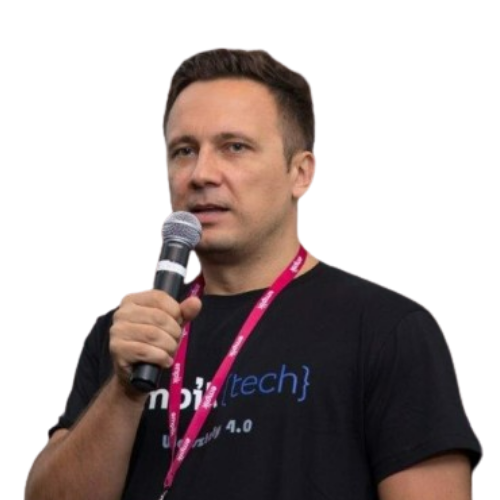
Şükrü Çakmak

Şükrü Çakmak

CTO & Co-Founder, Oobeya

11:40 am

Przerwa kawowa i networking

12:10 pm

The Private AI Paradigm

Ta sesja pokaże, czym jest Cloudera Private AI Anywhere – podejście, które pozwala wykorzystać AI bezpośrednio tam, gdzie znajdują się dane, niezależnie od tego, czy są w chmurze, centrum danych czy na brzegu sieci.

Porozmawiamy o architekturze, która umożliwia organizacjom budowanie i skalowanie rozwiązań AI, przy jednoczesnym zachowaniu pełnej kontroli nad modelami, agentami i sposobem ich działania.

Najważniejsze punkty

Suwerenność i zgodność → Bezpieczne zarządzanie danymi i modelami, nawet w wymagających środowiskach regulacyjnych.
Efektywność operacyjna → Ograniczenie kosztów chmury i szybszy zwrot z inwestycji dzięki wdrażaniu AI na większą skalę.
Elastyczność → Możliwość korzystania z AI tam, gdzie jest to najbardziej potrzebne – bez ograniczeń infrastrukturalnych.

Peter Rizvi

Peter Rizvi

Territory Account Executive, Cloudera

12:20 pm

Stochastyczny Umysł: Ocena Stabilności Odpowiedzi w Dużych Modelach Językowych

Gdy organizacje wdrażają modele językowe w środowiskach produkcyjnych, same wskaźniki dokładności nie wystarczą. Równie istotna jest spójność ich zachowania w różnych zadaniach. Podczas sesji przedstawię pierwsze wyniki szeroko zakrojonego badania nad spójnością modeli językowych, które rzucają nowe światło na ich zastosowanie w systemach agentowych. Badanie, przeprowadzane wielokrotnie przy różnych ustawieniach, pokazuje nie tylko, co modele robią poprawnie, ale także, jak niezawodne są w działaniu i w którym miejscu ich spójność zawodzi w warunkach rzeczywistych. Uczestnicy zdobędą nową perspektywę na dobór i ocenę modeli językowych oraz wspólny język dyskusji o spójności jako kluczowym kryterium jakości systemów agentowych.
Dariusz Korzun

Dariusz Korzun

Director, Applied AI, Global Cloud Solution Architecture, PepsiCo

12:35 pm

AI w komunikacji Żabki – studium przypadku

Studium przypadku pokazujące, jak AI może wspierać i rozwijać komunikację w ekosystemie kanałów Grupy Żabka.
Przyjrzymy się, w jaki sposób wykorzystanie AI przekłada się na przyspieszenie procesów oraz wzrost efektywności biznesowej – z perspektywy operacji, marketingu, sprzedaży oraz Żabka ADS.

Paweł Grabowski

Paweł Grabowski

Head of Digital B2B, Żabka Group

12:45 pm

Jak przestrzenne AI otwiera nowy wymiar możliwości biznesowych?

Rozwój sztucznej inteligencji, a szczególnie generatywnych modeli 2D, zmienia sposób tworzenia treści marketingowych. Obecne narzędzia nie odpowiadają jednak na wyzwania skali i interaktywności – dwóch kluczowych problemów branży modowej.

Podczas sesji pokażemy, jak wykorzystanie modeli 3D może znacząco obniżyć koszt produkcji materiałów marketingowych oraz jakie nowe doświadczenia cyfrowe mogą pojawić się w najbliższej przyszłości.

Moderator

Radek Brzózka

Radek Brzózka

Science journalist, technology enthusiast, and television presenter, Telewizja Polska

Maciej Borowski

Maciej Borowski

Co-founder & COO, Pirxe

Przemysław Kadula

Przemysław Kadula

Co-founder & CBO, Pirxe

12:55 pm

Leading Change for AI Adoption: Aligning Technology, Skills and Organization

Evghenia Iarina

Evghenia Iarina

Strategic Partnerships Director, Coursera

1:05 pm

The CIO Mandate: Scaling Enterprise Intelligence and Business Value

W przyszłości pracy definiowanej przez współpracę człowieka i maszyn, liderzy IT są głównymi architektami. Muszą oni skalować nie tylko wdrażanie sztucznej inteligencji, ale także, bardziej niż kiedykolwiek zapewniać wyniki biznesowe, bezpieczeństwo i zarządzanie (governance).

Dowiedz się, jak Workday może przyspieszyć tę transformację, działać jako mnożnik operacyjny oraz bezproblemowo integrować się z Twoim ekosystemem platform biznesowych.

Jens Löhmar

Jens Löhmar

CTO Continental Europe & DACH, Workday

1:15 pm

AI Reality Check + Q&A

Każda firma „robi coś z AI”, ale co tak naprawdę z tego wynika?
Praktycy z retail, fintech, mediów i przemysłu rozliczają trzy lata eksperymentów: co sprawdziło się jako centralny element strategii CIO, jak wygląda realne zarządzanie AI – od governance, przez ocenę ryzyka, po mierzenie ROI – dlaczego przejście od pilotaży do pełnoskalowego wdrożenia okazało się trudniejsze niż wszyscy zakładali. Porozmawiamy o tym, co zrobiliśmy naprawdę, a nie o tym, co powinniśmy byli zrobić.

Moderatorka

Ewa Zborowska

Ewa Zborowska

Research Director, IDC

Dariusz Korzun

Dariusz Korzun

Director, Applied AI, Global Cloud Solution Architecture, PepsiCo

Paweł Grabowski

Paweł Grabowski

Head of Digital B2B, Żabka Group

Małgorzata McCarthy

Małgorzata McCarthy

Technology Product Leader – Analytics, AI & Data, ManpowerGroup

Paweł Majek

Paweł Majek

Product Director, Poland Go To Market, Visa

2:00 pm

Networking Lunch

2:50 pm

Cyfrowa Transformacja obnaża realne kompetencje CxO

„Twoja transformacja cyfrowa nie działa! i wiesz o tym” czyli jak CxO musi się przebudować, żeby AI i Edge nie zjadły jego organizacji na śniadanie.

Powiedzmy sobie szczerze: większość „transformacji cyfrowych” to migracja do chmury, nowy CRM i ładny dashboard dla zarządu. P&L się nie rusza. Klienci tego nie czują. A za 18 miesięcy ktoś pyta „co właściwie zyskaliśmy?”
Tymczasem świat się zmienił. AI podejmuje decyzje, gdzie jest w tym lider/człowiek. Edge Computing przenosi inteligencję na krawędź sieci. Dane płyną w czasie rzeczywistym z fabryk, magazynów, szpitali.

I w tym nowym świecie CxO, który nadal jest „szefem IT”, jest jak kapitan żaglówki na autostradzie. Niby płynie, ale nie tam, gdzie trzeba.
Dlatego też opowiemy bez lukru:
→ Dlaczego „strategia cyfrowa” to oksymoron (strategia jest jedna, biznesowa)
→ Jak AI i Edge Computing zmieniają łańcuch wartości
→ Nowa kompetencja CxO już nie rola : od zarządzania IT do orkiestracji wartości

Robert Pławiak

Robert Pławiak

CDIO/CTO, Polpharma

Agnieszka Bochacka

Agnieszka Bochacka

Global Digital Transformation Director, GE Healthcare

3:00 pm

Technologiczny nokaut: jak odnaleźć strategię w chaosie

Cyfrowy ring, realne wyzwania i jedna kluczowa zasada: wygrywa ten, kto najlepiej rozumie strategię.

Ta prezentacja to spojrzenie na zmieniający się świat technologii i odpowiedź na pytanie, jak odzyskać kontrolę w warunkach chaosu, presji AI i rosnącej złożoności.

To nie opowieść o narzędziach, lecz o podejściu: o tym, jak przestać „przyjmować ciosy” i zacząć budować przewagę dzięki świadomej strategii.

Edyta Zborowska

Edyta Zborowska

Business Development Manager, vSoft

3:10 pm

Suwerenność technologiczna – strategia czy konieczność? + Q&A

Zależność od zagranicznych dostawców technologii przestała być wyłącznie kwestią ekonomiczną. W obliczu rosnących napięć geopolitycznych i cyberzagrożeń stała się zagadnieniem bezpieczeństwa państwa. Polska i Europa stoją dziś przed fundamentalnym pytaniem: czy budowanie własnych kompetencji technologicznych, suwerennej infrastruktury obliczeniowej i niezależnych modeli AI to realna strategia, czy jedynie polityczna deklaracja?

Jarosław Smulski

Jarosław Smulski

Senior Program Manager, Systems & Infrastructure Solutions, IDC

Radosław Maćkiewicz

Radosław Maćkiewicz

Director Centre for Information Technology, Centralny Ośrodek Informatyki

Grzegorz Zalewski

Grzegorz Zalewski

CEO, Aplikacje Krytyczne

Wiesław Wilk

Wiesław Wilk

CEO, Polska Chmura

Wojciech Wilk

Wojciech Wilk

Regional Director, CEE, HCLSoftware

Artur Kurcweil

Artur Kurcweil

CISO / CSO, Bank Millennium

3:55 pm

Brakujący element między agentami AI a biznesem – jak zapewnić governance, bezpieczeństwo i pełną kontrolę operacyjną

Pracownicy i agenci AI łączą się z systemami przedsiębiorstw szybciej, niż zespoły ds. bezpieczeństwa i governance są w stanie za tym nadążyć. Ta sesja analizuje powstającą lukę kontroli, obszar, w którym agenci uzyskują dostęp do wrażliwych danych, inicjują działania i zużywają zasoby bez scentralizowanego nadzoru.

Bazując na rzeczywistych doświadczeniach organizacji, pokażemy praktyczną architekturę warstwy pośredniej (gateway), która zapewnia CIO widoczność, egzekwowanie polityk oraz kontrolę kosztów we wszystkich obszarach wykorzystania narzędzi AI  bez spowalniania innowacji.

Marcin Mazurek

Marcin Mazurek

Co-Founder, Bitropy

4:05 pm

Technologia, biznes i ludzie – jak dobry CTO godzi światy, których nie da się rozdzielić

Ewa Zborowska

Ewa Zborowska

Research Director, IDC

Norbert Franke

Norbert Franke

CTO, Publicis Groupe Poland

4:15 pm

Secure by Design – gdy bezpieczeństwo, infrastruktura i biznes mówią jednym głosem + Q&A

Cyberbezpieczeństwo przestało być domeną działu IT . Dziś to strategiczny fundament całego biznesu, testowany przez AI, regulacje i rosnącą złożoność środowisk hybrydowych. Uczestnicy panelu podejmą kluczowe pytania o architekturę odporności, zarządzanie ryzykiem i budowanie kultury bezpieczeństwa w organizacjach, które chcą traktować cyberochronę nie jako koszt, lecz jako realną przewagę konkurencyjną.

Moderator

Marek Laskowski

Marek Laskowski

CIO, Kancelaria Prawna Domański Zakrzewski Palinka

Tomasz Kędziora

Tomasz Kędziora

Dyrektor Departamentu Cyberbezpieczeństwa, CISO, P4

Marek Ługowski

Marek Ługowski

Head of Infrastructure, Swiss Krono Group

Przemysław Szulecki

Przemysław Szulecki

Cyber Risk Senior Manager, HSBC

4:50 pm

Symulacja emocji przez sztuczną inteligencję. Algorytmy troski w ekonomii przywiązania (attachment economy).

Algorytmy to przede wszystkim potężna siła społeczna. Wraz z rozwojem technologii zdolnych do symulowania empatycznej responsywności relacje z AI silnie angażują najmłodsze pokolenia (AI Natives). Towarzysze AI  (AI companion) zachęcają do poszukiwania nowych rodzajów bliskości i są mechanizmami przekształcającymi dotychczasowe struktury relacji emocjonalnych. Skoncentruję się na rosnącym fenomenie sztucznych towarzyszy i generowanych komputerowo influencerach – antropomorficznych, hiperrealistycznych postaciach symulujących ludzkie doświadczenia i emocje. Uniwersum wirtualnych influencerów i lovebotów kształtuje obraz świata najmłodszego pokolenia dorastającego w środowisku mediów syntetycznych. Cyfrowo ucieleśnieni, społecznie interaktywni agenci, pełnią opiniotwórcze funkcje. Ich dysponenci wykorzystują szereg narzędzi wywierania wpływu. Symulujące empatię AI uczy się ludzkich reakcji, przewiduje potrzeby i zwraca się w formie, która dla młodego pokolenia bywa bezpieczniejsza, bardziej zrozumiała i pożądana niż komunikacja z człowiekiem. Teoria afektywnego wiązania (affective bonding theory) zakłada, że ludzie są predysponowani do tworzenia relacji emocjonalnych nie tylko z innymi ludźmi, lecz także z bytami sztucznymi, jeśli spełniają one funkcje społeczne i komunikacyjne. W ten sposób władza w kapitalizmie zaczyna działać  przez emocjonalne przywiązanie.

dr Ada Florentyna Pawlak

dr Ada Florentyna Pawlak

Technology Anthropoligist,

5:15 pm

Networking & Koktajl

5:15 pm

Podsumowanie IDC + Q&A + podsumowanie Host Partnera

Agenda

AGENDA

This year’s CIO Summit program has been designed as a coherent, strategic narrative reflecting the realities of an IT leader’s role in 2026. We have focused on debates, contrasting perspectives, and practitioner-led discussions. As a result, we go beyond traditional presentations to provide a comprehensive view of the challenges, decisions, and responsibilities today’s CIOs face.

April 22, 2026

CIO Summit

One Day Event

8:00 am

Registration & Welcome Coffee

9:00 am

Welcome & Opening

The official opening of CIO Summit Poland 2026, introducing the key themes of this year’s edition. The session will outline the strategic context of the event, highlight the most pressing challenges facing IT leaders in 2026, and present the main topics that will be explored in the subsequent agenda blocks.

Radek Brzózka

Radek Brzózka

Science journalist, technology enthusiast, and television presenter, Telewizja Polska

Keynote
One Day Event
9:10 am

CIOs Leading the AI Supercycle – Life Beyond Efficiency

As organizations accelerate digital investment, CIOs face a complex set of challenges: modernizing legacy systems, addressing rising technical debt, embedding cybersecurity, ensuring regulatory compliance, and preparing their workforce for technology-driven change. IDC research shows that nearly 40% of CIOs expect to overspend on digital infrastructure within the next 18 months, with technical debt cited as a primary driver, while only a fraction of digital initiatives deliver measurable business impact. At the same time, global digital transformation spend is set to surpass $4 trillion by 2027, underscoring the urgency for CIOs to deliver value, not just investment.

Lapo Fioretti | IDC

Senior Research Analyst, EMEA AI-Fueled Business Strategies

Read Bio LinkedIn
Lapo Fioretti
9:30 am

Architecture of Freedom – How Technological Sovereignty Becomes the Foundation of Strategy

In a world of escalating hybrid conflicts, technological sovereignty is becoming the foundation for the survival of every organization’s digital fortress. The Sovereignty by Design approach enables organizations to regain real control over their data and infrastructure, eliminating risks associated with unpredictable jurisdictions and global dependencies.

In this session, we will explore how to turn digital autonomy into a strategy that ensures long-term business continuity in the face of geopolitical disruption. This is not just about security — it is a critical insurance policy, ensuring that when it matters most, you retain the keys to your own kingdom.

This is not a choice between innovation and isolation, but a deliberate approach to designing security that guarantees resilience in an unpredictable world.

Jakub Łukasiewicz

Jakub Łukasiewicz

Regional Sales Director, HCL Software | CEE

9:45 am

Board Perspective: What Does the Business Expect from CIOs This Year? + Q&A

This time, the CIO does not take the floor — the CIO becomes the subject of the discussion.

On stage, CFOs, COOs, CROs and CEOs will share their perspectives. They work with technology leaders every day and have well-formed and not always comfortable opinions. What does the board really expect from the CIO in the era of AI? How do they assess the CIO’s role in shaping key business decisions? When does a CIO become a true strategic partner, and when do they remain a highly capable executor of others’ plans?

This panel offers a rare opportunity to hear a perspective that usually remains behind closed boardroom doors – candid, thought-provoking, and relevant for both technology and business leaders.

Jacek Nawrot

Jacek Nawrot

Senior ICT Executive, IDC

Robert Cegliński

Robert Cegliński

Vice President of the Management Board, Chief Risk Officer, PayPo

Aneta Gawrońska

Aneta Gawrońska

Chief Financial Director, Medicover Sport

Monika Kozakiewicz

Monika Kozakiewicz

CEO, NAUTA Shiprepair Yard

Diana Skotnicka

Diana Skotnicka

CFO, Respect Energy Holding

10:35 am

Stopping Fraud Before It Starts: Identity Intelligence Meets Agentic AI

Professionals across industries are in search for solutions to effectively prevent fraud while ensuring legitimate customers never feel the friction of fraud prevention. This requires combatting account takeover, unauthorized access, and new account fraud by integrating fraud prevention directly into the user journey. Many times, this involves incorporating friction when and where it is needed by building adaptive user journeys that evaluate and act on risk signals at key points such as registration, login, profile management, and transaction (either payment, check-out or subscription activation).

Marcin Zimny

Marcin Zimny

Principal Solutions Architect, Ping Identity

Andrei Dumitru

Andrei Dumitru

Executive Partner, IT Smart Systems

10:50 am

CIO’s Challenges in 2026 + Q&A

The role of the CIO has never been more strategic  and never more demanding.

Transforming IT into a true business partner, leveraging AI as a source of real competitive advantage, building cyber-resilience as an operational foundation, and scaling innovation securely across complex organizations, these are the challenges technology leaders face every day.

CIOs from different industries come together for an honest conversation about what truly defines effective technology leadership in 2026.

Moderator

Lucyna Michniewicz-Ślaska

Lucyna Michniewicz-Ślaska

CIO, VOX Group

Rafał Zbiróg

Rafał Zbiróg

Group CIO, Inter Cars

Tomasz Bednarczuk

Tomasz Bednarczuk

CIO, Kaczmarski Group

Robert Tomaka

Robert Tomaka

CIO, Diagnostyka

Alicja Rybczyńska

Alicja Rybczyńska

Chief Information Officer, Veolia Poland

11:35 am

Turning CIO Challenges into Measurable Outcomes with Oobeya

CIOs can transform today’s most pressing challenges, ranging from AI adoption and fragmented data to lack of execution visibility into measurable business outcomes. By leveraging engineering intelligence, Oobeya connects data across the software development lifecycle, turning insights into actionable decisions. Attendees will discover how to identify bottlenecks, align technology with business goals, and drive continuous improvement without manual reporting. The talk highlights a practical approach to moving from insight to execution, enabling CIOs and CTOs to deliver real, scalable impact in the age of AI.


Şükrü Çakmak

Şükrü Çakmak

CTO & Co-Founder, Oobeya

11:40 am

Coffee Break & networking

12:10 pm

The Private AI Paradigm

This session unveils Cloudera’s Private AI Anywhere, a sophisticated framework designed to bring high-performance intelligence directly to your data, regardless of whether it resides in the cloud, the data center, or at the edge.

We will explore a comprehensive architecture that empowers organizations to build and scale AI applications with absolute, end-to-end governance over every model, agent, and inference point.

Key Takeaways

Sovereignty & Compliance → Secure data and model integrity within the most rigorous regulatory environments.
Operational Excellence → Eliminate “cloud tax” and accelerate ROI by deploying enterprise AI at scale.
Unrivaled Portability → Experience the true flexibility of an “Anywhere Cloud” infrastructure.

Peter Rizvi

Peter Rizvi

Territory Account Executive, Cloudera

12:20 pm

Stochastic Mind: Evaluating Response Stability in Large Language Models

As organizations deploy language models in production environments, accuracy metrics alone are no longer sufficient. Equally important is the consistency of model behavior across different tasks. During this session, I will present the first results of a large-scale study on the consistency of language models, offering new insights into their application in agent-based systems. Conducted repeatedly under varying configurations, the study reveals not only what models get right, but also how reliable they are in practice—and where their consistency breaks down under real-world conditions. Attendees will gain a new perspective on selecting and evaluating language models, as well as a shared framework for discussing consistency as a key quality criterion in agent-based systems.

Dariusz Korzun

Dariusz Korzun

Director, Applied AI, Global Cloud Solution Architecture, PepsiCo

12:35 pm

AI in Żabka’s communication – case study

A case study demonstrating how AI can support and enhance communication across the Żabka Group’s channel ecosystem.
We will explore how AI contributes to faster processes and improved business efficiency from the perspectives of operations, marketing, sales, and Żabka ADS.

Paweł Grabowski

Paweł Grabowski

Head of Digital B2B, Żabka Group

12:45 pm

How does spatial AI open up a new dimension of business opportunities?

The development of AI, especially generative 2D models, is transforming the way marketing content is created. However, current tools do not address the challenges of scale and interactivity – two key issues for the fashion industry. During the session, we will discuss how leveraging 3D models can significantly reduce the cost of producing marketing materials and what new digital experiences we can expect in the near future.

Moderator

Radek Brzózka

Radek Brzózka

Science journalist, technology enthusiast, and television presenter, Telewizja Polska

Maciej Borowski

Maciej Borowski

Co-founder & COO, Pirxe

Przemysław Kadula

Przemysław Kadula

Co-founder & CBO, Pirxe

12:55 pm

Leading Change for AI Adoption: Aligning Technology, Skills and Organization

Evghenia Iarina

Evghenia Iarina

Strategic Partnerships Director, Coursera

1:05 pm

The CIO Mandate: Scaling Enterprise Intelligence and Business Value

In the Future of Work defined by Human & Machine Collaboration, IT Executives are the lead architects. They need to scale not only AI adoption, but more than ever also assure Business Outcomes, Security & Governance. Learn how Workday can accelerate this Transformation, act as an operational multiplier while seemlessly intetrating in your Business Platform Stack.

Jens Löhmar

Jens Löhmar

CTO Continental Europe & DACH, Workday

1:15 pm

AI Reality Check + Q&A

Every company is “doing something with AI”  but what has it actually delivered?

Practitioners from retail, fintech, media, and industry take stock of three years of experimentation: what has proven to be a central element of the CIO’s strategy, what real AI management looks like – from governance and risk assessment to measuring ROI, and why moving from pilot projects to full-scale deployment has turned out to be more difficult than anyone expected.

A conversation about what has actually been done, not what should have been done.

Moderator

Ewa Zborowska

Ewa Zborowska

Research Director, IDC

Dariusz Korzun

Dariusz Korzun

Director, Applied AI, Global Cloud Solution Architecture, PepsiCo

Paweł Grabowski

Paweł Grabowski

Head of Digital B2B, Żabka Group

Małgorzata McCarthy

Małgorzata McCarthy

Technology Product Leader – Analytics, AI & Data, ManpowerGroup

Paweł Majek

Paweł Majek

Product Director, Poland Go To Market, Visa

2:00 pm

Networking Lunch

2:50 pm

Digital Transformation Exposes the True Capabilities of CxOs

Let’s be honest: most “digital transformations” are just cloud migrations, a new CRM, and a polished dashboard for the board.
The P&L doesn’t move. Customers don’t feel a difference. And 18 months later, someone asks: “So what did we actually gain?”

Meanwhile, the world has changed.
AI is making decisions – where does the human leader fit in?
Edge computing is pushing intelligence to the edge of the network.
Data flows in real time from factories, warehouses, and hospitals.

In this new reality, a CxO who is still “the head of IT” is like a sailboat captain on a highway – moving, but not in the right direction.

So let’s talk about it without the buzzwords:

→ Why “digital strategy” is an oxymoron (there is only one strategy: business strategy)
→ How AI and edge computing are reshaping the value chain
→ The new CxO capability: not managing IT, but orchestrating value

Robert Pławiak

Robert Pławiak

CDIO/CTO, Polpharma

Agnieszka Bochacka

Agnieszka Bochacka

Global Digital Transformation Director, GE Healthcare

3:00 pm

Technology Knockout: Finding Strategy in the Chaos

Digital arena, real challenges, and one key principle: the winner is the one who understands strategy best.

This presentation offers a perspective on the evolving world of technology and addresses the question of how to regain control amid chaos, AI pressure, and increasing complexity.

It is not a story about tools, but about mindset: how to stop “taking punches” and start building an advantage through a conscious, well-defined strategy.

Edyta Zborowska

Edyta Zborowska

Business Development Manager, vSoft

3:10 pm

Technological sovereignty – strategy or necessity? + Q&A

Dependence on foreign technology providers is no longer solely an economic issue. In the face of rising geopolitical tensions and cyber threats, it has become a matter of national security. Poland and Europe now face a fundamental question: is building their own technological capabilities, sovereign computing infrastructure, and independent AI models a realistic strategy, or merely a political declaration?

Moderator

Jarosław Smulski

Jarosław Smulski

Senior Program Manager, Systems & Infrastructure Solutions, IDC

Radosław Maćkiewicz

Radosław Maćkiewicz

Director Centre for Information Technology, Centralny Ośrodek Informatyki

Grzegorz Zalewski

Grzegorz Zalewski

CEO, Aplikacje Krytyczne

Wiesław Wilk

Wiesław Wilk

CEO, Polska Chmura

Wojciech Wilk

Wojciech Wilk

Regional Director, CEE, HCLSoftware

Artur Kurcweil

Artur Kurcweil

CISO / CSO, Bank Millennium

3:55 pm

The Missing Layer Between AI Agents and Your Enterprise – Governance, Security & Operational Control in the Age of AI

Employees and AI agents are connecting to enterprise systems faster than security and governance teams can keep up. This session explores the emerging control gap, where agents access sensitive data, trigger actions, and consume resources without centralized oversight. Drawing from real enterprise experiences, we’ll walk through a practical architecture for a secure gateway layer that gives CIOs visibility, policy enforcement, and cost control across all AI tool usage – without slowing down innovation.

Marcin Mazurek

Marcin Mazurek

Co-Founder, Bitropy

4:05 pm

Technology, Business, and People — How a Great CTO Brings Together Worlds That Can’t Be Separated

Ewa Zborowska

Ewa Zborowska

Research Director, IDC

Norbert Franke

Norbert Franke

CTO, Publicis Groupe Poland

4:15 pm

Secure by Design – when security, infrastructure, and business speak with one voice + Q&A

Cybersecurity is no longer the sole domain of the IT department. Today it is a strategic foundation of the entire business, challenged by AI, regulation, and the growing complexity of hybrid environments. Panel participants will address key questions around resilience architecture, risk management, and building a culture of security in organizations that aim to treat cybersecurity not as a cost, but as a real competitive advantage.

Moderator

Marek Laskowski

Marek Laskowski

CIO, Kancelaria Prawna Domański Zakrzewski Palinka

Marek Ługowski

Marek Ługowski

Head of Infrastructure, Swiss Krono Group

Tomasz Kędziora

Tomasz Kędziora

Dyrektor Departamentu Cyberbezpieczeństwa, CISO, P4

Przemysław Szulecki

Przemysław Szulecki

Cyber Risk Senior Manager, HSBC

4:50 pm

Simulation of Emotions by Artificial Intelligence: Care Algorithms in the Attachment Economy

Algorithms are, above all, a powerful social force. As technologies capable of simulating empathic responsiveness evolve, relationships with AI are becoming deeply engaging—especially for the youngest generations (AI Natives). AI companions encourage the exploration of new forms of intimacy and act as mechanisms reshaping existing structures of emotional relationships.

I will focus on the growing phenomenon of artificial companions and computer-generated influencers – anthropomorphic, hyper-realistic figures that simulate human experiences and emotions. The universe of virtual influencers and lovebots is shaping the worldview of the youngest generation growing up in an environment of synthetic media. Digitally embodied and socially interactive agents are taking on opinion-forming roles, while their operators deploy a wide range of influence techniques.

Empathy-simulating AI learns human responses, anticipates needs, and communicates in ways that, for younger users, can feel safer, more intuitive, and more desirable than interaction with other people. According to affective bonding theory, humans are predisposed to form emotional relationships not only with other humans but also with artificial entities-provided these fulfill social and communicative functions.

In this way, power in capitalism increasingly operates through emotional attachment.

dr Ada Florentyna Pawlak

dr Ada Florentyna Pawlak

Technology Anthropoligist,

5:15 pm

IDC Wrap-up + Q&A + Host Partner Wrap-up

5:20 pm

Networking Cocktail

Knowledge Hub / Workday

Partner Spotlight

Rani Johnson
Chief Information Officer
Workday

Partner Spotlight

Transforming the Friction of AI Into Flow

To truly capture the return on AI investment, we must pivot from counting tasks to measuring the wins that matter.


There is incredible energy in our workforce right now. If you look at the dashboards, the numbers are climbing. Adoption of new tools is skyrocketing, and people are moving faster than ever before.


But capability is not the same as impact.


For the last few years, we have been laser-focused on gross efficiency—how many tasks we check off, tickets we close, and code we ship. We have become excellent at volume. But in an AI-driven world, raw speed is just the baseline.


To unlock the untapped potential of our teams, we must pivot to a new metric. We need to stop asking how fast did we finish? and start asking how well did we solve it?


Turn the AI Tax Into Hidden Potential


Let’s look at the data with clear eyes. We know that AI is driving productivity—77% of employees report they are more productive today than they were a year ago. That’s a huge win.


But we’re also seeing a few growing pains. New research shows that for every 10 hours of productivity gained, we pay back about four hours in rework—correcting, clarifying, and refining AI output.


Some call this an “AI Tax.” I prefer to call it hidden potential.


Think about that. Nearly 40% of possible gains are silently lost to rework. If we can reclaim that time by focusing on quality over quantity, we don’t just get those hours back—we get the brainpower back.


We can turn that friction into flow. We just have to shift our focus from doing things fast to getting things right.


Read more on the Workday Blog here.

IDC Dinner Roundtable München

IDC Dinner Roundtable München

Logo Logo

Navigating Digital Sovereignty – Kontrolle und Innovation im Gleichgewicht

Digitale Souveränität ist für europäische und deutsche Unternehmen zu einer strategischen Kernfrage geworden. Neu geschaffene Modelle der operativer Unabhängigkeit bieten IT-Verantwortlichen in einem weltpolitisch fragilen Umfeld hierfür neue Chancen und Herausforderungen.


Wie lassen sich Datenkontrolle und Innovationsfähigkeit – insbesondere im Bereich Cloud und KI – sinvoll miteinander vereinbaren? Und wie können moderne Cloud-Architekturen, hybride Modelle und offene Standards dabei helfen, Flexibilität und Zukunftssicherheit zu gewährleisten?

Darüber und mehr wollen wir sprechen:

Gemeinsam werden in einer vertraulichen Runde unter anderem folgende Fragen diskutiert:

  • Welche Anforderungen an digitale Souveränität sind wirklich geschäftskritisch?
  • Gibt es das optimale Gleichgewicht zwischen Innovation und Kontrolle?
  • Welche Cloud-Modelle schaffen deutschen Unternehmen wirklich nachhaltige Resilienz?

Freuen Sie sich auf einen Austausch auf Augenhöhe, praxisnahe Impulse und wertvolle Einblicke in Strategien, die digitale Souveränität und Wachstum erfolgreich verbinden.

Agenda

IDC Dinner Roundtable München

One Day Event

5:30 pm

Empfang

Networking bei Drinks und Canapés

6:00 pm

Begrüßung & Vorstellung der Themen des Abends

Carla Arend

Carla Arend

Associate Vice President, Research, Cloud in Europe, IDC

Armin Oppitz

Armin Oppitz

Mitgründer & Vorstand, Liongate

Axel Clauberg

Axel Clauberg

Direktor, AWS Partner Solutions Architects, EMEA, AWS

6:40 pm

Vorspeise – Erstes Diskussionsthema

Digitale Souveränität ist für viele Unternehmen zur strategischen Kernfrage geworden. Doch was bedeutet sie konkret für Ihr Unternehmen – wo entstehen reale Abhängigkeiten technologisch, geopolitisch, wirtschaftlich?

7:20 pm

Hauptgang – Zweites Diskussionsthema

Cloud und KI treiben Innovation massiv voran. Gleichzeitig wachsen Anforderungen an Kontrolle und Transparenz – verlangsamt Souveränität Innovation, oder macht sie nachhaltiger?

8:00 pm

Dessert – Drittes Diskussionsthema

Wenn wir digitale Souveränität nicht nur als Prinzip, sondern als Architekturfrage verstehen, wie sollte eine zukunftssichere IT-Landschaft konkret aussehen – Hybrid, Multi-Cloud, Sovereign Cloud, was ist Strategie, was Taktik?

8:40 pm

Zusammenfassung und Ausblick

Carla Arend

Carla Arend

Associate Vice President, Research, Cloud in Europe, IDC

Armin Oppitz

Armin Oppitz

Mitgründer & Vorstand, Liongate

Axel Clauberg

Axel Clauberg

Direktor, AWS Partner Solutions Architects, EMEA, AWS

9:00 pm

Offizielles Ende des Dinner Roundtables

Sprecher

Carla Arend

Carla Arend

Associate Vice President, Research, Cloud in Europe

IDC

Read bio

Armin Oppitz

Armin Oppitz

Mitgründer & Vorstand

Liongate

Read bio

Axel Clauberg

Axel Clauberg

Direktor, AWS Partner Solutions Architects, EMEA

AWS

Read bio

Partner

Veranstaltungsort

The Charles Hotel

Teilnahmebedingungen

IDC Roundtables richten sich an IT- und Fachbereichsmitarbeitende aus IT-Anwenderunternehmen mit Sitz in Deutschland. IT-Anwenderunternehmen im Sinne dieser Teilnahmebedingungen sind alle Organisationen, die selbst keine Beratungsdienstleistungen erbringen und/oder ITK-Produkte oder -Dienstleistungen entwickeln, herstellen oder vertreiben. Mitarbeitende von ausgegründeten IT-Gesellschaften, die ausschließlich für den Mutterkonzern arbeiten und kein Drittgeschäft machen, sind ebenfalls teilnahmeberechtigt. IDC behält sich ausdrücklich das Recht vor, Registrierungen von Personen, die nicht zur o.g. Zielgruppe gehören – auch wenn die Einladung durch einen unserer Partner, irrtümlich durch IDC selbst oder durch die Teilnahme an einer Online-Umfrage ausgesprochen wurde – nicht zu bestätigen. Nach Ihrer Anmeldung über das Online-Registrierungsformular und erfolgreicher Prüfung durch IDC erhalten Sie eine verbindliche Anmeldebestätigung per E-Mail.