AWS & Genesys

AWS & Genesys

Souveraineté numérique: maîtriser les parcours clients tout en accélérant l’innovation
Logo Logo

Gardez le contrôle total de votre expérience client dans un environnement souverain

La souveraineté numérique n’est plus une option : elle est au cœur de la stratégie des entreprises les plus innovantes. Près d’une entreprise européenne sur deux place cette notion au centre de sa feuille de route (IDC, 2025, EMEA).

L’enjeu : innover via l’IA et l’orchestration intelligente des parcours clients tout en garantissant la maîtrise totale des données, la résidence des informations et la conformité réglementaire.

Un dîner-débat entre pairs

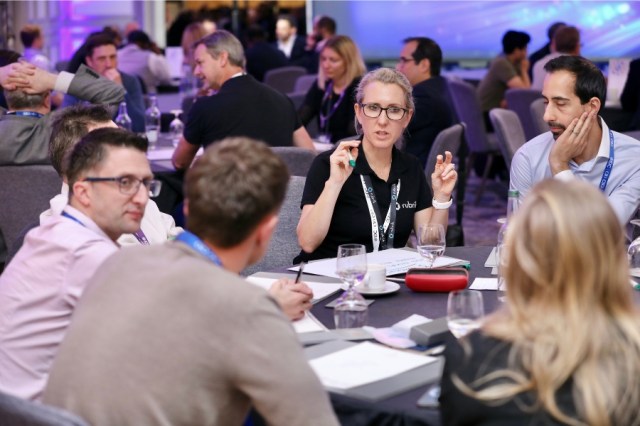
Organisé par IDC, en partenariat avec AWS et Genesys, ce dîner se tiendra dans le cadre prestigieux de l’Hôtel George V. C’est une opportunité unique de rencontrer décideurs IT et métiers, experts et partenaires technologiques dans un cadre élégant et intimiste.

L’objectif : partager des retours d’expérience concrets et découvrir comment une architecture souveraine peut devenir un levier stratégique pour moderniser l’expérience client.


Au programme :

  • Transformer la souveraineté numérique d’un impératif réglementaire en levier stratégique pour le board

  • Orchestrer des parcours clients intelligents dans un environnement souverain comme AWS European Sovereign Cloud

  • Mettre en place l’IA en environnement régulé : agentic AI, personnalisation éthique et gouvernance des données

  • Réduire la friction réglementaire (GDPR, DORA, EU AI Act) tout en accélérant l’innovation

  • Identifier les freins à lever pour moderniser la CX en toute maîtrise

Cette soirée sera rythmée par des interventions d’experts, suivies d’un débat interactif avec les participants.

Les thématiques clés abordées

Souveraineté numérique: de la conformité à l’avantage compétitif

Orchestration intelligente des parcours clients dans un environnement souverain

IA et gouvernance des données: innover en environnement régulé

Pourquoi participer?

En participant à ce dîner, vous pourrez :

  • Échanger avec des experts et des pairs confrontés aux mêmes défis IT et métiers

  • Comprendre comment une architecture souveraine peut devenir un accélérateur stratégique

  • Identifier des leviers concrets pour moderniser la CX tout en renforçant la maîtrise des données

  • Découvrir comment Genesys Cloud protège vos données en s’appuyant sur AWS European Sovereign Cloud


Agenda

AWS & Genesys

One Day Event

7:00 pm

Cocktail de bienvenue et networking

7:30 pm

Mots de bienvenue par IDC

Cyrille Chausson

Cyrille Chausson

Research Manager, IDC Europe

7:45 pm

Présentation AWS & Genesys

Rodrigue Vitini

Rodrigue Vitini

Digital Sovereignty Specialist Solutions Architect, AWS

Laurent Deville

Laurent Deville

Senior Manager Solutions Consulting, Genesys

8:00 pm

Dîner-débat

  • Souveraineté numérique : de la conformité à l’avantage compétitif

  • Orchestration intelligente des parcours clients dans un environnement souverain

  • IA et gouvernance des données: innover en environnement régulé

10:30 pm

Mots de remerciement & clôture du dîner

Intervenants

Cyrille Chausson

Cyrille Chausson

Research Manager

IDC Europe

Read bio

Rodrigue Vitini

Rodrigue Vitini

Digital Sovereignty Specialist Solutions Architect

AWS

Read bio

Laurent Deville

Laurent Deville

Senior Manager Solutions Consulting

Genesys

Read bio

Partenaires

Sponsorisé par

Lieu

Hôtel George V

Une soirée au Salon Napoléon – Hôtel George V
31 Av. George V, 75008 Paris

Plongez dans l’élégance du Salon Napoléon au cœur de l’Hôtel George V. Entre boiseries raffinées, lustres majestueux et mobilier d’exception, ce lieu emblématique offre le cadre parfait pour échanger avec IDC et AMD. Une soirée unique où raffinement, histoire et convivialité se rencontrent pour créer des moments inoubliables.

Critère de participation

Cet événement est destiné aux collaborateurs des entreprises clientes ayant des responsabilités clés. Pour garantir un public pertinent et enrichissant, les inscriptions des fournisseurs de technologies, intégrateurs ou cabinets de conseil peuvent être refusées à la discrétion de l’organisateur.


IDC, AWS & Genesys

IDC, AWS & Genesys

From Compliance to Innovation: Take Control of Your Customer Experience

Sponsored by

Logo Logo

Deliver Customer Experience with Full Control in a Sovereign Environment

Digital sovereignty is no longer optional — it has become a strategic priority for the most forward-thinking organizations. According to IDC (EMEA, 2025), nearly one in two European companies now places digital sovereignty at the heart of its technology roadmap.

For IT leaders, the challenge is clear: leverage AI and intelligent customer journey orchestration to drive innovation, while ensuring complete control over data, data residency, and regulatory compliance.

So how can organizations accelerate innovation without compromising control?

An Executive Dinner Discussion

Hosted by IDC, in partnership with AWS and Genesys, this exclusive dinner will bring together IT and business leaders, industry experts, and technology partners in the prestigious setting of the Hôtel George V in Paris.

In an intimate and interactive environment, this event offers a unique opportunity to exchange real-world insights and explore how sovereign architecture can become a strategic driver for modernizing customer experience.

On the Agenda
During the evening, we will explore topics such as:

  • Turning digital sovereignty from a regulatory requirement into a strategic advantage at board level

  • Orchestrating intelligent customer journeys within a sovereign cloud environment, such as AWS European Sovereign Cloud

  • Deploying AI in regulated environments: agentic AI, responsible personalization, and robust data governance

  • Reducing regulatory friction (GDPR, DORA, EU AI Act) while accelerating innovation

  • Identifying key barriers to modernizing CX while maintaining full control of data

The evening will feature expert perspectives, followed by an interactive discussion with participants.

Key Topics

Digital sovereignty: from compliance requirement to competitive advantag

Intelligent customer journey orchestration in a sovereign environmen

AI and data governance: innovating in regulated environments

Reasons to participate

By joining this dinner, you will:

  • Connect with peers and experts facing similar IT and business challenges

  • Discover how sovereign architecture can become a strategic accelerator

  • Identify practical ways to modernize customer experience while maintaining full control over data

  • Learn how Genesys Cloud protects customer data leveraging AWS European Sovereign Cloud

Agenda

IDC, AWS & Genesys

One Day Event

7:00 pm

Welcome and Networking Cocktail

7:30 pm

IDC Welcome Speech and Positioning

Cyrille Chausson

Cyrille Chausson

Research Manager, IDC Europe

7:45 pm

Welcome from AWS and Genesys

Rodrigue Vitini

Rodrigue Vitini

Digital Sovereignty Specialist Solutions Architect, AWS

Laurent Deville

Laurent Deville

Senior Manager Solutions Consulting, Genesys

8:00 pm

Dinner Roundtable Discussions

  • Digital sovereignty: from compliance requirement to competitive advantage
  • Intelligent customer journey orchestration in a sovereign environment
  • AI and data governance: innovating in regulated environments
10:30 pm

Thank you from IDC, AWS and Genesys

Speakers

Cyrille Chausson

Cyrille Chausson

Research Manager

IDC Europe

Read bio

Rodrigue Vitini

Rodrigue Vitini

Digital Sovereignty Specialist Solutions Architect

AWS

Read bio

Laurent Deville

Laurent Deville

Senior Manager Solutions Consulting

Genesys

Read bio

Partners

Sponsored by

Venue

Hôtel George V

An Evening at the Salon Napoléon – Hôtel George V
31 Avenue George V
75008 Paris

Step into the elegance of the Salon Napoléon, located in the heart of the Hôtel George V. With its refined wood paneling, grand chandeliers, and exceptional furnishings, this iconic venue provides the perfect setting to engage in meaningful conversations with IDC, AWS, and Genesys.

An exceptional evening where innovation, expertise, and high-level networking come together.
Participation Criteria

This event is intended for employees of client companies who hold key responsibilities. To ensure a relevant and enriching audience, registrations from technology vendors, system integrators, or consulting firms may be declined at the organizer’s discretion.

Knowledge Hub / OutSystems

Partner Spotlight

Leonard Tan
Regional Director for Southeast Asia and Greater China Region
OutSystems

Partner Spotlight

The Next Frontier of Enterprise AI in Singapore: Three Principles for Implementing Agentic AI at Scale


The emergence of generative AI (GenAI) has significantly lowered the barrier for enterprise technology adoption, rapidly demonstrating value in areas such as content creation and task automation. In Singapore, AI has now moved beyond experimentation to become a national priority for economic transformation.


Recent initiatives signal a decisive shift toward execution. The establishment of a National AI Council chaired by the Prime Minister, the launch of National AI Missions across sectors such as manufacturing, finance, healthcare, and connectivity, and the development of an AI Park at one-north reflect Singapore’s ambition to accelerate real-world deployment of AI technologies.


Yet despite growing adoption, many enterprises are still navigating a familiar challenge: how to move beyond isolated pilots and integrate AI meaningfully into core business operations. While AI tools have become widely accessible, scaling them across enterprise systems, workflows, and governance structures remains complex.


Now, Agentic AI is emerging as a new paradigm for bridging that gap. Moving beyond tools that merely respond to prompts, agentic systems introduce purpose-driven autonomy into enterprise environments, enabling agents to interpret intent, plan strategically, verify outputs, and iterate toward desired outcomes. OutSystems’ approach, exemplified through Agent Workbench, follows this principle by coordinating specialized AI agents to support complex development and operational tasks in a governed, predictable way.


Enterprise interest in agentic AI is no longer exploratory. Across industries, early implementations are already delivering meaningful gains—from automating repetitive tasks to accelerating mission-critical application development and reducing manual validation. These outcomes highlight a clear pattern: agentic AI delivers the greatest value when agents are embedded directly into existing processes and workflows, rather than introduced as standalone tools.


To implement agentic AI effectively, three principles are essential.


The first is to prioritize problem definition over technology selection. Many AI initiatives often fall short not because of model limitations, but because the underlying friction points were not clearly identified. Understanding where inefficiencies, bottlenecks, or risk truly exist ensures that agentic systems are designed to address high-impact, mission-critical needs from day one.


The second principle is seamless integration with existing workflows. Agentic AI is most effective when it operates within the tools and systems that employees already use. Requiring significant changes to interfaces or processes can introduce additional friction and slow adoption. By contrast, layering agentic orchestration enables agents to coordinate tasks, surface insights, and automate steps within users’ existing ecosystem. This is the principle behind architectures like Agent Workbench, which enable multiple agents to collaborate within established workflows rather than creating new destinations for users.


The last principle is treating trust and governance as foundational design elements. Sensitive, high-volume enterprise data demands systems that provide transparency, especially as AI agents take on more autonomous decision-making. As such, enterprises adopting agentic AI must ensure that data boundaries, access control, versioning, and auditability are embedded from the outset. Governance is not an afterthought—it is the prerequisite for scaling agentic AI across the organization.


Communicating the value of agentic AI is equally important. For users who are still unfamiliar with the concept of agentic AI, it is often more effective to demonstrate its real-world utility than to explain the technicalities. Clarifying the roles, responsibilities, and expected outcomes of AI agents—alongside the business problems they solve—helps users understand that AI not as a black box, but as a set of purposeful collaborators that augment their daily work.


Agentic AI is poised to reshape enterprise development, operations, and service delivery. Yet, its success depends not only on raw capability, but on strategy, integration, and trust. The key question facing enterprises in Singapore today is not whether to adopt agentic AI, but how to deploy it effectively. Those who can do so with clarity and precision will be best positioned to lead in the next phase of digital transformation.

Knowledge Hub / Crest Infosolutions

Partner Spotlight

Hemant Prasad
Chief Executive Officer
Crest Infosolutions Sdn Bhd

Partner Spotlight

Enterprise Content Lake: Govern What You Have First, Modernize What Matters Next


In banking and finance, insurance, fintech, telecommunications, retail and several other enterprises, customer and business documents rarely live in one place. Often overlooked as responsibility of individual business teams, it is spread across legacy ECM systems, collaboration platforms, cloud drives, shared folders, FTP servers, scanned archives, and the databases of line-of-business applications. Over time, this creates a familiar pattern: rising maintenance costs, duplicated information, slower processes, fragmented search, data leak risk and growing compliance exposure. In most cases, the customer and business documents live for forever due to lack of control on federated silos and blind spots in data governance.


The problem is not only storage sprawl, it’s the loss of control.


An Enterprise Content Lake offers a practical answer. Instead of forcing a risky, high-cost “big bang” migration, it creates a governed operating layer across federated content silos first. This gives organizations a single pane of glass to discover, classify, search, secure, and govern documents across multiple repositories while allowing content to remain where it must for operational, legal, or business reasons.


This approach helps enterprises apply consistent classification, retention, access, and policy controls across distributed content estates. It also provides a unified view of customer and business documents, reducing the time teams spend hunting for files, reconciling versions, and manually moving information between systems.


Just as importantly, it creates the foundation for trustworthy AI.


Most AI and RAG initiatives struggle because enterprise data is scattered, duplicated, poorly classified, and difficult to govern. By connecting content sources into a governed content layer, organizations can improve metadata consistency, reduce duplication, strengthen access control, and expose higher-trust content to downstream AI use cases. The result is faster time to value for business search, service operations, case work, and AI-driven knowledge access.


The smartest modernization strategy is not to migrate everything at once. It is to govern in place first, rationalize what is redundant second, and selectively migrate where the value is clear.


That is how fragmented repositories become a controlled, compliant, and AI-ready enterprise asset.

Knowledge Hub / Origina

Partner Spotlight

Nancy Maluso
Executive Vice President, Enterprise Transformation
Origina

Partner Spotlight

Designing Your Digital Destiny: A Framework for Independence in the AI Era


As digital transformation accelerates, organizations are confronting a growing strategic imperative: establishing digital sovereignty. More than a regulatory concept, digital sovereignty represents the ability of enterprises and nations to control and protect their data, infrastructure, and software in accordance with local laws, values, and operational requirements. In practice, it means understanding precisely where data resides, who has access to it, and how technological dependencies influence business continuity, competitive advantage, and customer trust.


This need for control is increasingly difficult to achieve in a borderless digital ecosystem dominated by a small number of megavendors. With more than 450 of the world’s top 1,000 technology firms headquartered in the United States and another significant cluster in China, enterprises across Europe, Asia, and even the U.S. itself are evaluating the risks of concentrated technological power. Vendor-driven migrations, forced upgrades, and cloud-centric operational models often collide with enterprise roadmaps, budgets, and long-term architectural needs, raising concerns about stability, cost escalation, and loss of control.


Regulators have responded accordingly. The European Union has introduced ambitious frameworks such as Gaia-X alongside the Data Act and AI Act; India and China enforce strict data localization laws. While Southeast Asian countries have taken a more balanced approach, this expanding patchwork requires global CIOs to navigate a complex landscape of data residency rules, sovereignty requirements, and compliance obligations, often across multiple jurisdictions simultaneously. The cost of noncompliance, demonstrated through GDPR and CCPA enforcement, has made sovereignty a board-level priority.


At the same time, evolving technical risks expose the fragility of overconcentrated digital supply chains. Outages at hyper-scalers can disrupt financial services, transportation, consumer platforms, and critical infrastructure for hours. Concerns about the security of globally sourced hardware have renewed interest in regional supply chains. High-profile abuses of personal data, such as the Cambridge Analytica scandal, have eroded trust and reinforced the need for transparency, governance, and localized control.


Origina’s explores the forces driving this global movement and provides pragmatic guidance for CIOs seeking to build vendor-independent, compliant, and resilient digital environments, while preserving the agility and innovation their organizations demand.

Driving Enterprise AI and Insights

5 Jun 2026 JW Marriott Hotel New Delhi Aerocity

Driving Enterprise AI and Insights

5 Jun 2026 JW Marriott Hotel New Delhi Aerocity

In Partnership With

Logo

Overview

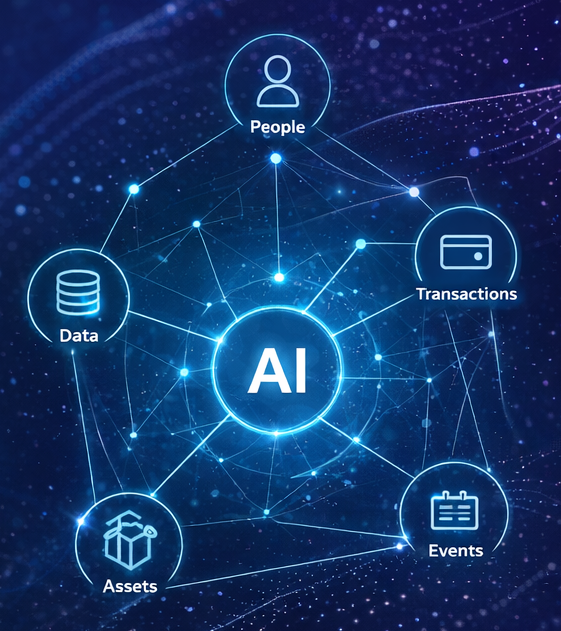
India’s rapid digital transformation driven by real-time payments, digital identity platforms, and expanding digital ecosystems, is reshaping how financial transactions, services, and interactions take place. However, this acceleration is also increasing the complexity and scale of fraud, financial crime, and identity-related risks.


Traditional fraud detection approaches often rely on rules and static models that struggle to detect sophisticated schemes spanning multiple accounts, devices, identities, and transactions.

IDC research highlights the growing importance of stronger data foundations for AI-driven risk management. By 2027, organisations that fail to prioritise high-quality, AI-ready data will experience up to a 20% productivity loss, as AI and analytics initiatives struggle with fragmented data environments. At the same time, IDC predicts that end-to-end observability across the data value chain will improve AI proof-of-concept to production success rates by up to 60% in APEJ organisations by 2026.


This executive roundtable will bring together CIOs and technology leaders to explore how connected data and graph intelligence are helping organisations uncover hidden fraud patterns, strengthen investigative analytics, and enable AI systems to operate with greater context and accuracy. Drawing on IDC research and enterprise experiences, the discussion will focus on how organisations can build more explainable, context-aware, and scalable fraud detection systems.

Why Attend

  • Gain Research Insights: Learn from IDC’s latest global and APeJ research on AI and GenAI adoption, trends, and enterprise challenges.
  • Understand Connected Data: Discover why connected intelligence is critical for scaling AI and improving decision-making.
  • See Graph Technology in Action: Learn how graph-based approaches help organizations enhance AI accuracy, explainability, and trust.

Agenda

Driving Enterprise AI and Insights

One Day Event

6:00 pm

Registration & Networking

6:30 pm

Welcome Address

Sakshi Grover

Sakshi Grover

Senior Research Manager, Cybersecurity Services, IDC Asia/Pacific

6:35 pm

The Future of Enterprise AI: From Data Silos to Connected Intelligence

As AI adoption accelerates, data silos remain a major barrier to scale. This session explores how enterprises can unify fragmented data, enable real-time insights, and build connected intelligence that drives smarter decisions and business growth.

Sakshi Grover

Sakshi Grover

Senior Research Manager, Cybersecurity Services, IDC Asia/Pacific

6:45 pm

Graph Intelligence in Action: Real-World AI Use Cases Across Industries

Graph intelligence is transforming how organisations uncover relationships, detect patterns, and generate actionable insights.

7:00 pm

Open Discussion: Scaling Trusted GenAI: Why Connected Data Is the Missing Link

Explore how connected, contextual data helps enterprises scale Generative AI responsibly by improving accuracy, trust, and governance while reducing risk.

Sakshi Grover

Sakshi Grover

Senior Research Manager, Cybersecurity Services, IDC Asia/Pacific

8:00 pm

Summary & Close

Sakshi Grover

Sakshi Grover

Senior Research Manager, Cybersecurity Services, IDC Asia/Pacific

8:10 pm

Dinner and Networking

Speaker

Sakshi Grover

Sakshi Grover

Senior Research Manager, Cybersecurity Services

IDC Asia/Pacific

Read bio

Partner

In Partnership With

Venue

JW Marriott Hotel

Meeting Room – Studio 05 & 06
Asset Area 4 – Hospitality District Delhi, Aerocity, New Delhi – 110037

Speakers

Speakers

Speakers
Alejandro Florean Rodriguez

Alejandro Florean Rodriguez

Vice President of Custom Solutions LatAm & Country Manager Mexico

IDC

Read bio

Claudia Medina

Claudia Medina

Director, Data & Analytics

IDC Mexico

Read bio

Alberto Arellano

Alberto Arellano

Infrastructure Director

IDC

Read bio

Marco Tena

Marco Tena

Director de ingeniería,

HPE Networking

Read bio

Julio César S. Lozano Vázquez

Julio César S. Lozano Vázquez

Strategic Account Manager

Manage Engine

Read bio

Gabriel Gadala

Gabriel Gadala

Senior Enterprise Leader, LATAM

BlueCat Networks

Read bio

Partners

Platinum Partners

Gold Partners

Silver Partners

Zabbix SIA is the creator of one of the leading network, server, and service monitoring tools.
Learn More

Expo partners

Knowledge Hub / SearchUnify

Partner Spotlight

SearchUnify

Partner Spotlight

Agentic Architecture for Enterprise Customer Support: A Lever for the Outcomes You're Already Accountable For

CIOs in high-stakes industries are managing more competing priorities than ever — security, cloud, data governance, AI risk, workforce transformation. Customer support rarely sits at the top of that stack, and that’s entirely rational. Bandwidth is finite. Every decision to defer something is also a decision to protect something else.


But support carries a quiet cost when deprioritized. When enterprise queries go unresolved, compliance questions fall through the cracks, or renewal conversations stall, the effects don’t stay in the support queue. They surface in churn numbers, audit findings, and board conversations about retention and operational risk — metrics you’re already accountable for, regardless of whether support is on your roadmap.


The question isn’t whether to prioritize support. It’s whether the infrastructure underneath it is quietly undermining outcomes you’re already responsible for.


From Patchwork to Architecture


Most organizations built their current support setup incrementally — a chatbot here, a knowledge base there. The result is fragmented, costly to maintain, and difficult to govern. Agentic systems change the calculus: rather than simply retrieving answers, they reason across context, invoke enterprise tools within a single workflow, and make calibrated decisions about when to resolve autonomously versus when to escalate gracefully to a specialist; with full context intact, not abandoned mid-resolution.


Three design decisions determine whether this works in practice: memory precision (retrieval rigorous enough for regulated environments), tool governance (every action surface scoped and audited like any privileged user), and escalation design treated as a feature, not a fallback. Organizations that get these right see the architecture compound in value over time – building a knowledge layer that becomes increasingly difficult for competitors to replicate.


A Governance Proof Point, Not Another Risk


For CIOs already navigating AI governance at the board level, a well-architected support layer can become a proof point rather than a liability — demonstrating auditability, immutable audit trails, and responsible deployment at scale.


The investment case isn’t built on support transformation for its own sake. It’s built on protecting the resilience, cost control, and risk reduction outcomes you’re already accountable for.


IDC, AWS & Kloia Executive Dinner

7 May 2026 Covent Garden Hotel

IDC, AWS & Kloia Executive Dinner

7 May 2026 Covent Garden Hotel
Logo Logo

Cloud Value Realisation: Best Practices Discussion for Migration, Modernization and Cost Optimization

C-suites across verticals and company sizes are looking to re-invent their business with AI. To this effect, three domains of focus for IT leaders are: IT modernization, cost optimization, and ensuring resilience and control.

As the economic climate tightens, IT and business leaders are facing a sobering reality: moving to the cloud didn’t automatically result in a smaller bill or faster innovation. Today, the conversation has shifted from “How do we get there?” to “How do we actually realize the value we were promised?”

Only 12% of organizations IDC surveyed in September 2025 (IDC Multicloud Strategies Survey, EMEA) identified themselves as having an IT architecture that is mature, optimized and tightly aligned to business value or innovation.

If speed of adoption and scale of use were top considerations in the last “cloud first” decade, this decade it is about adding control with cloud economics, efficiency and sustainability.

These value pillars are driving IT investment decisions today. In fact, based on an IDC survey, “value for money” was among the highest rated attribute for selecting a cloud technology vendor partner.  About a quarter of IT leaders IDC surveyed in December 2025 said they are “under utilizing or wasting” over 31% of their total cloud spend.

IDC, in partnership with Kloia and AWS, invites you to an exclusive executive roundtable designed to peel back the layers of Cloud Value Realization. The timing is pivotal as cloud and AI strategies take centerstage. In fact, workload modernization has become a high or top priority for 7 out of every 10 organizations in 2026, according to IDC research. The key question is to make the transformation and migration strategy cost-effective and successful. The actual ROI is often lost in the “messy middle”, the technical debt, unoptimized database workloads, skills shortages to operate efficiently in the cloud and legacy code that prevents true cloud-native agility.

We will address the “bill shock” head-on. In the current market, the long-term solution lies in FinOps-first modernization. We will explore how to move beyond simple “lift and shift”. We will discuss how to bridge the gap between business mandates and the engineering-level execution required to meet them. This is an opportunity to engage in a candid dialogue about the architectural discipline needed to turn the cloud into a genuine profit centre rather than a growing line item.

Agenda

IDC, AWS & Kloia Executive Dinner

One Day Event

6:00 pm

Welcome & Champagne Reception

6:30 pm

Welcome Address from IDC, AWS & Kloia

Archana Venkatraman

Archana Venkatraman

Senior Director Research, Cloud Data Management, IDC

Dorian Sezen

Dorian Sezen

Partner & Founder, Kloia

6:45 pm

Delegate Introductions

7:00 pm

Starter Discussion Topic & Feedback – Change Imperatives

What are the current challenges and limitations of existing IT environment in meeting business expectations? What are the pressures on IT teams? How to build the case for IT modernization to budget holders?

7:35 pm

Main Course Discussion Topic & Feedback – Hallmarks of True Cloud Migration, Modernization and Operations

From taking workload inventory to engineering migration and focusing on Day 2 operations that include security, cost optimization and continuous, transparent business value. How to work practical metrics and KPIs to track cloud value realization. How can leaders shift from reactive cost-cutting to proactive cost-engineering? What are low-hanging fruits to quickly optimise and how to set up FinOps discipline.

8:15 pm

Dessert Discussion Topic & Feedback – Execution Excellence

There is often a disconnect between the vision and the technical execution on the ground. How do you ensure your cloud strategy doesn’t fail at the implementation phase due to a lack of deep engineering talent? What are the best practices on building or partnering for “Deep Tech” squads that can handle complex migrations that standard cloud engineers might avoid.

8:45 pm

Coffee Served & Evaluations Forms Distributed

9:00 pm

Event Close

Speakers

Archana Venkatraman

Archana Venkatraman

Senior Director Research, Cloud Data Management

IDC

Read bio

Dorian Sezen

Dorian Sezen

Partner & Founder

Kloia

Read bio

Richard Lees

Richard Lees

Head of GTM Strategy and BD – Migration and Modernisation, EMEA

AWS

Read bio

Partners

In Association With

Venue

Covent Garden Hotel

10 Monmouth St, London WC2H 9HB