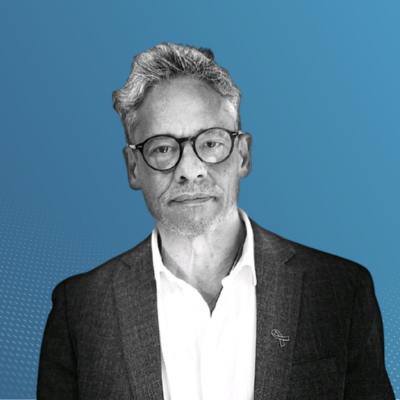
Knowledge Hub / Massimiliano Claps

Analyst Spotlight

Massimiliano Claps
Research Director
IDC

Analyst Spotlight

Vision to Reality: How Governments are Empowering the Middle East’s AI Future

IDC predicts that AI will have a cumulative global economic impact of $19.9 trillion by 2030, driving 3.5% of global GDP growth. Governments will play a strategic dual role – both shaping policies for secure, impactful, and responsible adoption of AI across industries, and acting as major buyers of AI to transform public programs and services, enhancing operational efficiency and achieving mission outcomes.


The Gulf countries have ambitious aspirations to lead the global AI economy. Empowering public service transformation through AI has become both an economic competitiveness and national security imperative for the region. In fact, IDC predicts that by 2029, 40% of national governments, led by EU and GCC countries, will use agentic AI to digitize public services by life events, reducing the cost to operate digital channel infrastructure and platforms by 25%.


For instance, the Abu-Dhabi Government Digital Strategy 2025-2027 aims to “…position the emirate as a global leader in AI-driven government and will deploy AED13 billion through 2025-2027 to foster innovation and technology adoption in the emirate…”. Likewise, the Kingdom of Saudi Arabia wants to position itself as “…one of the leading countries in the field of AI at the global level”, and through its AI investment vehicle, Humain, plans to build up to six gigawatts of data center capacity nationwide by 2034.


The early applications of AI agents in government focused primarily on back-office functions such as HR, procurement, and IT, assisting with automating code documentation, software development, testing, engineering, and compliance with security regulations. However, AI agents are rapidly enabling governments to automate more complex, multi-step processes that cannot easily be codified through rules. These include mission-critical areas such as border control, public health, social benefits, and grants management.


Across these mission areas, AI solutions, like TAMM AI Assistant can drive more responsive, personalized, and convenient services that enhance citizen satisfaction and trust by addressing the challenges of bureaucratic, siloed delivery. They also have the potential to improve urban quality of life, as seen in initiatives, such as the KAFD smart traffic management project, or Dubai Police’s advanced computer vision systems for traffic safety.


Governments that are leading the AI race are focusing their strategies on key aspects namely – organizational change, responsible use, data readiness, and digital sovereignty.


Let’s explore how each of these elements will play a critical role in 2026.


Organizational Change


Implementing AI requires upskilling the entire government workforce to explore its potential and understand how their roles will evolve. Specialized technical expertise will be critical, not only in AI model development but also in agent and model orchestration, AI stack security, and cost control (e.g., managing per-token charges from third-party providers or optimizing GPU cluster deployment in private cloud environments).


Responsible Use of AI


Robust output validation, oversight, and monitoring are essential, particularly in use cases involving sensitive national security missions or government programs that impact vulnerable populations. Clear accountability and ethical frameworks will strengthen public trust.


Data Readiness


While accuracy is improving with newer large language models, fine-tuning and grounding models for specific government programs remain paramount. In some mission areas, small language models (SLMs) may also be more appropriate.


IDC’s 2025 Government Insights Survey reveals that 45% of governments plan to fine-tune GenAI models, and 35% plan to ground them using retrieval-augmented generation (RAG) frameworks. High-quality, secure, and accessible data is crucial for training, grounding, and operating AI agents. This is especially vital for autonomous agents, whose performance depends on memory and self-learning from prior interactions.


AI Sovereignty


Governments increasingly seek flexibility in AI deployment environments. According to IDC’s 2025 Government Insights Survey, only 32% of governments prefer the public cloud for AI. The majority favor private, hybrid, or sovereign setups.


IDC predicts that by 2026, 55% of governments will adopt hybrid sovereign cloud stacks – blending hyperscaler scale with national control to ensure compliance, security, and strategic autonomy of AI.


Sovereign control of the end-to-end AI ecosystem – from infrastructure to data, models, operations, and talent – is a top priority in the Gulf. For example, the Abu-Dhabi Government Digital Strategy 2025-2027, which aims to “… to establish a robust digital infrastructure, creating a flexible and scalable foundation to achieve 100% adoption of sovereign cloud computing for government operations and digitizing and automating 100% of processes.”


The Quantum Future


Beyond AI, quantum computing is emerging as a transformative technology for government, offering the potential to solve complex challenges in national security, scientific discovery, and critical infrastructure management. The integration of quantum and classical compute technologies will empower governments to operate more securely, efficiently, and strategically, laying the foundation for a new era of computational capability that strengthens economic competitiveness, national resilience, and global leadership for Saudi Arabia, the UAE and the whole region.


Regional Vision, Global Intelligence


The Gulf Region stands at the forefront of the global AI economy. At the IDC Saudi Arabia CIO Summit 2026, government leaders will have the opportunity to engage with regional peers, global IDC experts, and technology partners to accelerate their transformation journey and realize the benefits of disruptive technologies like AI and quantum.


Knowledge Hub / Essa Haidar

CXO Spotlight

Essa Haidar
Chief Technology Officer
Ooredoo

CXO Spotlight

Intelligent Networks, Intelligent Enterprises: Leading in the Age of AI Native Infrastructure

The digital economy is entering a decisive new phase — one where competitiveness is no longer determined by connectivity alone, but by intelligence built directly into infrastructure. Around the world, executive leaders are shifting from traditional transformation programs to a more ambitious mandate: creating enterprises that can sense, decide, and act in real time. This next frontier is defined by two powerful forces converging at scale: next‑generation networks and applied AI woven throughout the enterprise fabric.


The Network Becomes Intelligent: The 5G‑Advanced Era


Over the past decade, global operators made extraordinary strides advancing mobile broadband. Now, the leap to 5G‑Advanced (5G‑A) and 5G Standalone (5G SA) marks the most consequential shift since LTE. More than 180 operators are on track to deploy these capabilities by 2025, a signal that the industry has reached an inflection point.


5G‑A brings an immediate 20–30% improvement in network efficiency, delivering higher capacity and better user experience. Meanwhile, 5G SA — built on a fully cloud‑native architecture — achieves single‑digit millisecond latency, making real‑time industrial control, robotics, and immersive experiences commercially viable. Cloud‑native cores reduce energy per bit by 30–50%, drive faster innovation cycles, and streamline lifecycle management.


But the true transformation lies in the Service‑Based Architecture (SBA) underpinning 5G SA. This architecture is inherently programmable, enabling networks to behave less like infrastructure and more like intelligent digital systems.


Two capabilities exemplify this shift:


NWDAF — From Transport Layer to Decision Engine


The Network Data Analytics Function (NWDAF) infuses machine‑learning‑based analytics directly into the 5G core. It continuously monitors behavior, predicts mobility and traffic patterns, allocates resources intelligently, and automates policy decisions. In effect, NWDAF turns the network into an AI‑powered decision engine, capable of self‑optimization and real‑time experience assurance.


NEF — Exposing Intelligence to the Ecosystem


The Network Exposure Function (NEF) opens network capabilities securely to developers and enterprises. Through standardized APIs, organizations gain access to quality‑on‑demand, slicing control, real‑time analytics, location data, and event triggers that enable new industry applications. NEF transforms the network from a connectivity provider into a platform for ecosystem innovation.


Together, NWDAF and NEF redefine what a network can be — moving operators beyond bandwidth economics into the era of intelligent digital services.


AI at Scale: The Enterprise’s New Growth Engine


If 5G SA represents the digital nervous system, AI is the intelligence that activates it. Across industries, CEOs and technology leaders are now centering their strategies on three AI‑driven impact pillars:


1. Operational Efficiency That Moves the P&L


AI‑driven automation is delivering returns once considered aspirational: up to 35% OPEX reduction through predictive maintenance and automated configuration, over 20% improvement in capacity planning accuracy, and 30–50% fewer outages thanks to proactive anomaly detection and root‑cause acceleration. Efficiency is no longer a cost‑cutting exercise — it is a catalyst for reinvestment and growth.


2. Customer Experience Orchestrated, Not Managed


AI agents resolve 60–70% of engagement scenarios, enabling human experts to focus on complex needs. Predictive detection prevents issues before they reach the customer, cutting complaints by 25–40%. Personalized digital journeys deliver 15–25% conversion gains. Enterprises are evolving from reactive service models to proactive, end‑to‑end experience orchestration.


3. New Revenue Through Intelligent Network Services


Dynamic slicing, edge computing, and AI‑driven charging are expected to generate USD 130–150 billion globally by 2030. Industry‑specific applications — especially in logistics, manufacturing, and healthcare — now rely on real‑time network intelligence. With NEF‑enabled API monetization, operators are emerging as strategic enablers of national and sector‑wide digital transformation.


Advanced Compute: Accelerating AI for Every Enterprise


To unlock these capabilities, enterprises are modernizing their compute environments. Demand for GPU‑accelerated infrastructure is growing at 30%+ CAGR, driven by large‑scale training, inference, and real‑time analytics. Smart datacenters equipped with NVIDIA‑class GPUs deliver 3–10× faster training, secure AI experimentation, and high‑density efficiency. GPU‑as‑a‑Service models further democratize access, removing CAPEX barriers and speeding adoption.


The Path Forward: Building the AI‑Native Enterprise


The convergence of next generation networks, AI at scale, and GPU‑accelerated compute signals the dawn of the AI‑native enterprise. For leaders, the mandate is clear: build intelligent networks, activate enterprise‑wide AI, and transform infrastructure into a platform for innovation and growth.


Those who do will define the next era of digital leadership.

Knowledge Hub / Huda Ahmed Mohsen

CXO Spotlight

Eng. Huda Ahmed Mohsen
Ministry of Information (Bahrain)
Chief of Information Technology

CXO Spotlight

Breaking Barriers and Building Resilience: Women’s Leadership in Cybersecurity

Advancing the Frontlines of Cyber Resilience


In today’s rapidly evolving digital landscape, cyber threats are more sophisticated and relentless than ever before. Organizations across industries are investing heavily in technologies and strategies to defend their networks, data, and users. Yet one of the most profound strengths in building cyber resilience is often overlooked: the leadership and impact of women in cybersecurity.


While women remain underrepresented in cybersecurity roles globally — and particularly in leadership positions — those who have risen to leadership have demonstrated exceptional capability in shaping strategic decisions, strengthening organisational culture, and championing risk-aware innovation. Their contributions are not only valuable but redefine what strong leadership looks like in a sector driven by complexity, strategy, and human behaviour.


The Strategic Value of Women Leaders in Cybersecurity


Cybersecurity today is no longer just a technical function; it is a strategic business imperative, influencing governance, risk management, collaboration, and enterprise culture. Women leaders consistently bring strengths that align with these broader organisational needs:


Holistic Decision-Making


Women often adopt a systems-level approach to problem solving — integrating technical considerations with organisational dynamics, user behaviour, and business impact. This holistic thinking is vital in defending against sophisticated threats, where success depends not only on technology but on aligning people and processes with security objectives.


Collaborative Leadership Across Functions


Effective security demands teamwork spanning IT, risk, legal, human resources, and executive leadership. Women’s leadership styles — often inclusive and collaborative — help break down traditional silos, ensuring that security strategies are embedded across the enterprise rather than left isolated within technical teams.


Risk Awareness and Governance


Governance and risk management are core elements of resilient cybersecurity. Women leaders have a strong track record in balancing ambitious innovation with prudent risk mitigation, enabling organisations to advance securely while navigating rapid technological change.


Championing Cultural Change


Security is as much about behaviour as it is about technology. Women leaders frequently emphasise awareness, education, and communication — helping organisations cultivate a security mindset among employees, partners, and leadership alike.

Knowledge Hub / Massimiliano Claps

Analyst Spotlight

Massimiliano Claps
Research Director
IDC

Analyst Spotlight

Vision to Reality: How Governments are Empowering the Middle East’s AI Future

IDC predicts that AI will have a cumulative global economic impact of $19.9 trillion by 2030, driving 3.5% of global GDP growth. Governments will play a strategic dual role – both shaping policies for secure, impactful, and responsible adoption of AI across industries, and acting as major buyers of AI to transform public programs and services, enhancing operational efficiency and achieving mission outcomes.


The Gulf countries have ambitious aspirations to lead the global AI economy. Empowering public service transformation through AI has become both an economic competitiveness and national security imperative for the region. In fact, IDC predicts that by 2029, 40% of national governments, led by EU and GCC countries, will use agentic AI to digitize public services by life events, reducing the cost to operate digital channel infrastructure and platforms by 25%.


For instance, the Abu-Dhabi Government Digital Strategy 2025-2027 aims to “…position the emirate as a global leader in AI-driven government and will deploy AED13 billion through 2025-2027 to foster innovation and technology adoption in the emirate…”. Likewise, the Kingdom of Saudi Arabia wants to position itself as “…one of the leading countries in the field of AI at the global level”, and through its AI investment vehicle, Humain, plans to build up to six gigawatts of data center capacity nationwide by 2034.


The early applications of AI agents in government focused primarily on back-office functions such as HR, procurement, and IT, assisting with automating code documentation, software development, testing, engineering, and compliance with security regulations. However, AI agents are rapidly enabling governments to automate more complex, multi-step processes that cannot easily be codified through rules. These include mission-critical areas such as border control, public health, social benefits, and grants management.


Across these mission areas, AI solutions, like TAMM AI Assistant can drive more responsive, personalized, and convenient services that enhance citizen satisfaction and trust by addressing the challenges of bureaucratic, siloed delivery. They also have the potential to improve urban quality of life, as seen in initiatives, such as the KAFD smart traffic management project, or Dubai Police’s advanced computer vision systems for traffic safety.


Governments that are leading the AI race are focusing their strategies on key aspects namely – organizational change, responsible use, data readiness, and digital sovereignty.


Let’s explore how each of these elements will play a critical role in 2026.


Organizational Change


Implementing AI requires upskilling the entire government workforce to explore its potential and understand how their roles will evolve. Specialized technical expertise will be critical, not only in AI model development but also in agent and model orchestration, AI stack security, and cost control (e.g., managing per-token charges from third-party providers or optimizing GPU cluster deployment in private cloud environments).


Responsible Use of AI


Robust output validation, oversight, and monitoring are essential, particularly in use cases involving sensitive national security missions or government programs that impact vulnerable populations. Clear accountability and ethical frameworks will strengthen public trust.


Data Readiness


While accuracy is improving with newer large language models, fine-tuning and grounding models for specific government programs remain paramount. In some mission areas, small language models (SLMs) may also be more appropriate.


IDC’s 2025 Government Insights Survey reveals that 45% of governments plan to fine-tune GenAI models, and 35% plan to ground them using retrieval-augmented generation (RAG) frameworks. High-quality, secure, and accessible data is crucial for training, grounding, and operating AI agents. This is especially vital for autonomous agents, whose performance depends on memory and self-learning from prior interactions.


AI Sovereignty


Governments increasingly seek flexibility in AI deployment environments. According to IDC’s 2025 Government Insights Survey, only 32% of governments prefer the public cloud for AI. The majority favor private, hybrid, or sovereign setups.


IDC predicts that by 2026, 55% of governments will adopt hybrid sovereign cloud stacks – blending hyperscaler scale with national control to ensure compliance, security, and strategic autonomy of AI.


Sovereign control of the end-to-end AI ecosystem – from infrastructure to data, models, operations, and talent – is a top priority in the Gulf. For example, the Abu-Dhabi Government Digital Strategy 2025-2027, which aims to “… to establish a robust digital infrastructure, creating a flexible and scalable foundation to achieve 100% adoption of sovereign cloud computing for government operations and digitizing and automating 100% of processes.”


The Quantum Future


Beyond AI, quantum computing is emerging as a transformative technology for government, offering the potential to solve complex challenges in national security, scientific discovery, and critical infrastructure management. The integration of quantum and classical compute technologies will empower governments to operate more securely, efficiently, and strategically, laying the foundation for a new era of computational capability that strengthens economic competitiveness, national resilience, and global leadership for Saudi Arabia, the UAE and the whole region.


Regional Vision, Global Intelligence


The Gulf Region stands at the forefront of the global AI economy. At the IDC Egypt CIO Summit 2026, government leaders will have the opportunity to engage with regional peers, global IDC experts, and technology partners to accelerate their transformation journey and realize the benefits of disruptive technologies like AI and quantum.

Knowledge Hub / Essa Haidar

CXO Spotlight

Essa Haidar
Chief Technology Officer
Ooredoo

CXO Spotlight

Intelligent Networks, Intelligent Enterprises: Leading in the Age of AI Native Infrastructure

The digital economy is entering a decisive new phase — one where competitiveness is no longer determined by connectivity alone, but by intelligence built directly into infrastructure. Around the world, executive leaders are shifting from traditional transformation programs to a more ambitious mandate: creating enterprises that can sense, decide, and act in real time. This next frontier is defined by two powerful forces converging at scale: next‑generation networks and applied AI woven throughout the enterprise fabric.

 

The Network Becomes Intelligent: The 5G‑Advanced Era


Over the past decade, global operators made extraordinary strides advancing mobile broadband. Now, the leap to 5G‑Advanced (5G‑A) and 5G Standalone (5G SA) marks the most consequential shift since LTE. More than 180 operators are on track to deploy these capabilities by 2025, a signal that the industry has reached an inflection point.


5G‑A brings an immediate 20–30% improvement in network efficiency, delivering higher capacity and better user experience. Meanwhile, 5G SA — built on a fully cloud‑native architecture — achieves single‑digit millisecond latency, making real‑time industrial control, robotics, and immersive experiences commercially viable. Cloud‑native cores reduce energy per bit by 30–50%, drive faster innovation cycles, and streamline lifecycle management.


But the true transformation lies in the Service‑Based Architecture (SBA) underpinning 5G SA. This architecture is inherently programmable, enabling networks to behave less like infrastructure and more like intelligent digital systems.


Two capabilities exemplify this shift:


NWDAF — From Transport Layer to Decision Engine


The Network Data Analytics Function (NWDAF) infuses machine‑learning‑based analytics directly into the 5G core. It continuously monitors behavior, predicts mobility and traffic patterns, allocates resources intelligently, and automates policy decisions. In effect, NWDAF turns the network into an AI‑powered decision engine, capable of self‑optimization and real‑time experience assurance.


NEF — Exposing Intelligence to the Ecosystem


The Network Exposure Function (NEF) opens network capabilities securely to developers and enterprises. Through standardized APIs, organizations gain access to quality‑on‑demand, slicing control, real‑time analytics, location data, and event triggers that enable new industry applications. NEF transforms the network from a connectivity provider into a platform for ecosystem innovation.


Together, NWDAF and NEF redefine what a network can be — moving operators beyond bandwidth economics into the era of intelligent digital services.


AI at Scale: The Enterprise’s New Growth Engine


If 5G SA represents the digital nervous system, AI is the intelligence that activates it. Across industries, CEOs and technology leaders are now centering their strategies on three AI‑driven impact pillars:


1. Operational Efficiency That Moves the P&L


AI‑driven automation is delivering returns once considered aspirational: up to 35% OPEX reduction through predictive maintenance and automated configuration, over 20% improvement in capacity planning accuracy, and 30–50% fewer outages thanks to proactive anomaly detection and root‑cause acceleration. Efficiency is no longer a cost‑cutting exercise — it is a catalyst for reinvestment and growth.


2. Customer Experience Orchestrated, Not Managed


AI agents resolve 60–70% of engagement scenarios, enabling human experts to focus on complex needs. Predictive detection prevents issues before they reach the customer, cutting complaints by 25–40%. Personalized digital journeys deliver 15–25% conversion gains. Enterprises are evolving from reactive service models to proactive, end‑to‑end experience orchestration.


3. New Revenue Through Intelligent Network Services


Dynamic slicing, edge computing, and AI‑driven charging are expected to generate USD 130–150 billion globally by 2030. Industry‑specific applications — especially in logistics, manufacturing, and healthcare — now rely on real‑time network intelligence. With NEF‑enabled API monetization, operators are emerging as strategic enablers of national and sector‑wide digital transformation.


Advanced Compute: Accelerating AI for Every Enterprise


To unlock these capabilities, enterprises are modernizing their compute environments. Demand for GPU‑accelerated infrastructure is growing at 30%+ CAGR, driven by large‑scale training, inference, and real‑time analytics. Smart datacenters equipped with NVIDIA‑class GPUs deliver 3–10× faster training, secure AI experimentation, and high‑density efficiency. GPU‑as‑a‑Service models further democratize access, removing CAPEX barriers and speeding adoption.


The Path Forward: Building the AI‑Native Enterprise


The convergence of next generation networks, AI at scale, and GPU‑accelerated compute signals the dawn of the AI‑native enterprise. For leaders, the mandate is clear: build intelligent networks, activate enterprise‑wide AI, and transform infrastructure into a platform for innovation and growth.


Those who do will define the next era of digital leadership.

Knowledge Hub / Huda Ahmed Mohsen

CXO Spotlight

Eng. Huda Ahmed Mohsen
Ministry of Information (Bahrain)
Chief of Information Technology

CXO Spotlight

Breaking Barriers and Building Resilience: Women’s Leadership in Cybersecurity

Advancing the Frontlines of Cyber Resilience


In today’s rapidly evolving digital landscape, cyber threats are more sophisticated and relentless than ever before. Organizations across industries are investing heavily in technologies and strategies to defend their networks, data, and users. Yet one of the most profound strengths in building cyber resilience is often overlooked: the leadership and impact of women in cybersecurity.


While women remain underrepresented in cybersecurity roles globally — and particularly in leadership positions — those who have risen to leadership have demonstrated exceptional capability in shaping strategic decisions, strengthening organisational culture, and championing risk-aware innovation. Their contributions are not only valuable but redefine what strong leadership looks like in a sector driven by complexity, strategy, and human behaviour.


The Strategic Value of Women Leaders in Cybersecurity


Cybersecurity today is no longer just a technical function; it is a strategic business imperative, influencing governance, risk management, collaboration, and enterprise culture. Women leaders consistently bring strengths that align with these broader organisational needs:


Holistic Decision-Making


Women often adopt a systems-level approach to problem solving — integrating technical considerations with organisational dynamics, user behaviour, and business impact. This holistic thinking is vital in defending against sophisticated threats, where success depends not only on technology but on aligning people and processes with security objectives.


Collaborative Leadership Across Functions


Effective security demands teamwork spanning IT, risk, legal, human resources, and executive leadership. Women’s leadership styles — often inclusive and collaborative — help break down traditional silos, ensuring that security strategies are embedded across the enterprise rather than left isolated within technical teams.


Risk Awareness and Governance


Governance and risk management are core elements of resilient cybersecurity. Women leaders have a strong track record in balancing ambitious innovation with prudent risk mitigation, enabling organisations to advance securely while navigating rapid technological change.


Championing Cultural Change


Security is as much about behaviour as it is about technology. Women leaders frequently emphasise awareness, education, and communication — helping organisations cultivate a security mindset among employees, partners, and leadership alike.

Agenda

Agenda

Agenda

AI & Data Summit

One Day Event

8:30 am

Welcome and Networking Breakfast

Kick off the day with coffee and conversation, connecting IT decision-makers, data leaders, and business and support managers for their first encounters.

9:00 am

IDC Opening Keynote

Can AI Deliver Both Performance and Responsibility?
Explore IDC’s insights on the AI revolution, the critical trade-offs between performance, governance, and responsibility, and the pivotal role of IT, data, and business leaders in shaping the future of AI.

Ewa Zborowska

Ewa Zborowska

Research Director, IDC

9:20 am

Partner keynote

From infrastructure to business value: how to successfully deliver your AI project with an AI Factory accelerated by NVIDIA and Dell Technologies.

Nat Ives

Nat Ives

Director Enterprise Benelux, France and Nordics, NVIDIA

Rahmani Cherchari

Rahmani Cherchari

Senior Director – ISG Specialty Sales France, DELL TECHNOLOGIES

9:35 am

Panel #1 – From Adoption to Impact: Structuring AI for Enterprise Succes

Operational and transformational, focused on mobilizing organizations.
How can we move from strategic intent to tangible transformation of teams, practices, and decision-making models?

Pierre Jarrijon, Head of AI Acceleration, Bpifrance

  • DAC Approach (Continuous Acceleration Framework)
  • Employee upskilling and AI awareness
  • AI in decision-making processes
  • Concrete use cases

Cyrille Charnier, Data Science & Artificial Intelligence Director, Verallia Group

  • Industrial requirement: zero error, no POCs
  • AI directly industrialized and reliable
  • AI serving operational excellence
  • Results-driven transformation
Pierre Jarrijon

Pierre Jarrijon

Responsable de l'accélération IA, BPIFRANCE

Cyrille Charnier

Cyrille Charnier

Data Science & Artificial Intelligence Director, VERALLIA GROUP

10:05 am

How data security enables the enterprise to master its AI

Mastering your data means mastering your AI within the organization. Discover how to map your data, automate compliance, strengthen governance, and protect sensitive data to ensure a controlled use of AI.

David Enaut

David Enaut

Senior Manager, Sales Engineering, Veeam France

Jeremy Agenais

Jeremy Agenais

Regional Sales Manager Securiti AI, Veeam France

10:20 am

Tech Pitch- Syndigo

Driving AI Innovation Without Losing Control
Key insights on aligning technology, governance, and organizational choices to achieve innovation, performance, and responsibility.

Dominique Thomas

Dominique Thomas

SVP Sales & Commercial Strategy Southern Europe, Syndigo

10:25 am

IDC Connect Workshop

Workshop Syndigo – Garbage In, Autonomous Chaos Out: Why Agentic AI Fails Without Trusted Data
with the following structure:
– Reality Check: Is Your Data Ready for Autonomous AI? What does “high quality data mean”? Do you know the six main criteria of quality data?
– Scenario: AI Agents Making Product Decisions
– Interactive Exercise: Designing Data for an AI Agent
– Framework: The Data Foundation for Agentic Commerce
– Closing Insight

Dominique Thomas

Dominique Thomas

SVP Sales & Commercial Strategy Southern Europe, Syndigo

10:25 am

IDC Connect Workshop

Dell Technologies and NVIDIA Workshop – Implementing a Private and Sovereign AI Stack: Leveraging the Right Models and Data for Your Business Use Cases
With the insights of Eric Bézille and Maliky Camara, let’s build together your secure, sovereign, and high-performance Data & AI platform, integrated into your IT system and aligned with your business challenges.

Our Promises / benefits at the end of the Workshop:

  • Under what conditions can sovereignty, security, and performance truly coexist in your AI strategy?

  • In what way does starting from your business use cases allow for providing the right models to your teams?

  • How far can you (re)take control of your data, your models, and your infrastructure?

  • What steps should be taken to sustainably move from POC to the industrialization of your AI use cases?

  • And above all, you will leave with a roadmap and operational advice to structure your next steps.

Eric Bezille

Eric Bezille

Senior Presales Manager, Systems Engineering – CTO Ambassador, DELL TECHNOLOGIES

Maliky Camara

Maliky Camara

France Server Brand Manager, DELL TECHNOLOGIES

11:35 am

Coffee break and networking

11:45 am

Sales & AI: How Can Technology Drive Business Impact?

AI as a Direct Driver of Growth and Sales Efficiency

Nicolas Grandclaude, Digital Transformation Manager, Husqvarna

  • AI powering commercial performance

  • ROI as a key performance indicator

  • Measuring tangible and intangible impacts

Christophe Vaudable, VP Data, Accor

  • AI and Generative AI in sales

  • Task reorganization and process optimization

  • Implications for workforce and investment planning

Christophe Vaudable

Christophe Vaudable

VP Data, ACCOR

Nicolas Grandclaude

Nicolas Grandclaude

Digital Transformation Manager, HUSQVARNA

12:05 pm

Panel #2 – Steering AI in the Enterprise: From Strategy to Operational Reality

Strategic structuring and institutional governance. How can AI be industrialized across complex organizations?

Philippe Rambach, SVP Chief AI Officer, Schneider Electric

  • AI structuring since 2021
  • Integration with the board
  • Team organization
  • Scaling AI globally for Customers & Employees

Christophe Vaudable, VP Data, Accor

  • AI governance frameworks
  • Balancing performance and compliance
  • Internal organizational design
Philippe Rambach

Philippe Rambach

SVP, Chief AI Officer, SCHNEIDER ELECTRIC

Christophe Vaudable

Christophe Vaudable

VP Data, ACCOR

12:35 pm

Tech Talk- Boomi

Antoine Bertora

Antoine Bertora

Senior Solution Consultant, Boomi

12:45 pm

Case Study – Structuring a Group-Wide AI Program: Adoption, Governance, and Barriers

  • Cross-functional deployment across the organization

  • Board and team relations

  • Accelerators and points of resistance

Julien Maillard

Julien Maillard

AI & Data Team Group Director, HAGER GROUP

1:00 pm

Networking Lunch

2:00 pm

AI in Public Service: Driving Performance Without Losing the Human Touch

  • Embedding AI into public service processes

  • Insights from the Court of Auditors

  • Completed projects and roadmap for implementation

  • Collaboration between AI systems and human staff

  • Long-term perspective on employment and workforce evolution

Aurélien Fenard

Aurélien Fenard

Directeur de la Transformation Digitale & Données RH, FRANCE TRAVAIL

2:20 pm

Case Study – AI for Legal Professions: Transforming the Practice of Law

  • Real-world use cases
  • Operational efficiency gains

  • Guidelines and responsible AI usage

Stéphane Mariotto

Stéphane Mariotto

Global CIO & CISO, FIDAL

2:30 pm

Industry Insights- AI in Action

Olaf Kouamo, Head of Data Science & AI, SUEZ

  • Applying AI to waste and water management operations

Nicolas Fayet, Group Transformation Director, Coface

  • AI for global financial data analysis

  • Human + AI: driving complementary decision-making

Sébastien Pacchini, Head of Data & AI Operations, Renault

  • AI in vehicle design

  • Using data to support engineering decisions

  • Enabling business teams through data and AI adoption

Olaf Kouamo

Olaf Kouamo

Head of Data Science and Artificial Intelligence, SUEZ

Sébastien Pacchini

Sébastien Pacchini

Head of Data & AI Operation, RENAULT

Nicolas Fayet

Nicolas Fayet

Group Transformation Director, COFACE

3:00 pm

Panel #3 – AI and the Future of Work: Moving Towards the Augmented Enterprise

A visionary debate on:

  • Agentic AI and system autonomy
  • AI in strategic decision-making
  • New balances between humans and machines
  • Long-term organizational responsibility

Thierry Taboy

Thierry Taboy

Impact AI board member, CFE CGC AI federal referent

Jean-Noël Chaintreuil

Jean-Noël Chaintreuil

Workforce Preparedness, Author of « RH & IA »

Ilhem Alleaume

Ilhem Alleaume

Présidente du, Réseau Emplois Compétences et Prospective Métiers et Qualifications

3:45 pm

Networking Cocktail

Agenda

AI & Data Summit

One Day Event

8:30 am

Accueil & petit-déjeuner networking

Ouverture conviviale autour d’un café, premières rencontres entre décideurs IT, leaders data et managers des fonctions métiers et supports.

9:00 am

Keynote d’ouverture IDC

Peut-on piloter une IA à la fois performante et responsable ?
Cadres de lecture IDC sur la montée en puissance de l’IA, les arbitrages clés entre performance, gouvernance et responsabilité, et le rôle des dirigeants IT, data et métiers.

Ewa Zborowska

Ewa Zborowska

Research Director, IDC

9:20 am

Partner keynote

De l’infrastructure à la valeur métier : comment réussir son projet d’IA avec une AI Factory accélérée par NVIDIA et Dell Technologies

Nat Ives

Nat Ives

Director Enterprise Benelux, France and Nordics, NVIDIA

Rahmani Cherchari

Rahmani Cherchari

Senior Director – ISG Specialty Sales France, DELL TECHNOLOGIES

9:35 am

Panel #1 – De l’acculturation à l’action : comment structurer l’IA dans l’entreprise ?

Positionnement : opérationnel et transformationnel, centré sur la mise en mouvement des organisations. Comment passer du discours stratégique à une transformation concrète des équipes, des pratiques et des modes de décision.

Pierre Jarrijon, Responsable de l’accélaration IA, Bpifrance

  • Démarche DAC (Démarche Accélération Continue)
  • Acculturation des collaborateurs
  • IA dans les processus décisionnels
  • Cas d’usage concrets

Cyrille Charnier, Data Science & Artificial Intelligence Director, Verallia Group

  • Exigence industrielle : zéro erreur, zéro POC
  • IA directement industrialisée et fiable
  • IA au service de l’excellence opérationnelle
  • Transformation orientée résultats concrets
Pierre Jarrijon

Pierre Jarrijon

Responsable de l'accélération IA, BPIFRANCE

Cyrille Charnier

Cyrille Charnier

Data Science & Artificial Intelligence Director, VERALLIA GROUP

10:05 am

Comment la sécurité des données permet à l’entreprise de maîtriser son IA ? 

Maîtriser ses données, c’est maîtriser son IA au sein de l’organisation. Découvrez comment cartographier vos données, automatiser la conformité, renforcer la gouvernance et protéger les données sensibles pour garantir un usage maîtrisé de l’IA.

David Enaut

David Enaut

Senior Manager, Sales Engineering, Veeam France

Jeremy Agenais

Jeremy Agenais

Regional Sales Manager Securiti AI, Veeam France

10:20 am

Tech Pitch- Syndigo

Innover avec l’IA tout en gardant le contrôle
Retour terrain sur les choix technologiques, organisationnels et de gouvernance permettant de concilier innovation, performance et responsabilité.

Dominique Thomas

Dominique Thomas

SVP Sales & Commercial Strategy Southern Europe, Syndigo

10:25 am

Workshop IDC Connect

Workshop Syndigo – Pourquoi l’IA agentique échoue sans données fiables »

– Réalité : vos données sont-elles prêtes pour l’IA autonome ?
Que signifie vraiment « données de haute qualité »? Connaissez-vous les six critères essentiels pour des données fiables ?

– Scénario : des agents IA qui prennent des décisions produits

– Exercice interactif : concevoir des données adaptées à un agent IA

– Cadre stratégique : poser les fondations de données pour le commerce agentique

– Conclusion : insights clés à retenir

Dominique Thomas

Dominique Thomas

SVP Sales & Commercial Strategy Southern Europe, Syndigo

10:25 am

Workshop IDC Connect

Workshop Dell Technologies et Nvidia – Mettre en œuvre une stack IA privée et souveraine : les bons modèles et les bonnes données, au service de vos cas d’usage métiers
Avec les éclairages d’Eric Bézille et Maliky Camara, bâtissons ensemble votre plateforme Data & IA sécurisée, souveraine et performante, intégrée dans votre SI et alignée sur vos enjeux business.

Nos Promesses / bénéfices à l’issu du Workshop :
1. À quelles conditions souveraineté, sécurité et performance peuvent-elles réellement coexister dans votre stratégie IA ?
2. De quelle manière partir de vos cas d’usage métiers permet-il de fournir les bons modèles à vos équipes ?
3. Jusqu’où pouvez-vous (re)prendre la main sur vos données, vos modèles et votre infrastructure ?
4. Quelles étapes franchir pour passer durablement du POC à l’industrialisation de vos cas d’usage IA ?

-> Et surtout, vous repartirez avec une feuille de route et des conseils opérationnels pour structurer vos prochaines étapes.

Eric Bezille

Eric Bezille

Senior Presales Manager, Systems Engineering – CTO Ambassador, DELL TECHNOLOGIES

Maliky Camara

Maliky Camara

France Server Brand Manager, DELL TECHNOLOGIES

11:35 am

Pause café et networking

11:45 am

Sales & IA : comment transformer l’ambition technologique en performance commerciale ?

L’IA comme levier direct de croissance et d’efficacité commerciale.

Nicolas Grandclaude, Digital Transformation Manager, Husqvarna

  • IA au service de la performance commerciale
  • ROI comme indicateur central
  • Mesure des impacts

Christophe Vaudable, VP Data, Accor

  • IA & GenAI dans la vente
  • Réorganisation des tâches
  • Effets sur effectifs et investissements
Nicolas Grandclaude

Nicolas Grandclaude

Digital Transformation Manager, HUSQVARNA

Christophe Vaudable

Christophe Vaudable

VP Data, ACCOR

12:05 pm

Panel #2- Piloter l’IA dans l’entreprise : de la stratégie à la réalité opérationnelle

Structuration stratégique et gouvernance institutionnelle. Comment industrialiser l’IA dans des groupes complexes?

Philippe Rambach, SVP Chief AI Officer, Schneider Electric

  • Structuration IA depuis 2021
  • Imbrication avec le board
  • Organisation des équipes
  • Passage à l’échelle de l’IA pour clients et collaborateurs

Christophe Vaudable, VP Data, Accor

  • Gouvernance IA
  • Arbitrages performance / conformité
  • Organisation interne
Philippe Rambach

Philippe Rambach

SVP, Chief AI Officer, SCHNEIDER ELECTRIC

Christophe Vaudable

Christophe Vaudable

VP Data, ACCOR

12:35 pm

Tech Talk- Boomi

Antoine Bertora

Antoine Bertora

Senior Solution Consultant, Boomi

12:45 pm

Use Case – Structurer un programme IA groupe : adoption, gouvernance et freins

  • Déploiement transverse
  • Relations board / équipes
  • Accélérateurs et résistances
Julien Maillard

Julien Maillard

AI & Data Team Group Director, HAGER GROUP

1:00 pm

Déjeuner networking

2:00 pm

IA, service public et performance : transformer sans déshumaniser

  • Intégration IA dans les processus
  • Analyse Cour des Comptes
  • Projets réalisés et roadmap
  • Coexistence agents IA / agents humains
  • Vision long terme pour l’emploi
Aurélien Fenard

Aurélien Fenard

Directeur de la Transformation Digitale & Données RH, FRANCE TRAVAIL

2:20 pm

Use Case – L’IA au service des professions juridiques : transformer les métiers du droit

  • Cas concrets
  • Gains opérationnels
  • Encadrement des usages
Stéphane Mariotto

Stéphane Mariotto

Global CIO & CISO, FIDAL

2:30 pm

Cas d’usage sectoriels – IA en action

Olaf Kouamo, Head of Data Science & AI, Suez
IA dans le traitement des déchets et de l’eau

Nicolas Fayet, Group Transformation Director, Coface
IA et analyse de données financières mondiales
Humain + IA : complémentarité

Sébastien Pacchini, Head of Data & AI Operations, Renault
IA Conception Véhicule
La Data pour aider aux décisions de conception
Accompagnement des métiers dans la DATA et IA

Olaf Kouamo

Olaf Kouamo

Head of Data Science and Artificial Intelligence, SUEZ

Nicolas Fayet

Nicolas Fayet

Group Transformation Director, COFACE

Sébastien Pacchini

Sébastien Pacchini

Head of Data & AI Operation, RENAULT

3:00 pm

Panel #3 – L’IA et l’avenir du travail : quelles transformations pour nos sociétés ?

Débat prospectif autour de :

  • Evolution des métiers
  • IA et responsabilité sociétale
  • Formation des jeunes générations
  • Confiance envers les entreprises
  • IA : contrainte ou opportunité ?
  • Avons-nous réellement le choix ?
Thierry Taboy

Thierry Taboy

Impact AI board member, CFE CGC AI federal referent

Jean-Noël Chaintreuil

Jean-Noël Chaintreuil

Workforce Preparedness, Author of « RH & IA »

Ilhem Alleaume

Ilhem Alleaume

Présidente du, Réseau Emplois Compétences et Prospective Métiers et Qualifications

3:45 pm

Cocktail networking

Speakers

PRELEGENCI

Radek Brzózka

Radek Brzózka

Science journalist, technology enthusiast, and television presenter

Telewizja Polska

Read bio

Lapo Fioretti
Keynote Speaker

Lapo Fioretti

Senior Research Analyst, Emerging Technologies and Macroeconomics

IDC

Read bio

Jakub Łukasiewicz

Jakub Łukasiewicz

Regional Sales Director

HCL Software | CEE

Read bio

Jacek Nawrot

Jacek Nawrot

Senior ICT Executive

IDC

Read bio

Aneta Gawrońska

Aneta Gawrońska

Chief Financial Director

Medicover Sport

Read bio

Robert Cegliński

Robert Cegliński

Vice President of the Management Board, Chief Risk Officer

PayPo

Read bio

Marcin Zimny

Marcin Zimny

Principal Solutions Architect

Ping Identity

Read bio

Andrei Dumitru

Andrei Dumitru

Executive Partner

IT Smart Systems

Read bio

Lucyna Michniewicz-Ślaska

Lucyna Michniewicz-Ślaska

CIO

VOX Group

Read bio

Alicja Rybczyńska

Alicja Rybczyńska

Chief Information Officer

Veolia Poland

Read bio

Rafał Zbiróg

Rafał Zbiróg

Group CIO

Inter Cars

Read bio

Tomasz Bednarczuk

Tomasz Bednarczuk

CIO

Kaczmarski Group

Read bio

Robert Tomaka

Robert Tomaka

CIO

Diagnostyka

Read bio

Şükrü Çakmak

Şükrü Çakmak

CTO & Co-Founder

Oobeya

Read bio

Paweł Grabowski

Paweł Grabowski

Head of Digital B2B

Żabka Group

Read bio

Przemysław Kadula

Przemysław Kadula

Co-founder & CBO

Pirxe

Read bio

Maciej Borowski

Maciej Borowski

Co-founder & COO

Pirxe

Read bio

Evghenia Iarina

Evghenia Iarina

Strategic Partnerships Director

Coursera

Read bio

Ewa Zborowska

Ewa Zborowska

Research Director

IDC

Read bio

Paweł Majek

Paweł Majek

Product Director, Poland Go To Market

Visa

Read bio

Małgorzata McCarthy

Małgorzata McCarthy

Technology Product Leader – Analytics, AI & Data

ManpowerGroup

Read bio

Dariusz Korzun

Dariusz Korzun

Director, Applied AI, Global Cloud Solution Architecture

PepsiCo

Read bio

Robert Pławiak

Robert Pławiak

CDIO/CTO

Polpharma

Read bio

Agnieszka Bochacka

Agnieszka Bochacka

Global Digital Transformation Director

GE Healthcare

Read bio

Edyta Zborowska

Edyta Zborowska

Business Development Manager

vSoft

Read bio

Jarosław Smulski

Jarosław Smulski

Senior Program Manager, Systems & Infrastructure Solutions

IDC

Read bio

Grzegorz Zalewski

Grzegorz Zalewski

CEO

Aplikacje Krytyczne

Read bio

Radosław Maćkiewicz

Radosław Maćkiewicz

Director Centre for Information Technology

Centralny Ośrodek Informatyki

Read bio

Wojciech Wilk

Wojciech Wilk

Regional Director, CEE

HCLSoftware

Read bio

Wiesław Wilk

Wiesław Wilk

CEO

Polska Chmura

Read bio

Marcin Mazurek

Marcin Mazurek

Co-Founder

Bitropy

Read bio

Norbert Franke

Norbert Franke

CTO

Publicis Groupe Poland

Read bio

Tomasz Kędziora

Tomasz Kędziora

Dyrektor Departamentu Cyberbezpieczeństwa, CISO

P4

Read bio

Marek Ługowski

Marek Ługowski

Head of Infrastructure

Swiss Krono Group

Read bio

Marek Laskowski

Marek Laskowski

CIO

Kancelaria Prawna Domański Zakrzewski Palinka

Read bio

Przemysław Szulecki

Przemysław Szulecki

Cyber Risk Senior Manager

HSBC

Read bio

Monika Kozakiewicz

Monika Kozakiewicz

CEO

NAUTA Shiprepair Yard

Read bio

Diana Skotnicka

Diana Skotnicka

CFO

Respect Energy Holding

Read bio

Jens Löhmar

Jens Löhmar

CTO Continental Europe & DACH

Workday

Read bio

Speakers

OUR SPEAKERS

Radek Brzózka

Radek Brzózka

Science journalist, technology enthusiast, and television presenter

Telewizja Polska

Read bio

Lapo Fioretti
Keynote Speaker

Lapo Fioretti

Senior Research Analyst, Emerging Technologies and Macroeconomics

IDC

Read bio

Jakub Łukasiewicz

Jakub Łukasiewicz

Regional Sales Director

HCL Software | CEE

Read bio

Jacek Nawrot

Jacek Nawrot

Senior ICT Executive

IDC

Read bio

Aneta Gawrońska

Aneta Gawrońska

Chief Financial Director

Medicover Sport

Read bio

Robert Cegliński

Robert Cegliński

Vice President of the Management Board, Chief Risk Officer

PayPo

Read bio

Andrei Dumitru

Andrei Dumitru

Executive Partner

IT Smart Systems

Read bio

Marcin Zimny

Marcin Zimny

Principal Solutions Architect

Ping Identity

Read bio

Lucyna Michniewicz-Ślaska

Lucyna Michniewicz-Ślaska

CIO

VOX Group

Read bio

Rafał Zbiróg

Rafał Zbiróg

Group CIO

Inter Cars

Read bio

Alicja Rybczyńska

Alicja Rybczyńska

Chief Information Officer

Veolia Poland

Read bio

Tomasz Bednarczuk

Tomasz Bednarczuk

CIO

Kaczmarski Group

Read bio

Robert Tomaka

Robert Tomaka

CIO

Diagnostyka

Read bio

Şükrü Çakmak

Şükrü Çakmak

CTO & Co-Founder

Oobeya

Read bio

Paweł Grabowski

Paweł Grabowski

Head of Digital B2B

Żabka Group

Read bio

Przemysław Kadula

Przemysław Kadula

Co-founder & CBO

Pirxe

Read bio

Maciej Borowski

Maciej Borowski

Co-founder & COO

Pirxe

Read bio

Evghenia Iarina

Evghenia Iarina

Strategic Partnerships Director

Coursera

Read bio

Ewa Zborowska

Ewa Zborowska

Research Director

IDC

Read bio

Paweł Majek

Paweł Majek

Product Director, Poland Go To Market

Visa

Read bio

Małgorzata McCarthy

Małgorzata McCarthy

Technology Product Leader – Analytics, AI & Data

ManpowerGroup

Read bio

Dariusz Korzun

Dariusz Korzun

Director, Applied AI, Global Cloud Solution Architecture

PepsiCo

Read bio

Robert Pławiak

Robert Pławiak

CDIO/CTO

Polpharma

Read bio

Agnieszka Bochacka

Agnieszka Bochacka

Global Digital Transformation Director

GE Healthcare

Read bio

Edyta Zborowska

Edyta Zborowska

Business Development Manager

vSoft

Read bio

Jarosław Smulski

Jarosław Smulski

Senior Program Manager, Systems & Infrastructure Solutions

IDC

Read bio

Grzegorz Zalewski

Grzegorz Zalewski

CEO

Aplikacje Krytyczne

Read bio

Radosław Maćkiewicz

Radosław Maćkiewicz

Director Centre for Information Technology

Centralny Ośrodek Informatyki

Read bio

Wiesław Wilk

Wiesław Wilk

CEO

Polska Chmura

Read bio

Wojciech Wilk

Wojciech Wilk

Regional Director, CEE

HCLSoftware

Read bio

Marcin Mazurek

Marcin Mazurek

Co-Founder

Bitropy

Read bio

Norbert Franke

Norbert Franke

CTO

Publicis Groupe Poland

Read bio

Tomasz Kędziora

Tomasz Kędziora

Dyrektor Departamentu Cyberbezpieczeństwa, CISO

P4

Read bio

Marek Ługowski

Marek Ługowski

Head of Infrastructure

Swiss Krono Group

Read bio

Marek Laskowski

Marek Laskowski

CIO

Kancelaria Prawna Domański Zakrzewski Palinka

Read bio

Przemysław Szulecki

Przemysław Szulecki

Cyber Risk Senior Manager

HSBC

Read bio

Monika Kozakiewicz

Monika Kozakiewicz

CEO

NAUTA Shiprepair Yard

Read bio

Diana Skotnicka

Diana Skotnicka

CFO

Respect Energy Holding

Read bio

Jens Löhmar

Jens Löhmar

CTO Continental Europe & DACH

Workday

Read bio