
Track 1
Laying the Foundations for AI Adoption – Digital Sovereignty, Cloud & Infrastructure

To successfully deliver your AI business use cases, a modern infrastructure is essential. This infrastructure must provide scalable, high-performance capabilities to support AI applications in both model training and real-time inferencing. Specialist AI hardware, such as GPUs, TPUs, and accelerators, plays a critical role in ensuring speed, efficiency, and low latency at scale. Additionally, robust data pipelines, storage solutions, and orchestration tools are necessary to manage AI models throughout their lifecycle, from development to production.
Organisations face a pivotal choice: public cloud platforms offer rapid access to cutting-edge AI hardware, elastic scaling, and managed services on a consumption basis. In contrast, private and edge AI environments provide enhanced data control, governance, and predictability. A hybrid infrastructure strategy is key to the best of both worlds enabling use cases to be incubated and productionised and tuned on the right platform at the right time efficiently.
According to IDC research, over 45% of organisations across Europe are now more interested in implementing digital sovereignty solutions compared to 2024, driven by geopolitical uncertainties such as trade tensions, regional conflicts, and regulatory shifts anticipated in 2025. Furthermore, 60% of European organisations are more likely to adopt sovereign cloud services for AI workloads as a direct response to these challenges.
So, how can you ensure the success of your AI use cases while prioritising data protection, control, and autonomy in this era of uncertainty?
In this session, you’ll discover the true meaning of digital sovereignty, learn how to choose and implement the right solutions, and identify common pitfalls to avoid. We will also explore how digital sovereignty fits into your overall IT and cloud strategy, what is needed for success, and how adopting digital sovereignty solutions can lead to unique business benefits.

Discussion Topics
- Why is Europe seeing an uptick in the need for digital sovereignty solutions?
- For AI business use cases how does the location and governance of your data and resources affect your choice of provider?
- Is “digital sovereignty” now just a marketing term?
- Will Europe and US tech continue to be friends?
Roundtable Discussions
- Is the control, governance and location of your data for AI use cases a major consideration in your choice of platform provider?
- Are regulations a help or hindrance when it comes to IT innovation in Europe
- Can extra-territorial tech vendors truly be sovereign?

Rahiel Nasir
Research Director, European Cloud & Lead Analyst, Worldwide Digital Sovereignty
IDC
Read bio

Rahiel Nasir
Rahiel Nasir is responsible for leading and contributing to IDC’s European cloud and cloud data management research programs, as well as supporting associated consulting projects.
Nasir has been watching technology markets and writing about them throughout his professional life.
Prior to joining IDC, he was a research analyst with 451 Research (now part of S&P Global Market Intelligence), where he covered the datacenter infrastructure and services markets across the EMEA region.
Nasir started his career as a consumer technology journalist with Haymarket Publishing where he rapidly worked his way up the ranks to become editor of a number of high-profile magazines, including What Hi-Fi?.
Following a successful career as a freelance technology journalist, he joined BBC Focus magazine as deputy editor before moving on to become editorial director of a number of B2B magazines, such as Networking+ which includes news and features about the technologies of voice and data networks for enterprise users, as well several publications targeted at vendors and service providers involved in the business and technologies of wireless communications in Africa, South Asia, and Eastern Europe.
Nasir has made numerous appearances on TV, radio, and in the press as a consumer technology spokesperson, and has also spoken at ICT industry events as a presenter, panelist, and moderator.
He was educated at the University of Manchester in England where he studied English and American and classical literature, as well as at the Postgraduate School of Journalism at City University, London.

Phil Hawkshaw
EMEA CTO
Insight
Read bio
Phil Hawkshaw
Phil Hawkshaw. EMEA CTO. An engineer, innovator and strategist. Helping organisations deliver technology transformation and adopt emerging technologies with confidence. Responsible for Insight’s strategic portfolio, AI innovation across EMEA and the UK Public Sector.
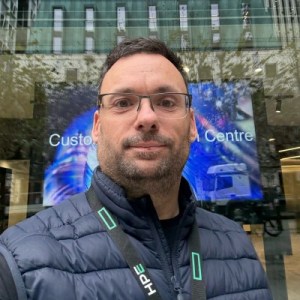
Nigel Horsell
Private Cloud AI Leader EMEA
HPE
Read bio
Nigel Horsell
Nigel Horsell is the Private Cloud AI Leader for Hewlett Packard
Enterprise UK, Ireland, Middle East & Africa. He is responsible for the
Private Cloud AI & Data Fabric business in the region, leading 10 sales
and technical specialists.
Starting his journey with HPE as Storage Specialist in 2017 Nigel has
progressed through the business holding a variety of customer-focused
sales roles across the end-to-end Solution and Services portfolio at HPE,
focusing on Strategic Enterprise and Global accounts. Most recently he
led a number of publicly referenceable engagements across Financial
Services and Automotive with a phenomenal track record of success in
supporting customers and partners with their digital transformations.
Nigel an inclusive leadership style, focusing on nurturing future people
talent within the business and actively supports both coaching and
mentorship programmes across the organisation.
Outside of his professional life is a father of two, is an active runner and
cyclist and enjoys spending time with his family.