Partners

Why Partner

Position your brand at the forefront of the region’s premier CIO community. This results-driven platform is designed to maximize engagement and ROI for solution providers.

become a partner
Why Partner

Access Key Decision Makers

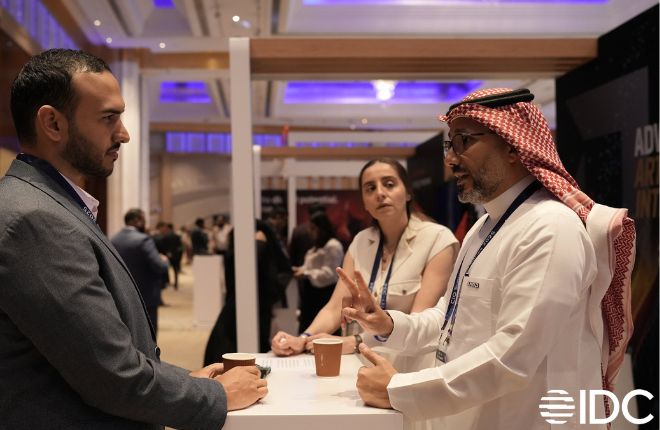
Directly engage with 100+ qualified technology buyers and influencers from across the country.

ROI-Focused Lead Generation

Unlock opportunities through power meetings, roundtables, and workshops designed to connect partners with active buyers.

Brand Elevation & Visibility

Showcase your solutions at the most premium CIO event in the region, amplifying your presence across the technology ecosystem.

Research-Backed Intelligence

Leverage exclusive IDC insights and CIO surveys to better understand market trends and strengthen your go-to-market strategy.

Summit Partner

Platinum Partner

Technology Focus Group Partner

Exhibit Partner

Why Attend

Why Attend?

The Summit is more than just a conference. It’s where the region’s technology leaders come together to shape the future of AI-driven enterprises.

Lead the AI Revolution

Navigate the next wave of AI-led digital transformation.

Explore the Power of Agentic AI

Gain an exclusive understanding of how agentic AI is reshaping industries, governance models, and workforce strategies across the region.

Agent-Ready Architectures and Skills

Explore how IT leaders are reimagining enterprise architectures, operating models, and workforce capabilities to prepare for an autonomous, AI-first world.

Learn how organizations are realizing business value from AI

Link investments to tangible outcomes to quantifying ROI across business functions.

Understanding Cybersecurity for the AI Era

Strategies for an era of emerging AI-driven threats and AI as a powerful tool for defense.

Govern Innovation Responsibly

As AI models evolve, governance emerges as a strategic priority and also a tough challenge to crack. Learn how leading CIOs are balancing innovation with control by building robust governance frameworks.

Champion Digital Sovereignty

Map out the path ahead for digital sovereignty, data residency, and local innovation to maintain a competitive edge in the global digital economy.

Real-World AI Success Stories

Hear firsthand from organizations that are scaling AI responsibly and effectively, from deploying intelligent automation to leveraging generative and agentic AI to drive measurable business outcomes.

Shape Qatar’s AI Future

Join a powerful community of decision-makers as we chart the roadmap for sustainable growth, innovation, and leadership in the global digital economy.

Key Themes

The summit this year will spotlight how innovation, intelligence, and resilience are reshaping enterprises through AI, cloud modernization, agentic architectures, and cybersecurity.

The CIO as Business Strategist

CIOs have evolved from operational leaders to enterprise strategists. As digital transformation reshapes every business model, technology leadership now defines competitiveness. Today’s CIO must align IT priorities with business outcomes, influence the boardroom agenda, and drive innovation that delivers measurable value.

Modernization, Legacy and Technical Debt

Managing technical debt is no longer just a maintenance concern, it’s a strategic priority. Modernizing legacy systems, simplifying architectures, and optimizing cost structures allow organizations to shift resources from upkeep to innovation. Streamlined technology portfolios create the agility needed to compete in a digital economy.

The Agentic AI Revolution

Agentic AI marks a shift from automation to autonomy. How CIOs can govern, scale, and integrate autonomous AI systems responsibly (balancing opportunity with oversight to create intelligent, self-directed enterprises.

Resilience by Design

Resilience is emerging as the defining capability of modern enterprises. Adaptive architectures, secure infrastructure, and integrated continuity planning enable organizations to withstand disruption (whether from economic uncertainty, regulatory shifts, or cyber threats) while sustaining growth and trust.

Cybersecurity, Trust, and Digital Sovereignty

As digital ecosystems expand, trust becomes a critical currency. CIOs must address cybersecurity, data sovereignty, and compliance in tandem, ensuring that cloud strategies and cross-border operations align with evolving regulations. Building digital trust creates both protection and competitive advantage.

Building the Intelligent Enterprise

Data is the foundation of every intelligent organization. Reliable, governed, and accessible data architectures enable AI, automation, and analytics to operate at scale. Enterprises that invest in strong data foundations are better positioned to extract insight, anticipate change, and deliver smarter, faster business outcomes.

Value Realization and IT-Business Alignment

Technology investments only matter when they drive business impact. CIOs must link digital initiatives to key performance metrics, track value creation, and translate innovation into measurable outcomes. Alignment between IT and business objectives ensures transformation delivers tangible enterprise returns.

People, Culture, and the CIO Talent Agenda

The human dimension of transformation is decisive. Building future-ready teams requires new skills, leadership mindsets, and cultural adaptability. CIOs must champion digital literacy, change readiness, and collaborative cultures that empower employees to thrive alongside intelligent technologies.

Sustainable and Responsible Leadership

Technology is central to achieving sustainability and ESG commitments. CIOs play a key role in enabling greener infrastructure, transparent reporting, and ethical innovation. Responsible leadership means aligning technological progress with environmental stewardship and long-term enterprise resilience.

Proceedings

Proceedings

Protected

To access this content, please enter the password you have received from IDC.


Speakers

Meet Our Speaker

Uncover breakthrough insights from IDC experts and exclusive sessions featuring influential voices transforming technology and leadership today.

Jyoti Lalchandani

Jyoti Lalchandani

Head of WW Events & MD – META, Central Asia, India

IDC

Read bio

Matthew Eastwood

Matthew Eastwood

Senior Vice President, WW Research

IDC

Read bio

Adam Harris

Adam Harris

Vice President, Digital Product Management-IT

IDC

Read bio

Eric Samuel

Eric Samuel

Associate Research Director

IDC

Read bio

Jebin George

Jebin George

Senior Research Manager, Cloud and Datacenter Services

IDC

Read bio

Priyanjali Sarkar

Priyanjali Sarkar

Senior Sales Manager (ME)

IDC

Read bio

Chetan Kumar

Chetan Kumar

Senior Manager, Sales

IDC

Read bio

Tehseen Qazi

Tehseen Qazi

Sales Manager

IDC

Read bio

Shilpi Handa

Shilpi Handa

Associate Research Director (META)

IDC

Read bio

Tom Seal

Tom Seal

Senior Research Director, Enterprise Software Sourcing Strategies

IDC

Read bio

Shahin Hashim

Shahin Hashim

Associate Research Director (META)

IDC

Read bio

Melih Murat

Melih Murat

Associate Research Director, Artificial Intelligence (META)

IDC

Read bio

Eren Eser

Eren Eser

Associate Research Director, Türkiye

IDC

Read bio

Ahmad Abu Hameedeh

Ahmad Abu Hameedeh

Director of Digital Enterprise Architecture

Confidential

Read bio

Fahad Alsuwailih

Fahad Alsuwailih

Senior Director, Digital Transformation

Leading Government Entity

Read bio

Dr. Eyad Buhulaiga

Dr. Eyad Buhulaiga

Chief Data & Digital Strategy Officer

Saudi Energy

Read bio

Dr. Akram Nour

Dr. Akram Nour

Chief of Digital Transformation

Misk Foundation

Read bio

Filip Nekvinda

Filip Nekvinda

Chief AI & Digitalization Visionary

Petro Rabigh

Read bio

Bader Aljundi

Bader Aljundi

Director, Digital Transformation and Innovation

Emaar, The Economic City

Read bio

Sameer Joshi

Sameer Joshi

Director Digitalization

NADEC Foods

Read bio

Fawaz Kilfaden

Fawaz Kilfaden

Information & Operations Technology Director

Saudi Air Navigation Services (SANS)

Read bio

Dr. Muhammad Ehsan Khan

Dr. Muhammad Ehsan Khan

Vice President – AI & Data

Go Telecom Group

Read bio

Eng. Manal Al-Bawardi

Eng. Manal Al-Bawardi

Chief Information Officer

King Fahd University of Petroleum & Minerals (KFUPM)

Read bio

Dr. Tamara Sunbul

Dr. Tamara Sunbul

Group Chief Information Officer

Fakeeh Care Group

Read bio

Eng. Rami Mohammed Zain Yousif

Eng. Rami Mohammed Zain Yousif

Director, Artificial Intelligence & Internet of Things Department Digital Transformation & Smart Cities Agency

Jazan Region Municipality

Read bio

Ibraheem Sheerah

Ibraheem Sheerah

Group Chief Transformation Officer

Saudia Airlines

Read bio

Tarik Al-Turki

Tarik Al-Turki

SE Director KSA

Cisco

Read bio

Amr Abou Reslan

Amr Abou Reslan

Regional Director

UnifyApps

Read bio

Ali El Kontar

Ali El Kontar

Cloud Practice Leader

NTT DATA

Read bio

Ram Chakravarti

Ram Chakravarti

Chief Technology Officer

BMC Software

Read bio

Rakesh Reddy

Rakesh Reddy

Regional Director (MEA)

Cloud4C

Read bio

Hatem Elkady

Hatem Elkady

Chief Executive Officer (MEA)

Nile

Read bio

Marwan AlHuthail

Marwan AlHuthail

Senior Enterprise Sales Manager

Veeam Software

Read bio

Waleed Marji

Waleed Marji

Regional Sales Manager

Thales

Read bio

Islam Saber

Islam Saber

Senior Solutions Engineer

Netskope

Read bio

Faris Suleiman

Faris Suleiman

Presales Manager – KSA, Egypt, Levant

FileOrbis

Read bio

Ibrahim Omar

Ibrahim Omar

Solutions Advisor

Omnix

Read bio

Alexandru Savin

Alexandru Savin

Senior Enterprise Sales Executive

Druid AI

Read bio

Ehsan Shariff

Ehsan Shariff

Managing Director

Nagarro

Read bio

Stephen Fernandes

Stephen Fernandes

Chief Growth Officer & Head of Middle East

Planview

Read bio

Ahmed Tarek

Ahmed Tarek

Director, Sales Engineering, EMEA

Incorta

Read bio

Pierre Nassif

Pierre Nassif

Senior Sales Engineer

Commvault

Read bio

Hatem Ibrahim

Hatem Ibrahim

Director – IT & Digital Sales

Saudi Xerox

Read bio

Mutaz Salem

Mutaz Salem

Chief Executive Officer

Dstation

Read bio

Khaled Moawad

Khaled Moawad

Senior Account Executive

OutSystems

Read bio

Ahmad El Natsheh

Ahmad El Natsheh

Principal Solution Architect

Red Hat

Read bio

Kareem Sherif

Kareem Sherif

Director AI & Datacenter

Intel

Read bio

Saran Babu Paramasivam

Saran Babu Paramasivam

Regional Director (MEA)

Zoho

Read bio

Ahmed Soliman

Ahmed Soliman

Solution Architect

SUSE

Read bio

Larbi Belbecir

Larbi Belbecir

Senior Solutions Engineer

Boomi

Read bio

Saddam Alsad

Saddam Alsad

Senior Sales Manager, Saudi Arabia

Cloudflare

Read bio

Charbel Khneisser

Charbel Khneisser

Senior Vice President, Global Solutions Engineering

Riverbed Technology

Read bio

Georgy Ovanesyan

Georgy Ovanesyan

Chief Executive Officer

Axidian

Read bio

Tom Gamali

Tom Gamali

Field CTO & Strategic Advisor, MEA-TRC

Splunk

Read bio

Tarek Khattab

Tarek Khattab

Solutions & Services Country Manager

Saudi Business Machines (SBM)

Read bio

Ankit Chandna

Ankit Chandna

AI Director (Saudi Arabia)

Oracle

Read bio

Jon Griffiths

Jon Griffiths

Field CTO

Dynatrace

Read bio

Abdulrahman Alsanie

Abdulrahman Alsanie

COO

Security Matterz

Read bio

Nandini Sapru

Nandini Sapru

Vice President (ME)

emt

Read bio

Roland Daccache

Roland Daccache

Director, Sales Engineering

CrowdStrike

Read bio

Kyle Jourdan

Kyle Jourdan

Head of AI Practice

Qlik

Read bio

Mohamed Assem

Mohamed Assem

Solutions Engineering Director

Global Knowledge

Read bio

Umair Riaz

Umair Riaz

Field Solutions Architect

Everpure

Read bio

Mohammed Alhadi

Mohammed Alhadi

Sales Engineer

Dataiku

Read bio

Mohsin Ali

Mohsin Ali

CEO

Inbox Technologies Arabia

Read bio

Waris Amin

Waris Amin

Senior Software Quality Assurance Engineer

TestCrew

Read bio

Rami Bou Hadir

Rami Bou Hadir

Senior Solution Architect

Siemens

Read bio

Adil Arif

Adil Arif

Sales Engineer

Rubrik

Read bio

K.S. Parag

K.S. Parag

Managing Director

FVC Arabia

Read bio

Mohammed Helaly

Mohammed Helaly

VP, Head META

AvePoint

Read bio

Why Attend

Why Attend?

The Summit is more than just a conference. It’s where the Kingdom’s technology leaders come together to shape the future of AI-driven enterprises.

Lead the AI Revolution

Navigate the next wave of AI-led digital transformation.

Explore the Power of Agentic AI

Gain an exclusive understanding of how agentic AI is reshaping industries, governance models, and workforce strategies across the region.

Agent-Ready Architectures and Skills

Explore how IT leaders are reimagining enterprise architectures, operating models, and workforce capabilities to prepare for an autonomous, AI-first world.

Learn how organizations are realizing business value from AI

Link investments to tangible outcomes to quantifying ROI across business functions.

Understanding Cybersecurity for the AI Era

Strategies for an era of emerging AI-driven threats and AI as a powerful tool for defense.

Govern Innovation Responsibly

As AI models evolve, governance emerges as a strategic priority and also a tough challenge to crack. Learn how leading CIOs are balancing innovation with control by building robust governance frameworks.

Champion Digital Sovereignty

Map out the path ahead for digital sovereignty, data residency, and local innovation to maintain a competitive edge in the global digital economy.

Real-World AI Success Stories

Hear firsthand from organizations that are scaling AI responsibly and effectively, from deploying intelligent automation to leveraging generative and agentic AI to drive measurable business outcomes.

Shape KSA’s AI Future

Join a powerful community of decision-makers as we chart the roadmap for sustainable growth, innovation, and leadership in the global digital economy.

Key Themes

The summit this year will spotlight how innovation, intelligence, and resilience are reshaping enterprises through AI, cloud modernization, agentic architectures, and cybersecurity.

The CIO as Business Strategist

CIOs have evolved from operational leaders to enterprise strategists. As digital transformation reshapes every business model, technology leadership now defines competitiveness. Today’s CIO must align IT priorities with business outcomes, influence the boardroom agenda, and drive innovation that delivers measurable value.

Modernization, Legacy and Technical Debt

Managing technical debt is no longer just a maintenance concern, it’s a strategic priority. Modernizing legacy systems, simplifying architectures, and optimizing cost structures allow organizations to shift resources from upkeep to innovation. Streamlined technology portfolios create the agility needed to compete in a digital economy.

The Agentic AI Revolution

Agentic AI marks a shift from automation to autonomy. How CIOs can govern, scale, and integrate autonomous AI systems responsibly (balancing opportunity with oversight to create intelligent, self-directed enterprises.

Resilience by Design

Resilience is emerging as the defining capability of modern enterprises. Adaptive architectures, secure infrastructure, and integrated continuity planning enable organizations to withstand disruption (whether from economic uncertainty, regulatory shifts, or cyber threats) while sustaining growth and trust.

Cybersecurity and Trust

As digital ecosystems expand, organizations must strengthen security and ensure trusted digital operations, enabling safer cloud adoption and sustained confidence.

Digital Sovereignty and Regulatory Alignment

Enterprises must align cloud and data strategies with national sovereignty requirements, ensuring compliance, transparency, and responsible data handling.

Building the Intelligent Enterprise

Data is the foundation of every intelligent organization. Reliable, governed, and accessible data architectures enable AI, automation, and analytics to operate at scale. Enterprises that invest in strong data foundations are better positioned to extract insight, anticipate change, and deliver smarter, faster business outcomes.

Value Realization and IT-Business Alignment

Technology investments only matter when they drive business impact. CIOs must link digital initiatives to key performance metrics, track value creation, and translate innovation into measurable outcomes. Alignment between IT and business objectives ensures transformation delivers tangible enterprise returns.

People, Culture, and the CIO Talent Agenda

The human dimension of transformation is decisive. Building future-ready teams requires new skills, leadership mindsets, and cultural adaptability. CIOs must champion digital literacy, change readiness, and collaborative cultures that empower employees to thrive alongside intelligent technologies.

Sustainable and Responsible Leadership

Technology is central to achieving sustainability and ESG commitments. CIOs play a key role in enabling greener infrastructure, transparent reporting, and ethical innovation. Responsible leadership means aligning technological progress with environmental stewardship and long-term enterprise resilience.

Digital Infrastructure Transformation

Modernizing cloud, datacenter, and network environments is essential for scaling AI, improving agility, and supporting next-generation digital services across the enterprise.

Knowledge Hub / Massimiliano Claps

Analyst Spotlight

Massimiliano Claps
Research Director
IDC

Analyst Spotlight

Vision to Reality: How Governments are Empowering the Middle East’s AI Future

IDC predicts that AI will have a cumulative global economic impact of $19.9 trillion by 2030, driving 3.5% of global GDP growth. Governments will play a strategic dual role – both shaping policies for secure, impactful, and responsible adoption of AI across industries, and acting as major buyers of AI to transform public programs and services, enhancing operational efficiency and achieving mission outcomes.


The Gulf countries have ambitious aspirations to lead the global AI economy. Empowering public service transformation through AI has become both an economic competitiveness and national security imperative for the region. In fact, IDC predicts that by 2029, 40% of national governments, led by EU and GCC countries, will use agentic AI to digitize public services by life events, reducing the cost to operate digital channel infrastructure and platforms by 25%.


For instance, the Abu-Dhabi Government Digital Strategy 2025-2027 aims to “…position the emirate as a global leader in AI-driven government and will deploy AED13 billion through 2025-2027 to foster innovation and technology adoption in the emirate…”. Likewise, the Kingdom of Saudi Arabia wants to position itself as “…one of the leading countries in the field of AI at the global level”, and through its AI investment vehicle, Humain, plans to build up to six gigawatts of data center capacity nationwide by 2034.


The early applications of AI agents in government focused primarily on back-office functions such as HR, procurement, and IT, assisting with automating code documentation, software development, testing, engineering, and compliance with security regulations. However, AI agents are rapidly enabling governments to automate more complex, multi-step processes that cannot easily be codified through rules. These include mission-critical areas such as border control, public health, social benefits, and grants management.


Across these mission areas, AI solutions, like TAMM AI Assistant can drive more responsive, personalized, and convenient services that enhance citizen satisfaction and trust by addressing the challenges of bureaucratic, siloed delivery. They also have the potential to improve urban quality of life, as seen in initiatives, such as the KAFD smart traffic management project, or Dubai Police’s advanced computer vision systems for traffic safety.


Governments that are leading the AI race are focusing their strategies on key aspects namely – organizational change, responsible use, data readiness, and digital sovereignty.


Let’s explore how each of these elements will play a critical role in 2026.


Organizational Change

Implementing AI requires upskilling the entire government workforce to explore its potential and understand how their roles will evolve. Specialized technical expertise will be critical, not only in AI model development but also in agent and model orchestration, AI stack security, and cost control (e.g., managing per-token charges from third-party providers or optimizing GPU cluster deployment in private cloud environments).


Responsible Use of AI

Robust output validation, oversight, and monitoring are essential, particularly in use cases involving sensitive national security missions or government programs that impact vulnerable populations. Clear accountability and ethical frameworks will strengthen public trust.


Data Readiness

While accuracy is improving with newer large language models, fine-tuning and grounding models for specific government programs remain paramount. In some mission areas, small language models (SLMs) may also be more appropriate.


IDC’s 2025 Government Insights Survey reveals that 45% of governments plan to fine-tune GenAI models, and 35% plan to ground them using retrieval-augmented generation (RAG) frameworks. High-quality, secure, and accessible data is crucial for training, grounding, and operating AI agents. This is especially vital for autonomous agents, whose performance depends on memory and self-learning from prior interactions.


AI Sovereignty

Governments increasingly seek flexibility in AI deployment environments. According to IDC’s 2025 Government Insights Survey, only 32% of governments prefer the public cloud for AI. The majority favor private, hybrid, or sovereign setups.


IDC predicts that by 2026, 55% of governments will adopt hybrid sovereign cloud stacks – blending hyperscaler scale with national control to ensure compliance, security, and strategic autonomy of AI.


Sovereign control of the end-to-end AI ecosystem – from infrastructure to data, models, operations, and talent – is a top priority in the Gulf. For example, the Abu-Dhabi Government Digital Strategy 2025-2027, which aims to “… to establish a robust digital infrastructure, creating a flexible and scalable foundation to achieve 100% adoption of sovereign cloud computing for government operations and digitizing and automating 100% of processes.”


The Quantum Future

Beyond AI, quantum computing is emerging as a transformative technology for government, offering the potential to solve complex challenges in national security, scientific discovery, and critical infrastructure management. The integration of quantum and classical compute technologies will empower governments to operate more securely, efficiently, and strategically, laying the foundation for a new era of computational capability that strengthens economic competitiveness, national resilience, and global leadership for Saudi Arabia, the UAE and the whole region.


Regional Vision, Global Intelligence

The Gulf Region stands at the forefront of the global AI economy. At the IDC Middle East CIO Summit 2026, government leaders will have the opportunity to engage with regional peers, global IDC experts, and technology partners to accelerate their transformation journey and realize the benefits of disruptive technologies like AI and quantum.

Knowledge Hub / Bob Parker

Analyst Spotlight

Bob Parker
SVP, Software and Services Research
IDC

Analyst Spotlight

Getting Your Data AI Ready

It has become a common refrain – getting data governance right is key to a successful AI strategy!  This conventional wisdom is very true, but it is not a new problem.  For as long as I have been involved in IT, both as an analyst and as a CIO, companies have struggled with wrangling the various data sets across the applications running at the organization.


Much of this prior effort focused on structured data sitting in relational databases.  From data warehousing to data lakes and now to data lakehouses, companies have incrementally built better cataloging and semantic mapping.  This category of data provides a performance context; it is where a company keeps score whether it is for financial reporting, operational status, sales pipelines, or workforces.


While much of the effort historically has been on this structured data, for the average company it only represents about 20% of the information corpus.  The rest is in the form of unstructured information in the form of documents, video, voice, or structures (e.g., blueprints or chemical models).  A central benefit of the transformer algorithms that build the language models used in generative AI is that they introduce some structure into this mess via vectoring.  This category of data represents the knowledge context at an enterprise – the collective knowledge of the organization is locked in these documents, videos, voice recordings, and structures.


There is a third category of information as well – streaming data.  This is the telemetry of the organization.  It could come in the form of sensors on a factory floor, the readings from health monitors, or click streams on a website.  This type of data usually is delivered in some time-series form and needs specific governance, usually tag repositories, to understand and apply the data.  This data provides the situational context, a view of what is happening in real time.


Efforts to organize, govern and utilize the data must link all three categories of information.  To achieve the tremendous potential of agentic AI, a company must be able to link the knowledge to the situational and performance context.  This requires advanced tools for semantic graphing and knowledge mapping with a strong commitment from the organization to elevate comprehensive data management to a strategic priority.


IDC does advise companies that they don’t have to get this all done before they undertake agentic efforts.  Rather, it is important to have the tools, organization, and policies in place and then synchronize the data domains with the agentic priorities.  For example, if the company wants to focus on marketing, then the information relevant to that function should be prioritized for governance.


It is easy to acknowledge that data is critical to AI success, but realization requires a comprehensive approach to data across all categories.

Knowledge Hub / Matt Eastwood

Analyst Spotlight

Matt Eastwood
SVP, WW Research
IDC

Analyst Spotlight

AI Infrastructure: The Foundation of the Agentic Era

The world is entering a defining moment for digital infrastructure. Artificial intelligence has moved from experimentation to ubiquity, and with it, a new operational paradigm is taking shape — one where agents rather than applications become the primary engines of digital value creation. This is the dawn of the agentic AI era, and its success depends on one thing above all else: robust, intelligent, and scalable infrastructure.


From Automation to Autonomy


For decades, infrastructure strategy has focused on efficiency – making IT faster, cheaper, and more reliable. But AI is forcing a step change. IDC’s Worldwide IT Industry 2026 FutureScape predicts that by 2028, nearly half of all IT product and service interactions will be mediated by AI agents. These systems are not just automating tasks; they are reasoning, collaborating, and acting in context – continuously learning from data to improve business outcomes.


Supporting this shift requires infrastructure that can think for itself. IDC’s Future of Digital Infrastructure research shows that by 2029, 70% of new operating systems will ship with built-in infrastructure operations agents and model context servers to drive efficiency, security, and sustainability. In short, we are moving from systems that are operated to systems that operate themselves.


AI Factories and the Rise of Private Intelligence


The massive growth of generative and agentic AI has triggered a global infrastructure renaissance. Enterprises and hyperscalers alike are building “AI factories”. These are the next-generation data centers purpose-built for high-density and GPU-driven workloads. AI-ready data center spending in the U.S. has tripled in three years and forecast anticipate that demand for AI-ready capacity will grow 33% annually through 2030.


IDC’s recent Private AI Infrastructure Systems MarketScape underscores why this matters: as AI workloads scale, organizations need hybrid models that balance performance, cost, and control. Leaders like Dell Technologies, HPE, and Cisco are responding with turnkey private AI systems that integrate compute, storage, networking, and model management software into secure, cloud-consistent platforms. These systems form the backbone of enterprise AI, where data sovereignty, security, and latency matter most.


The Power, Cooling, and Connectivity Challenge


The scale of AI infrastructure buildout is also testing physical limits. High-density GPU clusters can draw tens of kilowatts per rack, driving record levels of power demand and forcing innovation in liquid cooling and grid optimization. IDC predicts that by 2030, 70% of new liquid-cooled deployments will adhere to open standards, improving compatibility and reducing deployment costs by one-third. The infrastructure bottleneck is shifting from compute to power and cooling, making sustainability not just an ESG issue but an operational imperative.


Toward the Autonomous Enterprise


Agentic AI doesn’t live in isolation – it depends on a digital fabric that spans datacenters, clouds, and edge environments. By 2027, IDC expects 80% of enterprises to deploy distributed edge infrastructure to support low-latency AI inferencing, and 75% will use interconnection-oriented networks to secure and orchestrate AI workloads. This fusion of automation, intelligence, and interconnection is paving the way toward autonomous IT operations, where humans remain in the loop but not in the way.


Why It Matters Now


CIOs in the Middle East and beyond are standing at the intersection of two transformations: the modernization of infrastructure and the emergence of the agentic enterprise. The winners will be those who view AI infrastructure not as a cost center but as a catalyst – the intelligent backbone that allows agents, data, and humans to collaborate seamlessly.


At the IDC CIO Summit 2026, we’ll explore how forward-thinking leaders are reimagining infrastructure for this new era by building the secure, sustainable, and scalable foundations of an intelligent enterprise. Because in the age of agentic AI, infrastructure isn’t just the platform for innovation. It is the innovation.

Partners

Why Partner

Position your brand at the forefront of the region’s premier CIO community. This results-driven platform is designed to maximize engagement and ROI for solution providers.

become a Partner
Why Partner

Access Key Decision Makers

Directly engage with 200+ qualified technology buyers and influencers from the country.

ROI-Focused Lead Generation

Unlock opportunities through power meetings, roundtables, and workshops designed to connect partners with active buyers.

Brand Elevation & Visibility

Showcase your solutions at the most premium CIO event in the region, amplifying your presence across the technology ecosystem.

Research-Backed Intelligence

Leverage exclusive IDC insights and CIO surveys to better understand market trends and strengthen your go-to-market strategy.

Supporting Government Partner

Strategic Partner

AI Game Changer Partner

Summit Partner

Platinum Partner

Technology Focus Group Partners

Exhibit Partner

Speakers

Meet Our Speaker

Uncover breakthrough insights from IDC experts and exclusive sessions featuring influential voices transforming technology and leadership today

Eren Eser

Eren Eser

Associate Research Director, Türkiye

IDC

Read bio

Najat Hussain Ibraheem

Najat Hussain Ibraheem

Acting Director General

Central Agency for Information Technology (CAIT)

Read bio

Basil Ayass

Basil Ayass

Regional Lead for Public Sector

Google Cloud

Read bio

Saad Ouchkir

Saad Ouchkir

Director, Customer Engineering, Middle East, Turkey & Africa

Google Cloud

Read bio

Ahmad Al Failakawi

Ahmad Al Failakawi

General Manager – Applications

stc

Read bio

Shailesh Bhatia

Shailesh Bhatia

District Sales Manager – Middle East

Palo Alto Networks

Read bio

Osama Hantool

Osama Hantool

Solutions Engineer

Splunk

Read bio

Ali Al Saegh

Ali Al Saegh

Strategic Technology and Cybersecurity Executive

TrendAI

Read bio

Ibrahim Tanous

Ibrahim Tanous

Digital Innovation & AI Consultant

Watira.ai

Read bio

Moataz El-Kerdany

Moataz El-Kerdany

Enterprise Account Manager

Veeam

Read bio

Ayman Hamed

Ayman Hamed

Systems Engineering Manager

Nutanix North Gulf

Read bio

Scott Robertson

Scott Robertson

Cyber SME & Principal Engineer

Commvault

Read bio

Loay Al-Lusi

Loay Al-Lusi

Systems Engineer

Dell Technologies

Read bio

Praful Thummar

Praful Thummar

Vice President of Cybersecurity, AI, and Technology

Jazeera Airways

Read bio

Dr. Haidar Almohri

Dr. Haidar Almohri

Head of Data Science and Acting Chief Data and Innovation Officer

Gulf Bank

Read bio

Dhari Al Quraishi

Dhari Al Quraishi

Chief Technology Officer

stc

Read bio

Barrak Al Matar

Barrak Al Matar

General Manager – Information Technology

Burgan Bank

Read bio

Salah Al-Farhoud

Salah Al-Farhoud

Director of Applications and Information Support Department

Capital Markets Authority (CMA)

Read bio

Capt. Ayman AL Shammari

Capt. Ayman AL Shammari

Chief Operating Officer

Jazeera Airways

Read bio

Omar Samoud

Omar Samoud

Group Chief Financial Officer

Mezzan Holding Co.

Read bio

Abdalla Alawadi

Abdalla Alawadi

Chief Strategy Officer

Kuwait International Bank

Read bio