Proceedings
Protected
To access this content, please enter the password you have received from IDC.
Discover thought-provoking articles from IDC analysts, strategic partners, and end-user speakers. Explore expert viewpoints on the latest tech trends, real-world transformation stories, and forward-looking insights shaping the digital future.
The world is entering a defining moment for digital infrastructure. Artificial intelligence has moved from experimentation to ubiquity, and with it, a new operational paradigm is taking shape — one where agents rather than applications become the primary engines of digital value creation. This is the dawn of the agentic AI era, and its success depends on one thing above all else: robust, intelligent, and scalable infrastructure.
The way organizations deliver applications has undergone a significant shift over the past few years. Pre-pandemic, virtual desktop infrastructure (VDI) was often seen as a niche solution for specific use cases. Post-pandemic, it has become a cornerstone of modern IT strategies, driven by the rise of remote work and the need for secure, scalable access to business-critical applications.
AI is reshaping enterprise economics, and it’s happening faster than most organisations can keep up with. On one side, investment in AI is accelerating across models, compute, and data. On the other, labour is shifting as manual work declines and roles evolve. The expectation is clear: productivity should rise. But it isn’t that simple. Right in the middle of these changes is a critical gap, organisations don’t actually understand productivity.
In Partnership With
As enterprises look beyond chatbots toward more autonomous AI systems, leaders are under growing pressure to define where agentic AI can deliver measurable value and how to adopt it responsibly. While the opportunity is significant, many organisations remain constrained by fragmented data environments, limited context for AI models, and the challenge of operationalising AI beyond pilot stages.
Emerging approaches that prioritise connected, context-rich data are already demonstrating measurable impact, with organisations reporting 44% fewer AI model hallucinations, 31% improved model performance, and faster, more responsive decision-making. At the same time, leading adopters are achieving tangible business outcomes, including 230% ROI, $4M in average annual benefits, and significant gains in speed and productivity.
This exclusive, invitation-only executive roundtable will bring together CIOs and senior IT leaders to focus on IDC research on AI, connected data, and graph intelligence. The session will explore what distinguishes scalable, production-ready strategies from early-stage experimentation, and how organisations can improve accuracy, transparency, and business impact as they move forward.
Mark Woodhams
Chief Revenue Officer, Neo4j

As AI adoption accelerates, data silos remain a major barrier to scale. This session explores how enterprises can unify fragmented data, enable real-time insights, and build connected intelligence that drives smarter decisions and business growth.
Linus Lai
Group Vice President, Research, IDC
Graph intelligence is transforming how organizations uncover relationships, detect patterns, and generate actionable insights.
Peter Philipp
General Manager – ANZ, Neo4j
Explore how connected, contextual data helps enterprises scale Generative AI responsibly by improving accuracy, trust, and governance while reducing risk.
Linus Lai
Group Vice President, Research, IDC
Peter Philipp
General Manager – ANZ, Neo4j
Linus Lai
Group Vice President, Research, IDC
Linus Lai is a member of the Asia/Pacific Software and Services Research Group. He has more than 20 years of IT experience in the region. Based in Sydney, Australia, he has experience in several cloud, software, and services programs in Asia/Pacific excluding Japan (APEJ), which covers a wide range of technology and services markets across 13 countries.
In this role, he is responsible for providing insights and analyses in enterprise adoption, integration, and management of these solutions. This includes sourcing strategies, vendor selection, and identifying emerging trends in business and technology solutions across technology buyers in the region. Linus is a founding member of IDC Asia/Pacific’s Emerging Technology Advisory Council and is a recipient of numerous awards for country, regional, and quality research contributions. In his previous role as head of research in Southeast Asia, he developed and grew IDC’s presence in the region.
Linus is frequently quoted in various publications and media outlets and is a regular presenter at industry forums, client events, and strategic workshops. Prior to joining IDC, Linus worked with a large outsourcing service provider that focused on retail banking solutions.
Linus holds a master of science degree from the University of Lincoln, United Kingdom.
Explore how connected, contextual data helps enterprises scale Generative AI responsibly by improving accuracy, trust, and governance while reducing risk.
As AI adoption accelerates, data silos remain a major barrier to scale. This session explores how enterprises can unify fragmented data, enable real-time insights, and build connected intelligence that drives smarter decisions and business growth.
Mark Woodhams is Chief Revenue Officer at Neo4j, overseeing the company’s global field and partner operations, services, and customer success organizations. He brings more than 35 years of leadership experience in enterprise software sales, with a track record of scaling high-performing global teams and driving sustainable revenue growth.


Prior to Neo4j. Mark was CRO at BlackLine (NASDAQ: BL) and held leadership roles at Netsuite, Oracle, Hyperion, Capgemini, and other leading organizations. He has lived and worked extensively in the US and UK, and is currently based in London.

Explore how connected, contextual data helps enterprises scale Generative AI responsibly by improving accuracy, trust, and governance while reducing risk.
Graph intelligence is transforming how organizations uncover relationships, detect patterns, and generate actionable insights.
Neo4j is the graph intelligence platform that transforms data into knowledge to power the next generation of intelligent applications and AI systems. It includes enterprise-ready knowledge graphs for accurate, explainable, and governed AI; the most comprehensive, trusted, and easy-to- deploy graph data capabilities across any environment and data source; and an unmatched ecosystem trusted by 84 of the Fortune 100 and supported by the world’s largest graph community.
Meeting room: Executive Room II, Level 1
205 Collins St, Melbourne VIC 3000, Australia
Partners
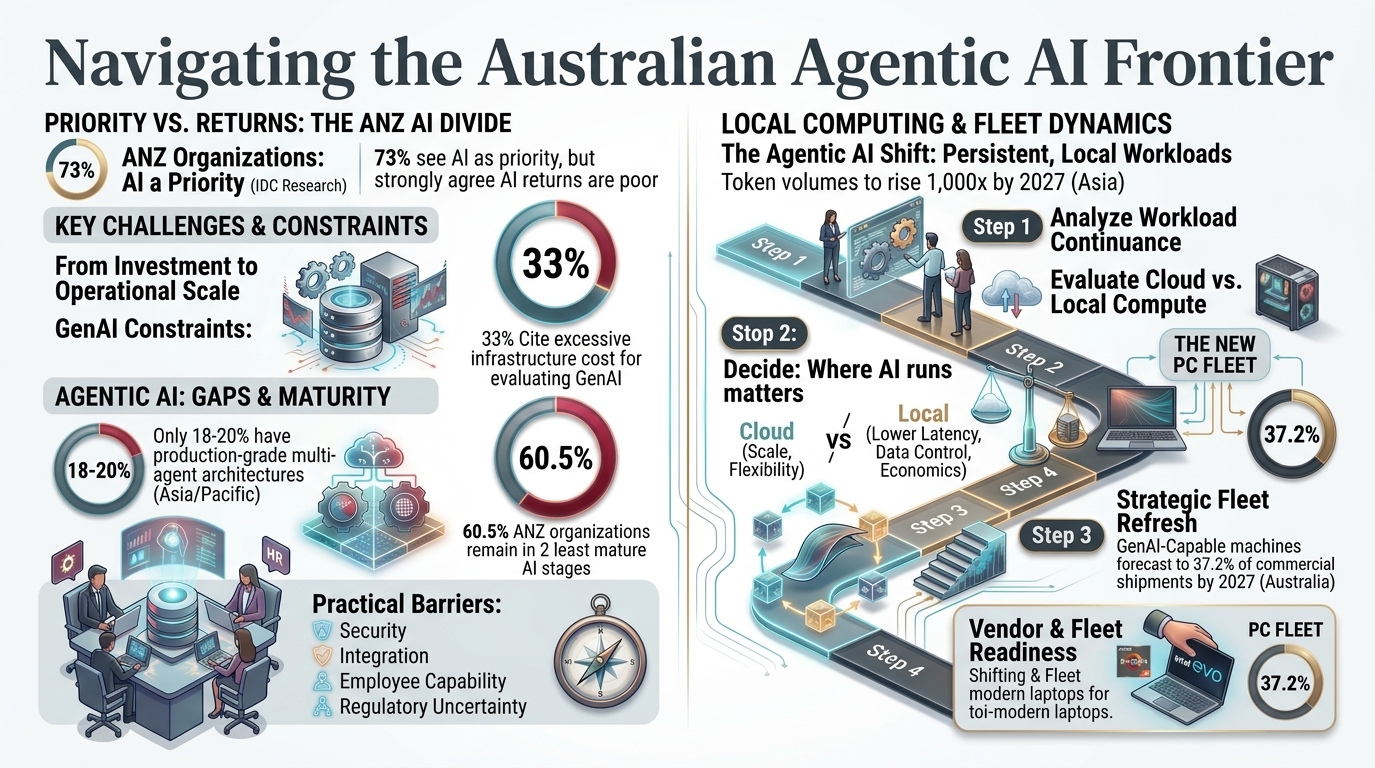
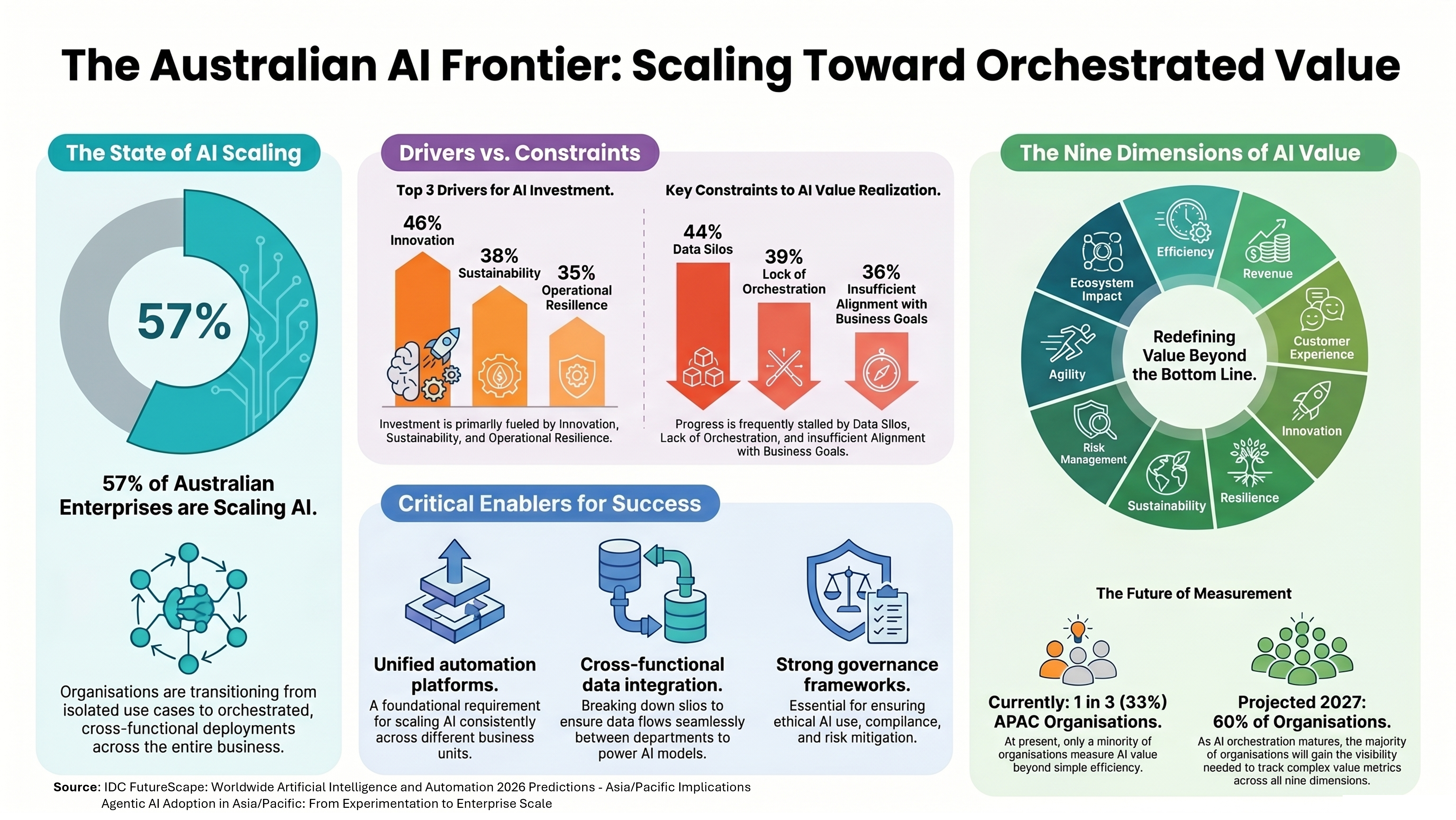
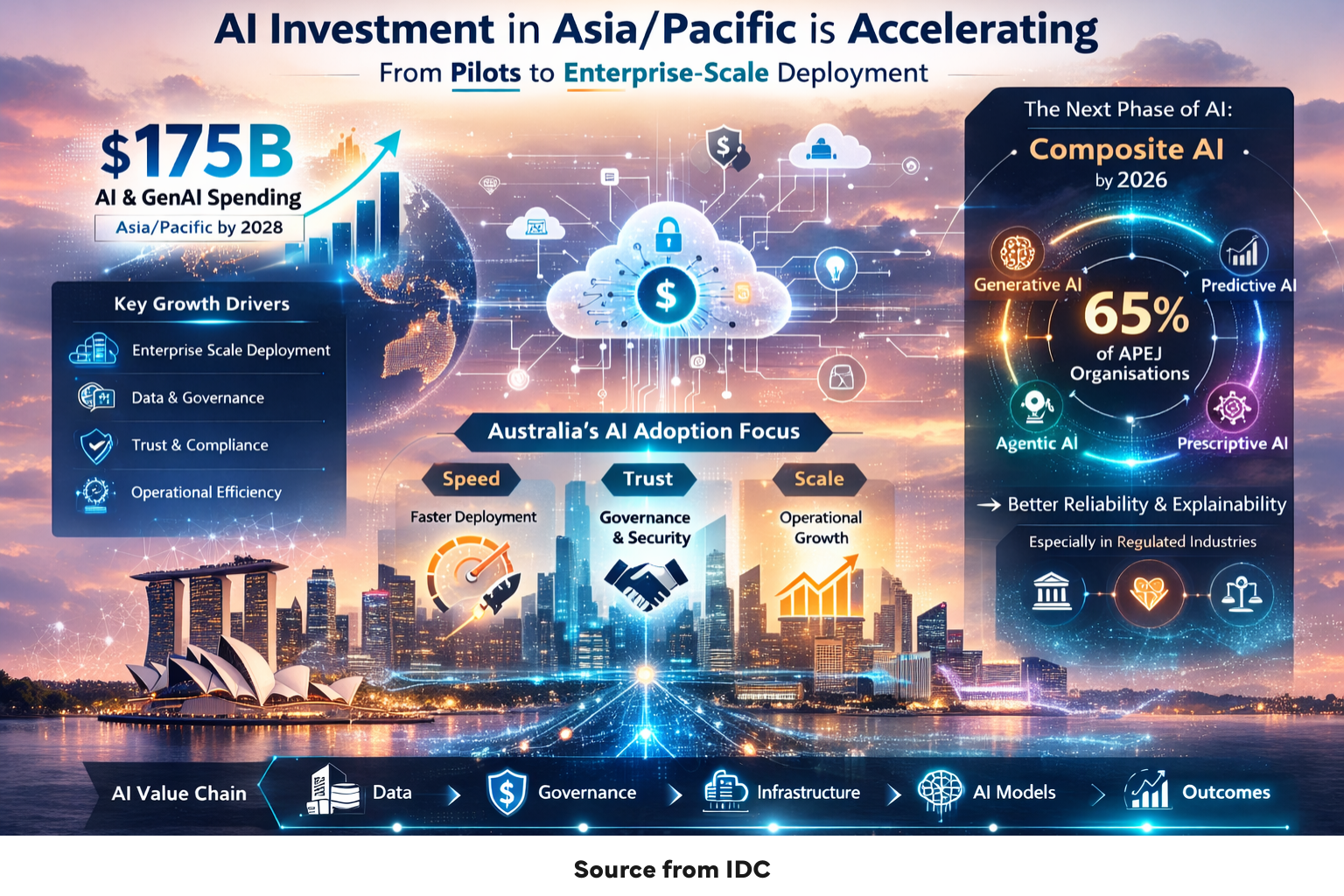
AI investment across Asia/Pacific is accelerating rapidly, with IDC forecasting $175 billion in AI and GenAI spending by 2028, as organisations move from pilots to enterprise-scale deployment. For Australian organisations, the next phase of AI adoption is focused on speed, trust, and operational scale.
At the same time, by 2026, 65% of APEJ organisations will adopt composite AI, combining generative, predictive, prescriptive, and agentic AI to improve reliability and explainability, particularly in regulated industries.
Scaling AI also depends on infrastructure and data readiness. IDC forecasts that organisations that fail to prioritise high-quality, AI-ready data will experience a 20% productivity loss when scaling generative and agentic AI solutions. As a result, Australian enterprises are increasingly investing in hybrid and multicloud platforms, secure data foundations, and governance frameworks to operationalise AI at scale.
This invitation-only executive roundtable brings together Australian CIOs and senior IT leaders to explore how AI can be industrialised across the enterprise, delivering measurable value while managing risk and compliance.
James Robertson
Sales Director, Public Sector & Enterprise, Lenovo
As enterprises accelerate AI adoption, security must evolve beyond traditional perimeters to protect intelligent, data-driven ecosystems. This session explores how organisations can build resilient AI-ready infrastructure, ensure data integrity and governance, and embed trust through explainability, observability, and compliance-by-design.
Linus Lai
Group Vice President, Research, IDC
AI is no longer measured by efficiency gains alone—it is now a critical driver of business growth, competitive advantage, and reinvention. Today’s CIOs are under increasing pressure to demonstrate how AI delivers tangible business outcomes, moving beyond technical success to real, measurable impact across the organisation.
James Robertson
Sales Director, Public Sector & Enterprise, Lenovo
AI impact requires more than strategy—it demands secure, scalable execution. This discussion session highlights how organisations can align business priorities, modernise data and infrastructure, and embed governance to deliver trusted AI at scale.
Linus Lai
Group Vice President, Research, IDC
James Robertson
Sales Director, Public Sector & Enterprise, Lenovo
Linus Lai
Group Vice President, Research, IDC
Linus Lai is a member of the Asia/Pacific Software and Services Research Group. He has more than 20 years of IT experience in the region. Based in Sydney, Australia, he has experience in several cloud, software, and services programs in Asia/Pacific excluding Japan (APEJ), which covers a wide range of technology and services markets across 13 countries.
In this role, he is responsible for providing insights and analyses in enterprise adoption, integration, and management of these solutions. This includes sourcing strategies, vendor selection, and identifying emerging trends in business and technology solutions across technology buyers in the region. Linus is a founding member of IDC Asia/Pacific’s Emerging Technology Advisory Council and is a recipient of numerous awards for country, regional, and quality research contributions. In his previous role as head of research in Southeast Asia, he developed and grew IDC’s presence in the region.
Linus is frequently quoted in various publications and media outlets and is a regular presenter at industry forums, client events, and strategic workshops. Prior to joining IDC, Linus worked with a large outsourcing service provider that focused on retail banking solutions.
Linus holds a master of science degree from the University of Lincoln, United Kingdom.
AI impact requires more than strategy—it demands secure, scalable execution. This discussion session highlights how organisations can align business priorities, modernise data and infrastructure, and embed governance to deliver trusted AI at scale.
As enterprises accelerate AI adoption, security must evolve beyond traditional perimeters to protect intelligent, data-driven ecosystems. This session explores how organisations can build resilient AI-ready infrastructure, ensure data integrity and governance, and embed trust through explainability, observability, and compliance-by-design.
AI impact requires more than strategy—it demands secure, scalable execution. This discussion session highlights how organisations can align business priorities, modernise data and infrastructure, and embed governance to deliver trusted AI at scale.
AI is no longer measured by efficiency gains alone—it is now a critical driver of business growth, competitive advantage, and reinvention. Today’s CIOs are under increasing pressure to demonstrate how AI delivers tangible business outcomes, moving beyond technical success to real, measurable impact across the organisation.

161 Elizabeth St, Sydney NSW 2000, Australia
Located in the Sydney CBD opposite Hyde Park, it offers luxury amenities with comfort for an executive roundtable session.
Steven Dewinter
Senior Global Director, Sales Engineering
Parallels
The way organizations deliver applications has undergone a significant shift over the past few years. Pre-pandemic, virtual desktop infrastructure (VDI) was often seen as a niche solution for specific use cases. Post-pandemic, it has become a cornerstone of modern IT strategies, driven by the rise of remote work and the need for secure, scalable access to business-critical applications.
Today, the conversation is no longer about whether to adopt VDI; it is about how to make it work in a hybrid world. Hybrid work models demand hybrid infrastructure, spanning on-premises, cloud, and edge environments. Employees expect seamless access across diverse devices, while IT teams strive to balance performance, cost, and security. This complexity underscores a critical truth: flexibility and simplicity are no longer optional; they are essential.
The ecosystem itself is also evolving rapidly. Organizations are rethinking their entire virtualization stack, from application delivery platforms to hypervisors, driven by licensing changes, cost pressures, and the need for more agile, future-ready solutions. This shift is not just about replacing one vendor; it reflects a broader trend toward open choice and adaptability across the IT landscape.
Adding to this transformation is the rise of AI-powered applications, which demand more computing resources and tighter integration with data. Delivering these apps efficiently and securely is a growing challenge. VDI and remote application delivery help address this by centralizing workloads, ensuring consistent performance, and enabling secure access from any device without exposing sensitive data at the edge.
Security remains the non-negotiable foundation of this evolution. As applications and data move across hybrid environments, the attack surface expands. CIOs are prioritizing solutions that embed security into every layer without compromising user experience or operational efficiency.
The future of application delivery will be defined by choice, adaptability, and trust. At Parallels, we enable this vision through solutions that simplify and secure access to applications and desktops, optimize hybrid work, and empower IT teams with flexibility across devices and infrastructures. From virtualization to cross-platform access, our focus is on helping organizations stay agile and resilient in a rapidly changing world.
Position your brand at the forefront of the region’s premier CIO community. This results-driven platform is designed to maximize engagement and ROI for solution providers.
Digital Realty brings companies and data together by delivering the full spectrum of data center, colocation, and interconnection solutions. PlatformDIGITAL®, the company’s global data center platform, provides customers with a secure data meeting place and a proven Pervasive Datacenter Architecture (PDx®) solution methodology for powering innovation, from cloud and digital transformation to emerging technologies like artificial intelligence (AI), and efficiently managing Data Gravity challenges. Digital Realty gives its customers access to the connected data communities that matter to them with a global data center footprint of 300+ facilities in 50+ metros across 25+ countries on six continents. To learn more about Digital Realty, please visit digitalrealty.com or follow us on LinkedIn and X.
Parallels® is a global leader in cross-platform virtualization & remote access solutions, enabling businesses and individuals to access and use applications and files they need on any device or operating system, anywhere, anytime, helping customers leverage the best technology available, whether it’s Windows, Linux, macOS, iOS, Android or the cloud.
MagicOrange is the market’s most advanced, cloud native enterprise financial management platform and the only platform that offers a fully integrated suite of IT Financial Management and FinOps capabilities. For decades, IT has been seen as a “black box” that absorbs significant costs and provides minimal visibility into ROI outside of the IT department. Simply put, the business line rarely knows or understands what it is paying for. We provide technology executives and their stakeholders with crystal-clear line of sight into expenses and cost-drivers across the entire IT estate. With that line of sight, CIOs and their teams are empowered to clearly define and communicate the value delivered to the business by IT. They can make smarter, data-driven IT investment and cost optimization decisions. And ultimately, they are able to partner more effectively with their business line stakeholders to drive profitability and growth.
Stop ransomware! ThreatLocker® improves enterprise-level server and endpoint security with zero trust controls, including Allowlisting, Ringfencing™, Elevation, Storage, Network Control, Configuration Management, and Operational Alert solutions.
For 90 years, innovation has been running through our veins, with creativity as our heartbeat. It’s more than a legacy, it’s our reason of existence.
At Barco, we believe truly great engineering starts with a clear vision. A vision of a better, smarter, healthier world. We use technology to transform the quality of life: from improving health outcomes to changing the way people work and creating compelling experiences.
Join us on our journey into the future, where innovating is not a choice, but a commitment to push the world forward.
We live and breathe audio. We are driven by the passion to create audio solutions that make a difference. Shaping the future of audio and bringing remarkable sound experiences to our customers – this is what the Sennheiser brand has represented for more than 75 years. While professional audio solutions such as microphones, conference systems, streaming technologies and monitoring systems are part of the business of Sennheiser electronic GmbH & Co. KG, the business with consumer devices is operated by Sonova AG under the license of Sennheiser.
Celebrating years of thought leadership, the IDC CIO Summit – Australia returns on 15 October 2026 in Sydney as the country’s premier gathering of technology decision-makers.
This year’s edition explores the rise of AI-native enterprises and the Agentic Stack — intelligent systems that enable real-time decision-making, adaptability, and innovation. With regional AI spending forecast to reach $11.4B by 2027, CIOs must balance bold innovation with governance, trust, and integration.
Bringing together CIOs, CTOs, CSOs, Heads of IT, technology leaders, and global experts, the Summit offers strategic insights, real-world case studies, and practical guidance to help organisations architect the next generation of digital enterprises.
Brett Wilson is a Chief Information Officer and executive leader with a strong track record of delivering large-scale digital transformation across diverse industries, including not-for-profit, healthcare, financial services, FMCG, and professional services. Currently serving as CIO at the Royal Australasian College of Physicians (RACP), Brett is focused on driving enterprise-wide transformation, strengthening technology leadership, and enabling innovation to support the organisation’s mission and future growth.
Previously, as CIO at the Australian Red Cross, Brett led a multi-year transformation of a 110-year-old organisation’s technology landscape, consolidating systems and teams into a simplified, modern architecture. His leadership delivered major initiatives including a rapid D365 Finance ERP implementation, large-scale automation through RPA, uplifted cybersecurity posture at the board level, and the introduction of enterprise data platforms to unlock advanced analytics and machine learning capabilities.
Brett has held senior leadership roles at organisations, leading technology strategy and operations across Asia Pacific and the UK. He is recognised for building high-performing teams and fostering cultures that align business strategy with technology delivery in complex environments.
A six-time CIO50 honouree (2019–2024), Brett is known for his ability to link business process improvement with technology innovation to create sustainable competitive advantage and deliver meaningful organisational outcomes.
Hear from thought leaders, visionary CIOs, and celebrity speakers redefining technology,
leadership, and innovation across APAC.
AI is transforming business strategy, and CIOs must act decisively. This keynote explores practical strategies for adopting, scaling, and governing AI across the enterprise. Attendees will gain insights on infrastructure, talent, and risk management, as well as actionable approaches to drive innovation, operational efficiency, and measurable business impact in today’s AI-driven landscape.
Linus Lai | IDC
Group Vice President, Research
Linus Lai is a member of the Asia/Pacific Software and Services Research Group. He has more than 20 years of IT experience in the region. Based in Sydney, Australia, he has experience in several cloud, software, and services programs in Asia/Pacific excluding Japan (APEJ), which covers a wide range of technology and services markets across 13 countries.
In this role, he is responsible for providing insights and analyses in enterprise adoption, integration, and management of these solutions. This includes sourcing strategies, vendor selection, and identifying emerging trends in business and technology solutions across technology buyers in the region. Linus is a founding member of IDC Asia/Pacific’s Emerging Technology Advisory Council and is a recipient of numerous awards for country, regional, and quality research contributions. In his previous role as head of research in Southeast Asia, he developed and grew IDC’s presence in the region.
Linus is frequently quoted in various publications and media outlets and is a regular presenter at industry forums, client events, and strategic workshops. Prior to joining IDC, Linus worked with a large outsourcing service provider that focused on retail banking solutions.
Linus holds a master of science degree from the University of Lincoln, United Kingdom.
AI is transforming business strategy, and CIOs must act decisively. This keynote explores practical strategies for adopting, scaling, and governing AI across the enterprise. Attendees will gain insights on infrastructure, talent, and risk management, as well as actionable approaches to drive innovation, operational efficiency, and measurable business impact in today’s AI-driven landscape.
In collaboration with
Linus Lai
Group Vice President, Research, IDC
Paul Crighton
VP, APJ Sales, Riverbed Technology
In a world where digital experiences are central to business success, IT leaders face mounting expectations to deliver both seamless performance and operational excellence. Today’s enterprises operate across a wide mix of technologies, making it increasingly challenging for IT teams to maintain clear, unified visibility over their entire environment. Fragmented data and reactive approaches often lead to missed opportunities and persistent issues, even as technology evolves.
The rise of AI-powered operations (AIOps) and agentic AI is transforming this landscape, enabling organizations to move beyond simply reacting to problems toward anticipating and autonomously resolving them. Agentic AI systems, capable of making decisions and taking action independently, are opening the door to new ways of working and delivering value. By harnessing data-driven insights and full-stack observability—from devices and networks to cloud and applications—IT teams can proactively optimize digital experiences and reduce disruptions.
This session will explore how modern platform solutions, AI automation, and agentic AI are empowering IT operations to deliver better digital outcomes, drive efficiency, and unlock new revenue streams and business models. Attendees will gain insight into how these innovations are reshaping the future of IT and creating fresh opportunities for growth.
Linus Lai
Group Vice President, Research, IDC
Fernando Castanheira
Global CIO, Riverbed Technology
Nick Kempt
Director, APJ Professional Services, Riverbed Technology
Demonstrations
IT and business leaders face constant pressure to deliver exceptional digital experiences, while balancing performance, cost efficiency, and operational agility. But achieving this with incomplete visibility is difficult.
We’ll explore how Aternity’s 360° Digital Experience helps leaders achieve better business outcomes enabling a productive mobile workforce.
Adi Mendel
Director of Product Management, Riverbed Aternity, Riverbed Technology
Linus Lai
Group Vice President, Research, IDC
Fernando Castanheira
Global CIO, Riverbed Technology
Nick Kempt
Director, APJ Professional Services, Riverbed Technology
Adi Mendel
Director of Product Management, Riverbed Aternity, Riverbed Technology
Linus Lai is a member of the Asia/Pacific Software and Services Research Group. He has more than 20 years of IT experience in the region. Based in Sydney, Australia, he has experience in several cloud, software, and services programs in Asia/Pacific excluding Japan (APEJ), which covers a wide range of technology and services markets across 13 countries.
In this role, he is responsible for providing insights and analyses in enterprise adoption, integration, and management of these solutions. This includes sourcing strategies, vendor selection, and identifying emerging trends in business and technology solutions across technology buyers in the region. Linus is a founding member of IDC Asia/Pacific’s Emerging Technology Advisory Council and is a recipient of numerous awards for country, regional, and quality research contributions. In his previous role as head of research in Southeast Asia, he developed and grew IDC’s presence in the region.
Linus is frequently quoted in various publications and media outlets and is a regular presenter at industry forums, client events, and strategic workshops. Prior to joining IDC, Linus worked with a large outsourcing service provider that focused on retail banking solutions.
Linus holds a master of science degree from the University of Lincoln, United Kingdom.
In a world where digital experiences are central to business success, IT leaders face mounting expectations to deliver both seamless performance and operational excellence. Today’s enterprises operate across a wide mix of technologies, making it increasingly challenging for IT teams to maintain clear, unified visibility over their entire environment. Fragmented data and reactive approaches often lead to missed opportunities and persistent issues, even as technology evolves.
The rise of AI-powered operations (AIOps) and agentic AI is transforming this landscape, enabling organizations to move beyond simply reacting to problems toward anticipating and autonomously resolving them. Agentic AI systems, capable of making decisions and taking action independently, are opening the door to new ways of working and delivering value. By harnessing data-driven insights and full-stack observability—from devices and networks to cloud and applications—IT teams can proactively optimize digital experiences and reduce disruptions.
This session will explore how modern platform solutions, AI automation, and agentic AI are empowering IT operations to deliver better digital outcomes, drive efficiency, and unlock new revenue streams and business models. Attendees will gain insight into how these innovations are reshaping the future of IT and creating fresh opportunities for growth.
Fernando Castanheira is Riverbed’s Global CIO responsible for all aspects of IT including digital transformation, Cyber/IT security, infrastructure, operations and business platforms. In addition, Fernando leads the SaaS Business strategy function partnering with the customer facing teams on new approaches centered on providing ongoing customer value and delightful experiences.
Prior to joining Riverbed, Fernando worked at JPMorgan Chase in various senior IT roles, most recently as a Managing Director and CTO. Fernando led various IT infrastructure and business aligned Application Development organizations with high impact roles at large scale with focus on digital transformations, increasing efficiencies, improve productivity and security. Fernando has built and led large organizations with specific focus in Digital Workplace technologies, End User Services, Multimedia/Telecom, and Corporate Technology functions.
Early in his career, Fernando held engineering and application development roles at Deloitte & Touche and Teledyne Brown Engineering.
Fernando holds a B.S in Computer Science from NJCU and a Master’s degree in Technology Management from Stevens Institute of Technology (magna cum laude).
With over 25 years of leadership experience in technology across the APJ region, Paul Crighton is dedicated to helping customers achieve their strategic vision.
Paul is passionate about engaging with customers to demonstrate the value of AIOps for Observability and Acceleration.
Nick is dedicated to customer success at Riverbed, leveraging his deep experience in IT and Service Management to address customer pain points and deliver optimal outcomes. Known for his collaborative approach and strong leadership, Nick ensures customer relationships are healthy and mutually beneficial. His ability to navigate complex topics and guide technical teams helps Riverbed deliver value across its customer base.
Adi Mendel has been a cornerstone of the Aternity team since 2016, driving the evolution of Digital Employee Experience (DEX) from traditional monitoring to modern, AI-powered observability. With a deep background in product strategy and a specialty in mobile and enterprise-wide DEX, Adi helps global organizations convert complex endpoint data into actionable business outcomes.
Known for a customer-first approach, Adi is currently focused on helping leadership teams navigate the 2026 vendor landscape—ensuring that as the market shifts toward private-equity models and standardized platforms, Aternity customers continue to benefit from technical flexibility, high-fidelity visibility, and a roadmap built for the future of work.
IT and business leaders face constant pressure to deliver exceptional digital experiences, while balancing performance, cost efficiency, and operational agility. But achieving this with incomplete visibility is difficult.
We’ll explore how Aternity’s 360° Digital Experience helps leaders achieve better business outcomes enabling a productive mobile workforce.
Riverbed, the leader in AIOps for observability, helps organizations optimize their user’s experiences by leveraging AI automation for the prevention, identification, and resolution of IT issues. With over 20 years of experience in data collection and AI and machine learning, Riverbed’s open and AI-powered observability platform and solutions optimize digital experiences and greatly improves IT efficiency. Riverbed also offers industry-leading Acceleration solutions that provide fast, agile, secure acceleration of any app, over any network, to users anywhere. Together with our thousands of market-leading customers globally – including 95% of the FORTUNE 100 – we are empowering next-generation digital experiences. Learn more at riverbed.com
Event Venue:
Smith Rooms 1 & 2
Address:
24 Loftus St, Sydney NSW 2000, Australia
Join us to discover how AI-powered observability and unified platforms are enabling organisations to simplify cloud operations, gain end-to-end visibility, and deliver resilient digital experiences.
Register Now