Why Partner
Position your brand at the forefront of the region’s premier CIO community. This results-driven platform is designed to maximize engagement and ROI for solution providers.
Position your brand at the forefront of the region’s premier CIO community. This results-driven platform is designed to maximize engagement and ROI for solution providers.
Discover thought-provoking articles from IDC analysts, strategic partners, and end-user speakers. Explore expert viewpoints on the latest tech trends, real-world transformation stories, and forward-looking insights shaping the digital future.

The world is entering a defining moment for digital infrastructure. Artificial intelligence has moved from experimentation to ubiquity, and with it, a new operational paradigm is taking shape — one where agents rather than applications become the primary engines of digital value creation. This is the dawn of the agentic AI era, and its success depends on one thing above all else: robust, intelligent, and scalable infrastructure.

Dr. Christopher Lee Marshall
Vice President, Financial Insights, IDC
Discover how autonomous enterprises can unlock productivity gains through self optimizing AI systems and intelligent automations.
Dr. Christopher Lee Marshall
Vice President, Financial Insights, IDC
Explore strategies for making smarter technology decisions while balancing innovation, business value, risk and long-term scalability.
Explore how agentic AI is enabling autonomous decision-making, intelligent automation, and new operating models that accelerate business transformation.
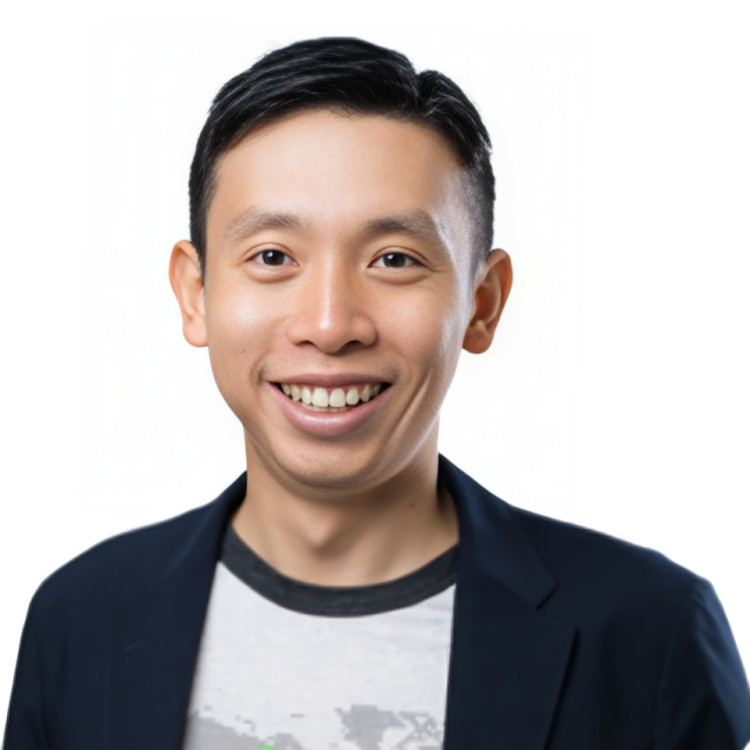
Ron Ho
Head of Solutions Engineering, Malaysia, F5
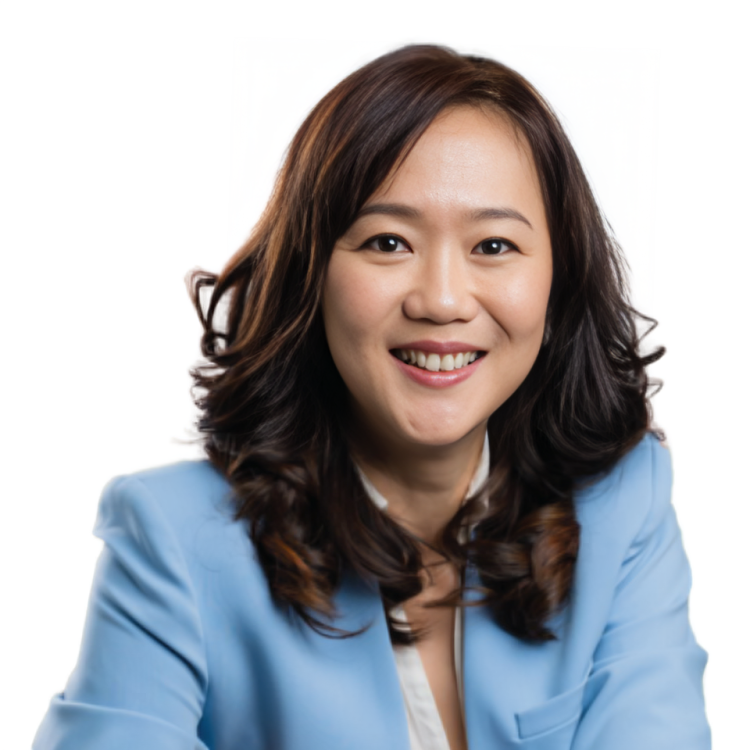
Lim Mei Lin
Country Manager, Malaysia, F5
Explore how organizations are optimizing AI inferencing to deliver scalable, cost-efficient, and real-time business intelligence.
Discover how CIOs are building AI-ready workforces by transforming skills, culture, and operating models for the future of work.
Learn how organizations are strengthening AI governance and cybersecurity to build trust, ensure compliance, and manage emerging risks.
11:35AM – 11:45AM
11:45AM – 11:55AM
11:55AM – 12:05PM
12:05PM – 12:15PM
11:35AM – 11:45AM
11:45AM – 11:55AM
11:55AM – 12:05PM
12:05PM – 12:15PM
Many organizations have successfully launched AI pilots, but few have scaled them across the enterprise. This panel will explore the technology foundations, operating models, governance practices, and leadership strategies required to operationalize AI securely and consistently across complex business environments.
Dr. Christopher Lee Marshall
Vice President, Financial Insights, IDC
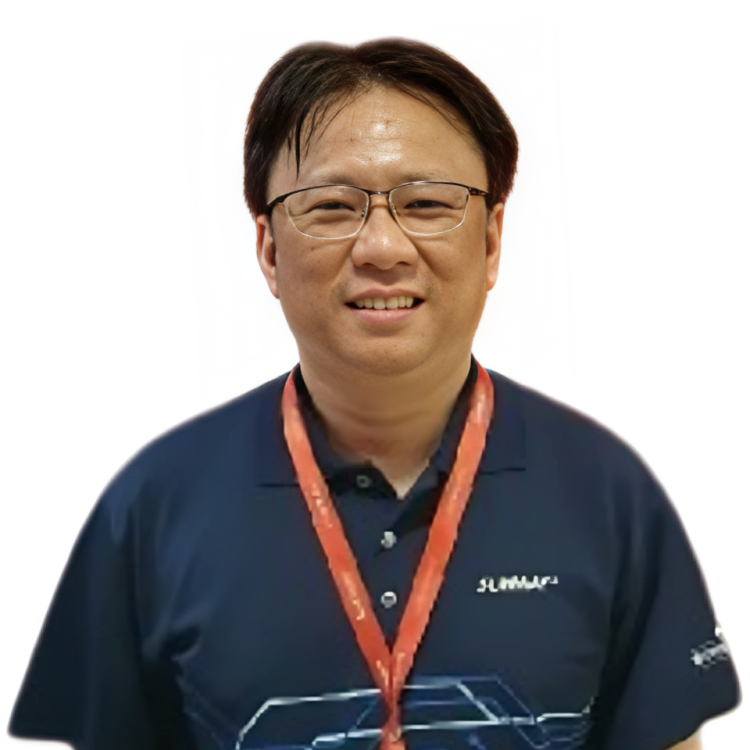
Wan Hock Wei
Chief Information Officer, Sunway Group

Alain Boey
Chief Operating Officer, Citadel Group

Alex Chi
Chief Information and Digital Officer, S P Setia Berhad

Ts. Victor Ooi
Chief Information Officer, Port of Tanjung Pelepas (PTP)

Dr Keeratpal Singh
Chief AI and Data Officer, Worldline
Uncover breakthrough insights from IDC experts and exclusive sessions featuring influential voices transforming technology and leadership today.
Please fill the form to update

Vice President, Financial Insights
IDC
Read bio
Dr. Chris Marshall is Program Vice President for IDC Asia Pacific, responsible for the Analytics, Big Data and Artificial Intelligence practice. Dr. Marshall’s core research coverage includes the development of Data Analytics and Machine Learning competencies and their implications – the threats and opportunities facing organizations as they seek to augment and automate their knowledge-based work.
Previously, Chris was a senior executive in IBM Watson Financial Services where he led their AI-enabled risk and analytics practice in Asia. Before joining IBM, he held senior business development and management roles in big data and analytics at KPMG, Oracle and UBS.
Many organizations have successfully launched AI pilots, but few have scaled them across the enterprise. This panel will explore the technology foundations, operating models, governance practices, and leadership strategies required to operationalize AI securely and consistently across complex business environments.
Discover how autonomous enterprises can unlock productivity gains through self optimizing AI systems and intelligent automations.

Chief Information and Digital Officer
S P Setia Berhad
Read bio
Many organizations have successfully launched AI pilots, but few have scaled them across the enterprise. This panel will explore the technology foundations, operating models, governance practices, and leadership strategies required to operationalize AI securely and consistently across complex business environments.

Chief Information Officer
Sunway Group
Read bio
Many organizations have successfully launched AI pilots, but few have scaled them across the enterprise. This panel will explore the technology foundations, operating models, governance practices, and leadership strategies required to operationalize AI securely and consistently across complex business environments.

Chief Operating Officer
Citadel Group
Read bio
Many organizations have successfully launched AI pilots, but few have scaled them across the enterprise. This panel will explore the technology foundations, operating models, governance practices, and leadership strategies required to operationalize AI securely and consistently across complex business environments.

Chief Information Officer
Port of Tanjung Pelepas (PTP)
Read bio
Ts. Victor Ooi is Chief Information Officer of Port of Tanjung Pelepas (PTP), where he has led digital and technology transformation since joining in 2024. His foundation in Mathematics and Information Technology, with System Architecture as a core discipline, is matched by more than two decades of regional technology and transformation leadership across Intel, IBM, Microsoft and EY.
At PTP, he is steering the port beyond digitalisation into AI, automation, big data, digital twin and intelligent operations — forging partnerships with innovators to build solutions that shape what comes next for the industry, and moving the organisation from being a technology user to becoming a technology innovator.
His approach is guided by a simple philosophy: Pragmatic. Producer. Progressive. Solve a real problem, build with the right partners, take the first step, and sharpen as you go.
Many organizations have successfully launched AI pilots, but few have scaled them across the enterprise. This panel will explore the technology foundations, operating models, governance practices, and leadership strategies required to operationalize AI securely and consistently across complex business environments.

Chief AI and Data Officer
Worldline
Read bio
Many organizations have successfully launched AI pilots, but few have scaled them across the enterprise. This panel will explore the technology foundations, operating models, governance practices, and leadership strategies required to operationalize AI securely and consistently across complex business environments.

Head of Solutions Engineering, Malaysia
F5
Read bio
Explore how agentic AI is enabling autonomous decision-making, intelligent automation, and new operating models that accelerate business transformation.

Country Manager, Malaysia
F5
Read bio
Explore how agentic AI is enabling autonomous decision-making, intelligent automation, and new operating models that accelerate business transformation.
To access this content, please enter the password you have received from IDC.


In Partnership With

Construction and manufacturing organizations are moving beyond isolated automation initiatives toward AI-enabled operational orchestration. As projects become more distributed, production environments more complex, and supply chains more volatile, enterprises are increasingly looking at how AI can coordinate workflows, optimize execution, and support faster operational decision-making across teams, assets, and business functions.
IDC research highlights that organizations across Asia/Pacific are evolving from siloed AI pilots toward more integrated operational AI capabilities. In manufacturing, AI-driven scheduling, intelligent workflow orchestration, operational cybersecurity, and real-time decision support are becoming increasingly important as enterprises look to improve agility, resilience, and execution efficiency across complex operating environments.
For construction and manufacturing leaders, the challenge is no longer whether to adopt AI, but how to scale it effectively across execution-heavy environments. This requires connected work management platforms, integrated operational data, governance frameworks, and visibility across projects, plants, field teams, subcontractors, and supply ecosystems.
This roundtable, organised by IDC and Smartsheet, will explore how enterprises are evolving from workflow automation toward AI-driven operational coordination and what it takes to build connected, intelligent, and governed work management environments across complex construction and manufacturing operations.

In manufacturing, by 2027, over 40% of manufacturers with production scheduling systems in Asia/Pacific will enhance them with AI-driven autonomous capabilities

By 2028, 65% of A2000 enterprises in Asia/Pacific will operate ‘AI factories’ centralized, automated platforms for deploying and scaling AI workflows and agents

40% of Asia/Pacific enterprises are already testing agentic AI solutions and POCs, and 30% are developing use cases for operational deployment

The top priorities for scaling agentic AI in Asia/Pacific:

Stephanie Krishnan
Associate Vice President, Research, IDC

Joe Kristo
Director, Solutions Engineering, Smartsheet

Associate Vice President, Research
IDC
Read bio
Stephanie Krishnan is Research Director for IDC Manufacturing Insights, responsible for Industry 4.0 research. In this role, she responsible for the production, development and growth of the IDC Manufacturing Insights program in the Asia Pacific region. In this role, Stephanie will be delivering a research agenda that will appeal to technology buyers and vendors both in terms of subscription products and custom research in Industry 4-0 looking across ecosystems, value chains and supply chains of industrial industries.
Stephanie has more than 20 years’ experience in manufacturing and supply chain, with a diverse background that complements her years in academia and professional development consulting in multiple countries such as Australia, Singapore, Malaysia, UAE and Hong Kong among others. in addition to this, she advises startups in the areas of process automation and technology adoption, particularly in supply chain management. Stephanie has been most recently been conducting economic and supply chain market research as part of consulting in the Middle East.

Director, Solutions Engineering
Smartsheet
Read bio
Joe brings over 25 years of experience helping organisations transform how they work — from business intelligence and analytics to the modern era of intelligent work management. As Director of Solution Engineering for Asia Pacific and Japan at Smartsheet, he partners with businesses across the region to unlock the power of AI-driven work orchestration, enabling teams to move faster, collaborate smarter, and deliver more.

Smartsheet is the intelligent work management platform enabling millions to innovate faster. Trusted by 85% of the Fortune 500, it combines enterprise-grade security with specialized agents to automate complex workflows in seconds. Achieve greater human impact with CIO-grade insights at scale. Learn more at www.smartsheet.com

Room: Capiz Room, Level 4
30th Street, corner 5th Ave, Taguig, 1634 Metro Manila, Philippines


In Partnership With


Enterprises across Asia Pacific are entering a new phase of AI maturity, one where AI is no longer confined to analytics or automation but is increasingly embedded into decision-making itself. According to IDC, organizations that scale AI successfully are those that integrate it deeply into operational and strategic workflows, rather than treating it as a standalone capability.
This shift is giving rise to what can be described as a ‘Digital Executive Layer’ a new decision-making fabric embedded across the enterprise. In industries such as BFSI, manufacturing, and healthcare, this is already becoming tangible. For instance, in banking, AI is moving into core decision workflows like corporate lending, where agentic systems are expected to streamline approvals and improve portfolio health.
In healthcare, the shift is even more profound. IDC highlights that 75% of providers in Asia-Pacific expect greater productivity gains from agentic AI than traditional GenAI, with adoption expanding into real-time clinical decision support and autonomous workflows. This reflects a broader transition from reactive to predictive and proactive care models, where AI continuously informs and adjusts decisions.
Meanwhile, in manufacturing, AI is evolving from predictive analytics to autonomous, data-driven operations, powered by cloud and connected assets. The next phase of industrial AI will depend on integrating massive data streams, hybrid cloud platforms, and intelligent automation, enabling factories to self-optimize and adapt in real time.
IDC in collaboration with NTT DATA & Google Cloud is organizing this roundtable to explore this critical topic and pose a defining question to today’s C-suite: Are we simply augmenting executives with AI, or are we building a parallel, intelligent layer that will fundamentally reshape how decisions are made?
As AI agents become increasingly autonomous, organizations are exploring how a digital executive layer can augment human judgment, accelerate decision-making, and drive enterprise-wide transformation.

How is the shift from AI for efficiency to AI for innovation changing enterprise priorities and investments?

What does it take to build a cloud-to-edge, AI-ready architecture that supports real-time, distributed decision-making?

As AI becomes more autonomous, how should organizations rethink governance, risk, and accountability?

Are enterprises prepared for a future where AI becomes a core decision-making layer alongside leadership?


Sandra Ng
Senior Vice President, WW and APJ Research, IDC
As AI evolves from automation to autonomous decision intelligence, enterprises are creating a new “digital executive layer” that augments strategic and operational decision-making. This keynote explores how organizations can responsibly scale agentic AI across business functions to drive agility, resilience, and measurable business outcomes.
Sandra Ng
Senior Vice President, WW and APJ Research, IDC
Organizations are moving beyond AI experimentation toward embedding intelligent agents into everyday workflows. This session examines how enterprises can operationalize agentic AI to accelerate decisions, improve productivity, and enable real-time business responsiveness.

Nathan Goh
Head, Google Workspace Customer Engineering, APAC, Google Cloud

Gillian de Brondeau
Director, Agentic AI Strategy, NTT Data
As AI becomes increasingly embedded into enterprise operations, organizations must redefine the balance between human judgment and autonomous intelligence. This interactive discussion will explore how leaders can build trust, governance, and organizational readiness while embracing AI-driven decision ecosystems.
Sandra Ng
Senior Vice President, WW and APJ Research, IDC
Nathan Goh
Head, Google Workspace Customer Engineering, APAC, Google Cloud
Gillian de Brondeau
Director, Agentic AI Strategy, NTT Data

Senior Vice President, WW and APJ Research
IDC
Read bio
Sandra Ng is Group Vice President and General Manager for IDC Asia/Pacific including Japan (APJ) research. Based in Singapore, she is responsible for thought leadership and deep-dive insights and advisory content on IDC’s 3rd Platform disruptive pillars of Cloud, Mobility, Big Data Analytics, and Social along with C-suite (CIO, CMO, CEO, COO, CFO and CxO) research and tech buyer engagements as well as the Service Provider industry. In her role, she advises both tech buyers (CIO and LoB) and IT suppliers/enablers across the ICT marketplace.
As IT becomes the epicenter of our economy, IDC sees the intersection of Digital Transformation (DX) and the 3rd Platform’s Innovation Stage. Here is where we see governments, industries and consumers consuming the four technology pillars as well as increasingly the six innovation accelerators (Internet of Things or IoT, cognitive computing, 3D printing, robotics, next-gen security, and augmented/virtual reality [AR/VR]). To this end, IDC created a portfolio of tech buyer/end-user research and methodology frameworks, the IDC DecisionScapes, to provide targeted advice in an increasingly complex and fast-paced marketplace.
Sandra leads a team of IDC’s senior analysts with collective expertise across the ICT industry. This team leverages the core research created by IDC’s Asia/Pacific Domain Research Group, through contextualizing the content and increasing its relevance for clients and their businesses. This value creation process enhances the proposition IDC brings to strategy, planning and market intelligence stakeholders. This unique delivery of research content also brings with it IDC’s thought leadership analysis and business executive insights for marketing, product management, sales and strategic leadership teams within the client’s organization.
Along with the Domain Research team, the Practice Group extensively collaborates with IDC’s Integrated Marketing Programs (IMP), IDC’s Industry Insights, and IDC’s Consulting organizations to provide a comprehensive scope of intelligence services to meet the diverse needs of today’s dynamic and complex technology marketplace.
From research to IDC’s customized go-to-market services (GMS) to executive roundtables and end-user events, Sandra and her team provide independent and insightful perspectives of market conditions, assisting clients in making informed business decisions and achieving business goals.
Sandra’s role also extends beyond quality research content delivery. She plays a key role in driving forward-looking assessment and analysis, often sharing her market insights and predictions to Asia Pacific management teams and heads of strategy within her customer base. She moderates and engages extensively with the client communities, including both traditional technology buyers and increasingly influential line of business heads often leveraging the IDC DecisionScape methodologies and deep-dive research.
Sandra has been in the Information and Communications Technology (ICT) advisory and consulting industry for 20 years. While her technology research expertise is vast and diverse, she is best known in the industry for her Telecommunications knowledge and opinions within the Asia Pacific region. Her ability to discuss broad, strategic and converged issues across the ICT industry enables her to engage with many C-level management teams and technology executives in Asia.
Prior to joining IDC, Sandra was with Gartner/Dataquest for more than four years, where she was managing a variety of IT research projects ranging from midrange systems to peripherals. In addition to base unit research, she was actively leading in channel and consulting work.
Sandra has established a keen following within the Asia Pacific media fraternity and is frequently quoted in leading regional business and trade publications such as the Asian Wall Street Journal, Computer World, Telecom Asia, tele.com and Wireless World, and also in locally-based media such as Singapore’s Business Times and Hong Kong’s South China Morning Post. She is often invited to present IDC’s opinions on CNBC Asia, Bloomberg and Channel News Asia. Sandra is also a regular keynote speaker at global and regional ICT conferences.
Fluent in English and Mandarin, Sandra graduated from National University of Singapore with a Bachelor of Business Administration degree.
As AI becomes increasingly embedded into enterprise operations, organizations must redefine the balance between human judgment and autonomous intelligence. This interactive discussion will explore how leaders can build trust, governance, and organizational readiness while embracing AI-driven decision ecosystems.
As AI evolves from automation to autonomous decision intelligence, enterprises are creating a new “digital executive layer” that augments strategic and operational decision-making. This keynote explores how organizations can responsibly scale agentic AI across business functions to drive agility, resilience, and measurable business outcomes.

Head, Google Workspace Customer Engineering, APAC
Google Cloud
Read bio
Nathan Goh serves as the Head of Google Workspace Customer Engineering for the Asia Pacific region, overseeing the technical engagements in Corporate and Enterprise segments . In this capacity, he is responsible for the go-to-market strategy and engagements for Google Cloud AI SaaS offerings. Nathan is currently leading his team of Customer Engineers across APAC to architect the Agentic Workplace for customers, ushering them into the AI Agentic Age. By leveraging Agentic Workspace Transformation—a platform with unified context that empowers teams to drive outcomes together across every workflow—he ensures Google Workspace elevates individual and team-level productivity with integrated AI.Deploying Gemini Enterprise to orchestrate enterprise widel context, acting as the central nervous system for organizations to drive impactful business outcomes and ensure a superior customer lifecycle experience.
With over 25 years of experience in the IT industry, Nathan has a proven track record of leading complex technical organizations across APAC. He began his career on the end-user side, managing pioneering projects such as VoIP at Andersen Worldwide. Nathan then spent a decade in Tokyo, honing his expertise in network and security management within the financial sector for prestigious institutions including Dresdner Bank and Merrill Lynch APAC. Upon returning to Singapore, he spent five years as a vendor consultant at Citrix, focusing on Digital Workspace and Application Delivery Controllers. Prior to joining Google, Nathan led the Partner Solution Architect organization at VMware, covering the entire Asia Pacific and Japan region. Nathan is an alumnus of Nanyang Technological University (NTU), where he studied Electrical and Electronic Engineering (EEE).
As AI becomes increasingly embedded into enterprise operations, organizations must redefine the balance between human judgment and autonomous intelligence. This interactive discussion will explore how leaders can build trust, governance, and organizational readiness while embracing AI-driven decision ecosystems.
Organizations are moving beyond AI experimentation toward embedding intelligent agents into everyday workflows. This session examines how enterprises can operationalize agentic AI to accelerate decisions, improve productivity, and enable real-time business responsiveness.

Director, Agentic AI Strategy
NTT Data
Read bio
As AI becomes increasingly embedded into enterprise operations, organizations must redefine the balance between human judgment and autonomous intelligence. This interactive discussion will explore how leaders can build trust, governance, and organizational readiness while embracing AI-driven decision ecosystems.
Organizations are moving beyond AI experimentation toward embedding intelligent agents into everyday workflows. This session examines how enterprises can operationalize agentic AI to accelerate decisions, improve productivity, and enable real-time business responsiveness.

NTT DATA is a $30+ billion business and technology services leader in AI and digital infrastructure. We accelerate client success and positively impact society through responsible innovation. As a Global Top Employer, we have experts in more than 70 countries. NTT DATA is part of NTT Group.

Google Cloud accelerates every organization’s ability to transform with Google’s powerful, optimized AI stack.

10 Bayfront Ave, B1-71 The Shoppes, Marina Bay Sands, Singapore 018956
To access this content, please enter the password you have received from IDC.

助理研究总监
IDC中国
Read bio

高级研究经理
IDC中国
Read bio
杜雁泽是IDC中国制造业洞察组的高级研究经理,负责对中国制造业和供应链进行研究与分析。他还参与区域和全球的咨询以及相关市场的业务发展。
在加入IDC之前,杜雁泽在数字化转型领域拥有深入的工作经验,并广泛接触制造业中的各类业务,包括智能制造和工业软件。这些经历使他对市场现状和未来趋势有了深刻的理解。
杜雁泽毕业于天津大学,获得计算机科学学士学位。
副总裁、格创东智CEO
TCL实业
Read bio
【教育背景】
约翰霍普金斯大学MAIR国际关系硕士学位、欧洲工商学院INSEADMBA学位
【职业经历】
2018年3月-至今,现任TCL实业控股股份有限公司副总裁;
2018年3月-至今,现任格创东智科技有限公司首席执行官;
2011-2018年,曾任思科首席战略官;
2007-2011年,曾任麦肯锡咨询公司高级咨询经理;
2003-2005年,曾任科尔尼管理咨询公司咨询顾问;
2000-2002年,曾任IBM中国公司经理。
【主要成就】
何军先生现任TCL实业控股股份有限公司副总裁,格创东智科技有限公司首席执行官。拥有20年高科技与互联网行业深耕经验,在数字化转型、智能制造与工业AI等领域尤有建树。
作为 TCL 全产业链数字化转型的核心推动者,他深度主导TCL智能化升级顶层设计与落地,以数字化能力支撑TCL半导体显示、新能源光伏等核心业务全球化布局,筑牢全产业链智造核心竞争力。
作为格创东智的核心掌舵人,他带领企业从TCL战略孵化成长为工业AI行业领军者,完成多轮数亿元级融资,服务超3万家制造企业,落地200余个整厂数字化标杆项目,连续5年斩获工信部双跨工业互联网平台企业等重磅资质。
他深耕国产工业软件自主可控与工业AI技术创新,破解高端制造数字化 “卡脖子”难题,牵头构建产学研用一体化产业生态,助力中国制造业高质量发展,斩获福布斯中国新时代颠覆力创始人等多项行业领军人物荣誉。
他先后当选深圳市工业互联网行业协会副会长、工业互联网产业联盟(AII)副理事长广东省数字经济协会副会长、中国节能协会碳中和专业委员会常务委员、工业互联网平台创新中心副主任等。

科技创新与数智化部副部长
广东省广晟控股集团有限公司
Read bio

联合创始人&CEO
衡泽软件
Read bio
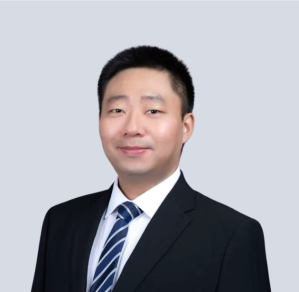
亚太区高级解决方案架构师
里瑞通
Read bio
Benjamin Li 李新宇现任里瑞通 Digital Realty 亚太区高级解决方案架构师,长期专注于数据中心、云、网络和AI基础设施领域,具备扎实的技术背景与丰富的行业经验。在其职业发展过程中,他始终以客户需求为导向,致力于规划与设计安全、高可用、高扩展性的综合解决方案,帮助客户实现业务增长。

CISO兼软件工程院院长 欧洲科学院院士 IEEE Fellow & IET Fellow
美的集团
Read bio
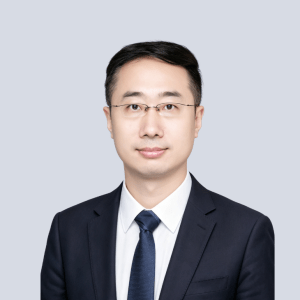
通信中心主任
国网山西信通公司
Read bio

数智创新中心总经理
万向钱潮股份公司
Read bio

工业能源行业总监
移动云
Read bio
严俊有十余年工业数智化研究经验,曾牵头研发设计过2款亿级大数据产品,中国大数据峰会特聘讲师,目前从事新型工业化相关工作,牵头落地中石油、荆州数转云等多个标杆项目。

中国区首席数据云架构师
Snowflake
Read bio
席叶文拥有深厚的云原生架构背景,曾作为初创成员主导了 Snowflake 中国区从私有预览到正式商用(GA)的全过程,攻克了多项复杂环境下的首创性技术难题。此前,她曾任职于 Google Cloud 负责助力互联网客户的架构演进,在数字原生、游戏及电商行业的超大规模增长架构方面有着独到见解。她擅长将数据 AI 与业务场景深度结合,是云原生及大规模数据架构领域的资深专家与实践者。
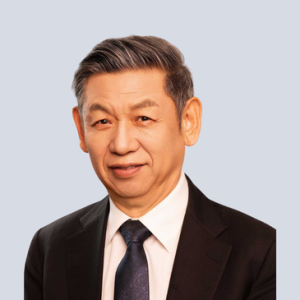
数据及人工智能学系讲座教授 深圳研究院院长,IEEE Fellow, ACS Fellow
香港理工大学
Read bio

中国集团副总裁
IDC
Read bio

CIO
通威股份有限公司
Read bio
