IDC IT Security Summit Saudi Arabia
Securing the Enterprise in the Age of AI Agents
Trust, Resilience, and Control in the Autonomous Business
The 2027 IT Security Summit Saudi Arabia brings together CISOs, security leaders, policymakers, and technology innovators to address AI-powered threats, data sovereignty, identity security, and cyber resilience. With NCA mandates and SDAIA data governance requirements expanding across all sectors, the summit focuses on the strategies, governance, and innovations shaping secure digital enterprise in the kingdom.
77% of Saudi organizations report ransomware as their top threat in 2025.Agentic AI is amplifying these risks: AI-powered attacks now move faster than human-led defenses.
At the same time, NCA mandates and SDAIA data governance requirements are tightening compliance obligations across every sector. This summit delivers the insights and frameworks Saudi security leaders need to defend AI-driven operations, meet rising regulatory demands, and build cyber resilience for Vision 2030.
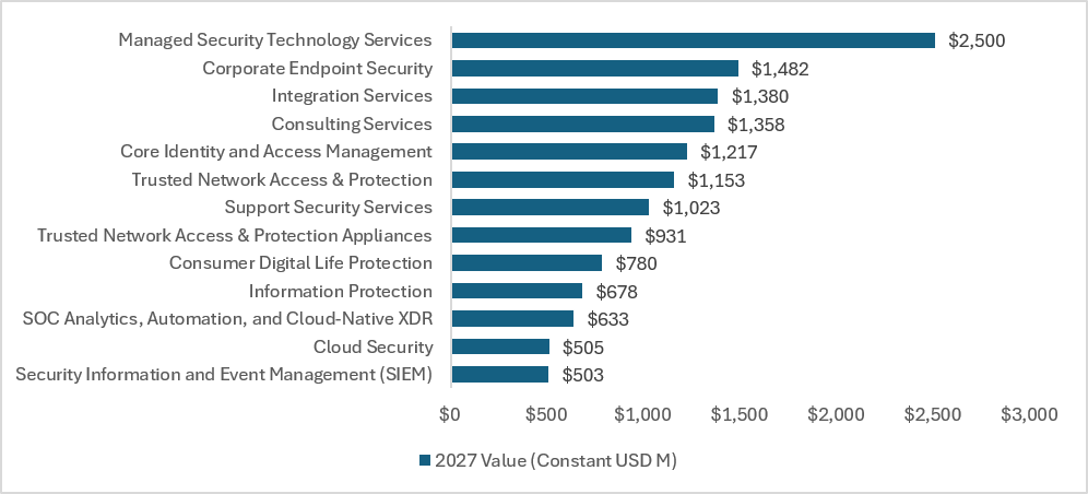
By 2028 40% of large enterprises in the META region will have a dedicated budget for GenAI Fraud Defense, as banking and financial services organizations respond to a triple-digit rise in AI- generated fraud attempts.

Source: Worldwide Security Spending Guide, META, 2026
As AI agents gain autonomy to access data, make decisions, and act across enterprise systems, they introduce a new and rapidly expanding attack surface that traditional security models weren’t built to handle. This keynote draws on IDC research to outline how security leaders can govern agent identities, enforce guardrails, and build resilient architectures that let organizations scale agentic AI with confidence.
This blog explores how organizations can embed trust, governance, and resilience into AI systems to ensure they operate reliably, transparently, and at scale in the agentic economy.
AI is transforming SOC operations with dynamic, AI-driven playbooks that adapt in real time to evolving threats. Security teams are shifting from static rules to intelligent, on-the-fly decision-making frameworks for faster, more precise response.
Quantum computing raises new security risks, making risk assessments critical. Organizations must act now to become quantum-ready and future-proof their defenses.