
CIO SUMMIT 2026
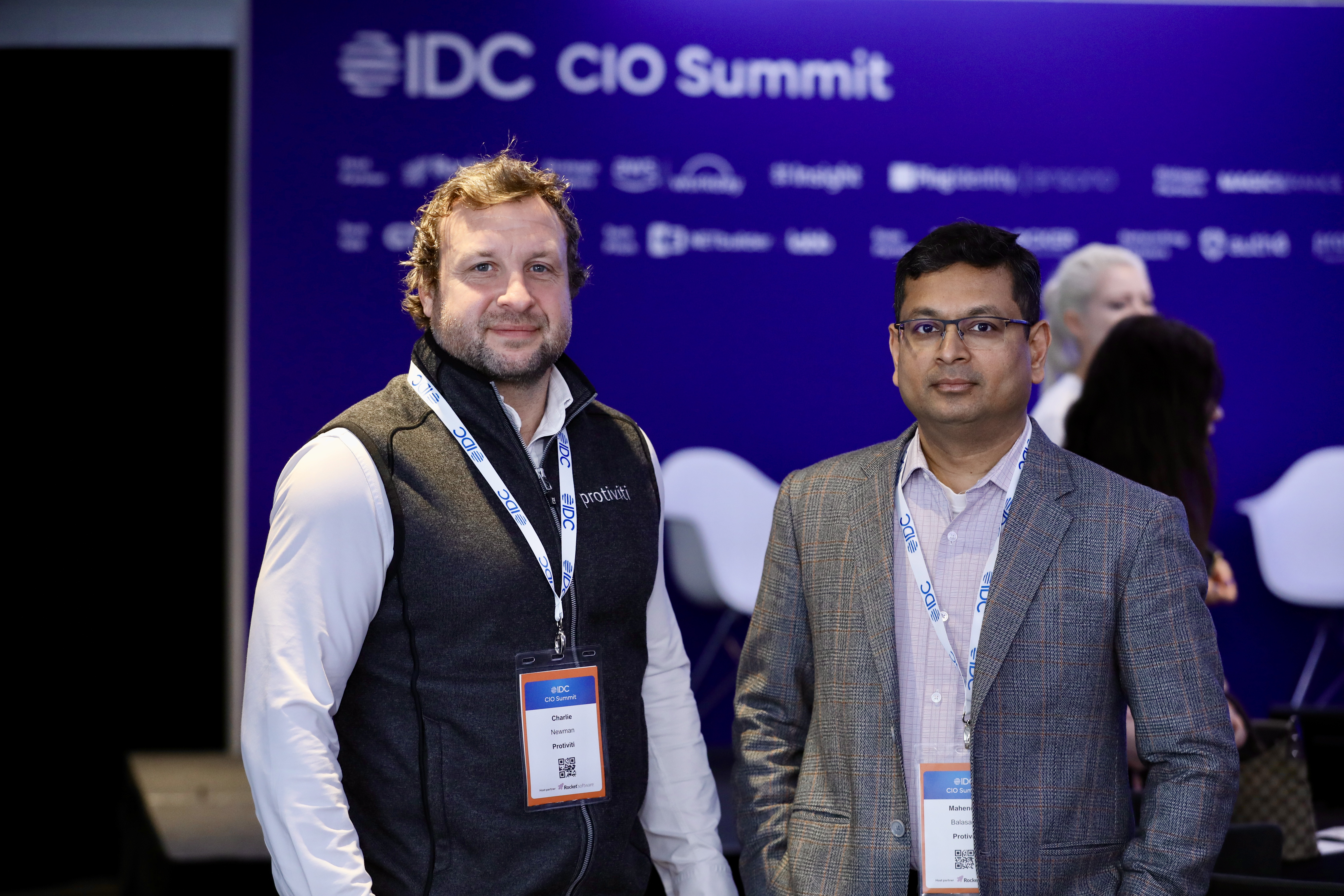
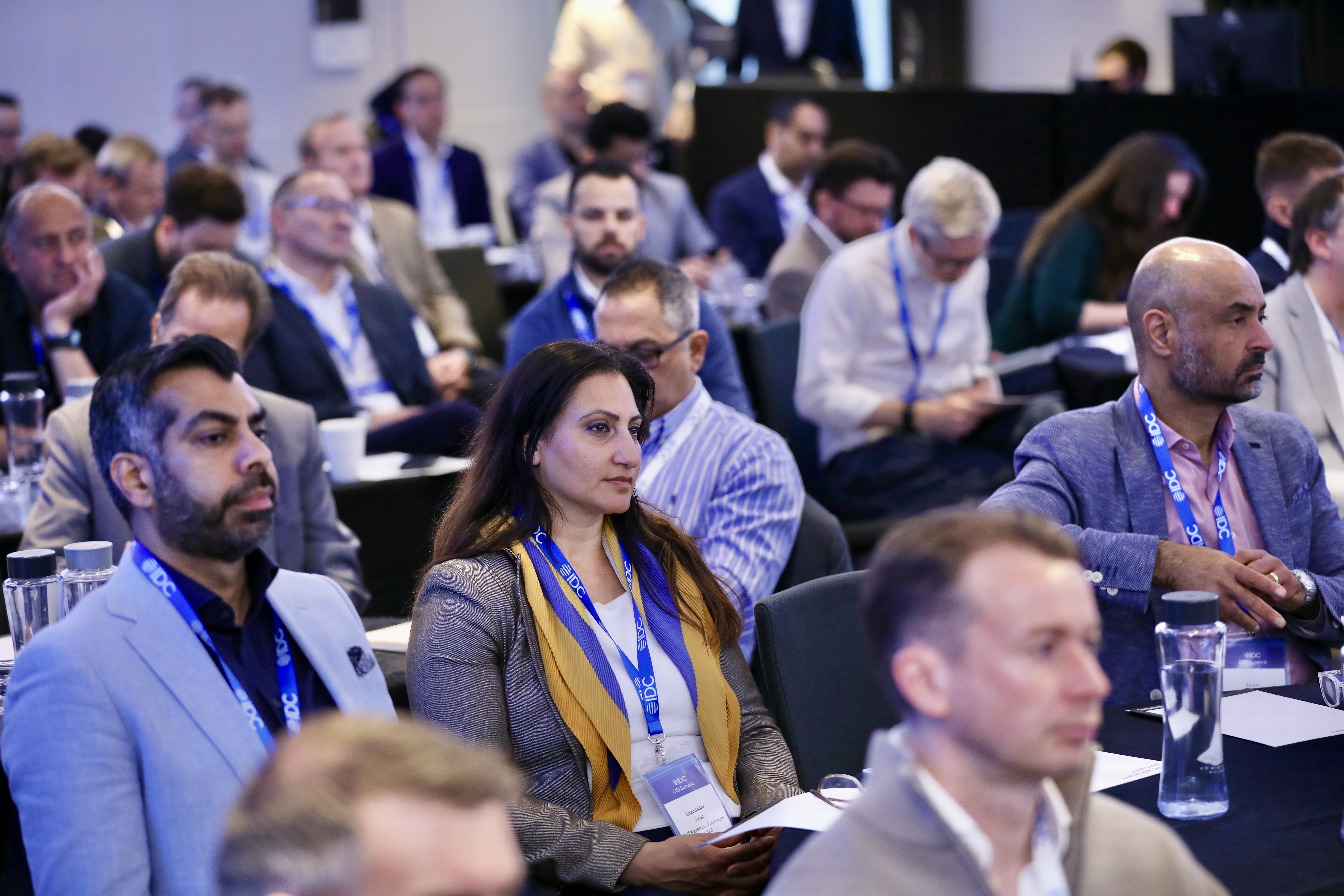
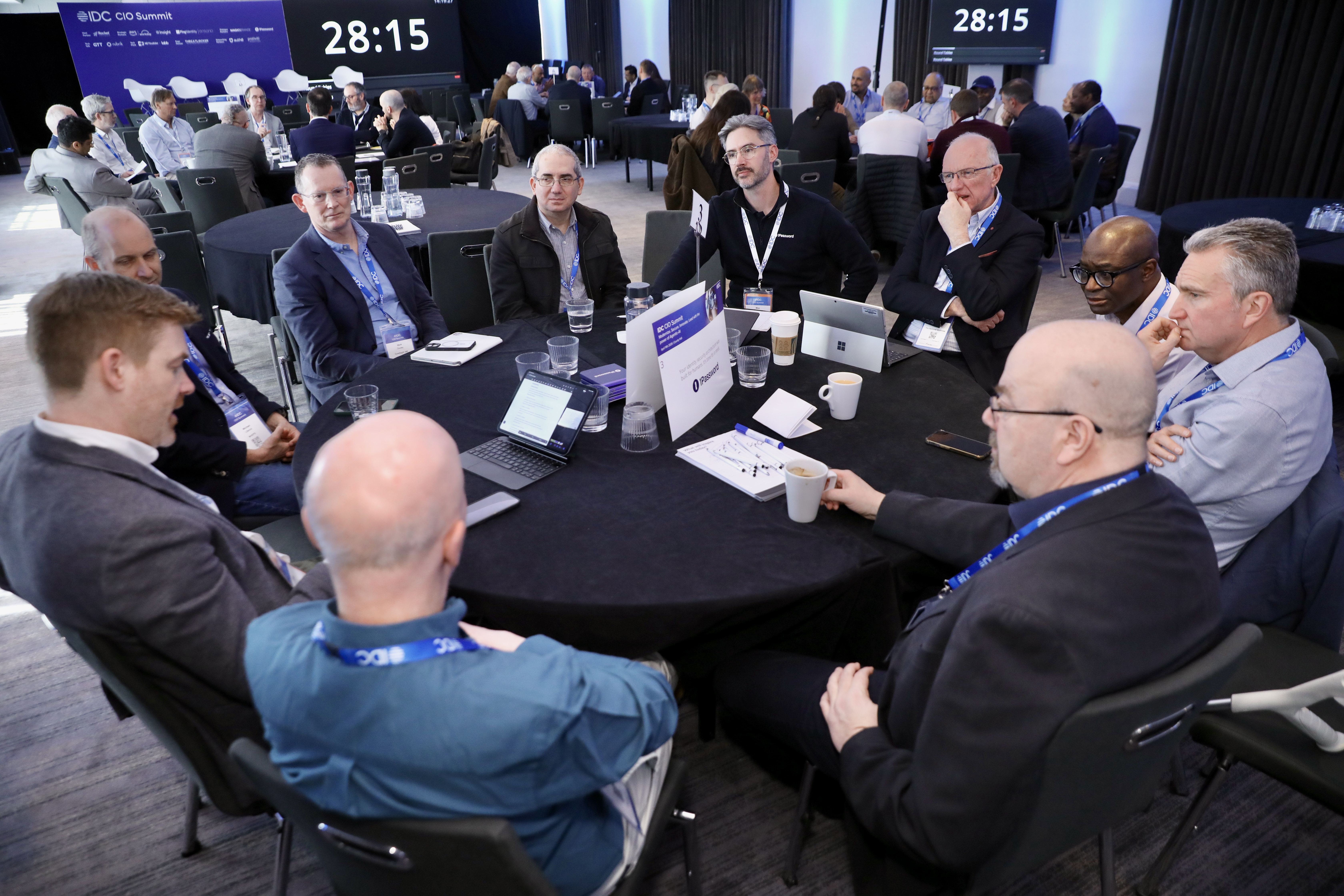
The IDC CIO Summit UK 2026 brought together technology and business leaders in London to explore the evolving role of the CIO in the era of agentic AI. Through expert presentations and panel discussions, the programme addressed IT modernisation, technical debt, cyber resilience and digital sovereignty, with a focus on translating technology investments into measurable business value. IDC analysts and industry speakers shared perspectives on scaling AI responsibly, strengthening digital trust and aligning technology strategy with business priorities.
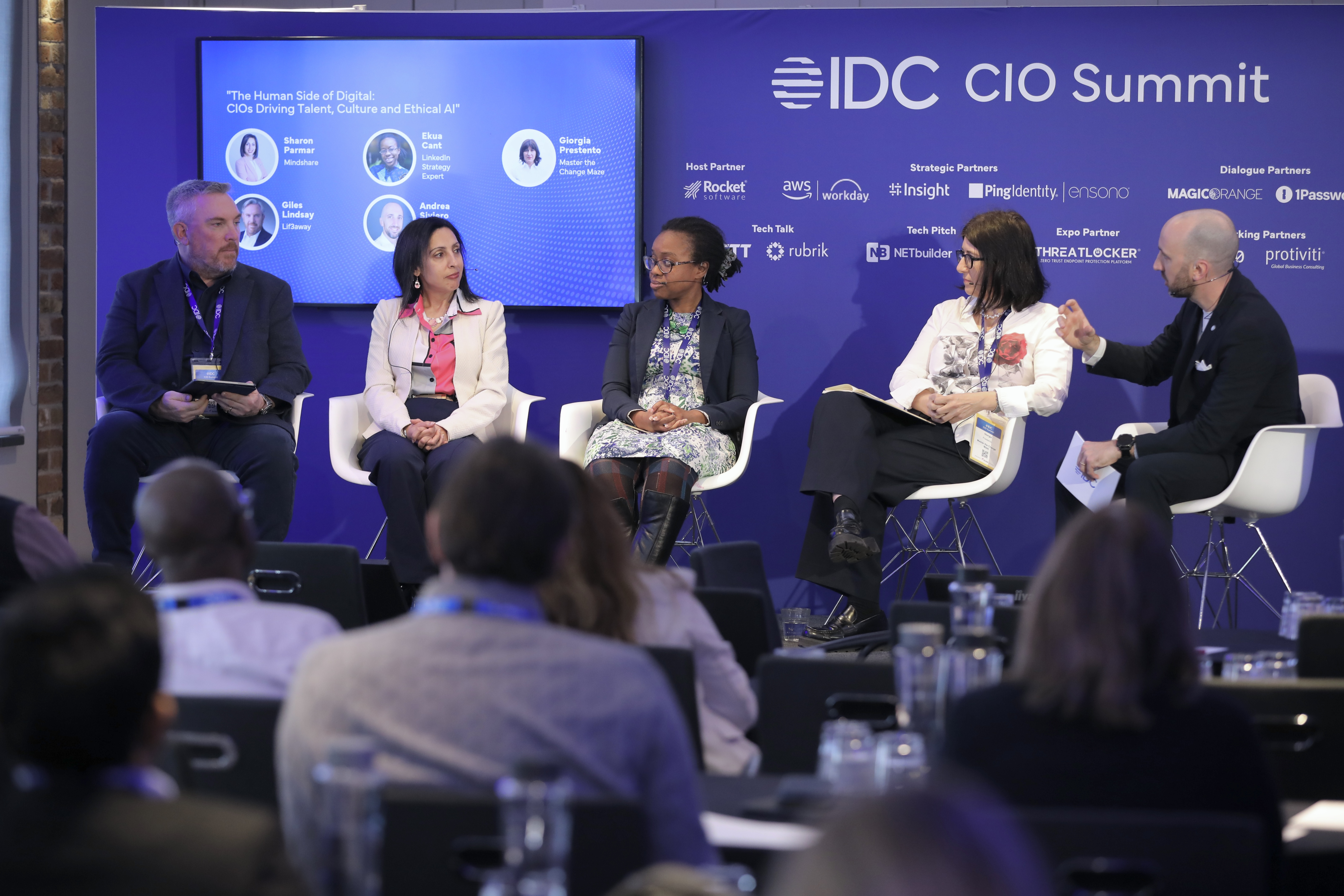
Highlights from the 2026

Partners

Rocket Software
Rocket Software helps organizations unlock the value of their data, applications, and infrastructure through modernization. Its solutions for data integration, analytics, content intelligence, and AI-ready transformation connect trusted data across mainframe, hybrid, and cloud environments. Trusted by more than 13,500 customers worldwide, Rocket enables innovation, better decisions, and confident modernization.

AWS & Workday
About Amazon Web Services (AWS):
Amazon Web Services (AWS) is the world’s most comprehensive and broadly adopted cloud platform, offering over 200 fully featured services from data centres globally. Millions of customers — including the fastest-growing startups, largest enterprises, and leading government agencies — trust AWS to power their infrastructure, become more agile, and lower costs.
AWS enables organisations to trade capital expense for variable cost, benefit from massive economies of scale, and eliminate the guesswork of capacity planning. With a relentless focus on security, reliability, and innovation, AWS provides the building blocks that allow businesses to move faster, operate more securely, and scale without limits.
From AI and machine learning with Amazon Bedrock and Amazon SageMaker, to data and analytics, customer experience transformation with Amazon Connect, and enterprise integration — AWS delivers the tools enterprises need to build, innovate, and grow in the digital era.
AWS maintains the highest standards of compliance and data protection, holding numerous internationally recognised certifications including ISO 27018, and giving customers full ownership and control over their data at all times.
For more information about AWS, visit: aws.amazon.com
About Workday:
Workday is the enterprise AI platform for managing people, money, and agents. Workday unifies HR and finance on one intelligent platform with AI at the core to empower people at every level with the clarity, confidence, and insights they need to adapt quickly, make better decisions, and deliver outcomes that matter. Workday is used by more than 11,500 organizations around the world and across industries – from medium-sized businesses to more than 65% of the Fortune 500.
For more information about Workday, visit workday.com

Insight
Insight Enterprises is a leading Solutions Integrator that helps clients solve technology challenges by combining the right hardware, software, and services. As a Fortune 500 technology company, backed by 35+ years of expertise and a deep network of 6,000+ partners, we deliver secure, end-to-end IT solutions for organizations around the world.

Ping Identity & Ensono

MagicOrange
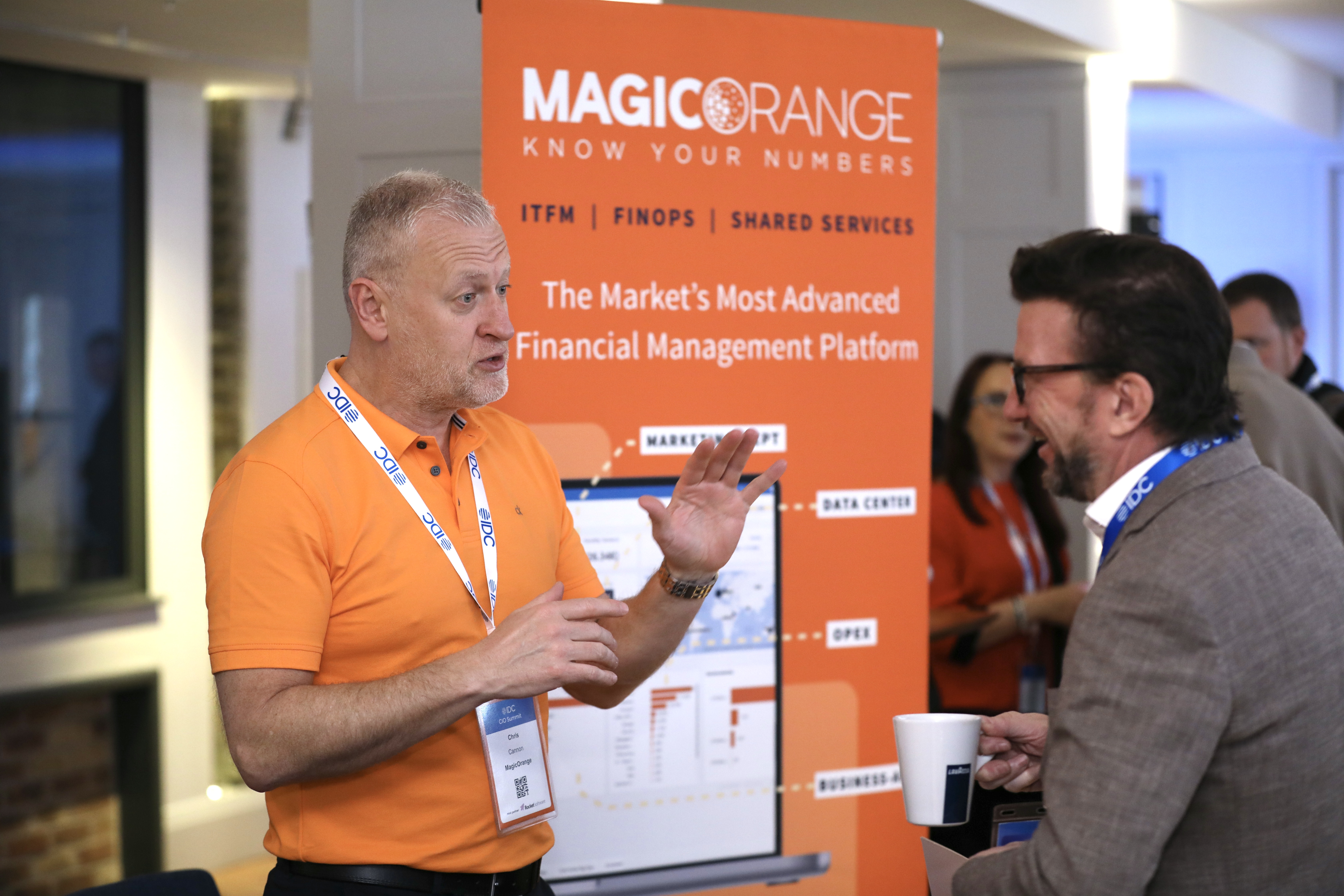
MagicOrange is the market’s most advanced, cloud native enterprise financial management platform and the only platform that offers a fully integrated suite of IT Financial Management and FinOps capabilities. For decades, IT has been seen as a “black box” that absorbs significant costs and provides minimal visibility into ROI outside of the IT department. Simply put, the business line rarely knows or understands what it is paying for. We provide technology executives and their stakeholders with crystal-clear line of sight into expenses and cost-drivers across the entire IT estate. With that line of sight, CIOs and their teams are empowered to clearly define and communicate the value delivered to the business by IT. They can make smarter, data-driven IT investment and cost optimization decisions. And ultimately, they are able to partner more effectively with their business line stakeholders to drive profitability and growth.

1Password
Trusted by over 180,000 businesses, millions of consumers, and 1 million developers, 1Password is redefining identity security for the way people and AI agents work today. Our mission is to unleash productivity without compromising security. The 1Password Extended Access Management product suite delivers zero trust security that protects, manages, and governs access to all SaaS applications, whether managed by IT or not. Built on 1Password’s Enterprise Password Manager, which secures more than 1.3 billion credentials, 1Password’s Agentic AI capabilities extend identity security to AI agents and other non-human identities. Leading companies such as Asana, Associated Press, Browserbase, Canva, Cresta, Golden State Warriors, Hugging Face, MongoDB, Octopus Energy, Salesforce, SandboxAQ, Slack, Stripe, and Under Armour trust 1Password to provide the right person or AI agent the right access to the right app from a trusted device.

Rubrik
Rubrik, the Security and AI Operations Company, leads at the intersection of data protection, cyber resilience, and enterprise AI acceleration. Rubrik Security Cloud delivers complete cyber resilience by securing, monitoring, and recovering data, identities, and workloads across clouds. Rubrik Agent Cloud accelerates trusted AI agent deployments at scale by monitoring and auditing agentic actions, enforcing real-time guardrails, fine-tuning for accuracy and undoing agentic mistakes.

GTT
GTT is a leading networking and security as a service provider for multinational organizations, simply and securely connecting people and machines to data and applications — anywhere in the world. We serve thousands of organizations, bringing together the right people, partners and technology to reduce the burden on IT teams and solve the most pressing networking and security challenges. Built on our highly ranked global Tier 1 network, GTT Envision is a single global technology platform to connect, orchestrate, virtualize and automate enterprise networks, enabling customers with consumable solutions to achieve business missions and meet ongoing demand when, where and how needed. Our portfolio includes SASE, SD-WAN, security, internet, voice and other connectivity options, complemented by a suite of professional services and exceptional sales and support teams in local markets around the globe. We partner with our customers to deliver Greater Technology Together. For more information, visit www.gtt.net

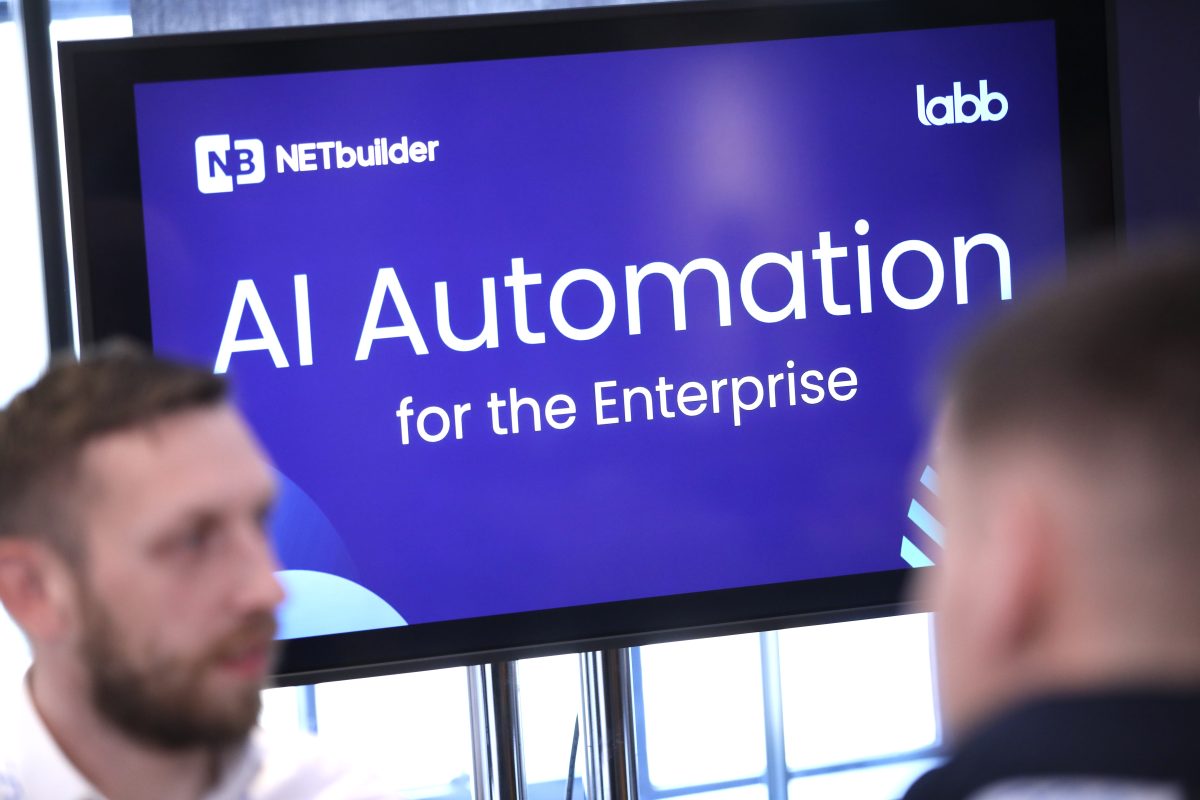
labb and NETbuilder
labb
labb delivers complex CRM, AI, and Automation solutions for Fortune 500 and blue-chip enterprises across banking, insurance, and the public sector.
As Pega’s trusted go-to-market partner for agentic self-service, labb combines deep platform expertise and market-leading products with modern, artificial intelligence assisted delivery to help organizations design, build, and scale omni-channel automation solutions in the AI-first world.
If you are interested in exploring enterprise automation solutions that drive real business outcomes, labb’s global team of experienced consultants can help.
Learn more here: www.labb.ai
NETbuilder
NETbuilder is a leading provider of specialist consulting, skills creation, digital transformation, and MDR services.
With a focus on cyber security, observability, automation, and AI, NETbuilder is a trusted partner to government departments and enterprise-scale organizations in the finance, healthcare, education, defense, and commercial markets.
With over 25 years’ experience in the industry, NETbuilder’s expert team can ensure your organization is running at maximum efficiency, while remaining fully protected in today’s AI-driven threat landscape.
Learn more here: www.netbuilder.com

ThreatLocker

auth0
Auth0® takes a modern approach to identity, providing secure access to any application, for any user. Safeguarding billions of login transactions each month, Auth0 delivers convenience, privacy, and security so customers can focus on innovation. Auth0 is part of Okta, Inc., The World’s Identity Company™.

Protiviti
Protiviti is a global consulting firm that delivers deep expertise, objective insights, a tailored approach and unparalleled collaboration to help leaders confidently face the future. Our consulting solutions span critical business problems in technology, digital, business process, analytics, risk, compliance, transactions and internal audit. We are committed to attracting and developing a diverse workforce of professionals who share the values of integrity, inclusion and innovation. We believe that by teaming together with our clients, we can tackle the business challenges presented by a dynamic world and discover and implement innovative, efficient and effective business solutions.
Our more than 11,000 people serve clients ranging from business, governments, public-sector agencies, not-for-profits through the network of Protiviti and independently owned member firms in more than 90 offices in over 25 countries. We have served more than 80 percent of Fortune 100 and nearly 80 percent of Fortune 500 companies. Our people and organisation have consistently been recognised by Fortune and Consulting Magazine as a best company to work for.
Speakers

Shivika Singh
Head of Global Strategy, Business Development
TikTok
Read bio

Shivika Singh
Event Sessions
One Day Event 10:40 am
Opening Panel Discussion: From Cyber Risk to Digital Trust: The CIO’s Role in Security, Sovereignty and Strategic Control
As organisations become increasingly data-driven and cloud-dependent, CIOs sit at the centre of a growing web of cyber risk, regulatory pressure and strategic accountability. Moving beyond traditional security models, this panel explores how CIOs are redefining digital trust not just through technology, but through governance, supplier choices and control over critical data and systems.
The discussion will examine the CIO’s role in navigating digital sovereignty, managing third-party and geopolitical risk, and balancing innovation with resilience. Listen to CIOs sharing practical insights on the decisions they are making today to protect their organisations, maintain autonomy, and build trust with boards, regulators and customers in an increasingly complex digital landscape.
Jonathon Valentine
Group CTO
Asset Performance Partners
Read bio
Jonathon Valentine

Nic Granger
Chief Information and Financial Officer
North Sea Transition Authority
Read bio
Nic Granger

Rajesh Jethwa
Chief Technology Officer
Digiterre
Read bio
Rajesh Jethwa

Ekua Cant
Visible Leadership and LinkedIn Strategy Expert
Read bio
Ekua Cant

Giorgia Prestento
Change Advisor
Master the Change Maze
Read bio
Giorgia Prestento

Hasani Jess
Group Chief Technology Office
Aventum Group
Read bio
Hasani Jess

Giles Lindsay
CIO
Lif3away
Read bio
Giles Lindsay

Lauren Dally
Technology Director
Everywhen
Read bio
Lauren Dally
Lauren is a forward-thinking strategist with a deep passion for cultivating client-centric IT capabilities and launching innovative digital products. With a proven track record spanning over a decade, she has consistently achieved strategic objectives by leading cross-functional teams in diverse sectors, including finance, insurance, healthcare, and corporate wellness.
Lauren thrives in fast-paced, complex environments and excel in senior and executive-level managerial roles, specializing in key IT-related functions such as Product Management, IT Delivery, Programme Management, and Project Management. She has a successful history of implementing Agile methodologies, including SAFe and ‘Tribe’ models, within various organizations, earning recognition as an Agile Champion.
Her leadership experience extends to managing teams of varying sizes, from small groups to large teams of 250 members, to effectively deliver products and projects across the entire IT development lifecycle. She is passionate about driving positive change, optimizing processes, and achieving excellence in client-centric solutions.
Her commitment to excellence has earned several notable awards and recognitions, including the esteemed Next CIO 2023 Award.

Chris Leong
Virtual Chief Responsible AI Officer Advisor
Assessed Intelligence
Read bio
Chris Leong
Event Sessions
One Day Event 4:15 pm
Closing Panel: Agentic AI: Strategic Opportunities and Operational Challenges for CIOs
Agentic AI – systems capable of autonomous decision-making is no longer a distant concept: it’s becoming a critical tool for enterprise innovation. But with strategic opportunity comes operational complexity. How can CIOs harness these technologies to drive efficiency, insight, and competitive advantage while managing risk, compliance, and ethical considerations?
Join this panel to discuss the real-world implications of agentic AI in the enterprise. IDC states that only 13% of proofs-of-concept (PoCs) make it to production, which highlights the execution gap CIOs must close. This panel will explore how to evaluate AI adoption, integrate autonomous systems into existing operations, and ensure responsible use, all while maintaining control and delivering measurable business impact whilst practical insights into how CIOs are balancing innovation with accountability in this rapidly evolving landscape.

Basit Tanveer
Head of Business Platforms & Data Engineering
Lebara
Read bio
Basit Tanveer
Event Sessions
One Day Event 4:15 pm
Closing Panel: Agentic AI: Strategic Opportunities and Operational Challenges for CIOs
Agentic AI – systems capable of autonomous decision-making is no longer a distant concept: it’s becoming a critical tool for enterprise innovation. But with strategic opportunity comes operational complexity. How can CIOs harness these technologies to drive efficiency, insight, and competitive advantage while managing risk, compliance, and ethical considerations?
Join this panel to discuss the real-world implications of agentic AI in the enterprise. IDC states that only 13% of proofs-of-concept (PoCs) make it to production, which highlights the execution gap CIOs must close. This panel will explore how to evaluate AI adoption, integrate autonomous systems into existing operations, and ensure responsible use, all while maintaining control and delivering measurable business impact whilst practical insights into how CIOs are balancing innovation with accountability in this rapidly evolving landscape.

Alpesh Doshi
Founder and CEO
Fintricity
Read bio
Alpesh Doshi
Event Sessions
One Day Event 4:15 pm
Closing Panel: Agentic AI: Strategic Opportunities and Operational Challenges for CIOs
Agentic AI – systems capable of autonomous decision-making is no longer a distant concept: it’s becoming a critical tool for enterprise innovation. But with strategic opportunity comes operational complexity. How can CIOs harness these technologies to drive efficiency, insight, and competitive advantage while managing risk, compliance, and ethical considerations?
Join this panel to discuss the real-world implications of agentic AI in the enterprise. IDC states that only 13% of proofs-of-concept (PoCs) make it to production, which highlights the execution gap CIOs must close. This panel will explore how to evaluate AI adoption, integrate autonomous systems into existing operations, and ensure responsible use, all while maintaining control and delivering measurable business impact whilst practical insights into how CIOs are balancing innovation with accountability in this rapidly evolving landscape.

Aaron Kalvani
Independent Global AI Strategist & Advisor on Multilateral AI Governance
Read bio
Aaron Kalvani
Aaron Kalvani serves as an Independent Global AI Strategist and Advisor on Multilateral AI Governance for the United Nations.
He guides how data and advanced AI are introduced into large-scale intergovernmental and institutional systems, with a focus on building trusted data foundations, regulatory integrity, and long-term structural resilience.
Through partnerships with international organisations, governments and cross-border initiatives, he shapes governance frameworks and institutional architectures that turn policy into practice, supporting responsible use of AI across borders, sectors, and public missions.

Silky Vaidya
CTPO and Board Advisor
Head of Technology & Product at Nominet
Read bio
Silky Vaidya
Event Sessions
One Day Event 10:40 am
Opening Panel Discussion: From Cyber Risk to Digital Trust: The CIO’s Role in Security, Sovereignty and Strategic Control
As organisations become increasingly data-driven and cloud-dependent, CIOs sit at the centre of a growing web of cyber risk, regulatory pressure and strategic accountability. Moving beyond traditional security models, this panel explores how CIOs are redefining digital trust not just through technology, but through governance, supplier choices and control over critical data and systems.
The discussion will examine the CIO’s role in navigating digital sovereignty, managing third-party and geopolitical risk, and balancing innovation with resilience. Listen to CIOs sharing practical insights on the decisions they are making today to protect their organisations, maintain autonomy, and build trust with boards, regulators and customers in an increasingly complex digital landscape.

Amy Jones
Chief Transformation Officer
Emerald Publishing
Read bio
Amy Jones
Amy Jones is Chief Transformation Officer at Emerald Publishing, where she brings people, process and technology together to accelerate real world impact. In 2025, Amy was named to the CIO 100 UK list and received the Visionary Leadership in Technology award, recognising her people first approach to purposeful transformation. At Emerald, her remit spans delivery excellence, IT operations and modern engineering. Amy focuses on building resilient platforms, clearer ways of working and a culture where change sticks—so teams can move faster with confidence. A committed advocate for women in tech, she mentors emerging leaders and is hands on about making inclusion practical, not performative. She’s also a proponent of ethical AI, championing transparent governance, human in the loop design and tools that augment judgement while protecting trust.
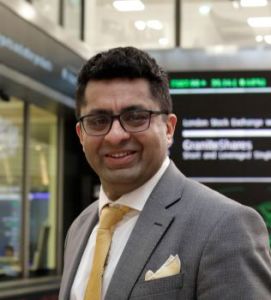
Manuj Sarpal
CTO
GraniteShares ETFs
Read bio
Manuj Sarpal

David Harding
CEO
MagicOrange
Read bio
David Harding
David Harding is the CEO of MagicOrange, the market’s first cloud-native IT financial management and FinOps platform. Prior to MagicOrange, David was a Managing Director and Technology COO at Morgan Stanley for 15 years and has more than two decades’ experience in technology management. Prior to Morgan Stanley, David spent 6 years at Credit Suisse where he launched and led the firm’s first global technology cost transparency initiative, a program which he also subsequently led at Morgan Stanley. As a career-long practitioner, David has developed and continuously drives a strong culture of accountability in the business, delivering value through cost transparency, so our clients can know their numbers and make their investment decisions confidently. David is a Fellow of the Association of Chartered Certified Accountants. He also holds a certificate in Digital Innovation for Finance and a Bachelors degree in Modern Languages from the University of Southampton in the UK

Andrew Simpson
Principal Solutions Architect
Rocket Software
Read bio
Andrew Simpson
Andrew has worked in the computer software industry for over 30 years starting off as a programmer to development manager, moving to technical consulting and then to a pre-sales engineering role. Andrew is currently a Principal Solutions Architect at Rocket Software after being with Rocket for over 20 years, focussing on application and data modernisation, optimisation and process improvement solutions for enterprises across the EMEA region.
Event Sessions
One Day Event 9:50 am
AI Isn’t the Foundation for Modernization. Trust Is.
Build the shared trust layer first—where data and security come together—and every team moves faster.
AI is accelerating modernization efforts, but it’s not the foundation of long-term success. Trust is. Trust is built on the “shared trust layer,” where data and security work together to form the backbone of a resilient, future-ready IT ecosystem. Without robust security, your data is vulnerable; without actionable data, your security measures lack precision. Together, they enable innovation, agility, and long-term impact.
IDC research shows nearly 40% of CIOs expect to overspend on digital infrastructure in the next 18 months, driven by technical debt and initiatives that stall before delivering results. Operational friction—rework from quick fixes, access exceptions from workarounds, inconsistent controls, reactionary audit scrambles, and untested recovery plans—undermines progress.
This keynote introduces the Shared Trust Layer as the foundation beneath every modernization initiative. Build it first, and teams move faster everywhere: delivery cycles shrink, resilience improves, compliance gets easier, and AI scales with confidence.
You’ll leave this session with:
- A practical model to align data and security strategies for IT modernization.
- Steps to reduce operational friction and accelerate delivery cycles.
- A focused 90-day action plan to benchmark your maturity with the IDC Modernization Index and build a resilient, future-ready IT ecosystem.

Michael McKay
Senior Engineer
Rocket Software
Read bio
Michael McKay
Michael McKay is a senior engineer at Rocket Software, specialising on Mainframe Storage, Resiliency and Security technologies. Michael has a background in Storage Infrastructure and eventually became a Sysprog at a leading UK bank, before transitioning to Rocket Software where he is now working with various customers to implement solutions to better manage and secure their Mainframe environment.
Event Sessions
One Day Event 9:50 am
AI Isn’t the Foundation for Modernization. Trust Is.
Build the shared trust layer first—where data and security come together—and every team moves faster.
AI is accelerating modernization efforts, but it’s not the foundation of long-term success. Trust is. Trust is built on the “shared trust layer,” where data and security work together to form the backbone of a resilient, future-ready IT ecosystem. Without robust security, your data is vulnerable; without actionable data, your security measures lack precision. Together, they enable innovation, agility, and long-term impact.
IDC research shows nearly 40% of CIOs expect to overspend on digital infrastructure in the next 18 months, driven by technical debt and initiatives that stall before delivering results. Operational friction—rework from quick fixes, access exceptions from workarounds, inconsistent controls, reactionary audit scrambles, and untested recovery plans—undermines progress.
This keynote introduces the Shared Trust Layer as the foundation beneath every modernization initiative. Build it first, and teams move faster everywhere: delivery cycles shrink, resilience improves, compliance gets easier, and AI scales with confidence.
You’ll leave this session with:
- A practical model to align data and security strategies for IT modernization.
- Steps to reduce operational friction and accelerate delivery cycles.
- A focused 90-day action plan to benchmark your maturity with the IDC Modernization Index and build a resilient, future-ready IT ecosystem.

Manoj Kumar
Director
Pax Identity Limited
Read bio
Manoj Kumar

Gokul Ramasubramanian
Staff AI Engineer for Innovation
Admiral Group
Read bio
Gokul Ramasubramanian

Bukky Yusuf
Senior Leader and Leadership Development Coach
Edith Kay School
Read bio
Bukky Yusuf
Bukky Yusuf is a senior leader, leadership coach and author, working with educators on a national and international basis. She has undertaken several leadership roles within mainstream and special school settings.
Beyond the classroom, Bukky is a Trustee and an Ed Tech Thought Leader with a variety of experiences that includes serving as an Advisory Council member for Good Future Foundation. In 2019, she was appointed by the Department of Education as co-chair for the EdTech Leadership Group to support the Government’s EdTech strategy.
Bukky has been awarded fellowship status within the industry in particular the Chartered College of Teaching (FCCT) and the Royal Society of Arts (FRSA) for her work in education.

Lydia Nicola
Head of Operations
Amnesty Internationals
Read bio

Lydia Nicola
Event Sessions
One Day Event 10:40 am
Opening Panel Discussion: From Cyber Risk to Digital Trust: The CIO’s Role in Security, Sovereignty and Strategic Control
As organisations become increasingly data-driven and cloud-dependent, CIOs sit at the centre of a growing web of cyber risk, regulatory pressure and strategic accountability. Moving beyond traditional security models, this panel explores how CIOs are redefining digital trust not just through technology, but through governance, supplier choices and control over critical data and systems.
The discussion will examine the CIO’s role in navigating digital sovereignty, managing third-party and geopolitical risk, and balancing innovation with resilience. Listen to CIOs sharing practical insights on the decisions they are making today to protect their organisations, maintain autonomy, and build trust with boards, regulators and customers in an increasingly complex digital landscape.

Carl Davis
Chief Technology Officer
Keensight Capital
Read bio
Carl Davis
Carl Davis is CTO of Keensight Capital’s Performance Team, partnering with portfolio companies on tech value creation and AI across cybersecurity, post-merger integration, software architecture, cloud strategy, and scaling engineering organisations. He was recognised in the CIO 100 UK in 2025 and 2022.

Sharon Parmar
Humanity Works Consultancy and Ex Partner at Mindshare
Read bio
Sharon Parmar

Alex Butler
Director, Digital Data and Technology
Sport England
Read bio
Alex Butler
Event Sessions
One Day Event 10:40 am
Opening Panel Discussion: From Cyber Risk to Digital Trust: The CIO’s Role in Security, Sovereignty and Strategic Control
As organisations become increasingly data-driven and cloud-dependent, CIOs sit at the centre of a growing web of cyber risk, regulatory pressure and strategic accountability. Moving beyond traditional security models, this panel explores how CIOs are redefining digital trust not just through technology, but through governance, supplier choices and control over critical data and systems.
The discussion will examine the CIO’s role in navigating digital sovereignty, managing third-party and geopolitical risk, and balancing innovation with resilience. Listen to CIOs sharing practical insights on the decisions they are making today to protect their organisations, maintain autonomy, and build trust with boards, regulators and customers in an increasingly complex digital landscape.

Abdullah Masud
Principal Solutions Engineer
Ping Identity
Read bio
Abdullah Masud
Abdullah Masud is a senior sales engineer at Ping Identity. He is a motivated and driven individual who possesses great communication skills. Abdullah has a passion for technology and a desire to pursue a career that operates within the field. He has a proven track record of working as part of a team and leading business units.
Event Sessions
One Day Event 10:10 am
The Rise of Non-Human Identity
The ratio of non-human to human identities is exploding. From service accounts and automated bots to the rapid emergence of agentic AI, these “digital workers” now perform critical business tasks, access sensitive data, and make autonomous decisions. However, this shift has expanded the attack surface, leaving organizations vulnerable to over-privileged service accounts, secret-sprawl, and AI-driven threats that traditional, human-centric IAM systems were never built to handle.
In this session, Ping Identity and Ensono explore why non-human identity (NHI) has become the new frontier of cybersecurity. We will dive into the unique challenges of managing machine-to-machine interactions and the necessity of a unified identity fabric.

James Peet
Practice Director – Identity
Ensono
Read bio
James Peet
Event Sessions
One Day Event 10:10 am
The Rise of Non-Human Identity
The ratio of non-human to human identities is exploding. From service accounts and automated bots to the rapid emergence of agentic AI, these “digital workers” now perform critical business tasks, access sensitive data, and make autonomous decisions. However, this shift has expanded the attack surface, leaving organizations vulnerable to over-privileged service accounts, secret-sprawl, and AI-driven threats that traditional, human-centric IAM systems were never built to handle.
In this session, Ping Identity and Ensono explore why non-human identity (NHI) has become the new frontier of cybersecurity. We will dive into the unique challenges of managing machine-to-machine interactions and the necessity of a unified identity fabric.

Ollie Cheal
VP, EMEA
1Password
Read bio
Ollie Cheal

Chris Weston
Director
Open UK
Read bio
Chris Weston
Event Sessions
One Day Event 4:15 pm
Closing Panel: Agentic AI: Strategic Opportunities and Operational Challenges for CIOs
Agentic AI – systems capable of autonomous decision-making is no longer a distant concept: it’s becoming a critical tool for enterprise innovation. But with strategic opportunity comes operational complexity. How can CIOs harness these technologies to drive efficiency, insight, and competitive advantage while managing risk, compliance, and ethical considerations?
Join this panel to discuss the real-world implications of agentic AI in the enterprise. IDC states that only 13% of proofs-of-concept (PoCs) make it to production, which highlights the execution gap CIOs must close. This panel will explore how to evaluate AI adoption, integrate autonomous systems into existing operations, and ensure responsible use, all while maintaining control and delivering measurable business impact whilst practical insights into how CIOs are balancing innovation with accountability in this rapidly evolving landscape.

Richard Cassidy
EMEA CISO
Rubrik
Read bio
Richard Cassidy

Clare Hickie
CTO – EMEA
Workday
Read bio
Clare Hickie
Event Sessions
One Day Event 11:30 am
The New Work Day: Architecting the Agentic Enterprise
The CIO’s mandate has shifted: you are no longer just the custodian of uptime, but the primary architect of the agentic enterprise. As AI redefines the economics of work, the CIO must bridge the gap between probabilistic AI and the deterministic rigor required for HR and Finance data and processes.
In this session, we explore how Sana, Workday’s AI superintelligence, empowers CIOs to lead this transformation. We move beyond disconnected “copilots” toward AI “teammates” that operate with built-in governance and deep context.
Join us to discover how to scale intelligence while maintaining the absolute trust and compliance that define the modern enterprise.

Tom Girdler
Product Marketing Director
Workday
Read bio
Tom Girdler

Kae Khan
Head of Business Value, UKI
Okta
Read bio
Kae Khan
Kae Khan leads Okta’s Business Value Consulting Practice in the UK, partnering with CXOs to transform identity into a strategic “value-accelerator”. As organisations bridge the “trust gap” from GenAI pilots to Agentic AI production, Kae helps leaders decipher the new agentic world balancing the economics of autonomous systems with the need for resilient identity governance.
Previously, Kae was at Accenture Strategy’s London office helping companies across Europe and the US with M&A and technology strategy. Before jumping into tech, Kae started his career as a CPA before taking up economic advisory roles for the Government of Canada’s digital innovation programs. Kae is from Ottawa, Canada, where he studied Financial Economics at the University of Ottawa, and holds an MBA from INSEAD.

Justin Campbell
Client CTO
Insight
Read bio
Justin Campbell
Justin Campbell is Client CTO at Insight and owner of the Insight AI Enterprise Architecture for EMEA, working with clients across the public sector, energy, digital platforms and financial services on AI strategy, architecture and product development.
Building internal AI solutions for the Insight business, to assist with onboarding, project delivery and operational performance improvements.
With 20+ years as a global CTO, architect and platform engineer, he has led major transformation programmes at financial services organisations, worked for HPE on their cloud portfolio.
Driven strategy, architecture and product development as a CTO in the following industry verticals
• Public sector digital services and platforms.
• Energy sector (including operational data and SCADA-related applications).
• Telecoms billing and large-scale BSS transformations.
• Biosciences and regulated industries adopting utility and cloud services.
• Financial services trading, risk and grid-compute environments.
Justin combines deep business context with hands-on engineering in modern development languages, cloud-native and serverless architectures, and ML/AI on AWS and Azure, underpinned by a long track record in application, infrastructure and cloud architecture, strategy development and large-scale platform delivery.
Event Sessions
One Day Event 10:25 am
Building an AI Value Playbook: From a Practitioner’s Perspective
Most organisations have AI projects running. Few can answer the question that matters most: what are we getting for the money?
This presentation tackles that problem directly, drawing on real experience building and operating an AI governance framework across a live enterprise portfolio. It is not a theoretical model or a vendor pitch. It is an account of what was built, why, how it works in practice, and what proved harder than expected.
The session covers the core components of an AI value playbook: a tiered classification model that applies proportionate governance to both new and existing projects, a four-checkpoint governance gate that must be passed before any AI initiative moves forward, a three-layer measurement framework that distinguishes between adoption, performance and value metrics, and a reference architecture layer that keeps the technology landscape legible and prevents tool sprawl.

Philip Wortrich
Technology & Strategy Director
GTT
Read bio
Philip Wortrich
Residing within GTT’s Product & Technology Group, Phil supports the adoption of GTT’s key strategic initiatives, including GTT’s Envision platform. Prior to this posting, Phil led a team of Solutions Consultants at GTT, in addition to having held a number of Senior Pre-Sales roles at both Level 3 Communications and Arelion. Drawing on the themes of this summit, Phil has a specific interest in the human/machine relationship, and how the use of artificial intelligence has allowed us to create value and meaning elsewhere in the workplace.

Marc Dowd
Vice President, Executive Advisory
IDC
Read bio
Marc Dowd

Henry Hale
Group CIO
Labb
Read bio