Knowledge Hub / Faisal Ameer Malik

Partner Spotlight

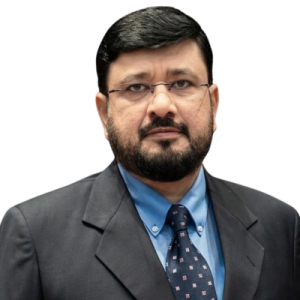
Faisal Ameer Malik
Chief Technology Officer
Huawei Enterprise Business Group, Middle East

Partner Spotlight

Navigating the AI Realm with Huawei: Staying Focused on What Truly Counts

For the past several years, we have all been watching enterprises pour significant capital into AI infrastructure, whether it is data centers, compute clusters and sophisticated models. The ambition is real, and in many cases, so is the investment. Having worked at the intersection of technology and enterprise strategy for Huawei in this region, I find myself returning to one question: Are we building AI that actually works for the people and industries it is meant to serve?

Across the Middle East and Central Asia, AI infrastructure investment is accelerating, and that momentum is welcome. But investment in infrastructure is not the same as investment in outcomes. A data center optimized for high-density compute means little if the enterprise running it cannot point to a single workflow that has meaningfully improved. The risk is that we measure our progress in petaflops and parameter counts, while the harder question whether any of this is creating real value remains unasked.

Deploying AI for your enterprise means building a complete, integrated system, one that brings together compute, data, and model capability in service of a specific outcome. Consider what that looks like in practice: a teacher in a remote classroom gaining access to personalized educational tools; a doctor leveraging predictive diagnostics to save lives; a researcher accelerating the discovery of new materials or medicines. These scenarios represent the true standard against which every infrastructure decision should be measured.

The Huawei and Redington partnership holds a unique position in the AI ecosystem. What distinguishes our approach is that we address every layer of the stack and integrate them. Starting with Data Center Infrastructure: facility design, power architecture, precision cooling, and physical security, built for high-density AI workloads with energy efficiency at the core. At the compute layer, our Atlas 850E Server and Atlas 950 SuperPoD Cluster deliver the performance enterprises need for large-scale model training and real-time inference. Our AI-optimized storage layer eliminates the I/O bottlenecks that silently throttle AI performance in most deployments, a problem enterprise rarely diagnoses until it is costing them significantly. At the model and platform layer, we support over 30 plus foundation models natively, including DeepSeek, GPT, Llama, and GLM etc., with one-stop model deployment, management and migration tools. And at the application layer, we co-develop industry-specific and scenario-specific models with partners across finance, telecommunications, education, health, energy, and government. This is where the architecture earns its value and the question “What should AI do” receives a concrete answer.

A robust AI ecosystem is what converts infrastructure capability into industry outcomes, and that requires openness by design. Huawei’s reference architecture for intelligent transformation is built on the principles of openness, agility, and trustworthiness. It is why our ecosystem today includes over 1,200 partners — among them more than 30 hardware partners, alongside 1.8 million developers, and more than 2,500 industry-specific AI solutions. We are continuously deepening partnerships to ensure our customers develop their own industry-specific and scenario-based models, accelerating their path to measurable operational outcomes.

The Middle East and Central Asia region is building and setting its own terms for how intelligent AI transformation should work. My ask of every enterprise and technology leader is to hold the infrastructure accountable to the outcome. At Huawei, that is the standard we set for ourselves and the partnership we offer to the region.

Proceedings

Proceedings

Protected

To access this content, please enter the password you have received from IDC.


IDC Mauritius Advisory Council 2025

IDC Mauritius Advisory Council 2025

Veekash Aukhojee

Veekash Aukhojee

Chief Information Officer

Emtel

Read bio

Abdool Kadell

Abdool Kadell

Group CIO

Sun Life

Read bio

Ajmal Abdool​

Ajmal Abdool​

Group CIO

RHT Holding

Read bio

Atma Beeharry

Atma Beeharry

Sr. Executive Officer

SICOM

Read bio

Rishi Sewnundun

Rishi Sewnundun

Group CIO

MUA Group

Read bio

Sudheer Prabhu

Sudheer Prabhu

CTO

CIM Group

Read bio

Roshan Koonja

Roshan Koonja

Chief Information and Transformation Officer

Constance Hospitality Management

Read bio

David Sew

David Sew

Group Head of Technology & Digital Transformation

Medine Group

Read bio

Dr. Banishta Bullyraz Kureeman

Dr. Banishta Bullyraz Kureeman

Director: Multimedia and ICT Services

Open University of Mauritius

Read bio

Knowledge Hub

Knowledge Hub

Discover thought-provoking articles from IDC analysts, strategic partners, and end-user speakers. Explore expert viewpoints on the latest tech trends, real-world transformation stories, and forward-looking insights shaping the digital future.

AI Infrastructure: The Foundation of the Agentic Era

The world is entering a defining moment for digital infrastructure. Artificial intelligence has moved from experimentation to ubiquity, and with it, a new operational paradigm is taking shape — one where agents rather than applications become the primary engines of digital value creation. This is the dawn of the agentic AI era, and its success depends on one thing above all else: robust, intelligent, and scalable infrastructure.

Matt Eastwood
| IDC
SVP, WW Research
Read More

Getting Your Data AI Ready

It has become a common refrain – getting data governance right is key to a successful AI strategy! This conventional wisdom is very true, but it is not a new problem. For as long as I have been involved in IT, both as an analyst and as a CIO, companies have struggled with wrangling the various data sets across the applications running at the organization.

Bob Parker
| IDC
SVP, Software and Services Research
Read More

The CIO Will Become the Orchestrator of Autonomy

South African CIOs are entering the agentic era under conditions that leave little room for experimentation without purpose. AI spending in South Africa is rising quickly, but organizational maturity remains early: IDC projects local AI-related spending to exceed $7 billion by 2030, yet more than half of South African organizations still sit in an ad hoc, experimental stage of AI maturity today. That tension matters. It means the opportunity is real, but so is the risk of fragmented investment, inflated expectations, and stalled value realization.

Jonathan Tullett
| IDC
Associate Research Director
Read More

Knowledge Hub / Jonathan Tullett

Analyst Spotlight

Jonathan Tullett
Associate Research Director
IDC

Analyst Spotlight

The CIO Will Become the Orchestrator of Autonomy


South African CIOs are entering the agentic era under conditions that leave little room for experimentation without purpose. AI spending in South Africa is rising quickly, but organizational maturity remains early: IDC projects local AI-related spending to exceed $7 billion by 2030, yet more than half of South African organizations still sit in an ad hoc, experimental stage of AI maturity today. That tension matters. It means the opportunity is real, but so is the risk of fragmented investment, inflated expectations, and stalled value realization.


IDC’s global research shows that 2025 launched the agentic era, but 2026 is the year enterprises started to industrialize it. A shift is underway towards systems that can reason, act, and coordinate across workflows. Yet only 45% of AI projects to date have delivered any measurable business value at all, never mind achieving their promised ROI. There is plenty of interest in AI, but the challenge is in converting AI activity into repeatable business outcomes. Executive boards should not fund AI – or any technology investment – for its own sake; they should invest in measurable outcomes.


For CIOs, the first imperative is controlled value. IDC’s research shows that fewer than 5% of CXOs currently view fully autonomous agentic AI as appealing, while 54% of C-suite leaders rank operational efficiency and productivity as the most important short-term outcomes for agentic AI. The market is not ready for grand promises about autonomous enterprises, but it is more than ready for credible progress in bounded, governed, high-value use cases. That means using agentic capabilities where they can improve speed, quality, and decision-making without creating unmanaged risk.


At a time when global markets are in turmoil and supply chains in flux, business risk tends to dictate a conservative approach to innovation, and geopolitical instability is raising the importance of sovereignty, control, and trust.


Virtually all of the South African organizations IDC has engaged with have highlighted the role of central governance in building AI roadmaps. The organizations that will move ahead are the ones that successfully impose discipline: start with strategy, prioritize use cases, map the value, model the cost, adjust for risk, and then optimize continuously. Curated pilot projects with clearer business ownership and more demanding baselines. In a constrained environment, the right roadmap is a ranked portfolio of viable, measurable business outcomes, and governance must be the steering system that allows innovation to scale safely, rather than a barrier to progress.

 

Even so, we expect friction along that journey. Many AI project failures, in practice, are enterprise-readiness failures as much as they are model failures. IDC’s research shows that data accuracy and availability are top inhibitors to successful agent deployment, but systemic issues include cultural barriers, data privacy and security concerns, unpredictable AI costs, and immature business cases.


There is also a critical workforce dimension to this transition. In IDC research, 45.5% of organizations identified an AI-ready workforce as a top-three AI adoption priority for 2026, while 81% say they are struggling to find and retain talent because of the shift to AI-enabled work models. In a skills-constrained environment, the winning narrative is human plus agent. Agentic systems should be framed as force multipliers that lift productivity, improve insight, and create room for innovation. If leaders reduce the conversation to headcount substitution, they will weaken adoption, trust, and the future talent pipeline.


This is where the CIO role is changing most dramatically. IDC increasingly describes the emerging CIO mandate as one of balancing efficiency and innovation while shaping the organization’s operating model for AI. I would go a step further: the CIO, and their colleagues among the broader AI governance board, are the orchestrators of autonomy. That means deciding where autonomy belongs, where human judgment must remain central, how decision boundaries are defined, and how value, risk, and accountability are continuously monitored. We are reshaping business architecture, enabled by increased machine agency, not dictated by it.


This will be one of the defining themes at IDC CIO Summit 2026 in Johannesburg. As South African organizations move from AI experimentation to enterprise-scale adoption, the central leadership question is how to build a roadmap that is mature, measurable, governable, and resilient. The CIOs who get this right will be the ones who most effectively translate AI ambition into business value, workforce capability, and trusted execution.

Knowledge Hub / Bob Parker

Analyst Spotlight

Bob Parker
SVP, Software and Services Research
IDC

Analyst Spotlight

Getting Your Data AI Ready

It has become a common refrain – getting data governance right is key to a successful AI strategy!  This conventional wisdom is very true, but it is not a new problem.  For as long as I have been involved in IT, both as an analyst and as a CIO, companies have struggled with wrangling the various data sets across the applications running at the organization.


Much of this prior effort focused on structured data sitting in relational databases.  From data warehousing to data lakes and now to data lakehouses, companies have incrementally built better cataloging and semantic mapping.  This category of data provides a performance context; it is where a company keeps score whether it is for financial reporting, operational status, sales pipelines, or workforces.


While much of the effort historically has been on this structured data, for the average company it only represents about 20% of the information corpus.  The rest is in the form of unstructured information in the form of documents, video, voice, or structures (e.g., blueprints or chemical models).  A central benefit of the transformer algorithms that build the language models used in generative AI is that they introduce some structure into this mess via vectoring.  This category of data represents the knowledge context at an enterprise – the collective knowledge of the organization is locked in these documents, videos, voice recordings, and structures.


There is a third category of information as well – streaming data.  This is the telemetry of the organization.  It could come in the form of sensors on a factory floor, the readings from health monitors, or click streams on a website.  This type of data usually is delivered in some time-series form and needs specific governance, usually tag repositories, to understand and apply the data.  This data provides the situational context, a view of what is happening in real time.


Efforts to organize, govern and utilize the data must link all three categories of information.  To achieve the tremendous potential of agentic AI, a company must be able to link the knowledge to the situational and performance context.  This requires advanced tools for semantic graphing and knowledge mapping with a strong commitment from the organization to elevate comprehensive data management to a strategic priority.


IDC does advise companies that they don’t have to get this all done before they undertake agentic efforts.  Rather, it is important to have the tools, organization, and policies in place and then synchronize the data domains with the agentic priorities.  For example, if the company wants to focus on marketing, then the information relevant to that function should be prioritized for governance.


It is easy to acknowledge that data is critical to AI success, but realization requires a comprehensive approach to data across all categories.

Why Attend UAE FSC26

Key Themes

Agentic AI in Finance

Autonomous systems that plan, act, and deliver measurable outcomes

Trusted, Secure & Compliant Finance

Building resilient financial infrastructure with embedded security

Embedded Finance & Ecosystems

Banking-beyond-banking: platforms reshaping financial value chains

Next-Gen Wealth Management

Hyper-personalised, AI-driven, experience-led advisory at scale

Responsible AI by Design

Trustworthy, transparent, and fair financial AI frameworks

Compliance in Digital Finance

Embedding resilience, transparency & governance into digital ops

Digital Innovation Unlocked

Reimagining financial services for a real-time, intelligent future

Carbon Markets & Climate Finance

Monetizing ESG through advanced accounting and trading platforms

Why Attend?

Close the AI execution gap before your competitors do

Only 16% of MEA BFSI firms have a fully integrated enterprise-wide AI strategy, while 54% are still at basic or early stages. This congress delivers the frameworks to accelerate your organisation from pilot to enterprise-wide impact.

Navigate the UAE’s most consequential regulatory moment

53% of MEA BFSI organisations cite compliance, regulation, and risk management as a top priority. With the New Banking Law, Open Finance regulation, and the FIT Programme all active, the stakes for getting this right have never been higher.

Get ahead of GenAI’s impact on client retention and revenue

IDC predicts GenAI features will drive a 40% increase in client retention among hybrid wealth advisory providers by 2026, and that 35% of financial institutions will recast GenAI integrations as CX programmes to prevent revenue erosion by 2028.

Build cyber resilience fit for today’s threat environment

51% of MEA BFSI firms cite cyberthreat detection as a top resilience concern, while 75% say privacy and data protection are their most critical cybersecurity projects. Hear how peers are operationalising Zero Trust and meeting rising regulatory expectations.

Prepare for AI governance and responsible AI regulation

By 2027, 70% of tier 1 global banks will have established a dedicated compliance function for responsible AI. By 2026, 60% of banks worldwide will embed RegTech with GenAI for day-to-day risk management. Understanding what this looks like in the UAE context is critical.

Capitalise on the payments and open banking revolution

Bank data aggregation platforms will capture 10% of global online consumer-to-business payments by 2027, and 30% of new payment system deployments will process across card, interbank, and cross-border rails from a single platform by 2028. The Digital Dirham makes this acutely relevant for UAE institutions.

Turn transformation investment into measurable performance

81% of MEA BFSI firms already report improved performance from digital and operational transformation — yet 100% now use public cloud. The question is no longer whether to transform, but how to maximise the return. Learn what separates the leaders from the laggards.

Defend against synthetic fraud and financial crime

Synthetic loan applications are predicted to grow 100% by 2027 as GenAI and dark web data combine to industrialise fraud. With 36% of MEA BFSI firms focused on financial crime and cybersecurity, this session is critical for risk and technology leaders alike.

Address the skills gap that is stalling transformation

52% of MEA BFSI firms lack OT skills and 48% lack software development and DevOps capability. 65% cite skills shortages as a core security challenge. Peer-led sessions will explore practical strategies for building, buying, and partnering to bridge these gaps.

Future-proof your core banking and product platforms

By 2029, 75% of global tier 1 banks will have modernised their product development and pricing platforms to enable new product innovation, and 25% will have AI/ML embedded in finance and planning software. Core banking modernisation is no longer a back-office project — it is a competitive differentiator.

Partners UAE FSC

Why Partner

The UAE Financial Services Congress brings together the region’s most influential technology decision-makers — CIOs and senior leaders who come ready to evaluate, decide, and invest. For solution providers, it’s a high-impact platform built to drive meaningful conversations, qualified connections, and measurable commercial outcomes. Partner with us to put your brand at the centre of the region’s most important financial technology conversation

Become A Partner
Why Partner

Exhibit Partner

Proceedings

Proceedings

Protected

To access this content, please enter the password you have received from IDC.


CIO Excellence Awards & Symposium

CIO Excellence Awards & Symposium

24 Nov 2026 Raffles İstanbul
Slide
Slide
Slide

Overview

The CIO Excellence Awards & Symposium honors the technology leaders who are shaping the future of Türkiye’s digital landscape. As enterprises across the country accelerate investment in AI, automation, data & cloud modernization, cybersecurity resilience, and industry-specific digital innovation, the role of the CIO has become pivotal. IDC’s research consistently shows that organizations in Türkiye are moving from experimentation to scaled digital execution, positioning technology leadership as a primary driver of business growth and sustained innovation.


The CIO Excellence Awards recognize “The Power 50” – visionary leaders who leverage technology to shape the next era of organizational growth and success. These CIOs drive impact across the entire ecosystem, inspiring collaboration and delivering value to customers, employees, partners, stakeholders, and the broader economy.

 

Join a community of visionary tech leaders and your peers to uncover the future of digital innovation in Türkiye. This exclusive event features industry’s best speakers, top IDC analysts along with the region’s finest technology influences for a day of insightful discussions and engagement. It is not only a celebration of excellence but a forum that underscores the expanding strategic impact of the CIO role in shaping Türkiye’s evolving digital economy.

Introducing CIO Excellence Awards

Through the IDC CIO Excellence Awards 2026, IDC intends to honor those organizations and IT leaders that have conceptualized and successfully delivered digital transformation initiatives that brought about tangible results.
The Power 50: Recognizing Excellence in IT Leadership

IDC Keynote

Keynote
9:05 am

The Evolving Role of the CIO: From IT Leader to Business Strategist

As organizations navigate rapid digital transformation, the role of the CIO is undergoing a fundamental shift. No longer confined to overseeing IT operations, today’s CIO is a strategic business leader driving innovation, growth, and competitive advantage.

This session will explore how CIOs are expanding their influence beyond technology, aligning digital initiatives with core business objectives, and leveraging emerging technologies such as AI, cloud, and data analytics to deliver measurable value. Attendees will gain insights into how modern CIOs collaborate across the C-suite, shape customer experiences, and lead organizational change.

Eren Eser | IDC

Read Bio
Eren Eser

IDC Türkiye Advisory Board 2026

Yaman Acar

Yaman Acar

IT Director

Alliance Healthcare Turkey (Cencora)

Read Bio

Fatih Akar

Fatih Akar

Global Digitalization Director

Kordsa

Read Bio

Gülsün Akhisaroğlu

Gülsün Akhisaroğlu

IT Director

Aydem Perakende

Read Bio

Darço Akkaranfil

Darço Akkaranfil

CIO

Burgan Bank

Read Bio

Enis Ozan Akkaya

Enis Ozan Akkaya

IT Director

Flormar

Read Bio

Harun Yaşar Aksöz

Harun Yaşar Aksöz

IT Director

Gözalan Group

Read Bio

Şirin Aktaş

Şirin Aktaş

CIO

Danone

Read Bio

A. Fahri Arkan

A. Fahri Arkan

CIO

AgeSA Hayat ve Emeklilik

Read Bio

Vedat Arslan

Vedat Arslan

CIO

Oyak Renault Otomobil Fabrikaları

Read Bio

Meltem Atay

Meltem Atay

IT Director

Türk Tuborg

Read Bio

Emrah Gökçe Aygün

Emrah Gökçe Aygün

CTO

Türkiye İş Bankası

Read Bio

Evren Ayorak

Evren Ayorak

CIO

Allianz

Read Bio

İsmihan Baysal Anderson

İsmihan Baysal Anderson

IT and Automation Director

İstanbul Sabiha Gökçen Airport

Read Bio

Tunç Bergsan

Tunç Bergsan

CIO

Anadolubank

Read Bio

Güngör Bingül

Güngör Bingül

CIO

Korozo

Read Bio

Serdar Birlikçi

Serdar Birlikçi

Chief Digital Technology Officer

Borusan Mannesmann

Read Bio

Mehmet Bütün

Mehmet Bütün

CIO&CDO

Vakıf Katılım Bankası

Read Bio

Dr. Aslıhan Çandır

Dr. Aslıhan Çandır

CIO

Neova Katılım Sigorta

Read Bio

Yasin Çarkcı

Yasin Çarkcı

CTO

Tam Finans

Read Bio

Şevket Süreyya Çelikkanat

Şevket Süreyya Çelikkanat

CTO

MAD Parfumeur

Read Bio

Serkan Demir

Serkan Demir

CIO

Alarko Holding

Read Bio

Metin Demirel

Metin Demirel

COO

Aksigorta

Read Bio

Serdar Dilmen

Serdar Dilmen

CIO

DHL

Read Bio

Dursun Dinçer

Dursun Dinçer

CIO

Yurtiçi Kargo

Read Bio

Mehmet Ufuk Dokuzluoğlu

Mehmet Ufuk Dokuzluoğlu

Group CIO

Zeren Group Holding

Read Bio

Vefa Erdem

Vefa Erdem

CTO

Kazancı Holding

Read Bio

Metin Erhan

Metin Erhan

CIO

Kibar Holding

Read Bio

Gül Erol

Gül Erol

IT President

Yıldız Holding & CEO, Yıldız Tech

Read Bio

Barış Fındık

Barış Fındık

CTO

Pegasus

Read Bio

Ersen Gelçin

Ersen Gelçin

CTO

Teknosa

Read Bio

Bilal Genç

Bilal Genç

CTO

A101

Read Bio

İbrahim Gökalp

İbrahim Gökalp

Chief Technology Officer

Sigorta Bilgi ve Gözetim Merkezi

Read Bio

Gökhan Gökçay

Gökhan Gökçay

CIO

Akbank

Read Bio

Sabri Gökmenler

Sabri Gökmenler

Deputy CEO, CIO

Türkiye İş Bankası

Read Bio

Sinem Gözaydın

Sinem Gözaydın

Head of Information Technologies and Solution

Sanofi

Read Bio

Ali İnal

Ali İnal

CIO

Enerjisa Üretim

Read Bio

Tayfun İşbilen

Tayfun İşbilen

CIO

İSKİ

Read Bio

Aykut Işık

Aykut Işık

CIO

Çelik Motor

Read Bio

Kemal Kaplan

Kemal Kaplan

Member of Board

Acıbadem Teknoloji

Read Bio

Önder Kaplancık

Önder Kaplancık

CIO

Zorlu Holding

Read Bio

Yaşar Karadeli

Yaşar Karadeli

CIO

Medisa Sağlık

Read Bio

Hayriye Karadeniz

Hayriye Karadeniz

CIO

Koç Holding

Read Bio

Timur Karaman

Timur Karaman

IT Director

Tiryaki Agro Foods

Read Bio

Engin Kavas

Engin Kavas

CTO

Aydem Enerji

Read Bio

Hilmi Koçak

Hilmi Koçak

CIO

Eczacıbaşı Group

Read Bio

Kaan Konak

Kaan Konak

CIO

Aksigorta

Read Bio

Özgür Korkmaz

Özgür Korkmaz

Head of IT

Uludağ İçecek

Read Bio

Köksal Küçükada

Köksal Küçükada

CIO

Sanko Holding

Read Bio

Koray Kurt

Koray Kurt

CIO

Abdi İbrahim İlaç

Read Bio

Korhan Kuyu

Korhan Kuyu

CIO

Anadolu Sigorta

Read Bio

Berke Menekli

Berke Menekli

Vice President, Global Head of Digital Platform Services

BSH Home Appliances Group

Read Bio

Funda Öney

Funda Öney

CIO

HSBC

Read Bio

Ege Örer

Ege Örer

CIO

AXA Sigorta

Read Bio

Mert Oruz

Mert Oruz

CIO

Arkas Holding

Read Bio

Şerafettin Özer

Şerafettin Özer

CDO

LCWaikiki

Read Bio

Sinan Erdem Özer

Sinan Erdem Özer

COO

Odeabank

Read Bio

Sinan Özkan

Sinan Özkan

CIO

Cengiz Holding

Read Bio

Haldun Selik

Haldun Selik

CIO

Tüpraş

Read Bio

Fahri Şengül

Fahri Şengül

Information Systems Director

Asaş Alüminyum

Read Bio

Altuğ Soydan

Altuğ Soydan

IT & Digital Transformation Director

OTOKAR

Read Bio

Orkun Soylu

Orkun Soylu

Head of Group IT

Evyap

Read Bio

Orkun Süer

Orkun Süer

IT Director

Atasun Optik

Read Bio

Uğur Serkan Taşkın

Uğur Serkan Taşkın

CTO

Koçtaş

Read Bio

Hakan Cem Topal

Hakan Cem Topal

IT Director

SAYA Holding

Read Bio

Ethem Topgül

Ethem Topgül

IT Director

Alarko Carrier Sanayi

Read Bio

Emel Tural

Emel Tural

IT Director

Bosch

Read Bio

Kurtuluş Yavuz

Kurtuluş Yavuz

CTO

Gürok Holding

Read Bio

Oğuzhan Yıldırım

Oğuzhan Yıldırım

Deputy General Manager

Kocaer Haddecilik

Read Bio

Cihan Yıldız

Cihan Yıldız

CTO

Boyner Büyük Mağazacılık

Read Bio

Serdar Yılmaz

Serdar Yılmaz

CIO & COO

Fibabanka

Read Bio

Murat Özkan

Murat Özkan

CIO

Hayat Holding

Read Bio

Our Partners

Venue

Raffles Istanbul

Zorlu Center, Levazım, Vadi Caddesi, 34340 Beşiktaş/İstanbul